
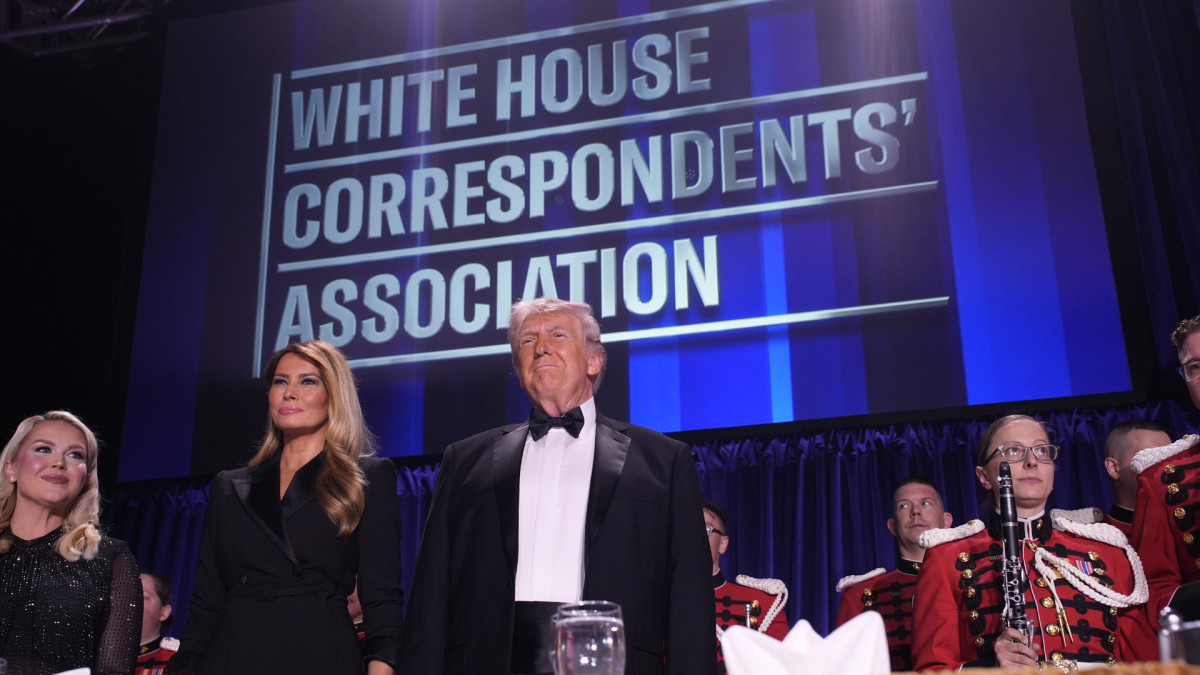
Bullets, they say, smell like power, and they detect it as a hound tracks its prey. Some graze him; others miss; others have altered history. There are also those that feel a particular pull toward figures who project themselves to the world as invincible, invulnerable. One such case is Donald Trump, who, in two years, has endured at least four personal attacks. Since 2024, during the waning phase of his presidential campaign, Trump’s political arc has been written between attacks and suspicions, between gunfire and silences, that always arrive at specific moments of his political narrative.
Let us go back to July of the year just mentioned. The setting: Butler, Pennsylvania. A shot drew blood from his ear as the then-presidential candidate stood in the line of fire. It also left him with a photograph that quickly became a symbol of MAGA resistance and a spur for his campaign. That moment fed his political script, one that argued that after four years of Joe Biden’s Democratic Administration, “his country” had fallen into disaster. And that moment took on an epic hue: a candidate who bleeds and keeps speaking; a leader who survives “his enemies” and whose image approaches that of the martyr for his own cause.
“That episode reinforced an idea that also underpinned the Trumpist discourse: that ‘American patriots’ live under constant threat”
Three months later, in September, the scene shifted, but the narrative remained. A Florida golf course, bathed in everyday luxury, became a trench. There, a man armed with a rifle tried to disrupt the candidate’s routine, but on that occasion he was stopped before firing. That episode reinforced a notion that also underpinned the Trumpist discourse: that “American patriots”—as he has self-styled on countless occasions—live in a constant threat; that violence, as a backdrop, stalks the American dream. And two months before the elections that would return him to the White House, he already stood as a president-in-waiting. In short, someone who ought to be protected from “innumerable enemies” who threatened “the great American nation.”
After a few months, Donald Trump returned to the U.S. Government. During 2025, there were no recorded attacks against him or his close circle, save for the killing of Charlie Kirk. But this year everything changed: on February 22, at Mar-a-Lago in Florida, a twenty-one-year-old breached the perimeter of the president’s residence; he was armed, but was shot dead before any incident could be registered.
Finally, last Saturday, during the annual White House Correspondents’ Dinner, held at the Hilton hotel in Washington, D. C., a Californian thirty-one-year-old was detained after several shots he fired in the lobby before reaching the main venue. His name: Cole Allen. The motive? It is difficult to answer definitively at this point, given how the events unfolded, raising more questions than answers. What is known is that the alleged aggressor had written a manifesto that explicitly declared his violent intent, stating that his target was the Trump Administration’s surroundings. In that document, Allen even calls himself “the friendly federal assassin” and accuses the president of being a “pedophile, rapist and traitor”.
“Each attack has served to reinforce the construction of an idea, of a figure: a man who survives, who bleeds, who exposes himself and who makes violence part of his power narrative”
This latest assault arrived at a moment of maximum media exposure, surrounded by journalists, cameras, and, of course, headlines. And, just like the July 2024 attack, voices are already casting doubt on the veracity of the events, suspicious of truths told halfway. As if it were a perfectly scripted plot: a president who escapes the bullet while others narrate the story. The truth is that, to date, there is no reliable information confirming these hypotheses. Most conclusions are mere opinions circulating on X. Thus, each attack has coincided with a crucial political moment—a campaign, a transition, or the consolidation of the presidency—and has served to reinforce the construction of an idea, of a figure: a man who survives, who bleeds, who exposes himself and who turns violence into part of his power narrative.
Between shots and suspicions: the readings behind (and after) the attacks
Let us first lay out the facts: one attack (with one fatal victim), two failed attempts (without fatalities) and an improvised shooting without fatalities. All of them, with arrests or successful takedowns, have occurred in less than two years.
Now, the reflection. Let us go back to September of the previous year, precisely the tenth. Charlie Kirk was killed by a single shot fired from roughly 130 meters away, striking his neck. The author? Tyler James Robinson, a twenty-two-year-old who surrendered to the police two days after the incident. He was charged with aggravated homicide, illegal possession of weapons, resisting law enforcement, and a couple of minor offenses; the prosecution is seeking life imprisonment and even the death penalty if he is found guilty.
There is also the case of Thomas Matthew Crooks. In that case we encounter something similar: a twenty-year-old who fired eight shots from a distance of about 150 meters, and one of them struck Trump in the ear. About his political motivations, little was learned beyond that he was a Republican activist. He was taken down by a Secret Service marksman.
Thus far, we observe that two young men, from considerable distances (over a hundred meters), killed or wounded their targets despite never having received formal military training.
Then we have two alleged attacks in which the supposed aggressors did not manage to draw their weapon or carry out the assaults. However, regarding their identities or any information about political affiliations or motives for such an attack, nothing else emerged.
“Donald Trump, as is his habit, delivered a statement to the press immediately afterward in which he claimed that his job is high risk”
And finally, last Saturday, the Californian professor, author of a manifesto advocating justice through self-help, entered the White House Correspondents’ Dinner, fired several shots, wounded a Secret Service agent, was promptly detained and nothing further escalated. Donald Trump, as is his habit, gave a press address immediately after, asserting that his work is high risk; he then offered a series of proportional comparisons about the dangers, and joked that, if Marco Rubio had told him that these were the perils of the job, perhaps he would not have run for president. He also stated, in another interview, that the author of that attack “harbors a deep hatred for Christianity”.
Now, regarding this latest attempt at magnicide, more questions than certainties arise. Why did the attacker shoot before reaching the venue? If his manifesto was so violent and clearly indicated that his targets were Donald Trump and the entire governmental leadership, why act so clumsily (exposing himself to arrest)? And above all, why, as The Washington Post reported, was the security protocol at the event so lax? The fact is that this incident—like the preceding ones—arrives at a moment when the president’s narrative (or the candidate’s, when he was) is seriously questioned.
When the 2024 attack occurred, for example, Trump had already been convicted, two months earlier, on 34 counts of falsifying business records in relation to a $130,000 payment to actress Stormy Daniels to silence a extramarital affair during the 2016 campaign. That, clearly, put his path back to the White House at risk. That, of course, clouded the image of a leader who has always presented himself to the world with moral superiority (a claim that is, incidentally, highly questionable).
“Sources close to the California Administration, to whichAgenda Pública has had access, cast scrutiny on the veracity of this supposed attack”
And this year, the U.S. president’s role on the geopolitical stage has not helped his public standing. Scandals such as receiving, from María Corina Machado, the Peace Prize after his armed intervention in Venezuela—stating that what mattered most was the oil—, as well as everything connected with the war in Iran—and the global negative economic effects—, along with the ongoing Epstein affair and his commercial frictions with China, Russia, and the European Union, have already degraded public opinion globally about him and his Administration.
Sources close to the California Administration, to which Agenda Pública has had access, cast doubt on the veracity of this supposed attack. They contend that this event arrives at a moment when Epstein’s documents leave more questions than certainties regarding Trump’s relationship with Jeffrey Epstein.
For the record, and reiterating what was stated earlier, there is no clear evidence to support any hypothesis that the attacks (or attempts) were provoked or orchestrated. What we do know is that every time the figure of Donald Trump faces legal challenges, or his military decisions are controversial, an incident occurs in which an anonymous assailant wields a weapon and creates chaos at a public event, thereby risking both Trump’s own security and that of his inner circle.
