
The debate about the future of the European Union today is dominated by heavyweight geostrategic terms: strategic autonomy, reindustrialization, and shared defense. However, if recent history has taught us one lesson, it is that a continent’s sovereignty does not depend solely on its ability to manufacture microchips or secure natural gas supplies. The resilience of modern nations is fought on a less visible front, but with decisive economic and social effects: .
“Social welfare coexists with a strategy capable of mobilizing resources, attracting international talent and generating knowledge, aiming to give Europe a competitive edge”
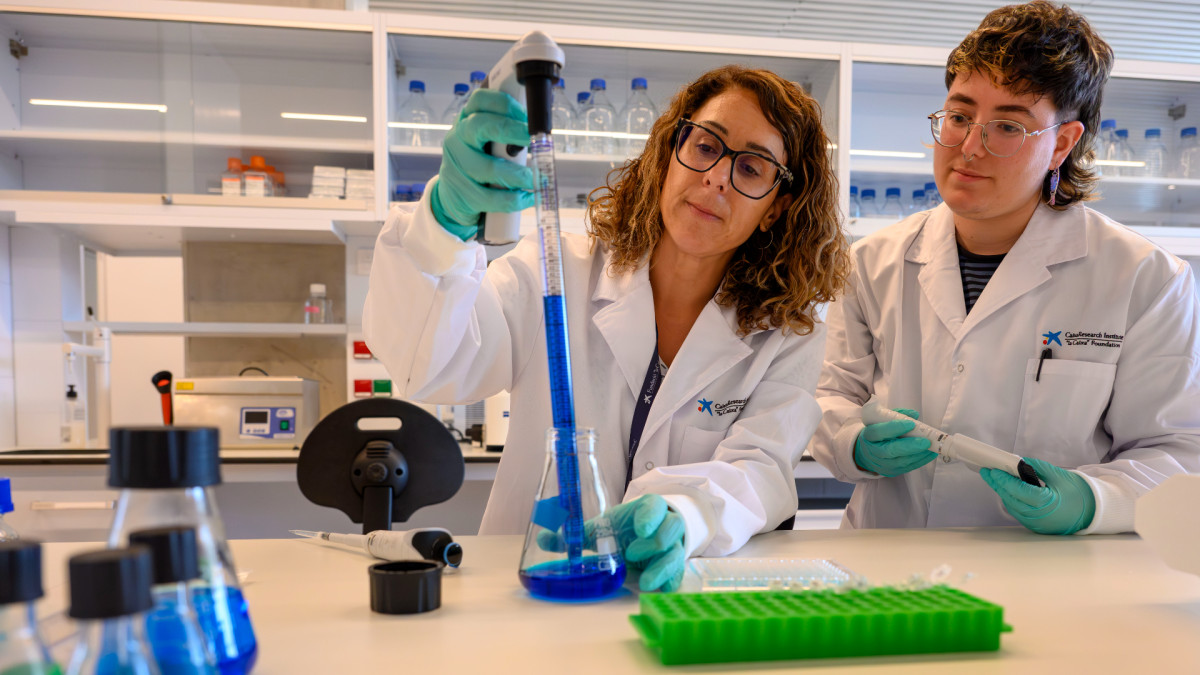
Aware of this, Spain is emerging with a proposal that redefines the role of scientific philanthropy in the 21st century. With the support of the “la Caixa” Foundation, the Spanish innovation system advances as a relevant node for science and health. In this case, social welfare coexists with a strategy capable of mobilizing resources, attracting international talent and generating knowledge, aiming to give Europe a competitive edge on the global stage. The culmination of this strategy is the CaixaResearch Institute, which was inaugurated in Barcelona last Friday in the presence of King Felipe VI. It is the first research center owned by the “la Caixa” Foundation and the first research center in Spain specialized in immunology, with the ambition of strengthening the continent’s health sovereignty.
Immunology as the axis of European resilience
The project begins with a cross-cutting focus on the study of the immune system. Contemporary medicine has understood that many responses to cancer, infectious diseases or neurodegenerative pathologies hinge on understanding how our defenses interact with them. But to understand where we stand, we must look back. Since Edward Jenner observed in 1798 that cowpox protected humans and coined the term “vaccine,” humankind has sought to master this capacity of the organism to recall and combat threats.
“Unraveling these mysteries at the CaixaResearch Institute can help better prepare tomorrow’s society for future health crises”
Today, the challenge is exponentially greater. We face viruses with a high capacity for mutation and the need to understand why the immune system sometimes turns against us in autoimmune diseases or why it falters in the fight against solid tumors. Unraveling these mysteries at the CaixaResearch Institute can help better prepare tomorrow’s society for future health crises. By focusing on immunology, the institute drives the search for a nexus that regulates much of human well-being.
A node for Spanish innovation
In an environment where public investment often endures the fluctuations of political cycles and budgetary swings, the entity provides financial stability and a long-term vision typical of a large corporation, but with a social return purpose.
For 2026, investment in research and health by the Foundation reaches 147 million euros annually, representing 20% of its total budget. This capacity to mobilize resources has allowed doubling the funding over the last decade, consolidating a model that not only funds projects but builds institutions. Just as heavy industry requires solid infrastructures, elite science requires state-of-the-art laboratories and networks of collaboration. The CaixaResearch Institute operates as the central node of an ecosystem that includes IrsiCaixa, ISGlobal, VHIO, and the Barcelonaβeta Brain Research Center. This network functions as a true “value chain” of knowledge, where discoveries made in the laboratory can rapidly translate into clinical trials and precision treatments.
The return on investment in science
Investing in science is not an expense, but a way to secure future GDP. The research center aspires to generate high-impact scientific publications and trusts in functioning as a magnet for international pharmaceutical and biotechnology industries. In a knowledge economy, talent follows talent. The creation of an immunology hub in Barcelona facilitates the formation of spin-off companies and attracts venture capital investment, strengthening Spain’s business fabric.
“Immunology-based medicine enables more preventive and personalized treatments, reducing prolonged hospitalizations”
Moreover, the impact on the public health system can be highly relevant. Immunology-based medicine enables more preventive and personalized treatments, reducing prolonged hospitalizations and ineffective treatments. Establishing these principles is a basic pillar to help sustain the economic viability of the European welfare model in the face of the aging population.
Barcelona and the collaborative ecosystem
The CaixaResearch Institute aims to lead a European network of cooperation and is the first of its kind in the southern part of the continent. Its integration with centers such as the Gulbenkian Institute for Molecular Medicine (GIMM) in Portugal reinforces an Iberian axis of excellence that seeks to position itself on the map of the major international biomedical hubs.
It should also be read in terms of the city. Barcelona has been competing for years to consolidate itself as a biomedical research hub comparable to other European poles like Paris or Copenhagen. The concentration of hospitals, universities, research centers, and biotech companies has created a particularly fertile ecosystem. The CaixaResearch Institute adds another piece to that map and reinforces the idea that southern Europe can also occupy a relevant place in frontier biomedical research.
“Science cannot live locked in ivory towers; it must be understood and supported by citizens”
Socially, its location next to the CosmoCaixa Science Museum and the Francesc Moragas Gardens creates a unique space for technology transfer. Science cannot live in ivory towers; it must be understood and supported by citizens. By fostering scientific vocations from the ground up, the Foundation contributes to ensuring that this scientific infrastructure continues to grow in future generations.
The new paradigm of European sovereignty
Beyond the laboratory, the CaixaResearch Institute marks a shift in the way we understand health sovereignty. In a context where Europe seeks to reduce strategic dependencies, the ability to produce biomedical knowledge domestically, attract researchers, and connect the laboratory to clinical practice becomes yet another dimension of European autonomy.
“For Europe, it adds a new node in the south of the continent at a moment when health is also a matter of resilience, competitiveness and security”
For Barcelona, the new institute reinforces a position that had already been built around hospitals, universities, research centers, and biotech companies. For Spain, it means moving from supporting large scientific projects to having an infrastructure of its own in one of the most transversal fields of biomedicine. And for Europe, it adds a new node in the south of the continent at a moment when health is also a matter of resilience, competitiveness and security.
