
Rarely does the European Commission manage to secure total consensus among the Member States, always so divided in their interests, motivations, and objectives. But last week the EU executive achieved it with the presentation of its package of measures to ease the energy crisis that is impacting Europe. The diagnosis from all European leaders and diplomatic sources who have responded to Brussels’ proposal has been uniform: it is not enough. Total consensus, though not the one desired.
Until now, the energy crisis caused by the war between the United States and Israel against Iran and Tehran’s blockade of the Strait of Hormuz has forced Europeans to pay around 25 billion euros extra, according to Brussels’ calculations. Last Wednesday, before the heads of state and government traveled to Cyprus for an informal summit, the Commission laid out a package focused on voluntary measures and coordination between capitals.
“Several leaders publicly agreed that the proposal fell short. Each with different ideas, Spain and Italy led the charge”
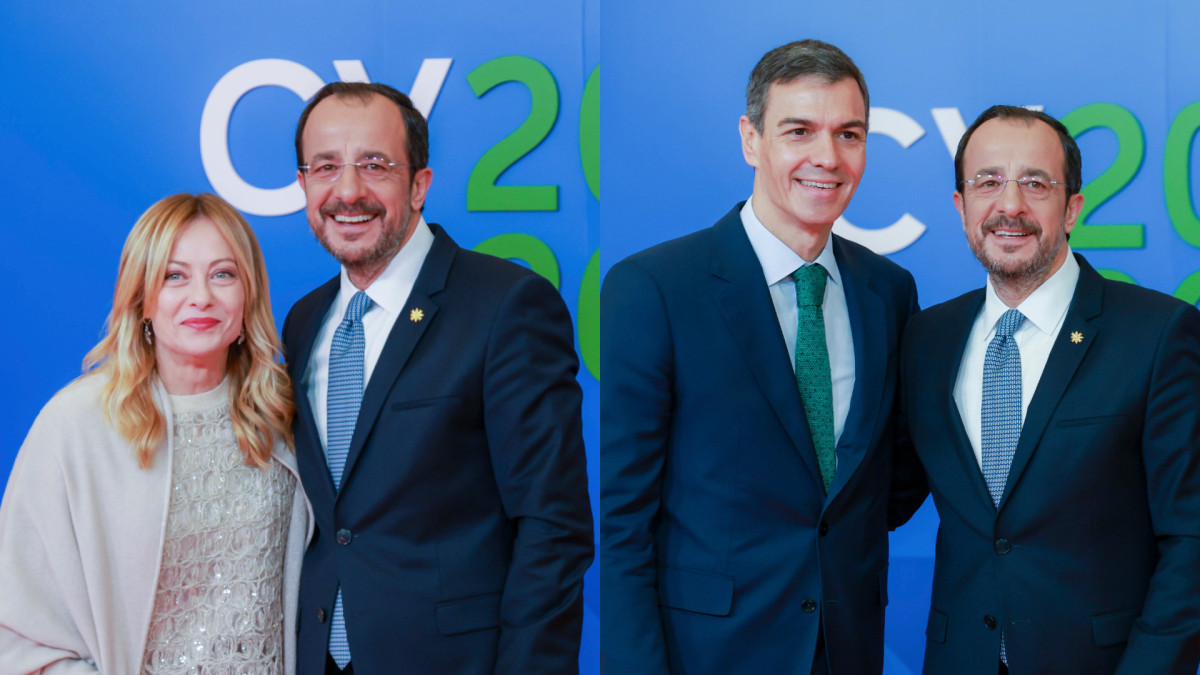
Both on Thursday, at a dinner in Ayia Napa on the Cypriot coast, and on Friday, at a more formal meeting held in Nicosia, several leaders publicly pointed out that the proposal had fallen short. Each with different ideas, Spain and Italy led the charge. Giorgia Meloni, Italian Prime Minister, insisted on the idea of obtaining greater flexibility of the fiscal rules, an idea that the Commission has rejected for the moment. Facing the prospect of relaxing the State aid rules, which set the limits of aid that governments can offer to sectors or companies in crisis due to the crisis, Meloni recalled that not all countries have the same fiscal space. The ultraconservative leader proposed, in fact, a system similar to SAFE, whereby the European Commission would issue joint European debt that is then channeled to member states in the form of favorable loans to finance the increase in defense spending.
Pedro Sánchez, Spanish Prime Minister, also played the pace-setter on Friday. As Meloni did, he thanked the Commission for its proposals only to make clear that he wants much more. The socialist leader requested an extension of six to twelve months for disbursements from the Recovery Fund, the mechanism created to restart the European economy after the coronavirus crisis. In addition, Sánchez called for a loosening of the fiscal rules so that spending dedicated to electrification is not counted toward the deficit, which has a cap of 3% of GDP.
Moreover, Spain, Germany, Italy, Portugal and Austria, through their finance ministers, had asked the European Commission to propose a special tax on the extraordinary profits of energy companies. For now, Brussels has not taken up the baton, but Sánchez renewed the idea in Nicosia. “There are companies that are currently benefiting from the rise in crude prices, and therefore we must take coordinated action to recreate, as we did during Russia’s energy crisis, an extraordinary tax on large energy companies, an extraordinary tax to help finance a large part of the responses that are now guiding us to protect citizens, businesses and industries,” said the head of the government.
European sources agreed that the sense among leaders is that the situation worsens each day and that it will be necessary to find creative and more ambitious solutions than those currently proposed by von der Leyen.
“The Commission, especially this one, so unwilling to take risks, has decided to be very discreet and not propose anything particularly bold”
The work has already begun. The heads of state and government have tasked their finance ministers to work on a series of alternatives beyond those proposed by the European Commission. That not only demonstrates the discontent of many capitals with Brussels’ plan. It is also a reflection of why, precisely, the Commission, especially this one, so reluctant to take risks, has decided to be very discreet and not propose anything particularly bold: it is an enormously sensitive issue, that raises many emotions, a matter of absolute political priority that requires direct involvement from the capitals. In Cyprus, what has become clear is that national governments are the ones taking back the helm.
