
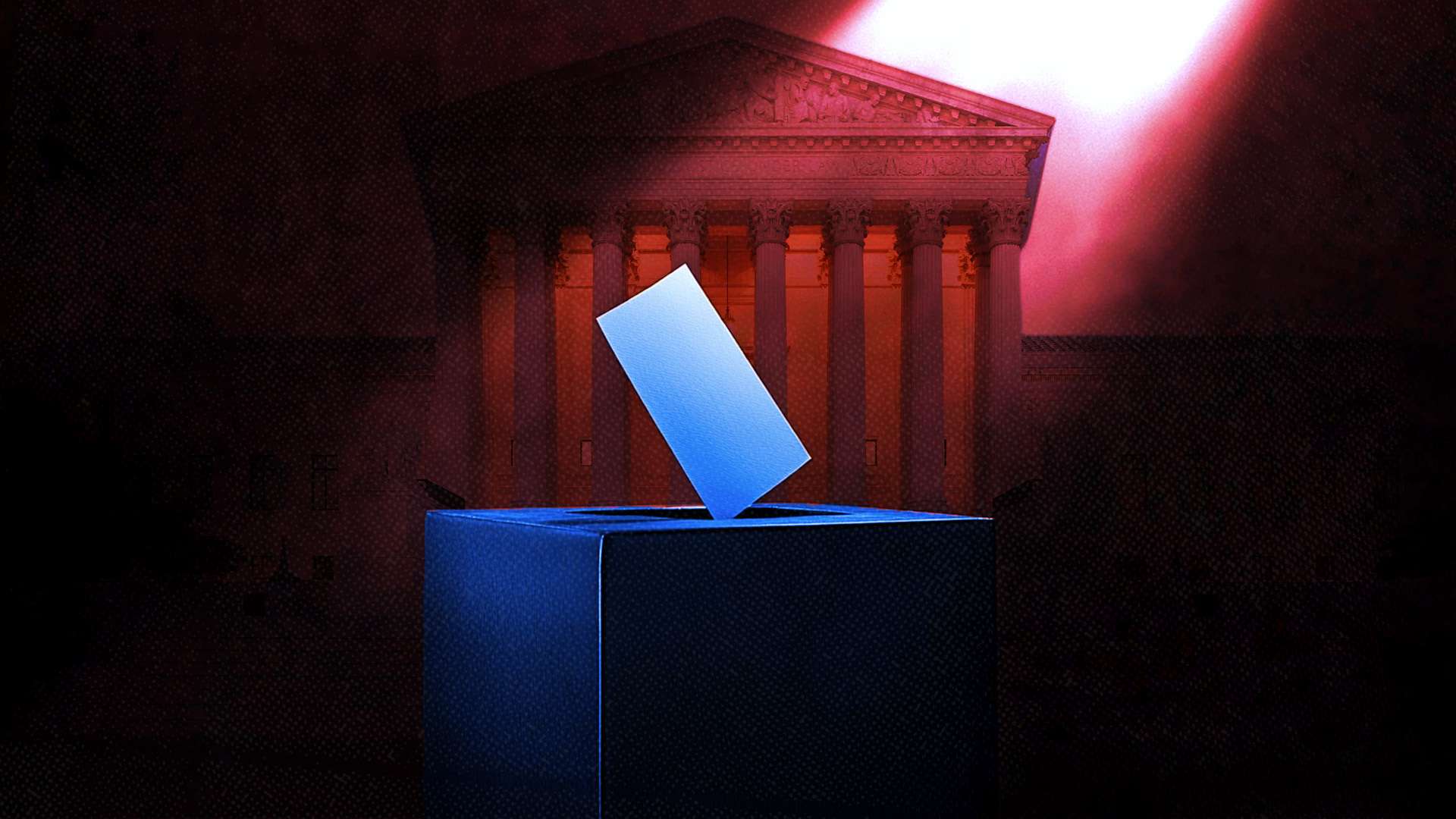
Hello and welcome to the newest issue of the Injustice System newsletter. The U.S. Supreme Court issued two noteworthy rulings yesterday. Let’s examine them in turn.
You’re reading Injustice System about constitutional law and political history. This edition offers further analysis of the legal system and related topics.
1. Redrawing Congressional Boundaries and the Voting Rights Act
In Louisiana v. Callais, the Supreme Court, in a 6–3 decision split along party lines, invalidated a district with a Black majority on the grounds that it constituted an unlawful gerrymander that separated voters by race.
The dispute began in 2022 when a coalition of voters challenged Louisiana’s newly drawn congressional map, arguing it violated the Voting Rights Act’s prohibition on racial discrimination in elections. A federal judge agreed, prompting Louisiana to redraw by creating a second majority-Black district to comply with the ruling. A separate group of voters challenged the revised district, contending it too was an illegal racial gerrymander.
In the majority opinion, the Court explained that the Voting Rights Act should come into play only if the record strongly supports an inference that the state intentionally drew districts to reduce minority voters’ opportunity due to race. It argued that the original 2022 challenge would not have shown an objective likelihood of intentional discrimination when considering the full set of circumstances.
In dissent, Justice Elena Kagan offered a contrasting view of the Voting Rights Act, asserting that Congress, using its authority to enforce the Fifteenth Amendment, can and should bar electoral schemes based on their effects on votes, even if the state cannot offer a race-neutral explanation. In other words, while the majority focuses on proving intentional discrimination, the dissent warned that even race-neutral state actions can sustain purposeful racial discrimination. The upshot is that the Voting Rights Act will play a much narrower role in future redistricting disputes as a result of this ruling.
2. Freedom of Association and Government Subpoenas
A second major Supreme Court decision came in the case First Choice Women’s Resource Centers v. Davenport. In 2023, the New Jersey Attorney General’s office issued a subpoena seeking the names of donors to a religious nonprofit that offers counseling against abortion. First Choice then sought relief in federal court, arguing that the subpoena would deter donors and thereby infringe on its First Amendment right to freely associate.
The federal district court dismissed the claim, ruling that the subpoena alone did not constitute a cognizable injury sufficient to give the organization standing to sue in federal court.
In a unanimous ruling issued yesterday, the Court, writing for the Court, rejected that reasoning. An injury in fact does not require tangible harm; it can arise when a government action burdens a person’s constitutional rights. The Court noted that demands for a charity’s private member or donor information have historically had this chilling effect, deterring people from joining or supporting groups engaged in protected First Amendment advocacy. Because First Choice faced a constitutional burden of this kind, the Court held that its First Amendment case could proceed in federal court.
While some may view the decision as a partisan outcomes-oriented one, given the posture of the parties, the Court’s reasoning has broader reach. The ruling strengthens the protection of the freedom of association for any group whose message may be unpopular with officials—ranging from mainstream civil rights organizations to veteran advocacy groups—by recognizing the donor-identity demand as a burden on protected speech and association.
