
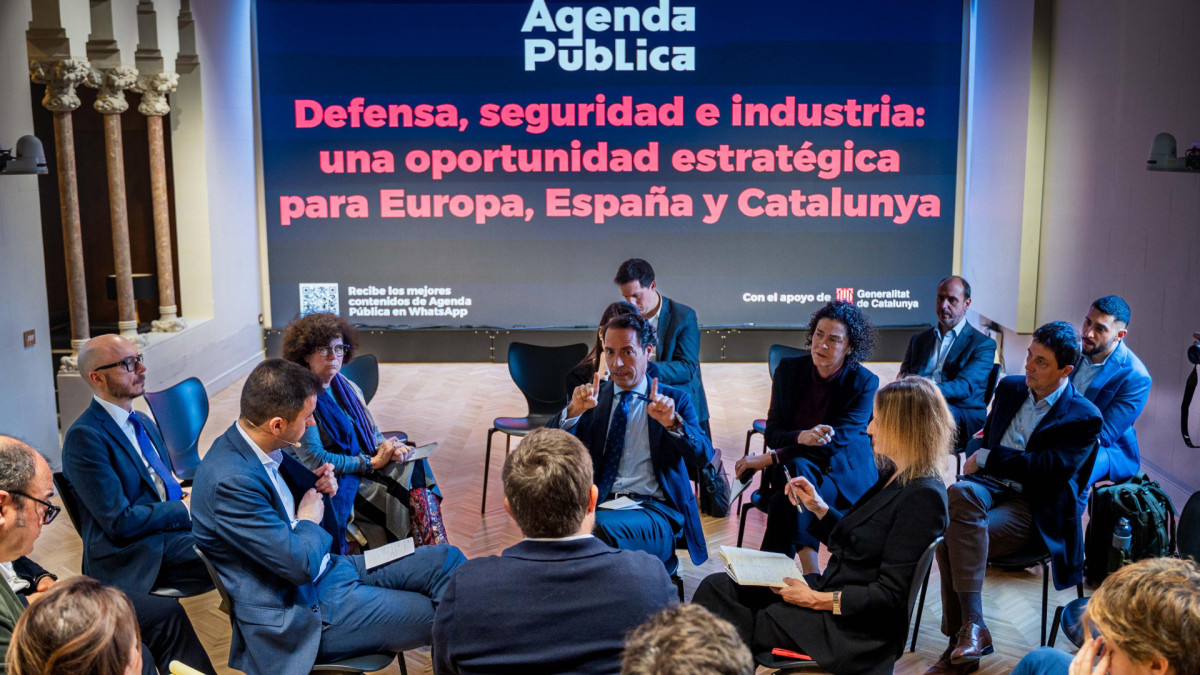
In an international context marked by the intensification of conflicts—from Ukraine to the Middle East—, the escalation in Iran and the uncertainty stemming from the new U.S. Administration, defense has ceased to be a peripheral arena and has moved to the heart of the political, industrial, and strategic agenda of Spain and of the European Union.
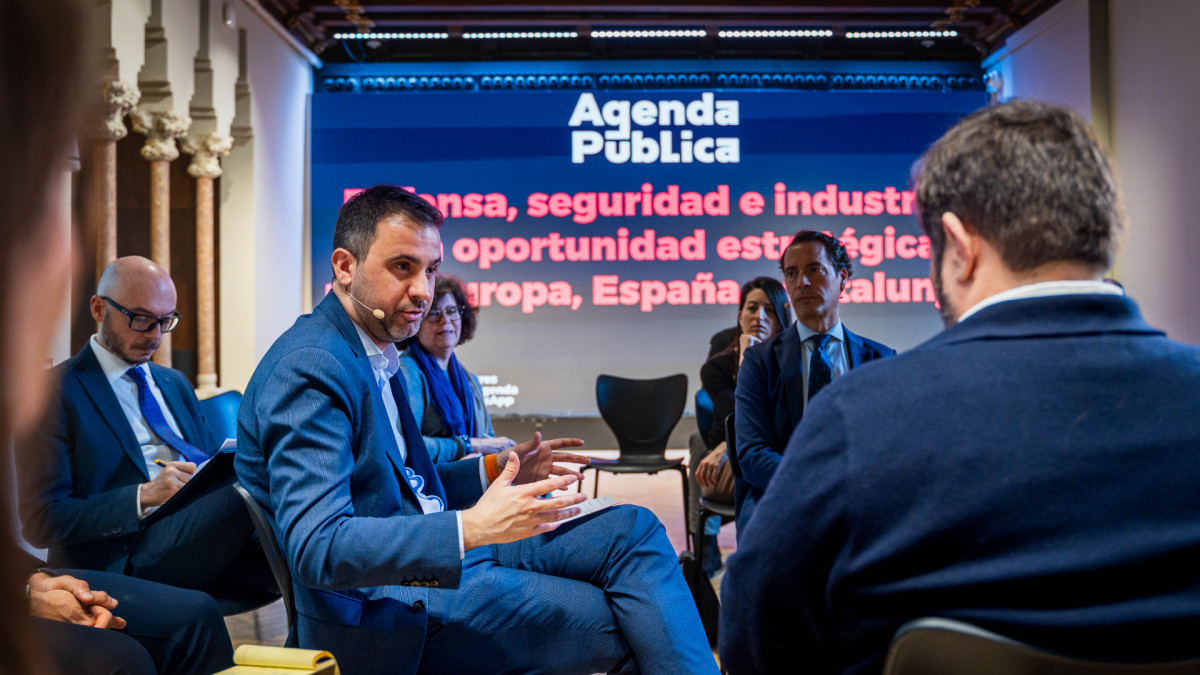
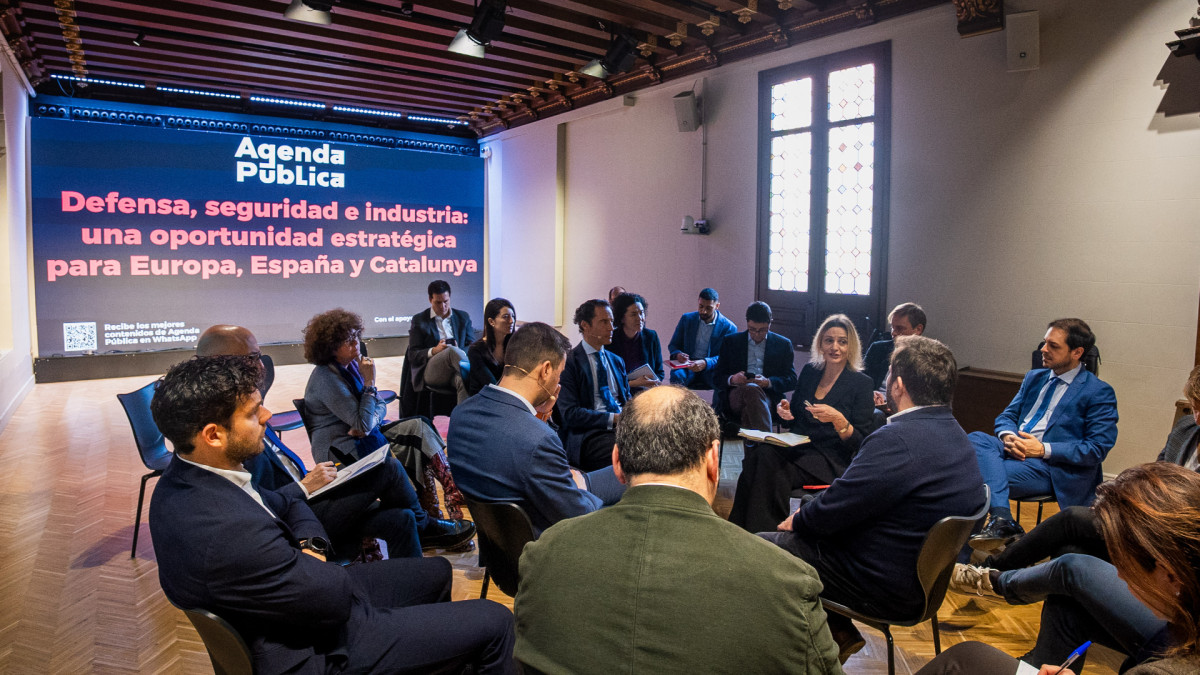
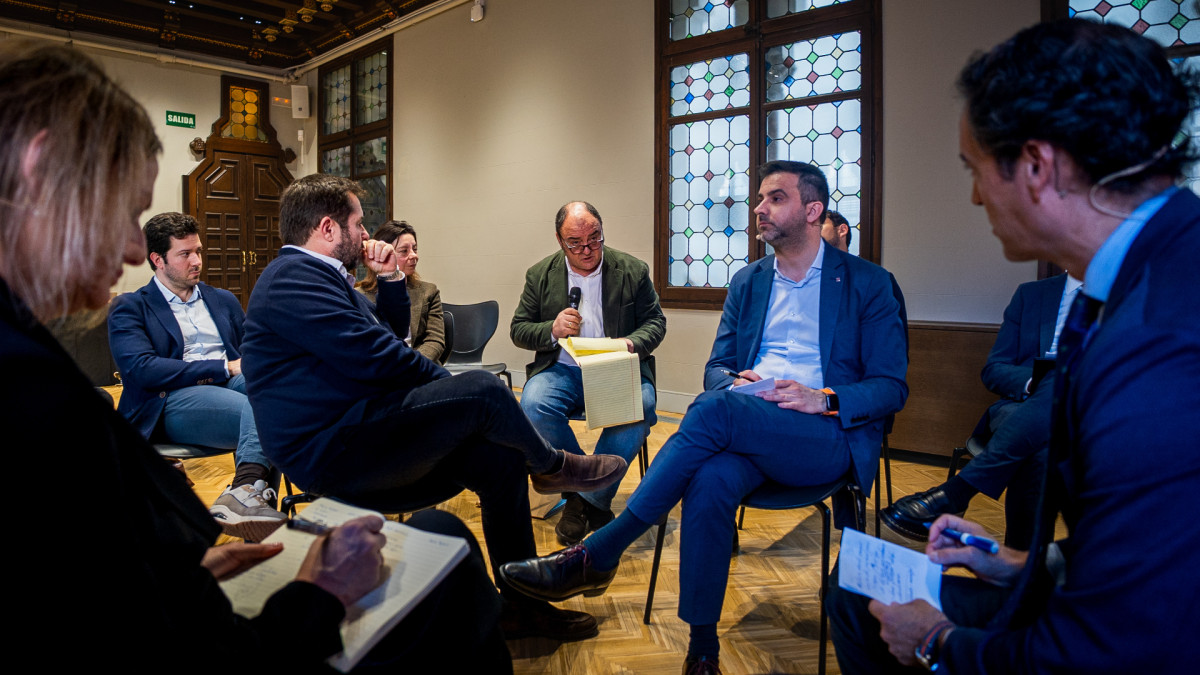
On this premise, a micro-space organized by Agenda Pública was articulated this Friday, March 20, at the Palau Macaya, which brought together the Deputy Secretary General Adjunct of NATO and Special Representative for the Southern Neighborhood, Javier Colomina, and the Secretary General of the Department of Business and Work of the Generalitat de Catalunya, Pol Gibert. Moderated by the director of the Center for the Governance of Change at IE University, Irene Blázquez, the gathering gathered public decision-makers and experts in a compact format oriented toward strategic exchange, with participants from CIDOB, PIMEC, Foment del Treball, Indra and European institutions, alongside academics and specialists in the industrial and technological fields.
The director and editor of Agenda Pública, Marc López Plana, presented to the speakers the debate on the need to strengthen strategic autonomy, reduce critical dependencies —especially in raw materials and key technologies— and develop an own industrial base, a central element that has shifted from a long-term aspiration to an immediate priority. In this scenario, Europe advances driven by a geopolitical environment demanding faster, more coordinated and ambitious responses, with a defense industry increasingly central as a vector of innovation, competitiveness and reindustrialization.
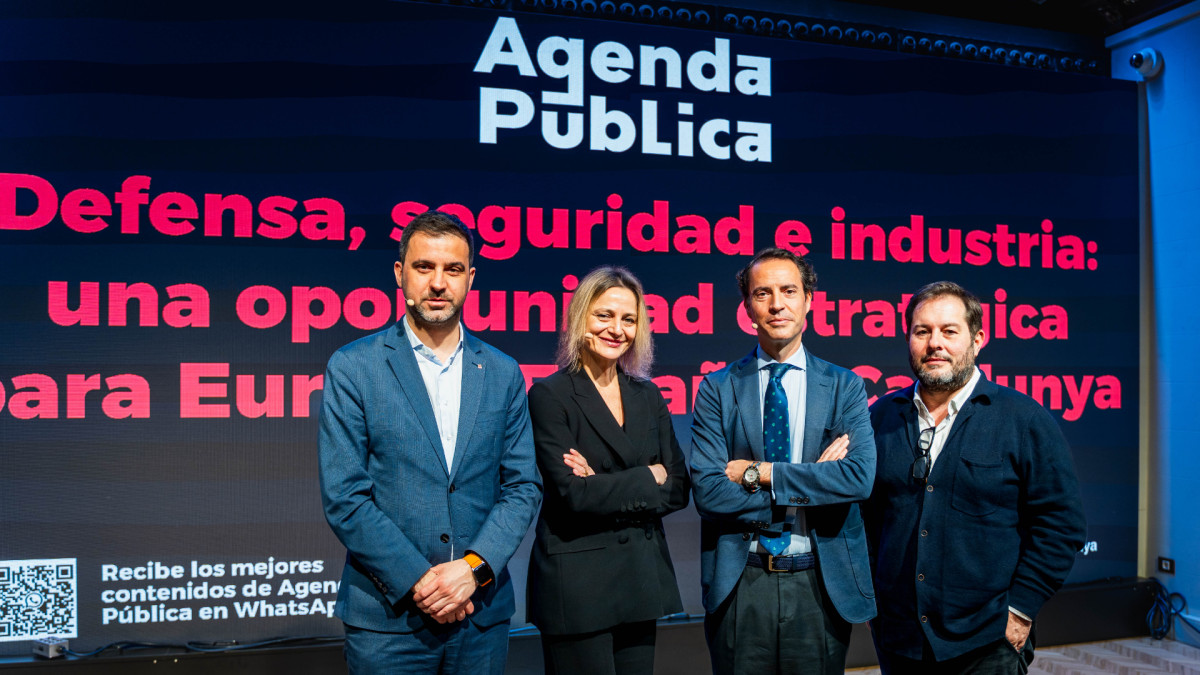
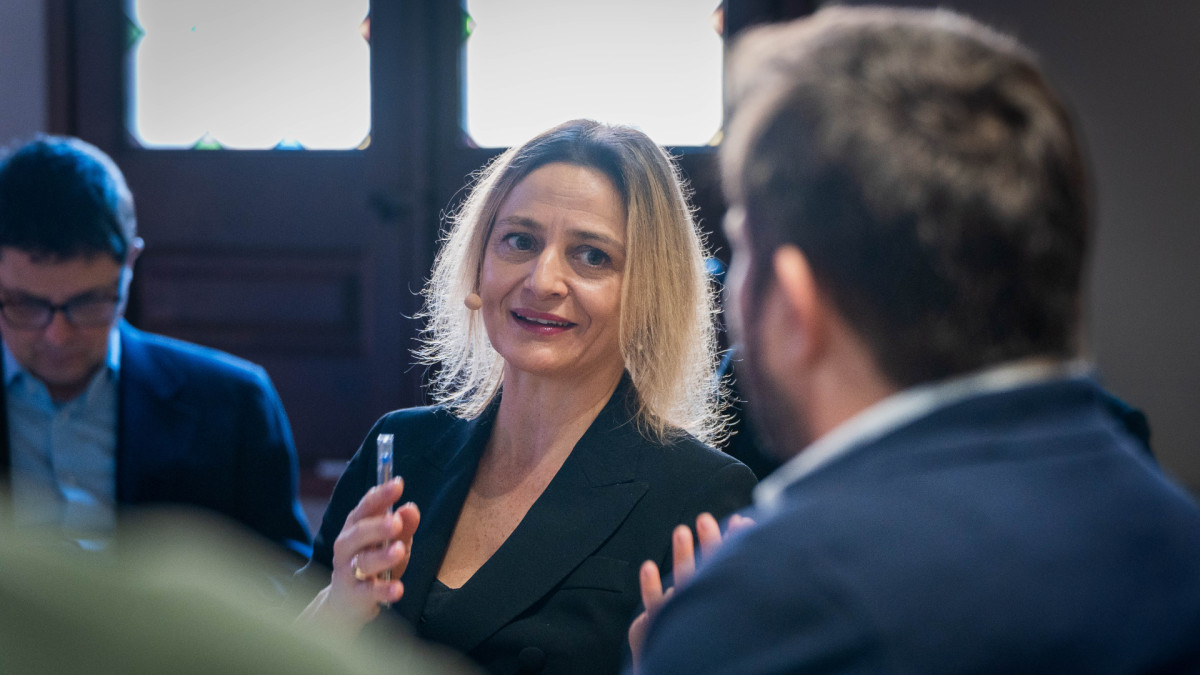
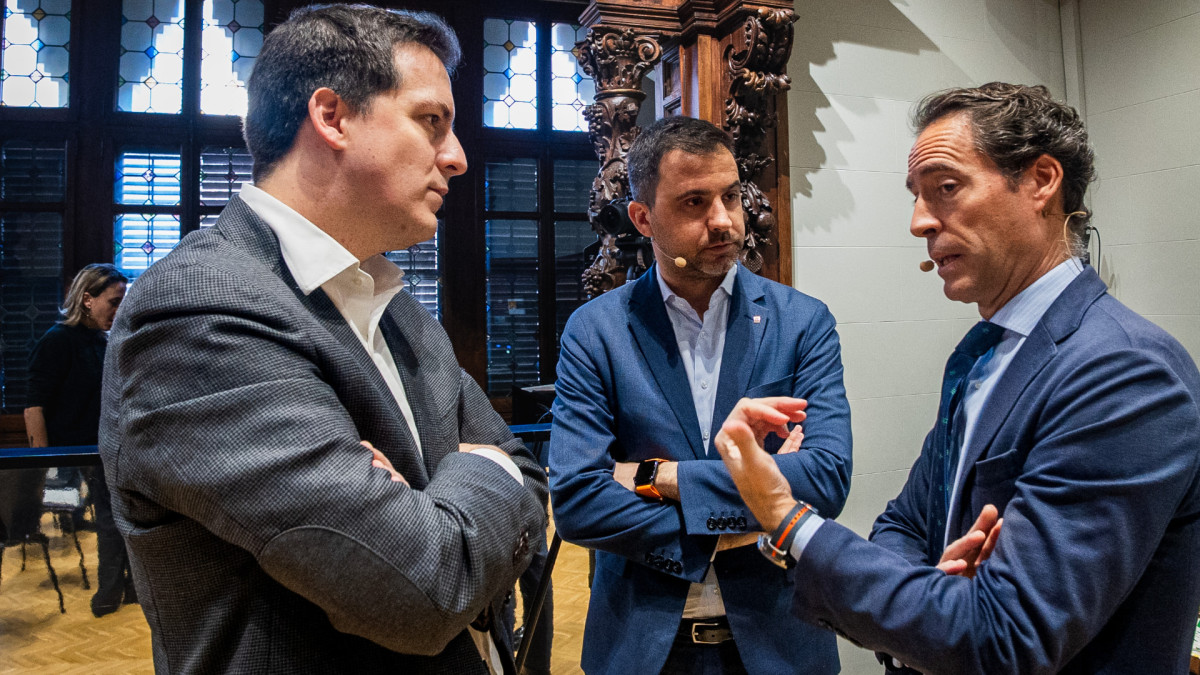
Pol Gibert (left) and Javier Colomina (right) discuss before the micro-space begins. Photo: Agenda Pública / Tsun Ho
Spain as a NATO member and a key actor in the Atlantic relationship
The meeting highlighted the ongoing realignment between NATO and the European Union. While the Alliance and the United States have traditionally formed Europe’s main security umbrella, participants agreed that this framework is currently insufficient on its own. As Colomina has noted, the EU did not wake up, it has been awakened, pushed by crises and by the arrival of the Trump administration to accelerate the development of its own capabilities. The challenge is to move toward greater strategic autonomy without breaking transatlantic ties, rebalancing a historically asymmetric relationship and adapting it to a new scenario in which Europe must take a more active role in its own security.
“Spain starts from a relevant position thanks to an industry already structured around ‘defense corridors’, while Catalonia has an especially competitive ecosystem of technology SMEs”
Hence, the defense industry consolidates itself as a key piece both from a strategic and an economic-industrial standpoint. Its cross-cutting nature —with applications in areas such as cybersecurity, artificial intelligence, or advanced materials— places it at the center of Europe’s reindustrialization processes. Spain starts from a relevant position thanks to an industry already structured around “defense corridors,” while Catalonia boasts an especially competitive ecosystem of technology SMEs and companies linked to dual-use technologies. In this regard, the professor and researcher at the Spanish Institute of Strategic Studies, Rafa Martínez, stressed the importance of not limiting the commitment to SMEs and of also boosting tier 2 companies, which currently work for large multinationals in the sector and concentrate a high growth and profitability potential. This combination opens concrete opportunities for positioning in Europe’s new strategic value chains, in a context of increasing investment and institutional support.
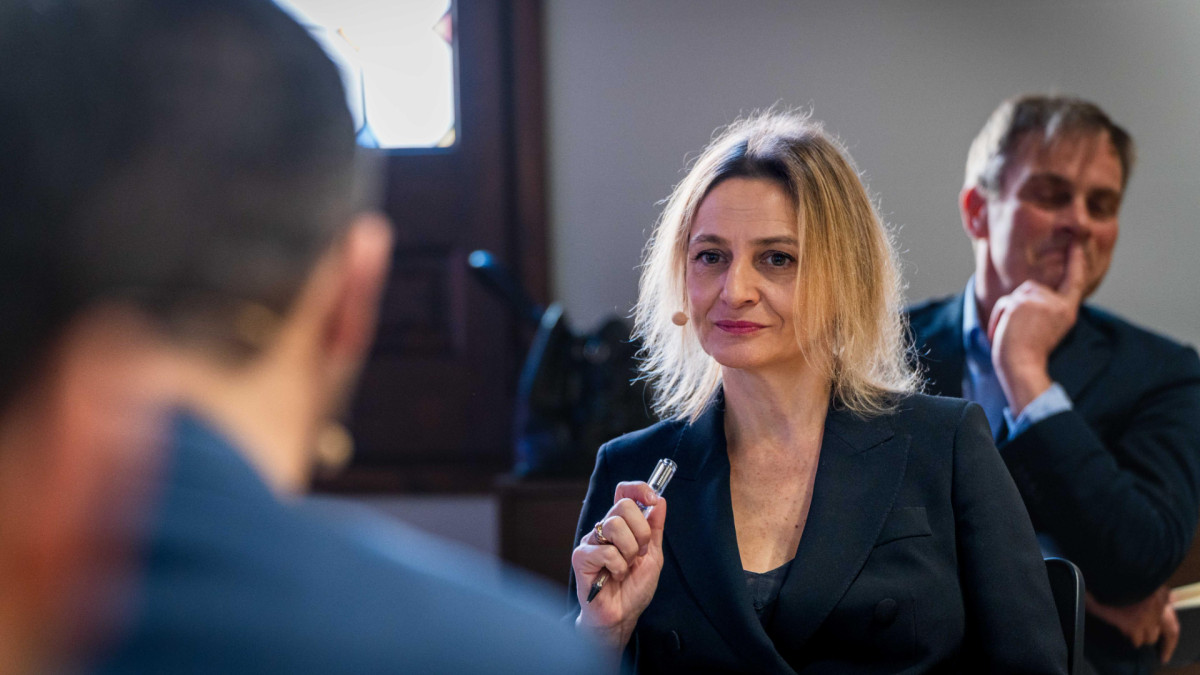
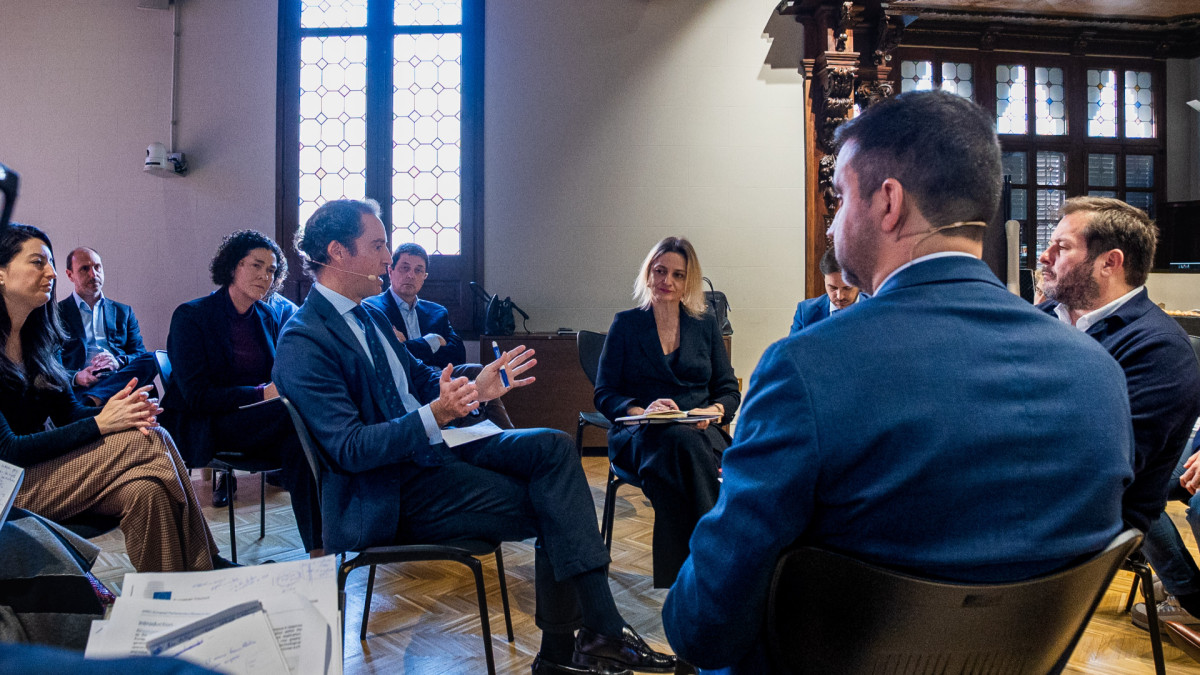
Irene Blázquez serves as the moderator of the meeting. Photo: Agenda Pública / Tsun Ho
The conversation also included a reflection on the speed of change and its social and political implications. As Ana Mar Fernández Pasarín, Professor of Political Science at the University of Barcelona, pointed out, the institutional, business, and social ecosystem faces the challenge of adapting to a rapidly changing paradigm, in which sustainability—until recently the central axis of European discourse—now coexists with strategic autonomy as a priority. Far from being mutually exclusive agendas, participants agreed that both must be integrated.
Pol Gibert stressed the need to strengthen public pedagogy around defense and noted that, at regional and local levels, investment in this sector can have a significant socio-economic impact, both in generating skilled employment and in wealth creation. For her part, Agenda Pública’s councilor Marta Pascal warned that, although crises can open windows of opportunity for advancing European integration —as suggested by Jean Monnet’s famous maxim— they also entail significant risks that must be managed carefully, given their complexity and potential impact on public opinion and the electoral arena. The construction of a Europe of defense will necessarily be a gradual process, requiring political continuity, sustained investment, and a balanced handling of its economic and social implications.
With the support of

Previous Next
