
In 1971, Henry Kissinger undertook a secret trip to Beijing. The American national security adviser cited intestinal problems during his official visit to Islamabad and, with the complicity of Pakistani president Yahya Khan, moved on to the Chinese capital to meet with the authorities of the People’s Republic of China (PRC). That clandestine visit, conducted without public statements and without press conferences, paved the way for President Richard Nixon’s first visit to Communist China. A geopolitical move that inaugurated the normalization of United States relations with the budding Asian giant and helped reshape the balance of the Cold War.
That discretion was not an anomaly in the configuration of international relations, but an essential instrument to make possible agreement among different actors. Kissinger summed it up very well and with the precision that characterized him: diplomacy is the art of limiting power. If everything is immediate, if everything is a publicity stunt or a display of force, there is no room for nuance, calm, and the construction of solid and durable agreements.
“The rule-based order seems too slow, too rigid and too analog for a world that demands to react always and at full speed”
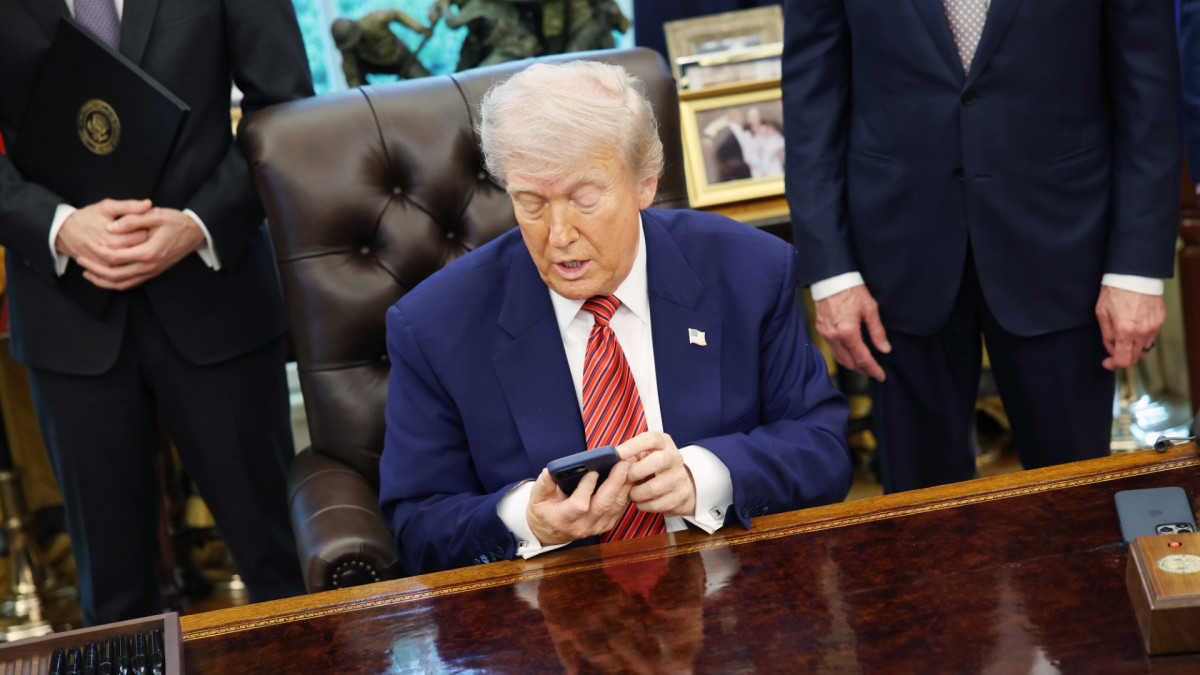
On April 7, fifty-five years later, in the context of the Iran conflict, the president of the world’s leading power announced on his personal social network that “an entire civilization will die tonight, never to return.” Hours later, he declared a truce as a “total and complete victory.” That ultimatum, issued from Truth Social with the same grammar as an anonymous citizen expressing everyday indignation, goes beyond a mere stylistic shift. It is the most visible symptom of a structural transformation that has been brewing for decades, for classical diplomacy does not fare well with immediacy and the overexposure of social networks. The result is the resentment of the rules-based international order. Too slow, too rigid, too analog for a world that demands to respond immediately and at all times.
Brexit, Cambridge Analytica and the geopolitics of social networks
Brexit was the first major laboratory of this new order. The referendum on June 23, 2016 was decided by less than 2% of the votes. In that narrow margin lies a huge debate about whether democracy can survive the big data.
According to the investigation concluded by the British Parliament, Cambridge Analytica accessed the data of 87 million Facebook profiles through an app designed to build psychological profiles of voters. Its declared objective was to identify pro-Remain voters, supporters of the traditional parties, and citizens who were not planning to vote, in order to persuade them to back the leave or simply to demobilize them. Christopher Wylie, former director of research at the firm and the main whistleblower of the scandal, testified before Parliament that, without that microtargeting operation, the outcome would have been different. That data-extraction and microsegmentation infrastructure revealed how private and public actors could potentially influence a referendum that reshaped the geopolitical map of Europe.
Since then, social networks have become another tool in every electoral campaign, to the point of normalizing them as an additional weapon in Putin’s everyday arsenal for destabilizing the European Union or as a direct route to radicalization for Islamist groups, multiplying their capacity to mobilize terrorist cells around the world.
“The mere existence of regulation to protect European democracy in the digital space is good news”
Their power is so evident that the richest man in the world, Elon Musk, acquired the current X —the platform with more than 600 million users— with the declared aim of shaping the course of politics in his country and around the world. The consequences did not take long to reach European politics. On December 20, 2024, the owner of the social network X and then a senior advisor to the Republican candidate for the White House published: “Only the AfD can save Germany,” just weeks before the German federal elections. The German government labeled the statements as electoral interference. About 150 European Commission officials monitored in real time his subsequent interview with Alice Weidel, the AfD candidate, to determine whether he violated the Digital Services Act (DSA). The mere existence of regulation to protect European democracy in the digital space is good news. However, the EU’s institutional response was, in short, simply to observe, which underscored that there is still much to adapt our institutions to the new digital geopolitical board.
Iran, Trump and the European response to the new digital disorder
The Iran case pushes this logic to its ultimate consequences. The aforementioned Trump message (“an entire civilization will die tonight, never to reappear. I don’t want this to happen, but it probably will”) would have caused real intestinal trouble for an architect of the old world order like Kissinger had he read it. The threat was accompanied by another, issued two days earlier: “Open the damn Hormuz, you crazy fools, or you will live in hell.” In the same message, and with the same blunt tone: “Glory to Allah.”
European and Asian foreign ministries were forced to analyze these messages with the same rigor as an official diplomatic cable. A former legal adviser to the State Department warned that such statements could be interpreted as a genocide threat under international law. UN Secretary-General Antonio Guterres noted that there is no military objective that justifies the total destruction of a society. The world fell silent in the face of the impotence of the old international institutions, unable to articulate an effective response to this devastating way of exercising diplomatic pressure.
“Whoever seeks depth, second derivatives, and Florentine finesse simply stays out of the analysis. The new world order does not wait”
Less than ten hours after the ultimatum, Trump announced via another post a cease-fire, presented as “total and complete victory.” What for hours had been treated as a threat of mass destruction became merely another forgotten statement amid the cacophony of social networks. No Security Council deliberation, no consultation with European allies, no procedure before any international body.
The measured rigor and the cautious verbal diplomacy that used to guide conflict resolution have been displaced in the Iran affair. Previously, statements had to be drafted, reviewed, and validated. Diplomatic cables passed through various filters. Protocol was the true expertise of the great diplomats. That slowness served a function because it cooled crises, opened new avenues, and gave parties time to refine agreements. Today, someone who disconnects for a couple of hours misses out; someone seeking depth, double derivatives, and Florentine refinement simply stays outside the analysis. The new world order does not wait. Social networks have eliminated that deliberate friction. And by doing so, they have turned impulsivity into a routine instrument of foreign policy.
The paradox speaks to all supporters of liberalism. Liberal democracies built the international order on the assumption that more communication yields more understanding. The Internet was the technological embodiment of that Enlightenment dream. Yet the current algorithmic design reverses that logic: more communication yields more fragmentation, more polarization, and greater susceptibility to manipulation. Hyperbole is not a systemic glitch. It is, in many cases, a feature encouraged by the platforms’ business model, which maximizes attention, not truth or respect for facts.
“The new global disorder is precisely this: circulating at speeds that outpace what the old rails of international institutions can bear”
We see it in the evidence. According to the World Economic Forum’s Global Risks Report 2025, 64% of experts expect a fragmented world order defined by great-power competition, and more than half foresee instability in the next two years. NATO already recognizes the cognitive dimension as a new domain of warfare. What was once editorials in newspapers is today recommendation algorithms capable of mobilizing voters, destabilizing governments, and legitimizing extremisms. The paradigm shift is double: everything happens faster, and we all have greater capacity to influence what happens. The benefits are clear, but the risks are akin to those of a high-speed rail accident because with higher speed and more passengers, the consequences of a derailment are magnified. The new global disorder is precisely that: circulating faster than the rails of the old international institutions.
The lesson to draw is that the European Union cannot be a bystander to this transformation. We have ratified the DSA, the world’s most advanced regulatory instrument governing the responsibility of major platforms toward the real world around them and of which they are a part. Yet what we truly need is qualitatively different, or we will end up succumbing to the impotence of preaching into the desert.
First, we need an extraterritorial liability regime for external agents who intervene in electoral processes of the member states, increasing our ability to detect and neutralize content directed by foreign powers against European strategic interests. Second, we must reduce our dependence on non-European information infrastructures. The alternative is to live under the umbrella of others and risk being exposed if they decide to withdraw it one day. And finally, we must integrate the cognitive dimension into our strategy of collective security, accepting that the battle against the giants of the twenty-first century cannot be fought with twentieth-century capabilities.
“Europeans have spent sixty years complying and patiently betting on multilateralism and the establishment of a rules-based international order”
Kissinger also warned about the importance of building a reputation for reliable responsibility to operate firmly and decisively in international affairs. Without it, deploying any form of tactical intelligence to reach agreements becomes very difficult. Europe possesses that reputation. We Europeans have spent sixty years complying and patiently betting on multilateralism and the establishment of a rules-based international order and institutions. We cannot allow that reputation and trust in the order in the face of anarchy to be threatened by incendiary rhetoric from actors who have learned that, in the digital environment, scandal carries no cost, only audience.
This conviction must guide those who lose decorum on networks, but also those who measure the success of their international policy by the number of followers. Europe can and must demonstrate that it is still possible to build an international board where rules matter, where facts carry weight, and where diplomacy remains, as Kissinger wished, the art of limiting power.
