
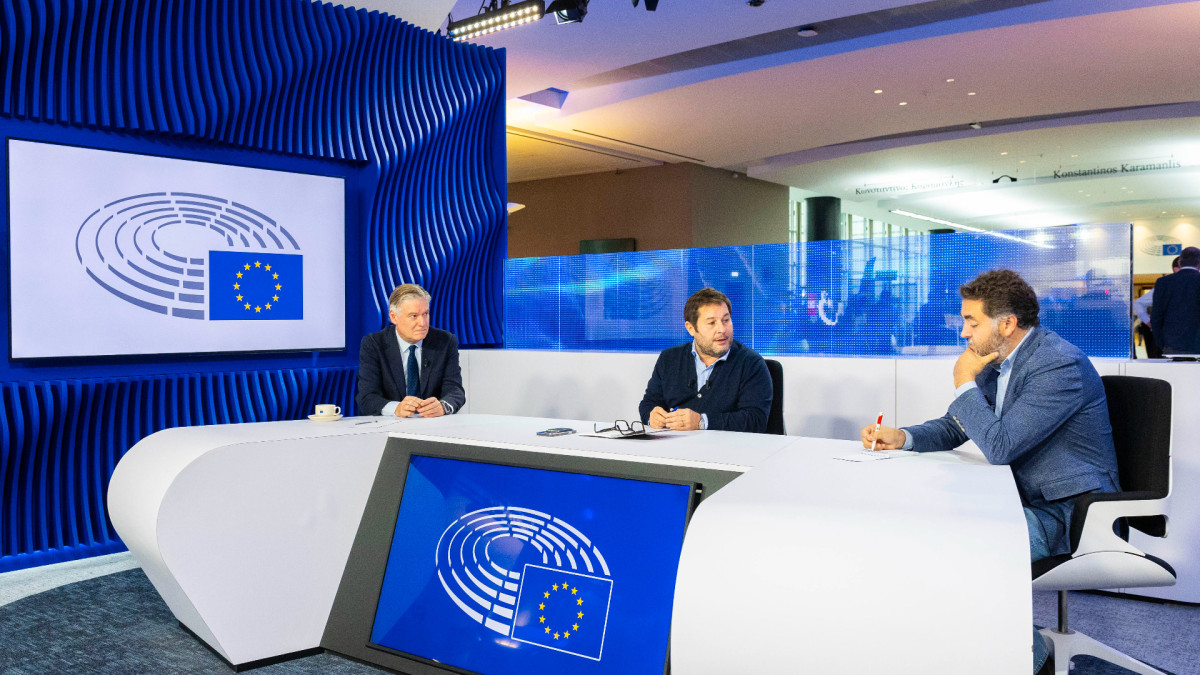
The European Parliament has once again opened its doors to Agenda Pública. A conversation by Marc López Plana, director and editor of Agenda Pública, with Antonio López-Istúriz, of the European People’s Party (EPP) and Jonás Fernández, of the Progressive Alliance of Socialists and Democrats (S&D). López-Istúriz warns: “Von der Leyen and the Commission are facing a Parliament where the extremes are growing.” Meanwhile Jonás Fernández expresses his disappointment with the Commission regarding the European budgets. “It generates little ambition and reinforces my sense of a disappointing year,” he admitted.
I’d like you to give a first political assessment of this year and, more specifically, since the start of von der Leyen’s second Commission.
Jonás Fernández (J. F.): This legislature began with a very ambitious promise linked to the Draghi and Letta reports, which in some way structured a clear government agenda: the need to relaunch European productivity by placing the Single Market at the center of that pledge. In those reports, almost all pro-European political groups found something with which to identify themselves, albeit with different emphases on the need to push forward that agenda to revive growth, improve integration, and strengthen social policies.
However, the areas that those two reports pointed to where the European Union should accelerate integration — economic, defense, industrial policy and others — we have seen very little progress and, in some cases, clear setbacks, tied to a deregulation-driven agenda that is unlikely to have a meaningful impact on improving the competitiveness of the European economy.
Antonio López-Istúriz (A. L. I.): Von der Leyen and the Commission are confronting a Parliament where the extremes are growing, and that influences the debate.
“Now we want to catch up, fund our defense and build our defense industry in a few years, but time is needed”
Jonás mentioned that advances in defense have been disappointing. It should be recalled that in the previous legislature there wasn’t even a proper defense committee. Talking about defense was, let’s say, not very fashion. Now we want to catch up, fund our defense, and build our defense industry in a few years. Time is needed. The strategic plans outlined by the Commission are beginning to be implemented. They are five years to shift a model previously based on climate policies toward something called competitiveness.
Without renouncing the prior objectives, we must adapt our industry and create jobs.
From Spain’s perspective, the PSOE and the PP are central to their respective European parliamentary groups. What can these two major Spanish parties do so that, despite the growth of the extremes, there continues to be a majority as there has been up to now at the European level?
J. F.: I would like to comment on competitiveness. This mandate has placed it as a key objective. Probably in Spain the need to accelerate European growth isn’t fully perceived, because economic data look good. But if we look at Germany, France, or Italy, Europe needs to grow more.
To do that, we must identify the bottlenecks that prevent growth. It is widely believed that EU regulation is an obstacle. We have received and will continue to receive omnibus proposals from the Commission to rationalize, simplify, and deregulate EU rules.
But, in autumn 2024, the IMF estimated that within the EU itself there were implicit tariffs of about 40% on goods and 110% on services simply for not having completed our Single Market. They are so high that I am surprised they don’t generate broad discontent that would prompt the Commission to eliminate them. Instead, political efforts are focused on simplifying the rules, which is reasonable, but we are not tackling the real problem: the administrative cost that these implicit tariffs impose on European growth. That is why this year has been disappointing.
A. L. I.: A correction: the Spanish economy is not as robust as it may seem.
J. F.: Regarding the extremes in the European Parliament, they pose an obstacle to market integration and deeper integration. The conservative right and the far right together account for between 26% and 28% of the Parliament. On our left, the radical groups carry much less weight. The problem is that about 30% of institutional power lies in the hands of non-Europeanist formations, which makes it difficult to build majorities that resolve fundamental problems.
A. L. I.: The rise of the extremes is not only on the right but also on the left. Both oppose everything systematically. The strategy isn’t to isolate them with cordons sanitaires, but to compel them to work together and find consensus. When they are forced, they eventually fade away. This is an immense effort that traditional parties must take on.
The Covid-19 crisis and other circumstances have fostered the appearance of parties that promise magical solutions. We must respect the voter, analyze them, and offer appealing policies without falling into the extremes.
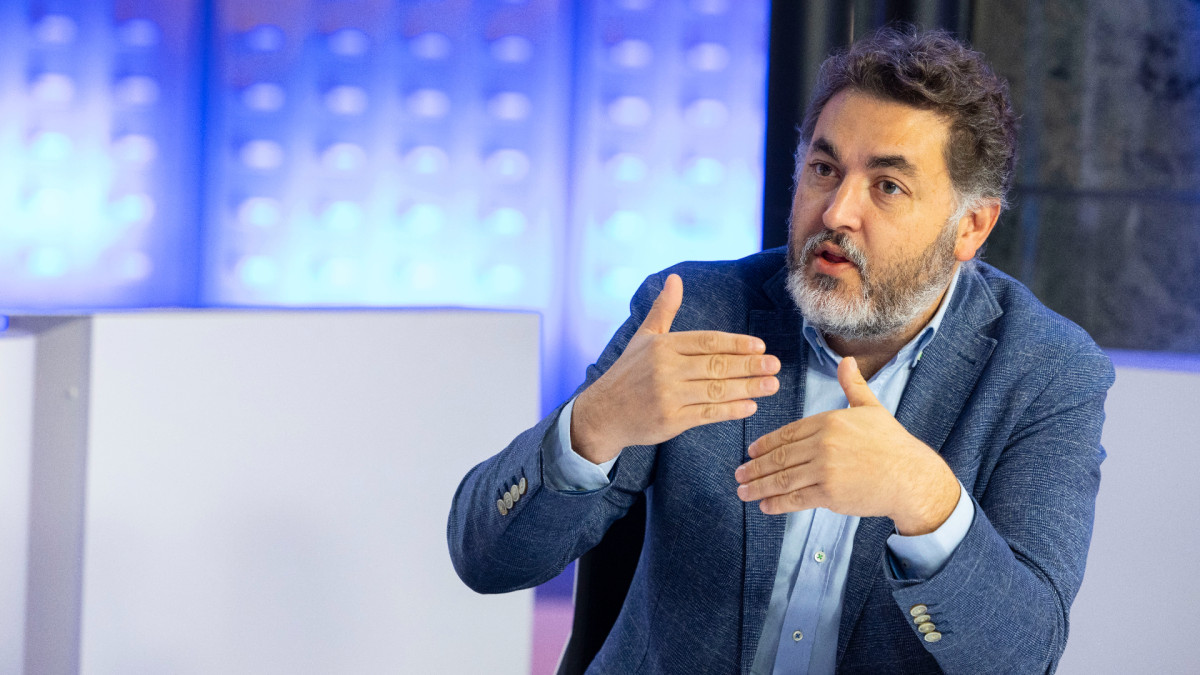
Jonás Fernández (S&D) sees extremes in the European Parliament as a problem for majorities. Photo: Agenda Pública / Bernal Revert
Let’s talk about Trump. How has his arrival been perceived in the areas of economy and defense?
J. F.: The transformation of the subcommittee into a defense committee is not primarily due to Trump, but to Putin’s invasion of Ukraine. The threat to European security prompted reflection on defense and defense industry policy. But it’s true that Trump was a step further, as his commitment to NATO is wavering and his comments about Greenland created uncertainty.
We are seeing defense budgets rise, which, while necessary, will not improve security unless done jointly. The Europeanization of defense advances in the debate, but not so much in joint action.
A. L. I.: In international politics, the best approach is to put yourself in the other’s shoes. If we think only as Europeans, we misjudge the United States. Trump is Anglo-Saxon in his negotiating style: he comes to the table, asks for a lot, and takes away half of what was projected. You may like it or not, but it is effective. Europe, with Ursula von der Leyen, has managed tariffs in the medium-to-long term well and has gained stability.
Trump has also achieved historic agreements, such as Arab countries recognizing Israel. We must study the man well: he is more effective than he appears.
The Parliament complains that the Commission does not take it sufficiently into account and leans toward a more national than European model. At what stage are the negotiations, and how can they evolve?
J. F.: I see a diseuropeanization of the Community budget. The Commission has yielded quite a bit to the Member States and has handed out national checks rather than maintaining clear Community criteria. This generates little ambition and reinforces my sense of a disappointing year.
A. L. I.: The seven-year financial framework provides stability, even though the Commission has ceded quite a bit to the Member States. The question of who has more power, Brussels or the member countries, will continue to be debated.
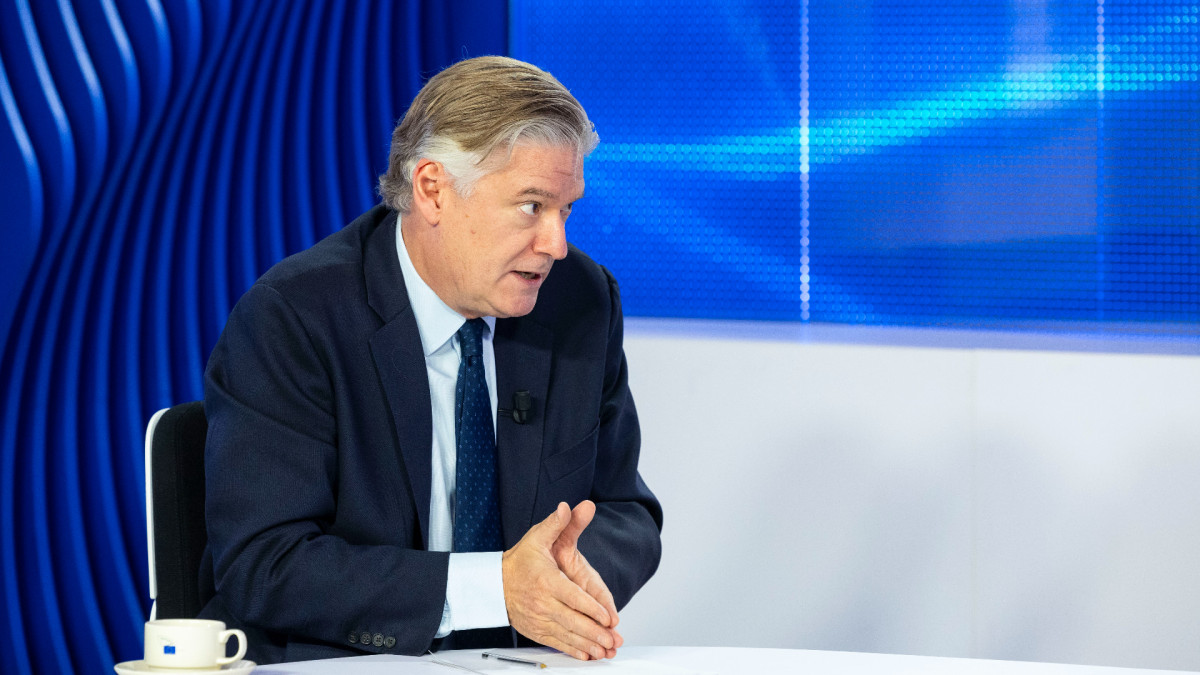
Antonio López-Istúriz chooses to put himself in the other’s shoes when discussing international policy. Photo: Agenda Pública / Bernal Revert
In this review of the past year we must not forget Ukraine. How do you see the situation?
J. F.: Trump promised to fix Ukraine in 72 hours and did not. Europe must increase its support for Ukraine, because not only is its territorial integrity at stake, but also the freedom of the European Union. Putin’s threat requires maintaining European support, though I miss Borrell’s presence in foreign action.
I started the conversation by asking them for an assessment of the horizon of the von der Leyen 2.0 Commission. To conclude it, I pose a similar question: Do you think the power and influence of the German leader has diminished?
A. L. I.: The system discarded a procedure called Spitzenkandidaten, a mechanism we introduced by political parties, moderates, socialists and conservatives, which was an attempt to bring the presidency of the European Commission closer to citizens, with the aim that one day the presidency would be decided by a direct vote. It was that, at least, that the party that wins the elections would decide who would occupy the Commission presidency. Among diplomats, civil servants and others who do not run in elections, they decided not to pursue that, because it gave too much independence and too much protagonism to the Commission president. This is partly what happened with Jean-Claude Juncker, and since then they became afraid and changed the system. So, it’s not exclusively a question about Ursula von der Leyen.
Don’t you see her, Antonio, as less visible politically?
A. L. I.: No, I see her as very visible. People on the street ask about her; everyone knows who she is, for better or for worse. The problem is effectiveness—the powers she has been given, which are not the same as those Juncker had in his day. That was a battle I have publicly criticized, that the system is so poorly valued by the European population, by the men in black, bureaucrats hiding here, who decide things in the corridors of the European Council at six in the morning, in the face of tired politicians, and they decided that change.
J. F.: Antonio has a lot of the right, but another problem contributing to a certain distortion of the president’s image are electoral outcomes—both at the European level and at the national level—where in recent years we are seeing how those forces that do not believe in the process of building Europe obtain 20, 25, 30% of the votes.
“Radical parties are a wedge sufficiently relevant to hinder a more ambitious Commission agenda”

Therefore, although they are obviously not in the majority and far from it, they are a wedge sufficiently relevant to hinder a more ambitious Commission agenda and, instead, keep us occupied with things, as I said at the outset, that I believe do not solve the problems in the economic arena. Far from it, a budget proposal with little ambition and a deseuropeanization of policies is being pushed. I hope that next year I can have a different opinion.
A. L. I.: We are at the start of the legislature. Undoubtedly, now the presentation of projects begins, and we will see which ones are fulfilled. This is Europe, ladies and gentlemen. There are twenty-seven members and we must respect both Malta’s and Germany’s views. It is a slow, tedious process —which vexes even the protagonists— but undoubtedly we seek security for all. 500 million European citizens who are not all the same. We are very different in our cultures, our languages, or our policies. And we must take them all into account. If we want the Finns to listen to the Spaniards, it is better if we listen to them as well. Let us discard these purveyors of miracle elixirs and prophets of the Apocalypse, who conveniently appear during times of turmoil.
We will weather the situation; we have to weather it, because on other occasions it ended in a world war. Let’s hope this time reason, logic, and historical memory prevail to end this with negotiations, as well as a rational wish of European society to have effective governments. We must change the system, undoubtedly. After the economic crisis, we all agree that there is also a need to review the entire political system, European, Spanish, and of every country. But not at the expense of creating regimes ruled by a single person. I say this for those who side with the Chinese.
Very well, thank you very much to both of you.
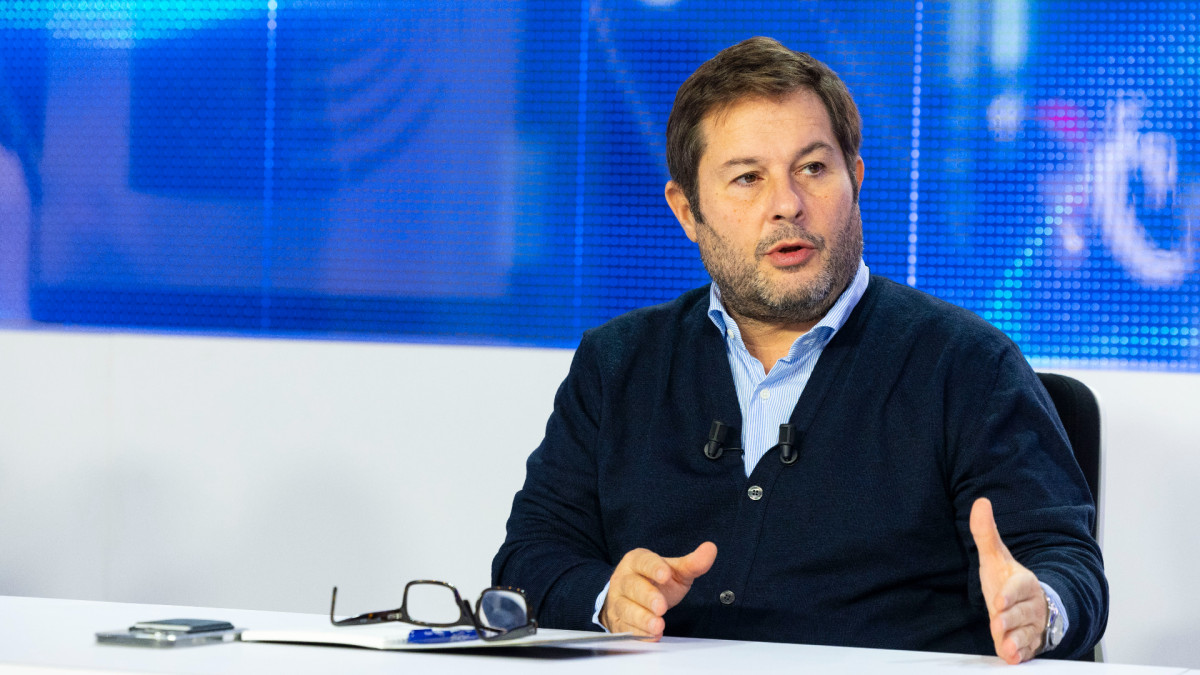
Marc López Plana gave a sidereal review of the main points on the European agenda. Photo: Agenda Pública / Bernal Revert
