Of the seven forums we have held to date, three have been especially difficult: not the first, but the pandemic one, when we were among the first events to take place in person. Normally, those of us who organize this event breathe a sigh of relief on the last day, but in that edition we did not until the incubation period of Covid-19 had passed.
The second forum was very difficult, because it was the first after Josep Piqué’s death: the intellectual engine and inspirer of the forum. The third most challenging has been this year’s edition.
“There is no principle or value of those we believed to be firm foundations of our society that is not today in question”
For those of us who defend the values that inspire the Forum La Toja we live in a perfect storm: there is no principle or value of those we believed to be firm foundations of our society that is not today in question. Populism not only grows, but it infects the political debate and some traditional parties; the worst challenge to Europe’s future since Brexit is materializing with the de facto rupture of the Atlantic bond, currently sustained, for the moment, only by NATO; the principles of global trade are being questioned with the revival of tariffs we thought belonged to the past; polarization dominates political discourse; the principles of International Humanitarian Law are breaking apart; and law and rules have been replaced in international relations by force as in times past, which we believed we would never see again.
As Amancio López Seijas noted in his opening speech of this edition, today we must reaffirm with more strength than ever the principles that inspire the Forum La Toja.
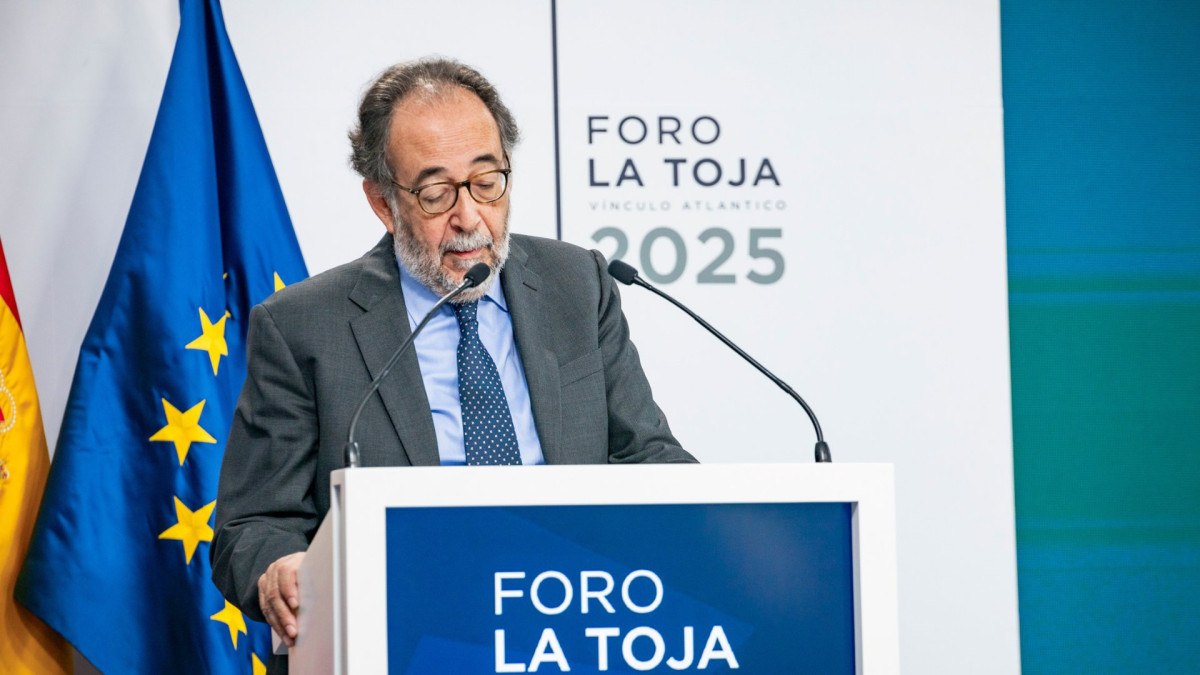
Carlos López Blanco during his intervention as president of the organizing committee. Photo: Agenda Pública / Yanka Soto
Nuestro ideario se basa en los valores que definen las sociedades abiertas: defensa de las libertades y la democracia representativa, unas instituciones sólidas y respetadas, los poderes sometidos a control y el pluralismo político. En el ámbito económico, una economía de mercado basada en la iniciativa privada pero comprometida con la prosperidad compartida. En el ámbito internacional, una gobernanza global definida por el derecho internacional, la defensa de los derechos humanos y un orden multilateral cooperativo.
Estos principios y valores, que animaron el nacimiento del Foro La Toja, siguen vigentes y creemos que hoy, sometidos a nuevos y radicales desafíos, su defensa es más imperiosa que nunca.
“We reaffirm our conviction that the Atlantic bond continues to be a decisive factor for the maintenance of the model of open societies and representative democracies that we share”
We reaffirm that the Atlantic bond remains a decisive factor for maintaining the model of open societies and representative democracies that we share. Likewise, we maintain the conviction that Ibero-America should be the third vertex of that Atlantic space.
Europe must not renounce its economic model, nor can nor should it renounce its model of society, which must be a source of pride. However, we must be aware that sustaining the European welfare state must be based on the work and effort of citizens, innovation, productivity and excellence in education, and a high level of physical and legal security.
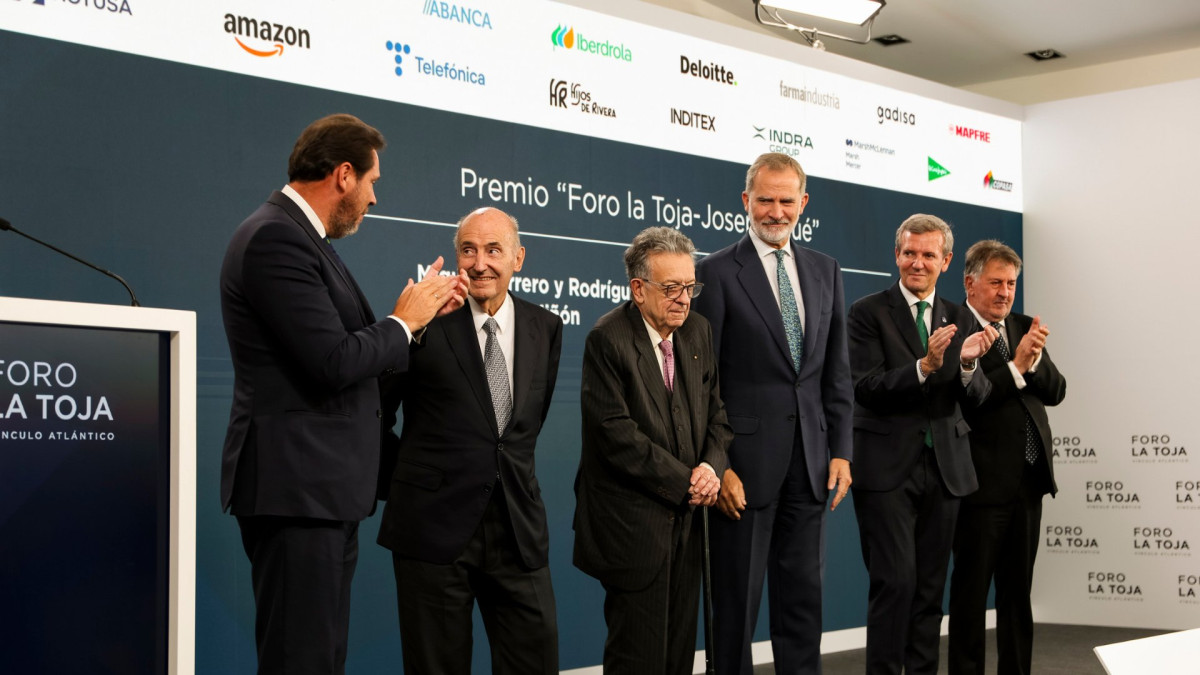
Felipe VI was responsible for presenting the Josep Piqué Award to this year’s winners. Photo: Agenda Pública / Yanka Soto
In this era of global uncertainty, this civil-society-born forum retains some certainties. We continue to trust in the principles and values of liberal democracy and open societies; we also have the conviction that the best solutions to society’s problems are those that emerge from dialogue and public conversation.
“The extraordinary political and economic success of our country in the last fifty years has rested on the broad consensus that reflected the centrality of Spanish society”
If we look at Spain, the extraordinary political and economic success of our country in the last fifty years has rested on its openness to the exterior, a solid institutional strength built from the Constitution and on the broad consensus that reflected the centrality of Spanish society. The monarchy that Felipe VI embodies today has been a motor of that historical transformation and a guarantor of its permanence.
Precisely for that reason we pay a moral debt with the recognition of the greatest instrument of convivencia that Spain has known in its recent history: the 1978 Constitution, and that is why the Josep Piqué award to the fathers of the Constitution, in the persons of Miquel Roca and Miguel Herrero de Miñón, was more than justified. Allow me to highlight Miquel Roca’s words that none of the current problems have their origin or cause in the 1978 Constitution.
And speaking of the Josep Piqué award I feel obliged to remind, once again, of the dramatic and increasingly worse situation of Afghan women, callously abandoned by the international community.
With these challenges in mind we have begun the seventh La Toja Forum, which has sought to address the four main problems we face today: Europe’s strategic autonomy with the transatlantic relationship at stake and the war in Ukraine, global trade and the survival of the rules that have governed it in recent decades, and the contagion of populism that reaches, actively or passively, some of Europe’s traditional parties.
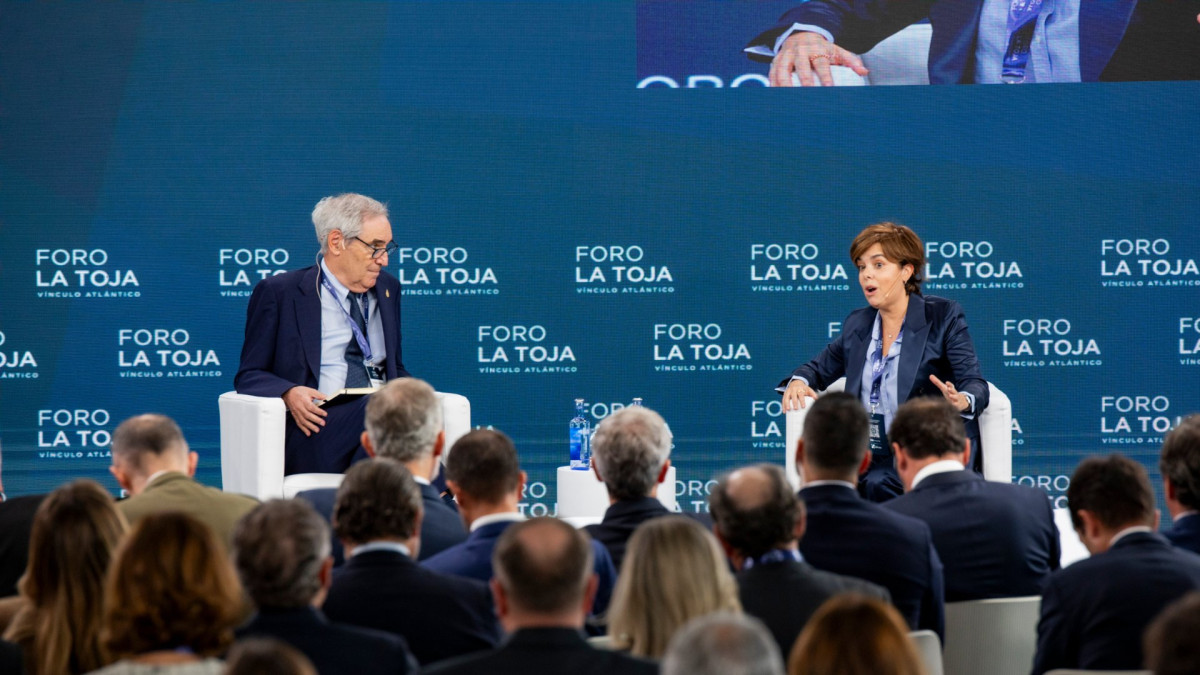
Michael Ignatieff managed to open with his intervention many of the discussions that later occurred at Illa da Toxa. Photo: Agenda Pública / Yanka Soto
Con una visión de largo alcance, Michael Ignatieff, premio Princesa de Asturias de las Ciencias Sociales, nos proporcionó, como siempre, una importante reflexión sobre el momento presente y sus desafíos.
“We live in a gray zone with new risks and the need to build a transatlantic relationship based on the new relationship between Europe and countries such as Canada, —with whom we share common interests and values— while reclaiming our ability to be active agents of History”
We live in a gray zone with new risks and the need to build a transatlantic relationship based on the new relationship between Europe and countries like Canada, —with whom we share common interests and values— while reclaiming our ability to be active agents of History.
Without ruling out that, as Ignatieff reminded us, empires sometimes commit suicide, this need to act together must be accompanied by the speed required in decision-making. This will not be the last time we hear this message.
Next, presidents Rajoy and Zedillo —the latter attending La Toja for the first time—’ve given us their view of today’s world and the crisis of institutions, prefiguring some later debates. They described the siege on representative democracy and the liberal order which, however, for President Rajoy is not in danger.
“Europe has to recognize its own strengths and again we spoke of building a new alliance with other countries”
President Zedillo reminded us that Europe today is the only benevolent power and has the responsibility to defend democracy and the rule of law. Inward, but outward as well. Europe must recognize its own strengths and again we spoke of building a new alliance with other countries and the sense of urgency in doing so. The former Mexican president also warned us of one hot topic: chinophobia.
One of the lessons we have learned is that the Forum has a life of its own, independent of the organizers’ intent. Last year Europe was not on our agenda and nothing else was discussed. This year we had two topics that were not on the agenda but took center stage in the debates: China’s position and its relationship with Europe and a classic: European regulation, scant for some and excessive for others.
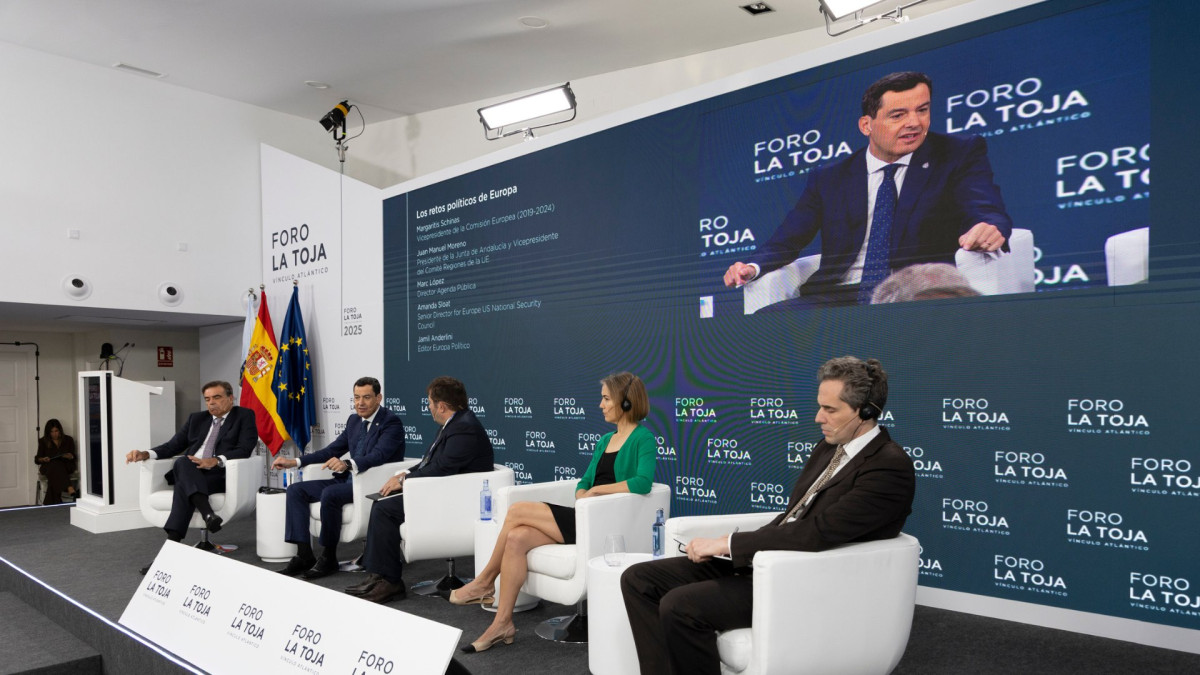
Marc López Plana, director and editor of Agenda Pública, moderated an international panel. Photo: Agenda Pública / Yanka Soto
Abierto el melón de la chinofobia, China ha sido objeto de un enérgico debate y no puede obviarse la circunstancia de que, entre nuestros panelistas, los mayores expertos en China, aquellos con un profundo conocimiento de su realidad, son los más críticos con las políticas cercanía a Pekín. Sirva por todos la neodickensiana historia de las tres ciudades que nos ha propuesto Alicia García Herrero y, si de China se trata, no deberíamos olvidar la frase del exvicepresidente Schinas de que, si China quiere un gesto de amistad con Europa, que propicien el fin de la guerra de Ucrania.
The transatlantic relationship has been, as it cannot be otherwise, the subject of intense debate and with two points of agreement among all our speakers: what has been called the end of European innocence and the shift from rule-based politics to power-based politics in a transition as painful as it is inevitable. Almost all our speakers, from Ignatieff to Minister Cuerpo, agreed: Europe must seek new allies in this new world to balance the loss for all that comes with the United States stepping away from trade rules and international law.
“Thus opens the perspective suggested by Ignatieff of a Europe not based solely on geography, that includes Canada and the United Kingdom”
Thus opens the perspective suggested by Ignatieff of a Europe not based solely on geography, which includes Canada and the United Kingdom and establishes close relations with nearby countries. Not on a geographic basis, but on a basis of shared values: Latin America, Japan, and South Korea, among others, as a way to compensate for the manner in which China and the United States use trade policy for geopolitical reasons.
Europe, in short, must learn to be selfish, look inward, not wait for others to change and for Trumpism to fade, and become a credible actor in global geopolitics and the economy.
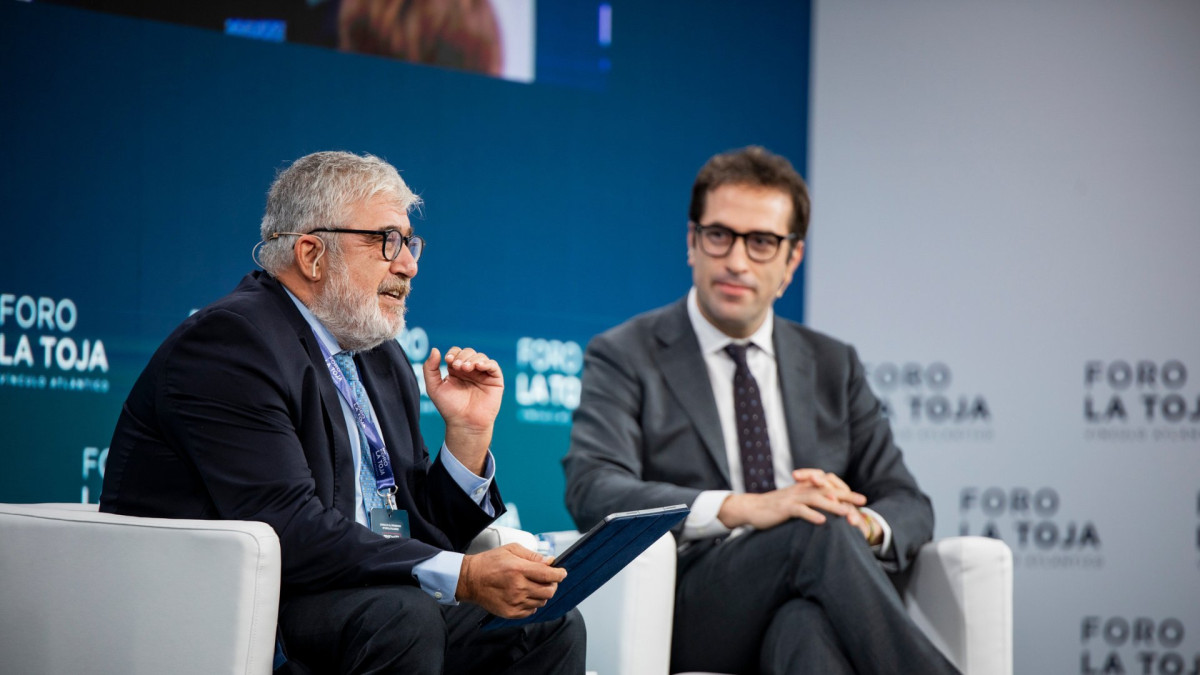
Jose Juan Ruiz conducted the Economy Minister Carlos Cuerpo’s presentation. Photo: Agenda Pública / Yanka Soto
Confieso que con el ministro Cuerpo esperaba que repitiese lo que nos dijo el año pasado: que había más de 30.000 normas al año y que debía acabarse con la sobre regulación. Ya no tan reciente en el cargo, fue más prudente y se limitó a recetar simplificación administrativa.
Sí hizo hincapié en algo que ha sido bastante habitual en todas las mesas: el problema de Europa no está en sus diagnósticos ni estrategias, numerosas y bien concebidas, sino en que tiene que aprender a actuar rápido en este cambio que José Juan Ruiz describió como “el cambio de un juego de suma positiva a un juego de suma cero”.
Un gran momento del Foro ha sido el debate digital, normalmente áspero y frío. Este año Alex Romero ha convertido en un interesante juego de espejos entre uno de los mejores científicos del MIT —que por cierto nos recordó que el problema de la investigación en Europa no es de dinero, sino de cómo se usa y la ausencia de la meritocracia— y una filósofa de Oxford profundamente crítica con las consecuencias sociales de la tecnología.
Ese juego de espejos nos permitió asistir a un relevante debate sobre los aspectos éticos de la tecnología, de su producción y de su uso y nos recordó, como en el tango, que veinte años no son nada.
En el último día, dedicamos nuestro tiempo a tres debates centrales: la defensa europea, la situación en Oriente Medio y la guerra de Ucrania con la posición de Rusia en el mundo.
La defensa, y en particular la defensa europea, ha sido objeto de debate, no solo en la mesa específica, sino también en las dedicadas a la competitividad de la economía española. Esto es muy significativo y refleja el papel central que la defensa juega no solo en el debate geopolítico sino en el de la competitividad de la industria europea.
“Como señala el general Hodges, las amenazas son reales y el dinero de los contribuyentes está bien empleado en contrarrestarlas”
The defense debate has focused on two essential topics: the culture of defense or, more precisely, the lack of a defense culture and the need to persuade public opinion that defense spending is essential because, como señala el general Hodges, las amenazas son reales y el dinero de los contribuyentes está bien empleado en contrarrestarlas. Se ha insistido en que el gasto en defensa es indispensable y que la industria europea tiene la capacidad de producción y tecnológica para ser el motor de este proceso.
Después, el foro se ha centrado en Oriente Medio, con el primer evento de este nivel en que se ha podido discutir en profundidad la reciente propuesta de plan de Paz.
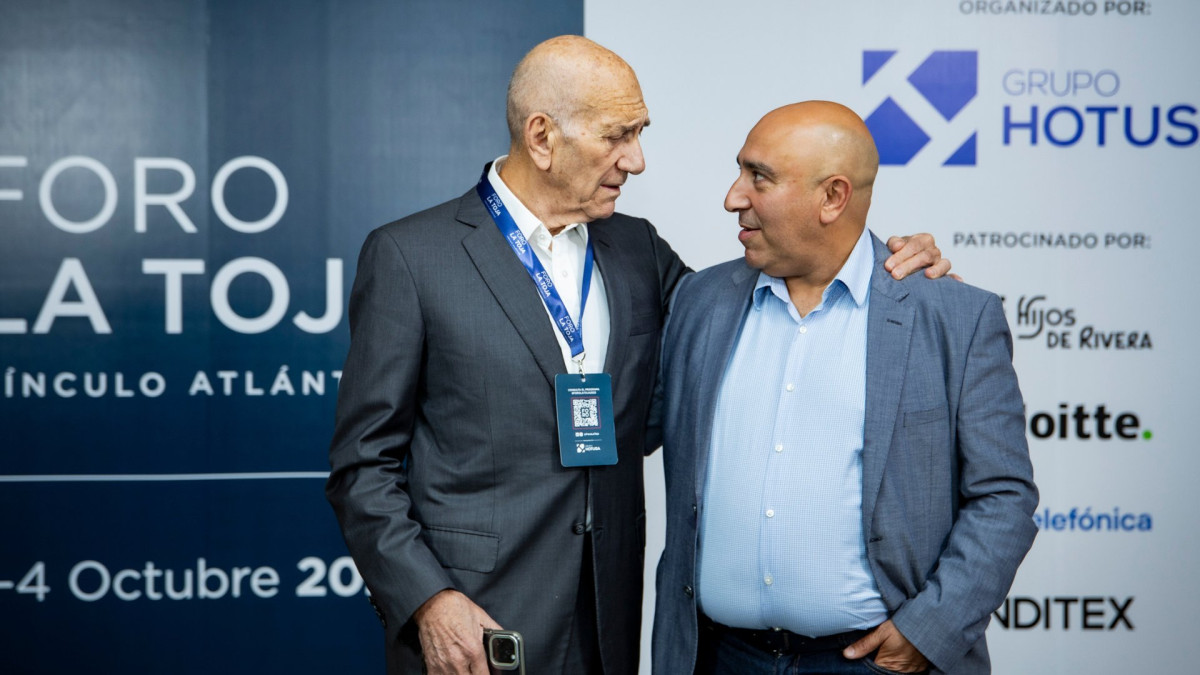
Ehud Olmert and Samer Sinijlawi share an embrace at the end of their dialogue. Photo: Agenda Pública / Yanka Soto
Pero además, permítanme destacar que aun en tiempos de crispación, conflictos de blanco y negro, conmigo o contra mí, incluso en el asunto más complejo y sentimental que existe, es posible encontrar personas que debatan y dialoguen. Y créanme que no ha sido fácil ni bien comprendido, pero ese es el espíritu del Foro La Toja y la razón de su existencia.
El diálogo entre Ehud Ólmert y Samer Sinijlawi ha sido uno de los momentos más importantes y emocionantes del foro y en un momento especialmente significativo, con el plan de paz que acaba de proponerse.
Después de recordar Sinijlawi la Intifada y su importancia para la historia reciente de Palestina y por Ólmert la trágica experiencia del 7 de octubre y la necesidad de no dejarse dominar por la rabia en la respuesta, en el diálogo se han producido coincidencias importantes y muy significativas:
- That the current moment represents an extraordinary opportunity that must be seized by all. No one in the early 1940s imagined that Germany and France would become not only partners, but would integrate into a common institution.
- Finding the balance is not difficult if the parties acknowledge their substantial needs: security and self-determination.
- There is no other solution than the two states, and it is probably closer than we think.
- The conflict’s resolution and definitive peace require, without exception, new leadership and thus involve elections in both Israel and Palestine.
The final intervention of this forum, which did not disappoint the expectation it had aroused, was that of chess champion and today president of the Renew Democracy Initiative, Garry Kasparov, from whom we would highlight a few things he said:
- Dictators do not play chess; they prefer poker.
- There are no former KGB agents.
- Dictators never ask why, but why not.
- Everything Putin has done was foretold or written; no one should have been surprised.
- Ukraine is a war against the Western world, not only against Ukraine.
- Putin understood Europe’s reaction very well, but underestimated the will of the Ukrainian people.
- We are at war because they declared war on us.
- Our future is not decided in the Middle East; it is decided in Ukraine.
In summary, we leave this forum with some things clear: that populism cannot be fought with populism, that Europe must learn to operate from its strategic autonomy and understand power games, and that China is a complex country that must be approached with at least caution. But above all, we leave with the lesson that defending the principles of liberal democracy, open society and the rule of law in international trade is today more important than ever.
In alliance with