Europe is undergoing a moment of intense political and geopolitical transformation. The surge of far-right parties in countries such as France, Italy, Germany and the United Kingdom, together with the possibility that conservative and nationalist forces influence governments like Spain, poses significant challenges to the continent’s internal cohesion, its foreign policy and its collective security. As Amanda Sloat, a former security adviser to the Biden administration, warns: “The real threat would be that far-right parties come to power and adopt undemocratic behaviors”.
In this context, the conversation between Jamil Anderlini, regional director of POLITICO Europe, and Amanda Sloat, moderated by Marc López Plana, editor and director of Agenda Pública, at Illa da Toxa offers a rigorous and nuanced analysis of these dynamics. Anderlini brings a distinct perspective, based on his experience in countries with authoritarian regimes: “I worry about prematurely labeling political positions as far-right or far-left. A hasty classification can increase polarization and push movements beyond the boundaries of the democratic process”.
The experts examine how leaders like Marine Le Pen or Giorgia Meloni have adopted pragmatic approaches. According to Anderlini: “Le Pen has moderated her father’s positions and has moved toward the center… Her approach is pragmatic and not radical, unlike Viktor Orbán”. Sloat complements the European view with the American perspective: “Trump has cultivated relationships with various leaders: Meloni, Nigel Farage, the president of Poland, … Orbán actively participates in MAGA politics“.
The dialogue also addresses global geopolitical challenges, including the war in Ukraine and the role of China. Sloat explains: “Until both leaders are willing to negotiate seriously, it is difficult to foresee a near-term outcome”, while Anderlini emphasizes: “The West hesitated to confront China directly“.
Finally, the conversation raises reflections on Europe’s defense and its strategic position, including Europe and Spain: “Europe must invest more in defense capabilities… Spain, for example, has lagged for years”, asserts Sloat, while Anderlini adds: “Spain represents a dynamic growth within the EU and has shown an increasing role in business and industry”.
Taken together, this encounter offers a comprehensive portrait of the challenges Europe faces today, combining political, strategic and economic perspectives, and outlining the decisions European leaders will need to make to ensure the continent’s cohesion and its global influence in an ever more complex and interconnected context.
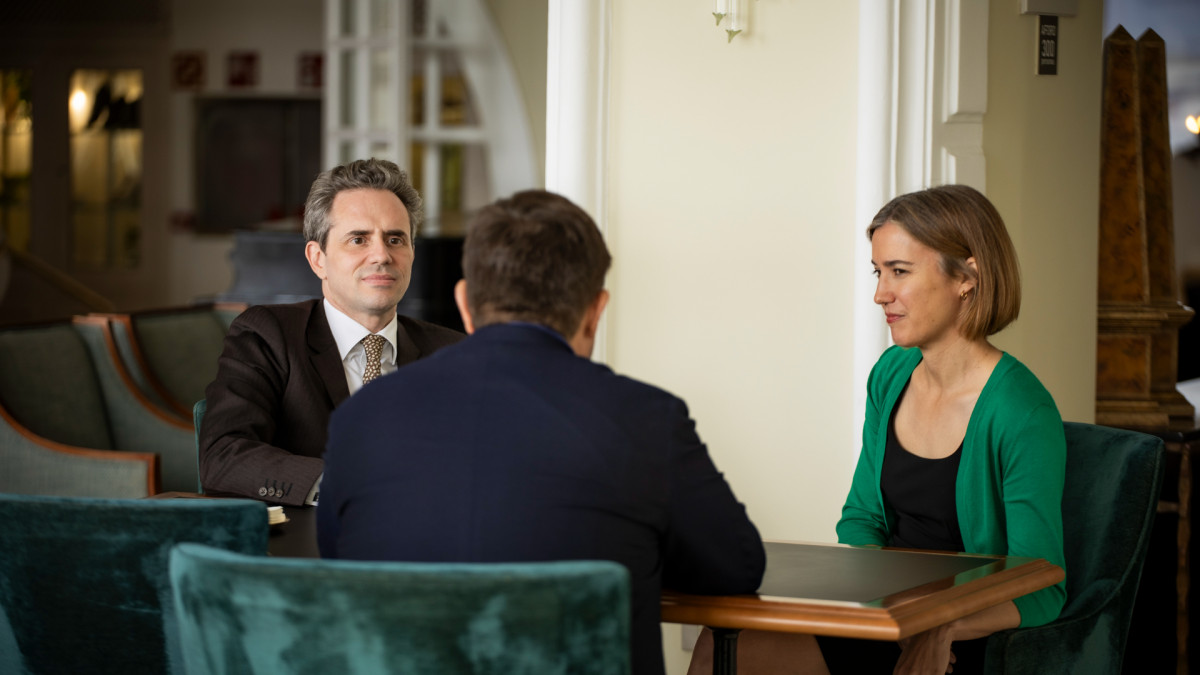
Jamil Anderlini, editor of POLITICO Europe and Amanda Sloat, former Biden Administration security adviser. Photo: Agenda Pública / Yanka Soto
What would be the repercussion for France if Le Pen or her party won the elections? Or even in Spain, where Mr. Feijóo could become head of government with Vox’s support?
Amanda Sloat (A. S.): I am deeply worried about this swing to the far right. There are already governments that are less liberal or far-right in several European countries. We have observed democratic erosion in Hungary and Slovakia, and Italy currently has a far-right government. Far-right parties are also performing well in Germany, France, and the United Kingdom.
From the American perspective, I am also concerned about the Trump Administration’s intention to cultivate relationships with these parties and actively intervene in the domestic politics of those countries, encouraging their consolidation and criticizing judicial decisions taken against far-right politicians in France and Romania. My main worry is that, in the long run, a transatlantic alliance defined by illiberal values could be consolidated rather than shared democratic values.
Jamil Anderlini (J. A.): I have a somewhat different perspective. I spent most of my adult life in an authoritarian state, today totalitarian, such as China. When I moved to Europe, I noticed that, by comparison, the Western political spectrum appeared limited to internal differences within democratic frameworks.
“I worry about labeling political positions as far-right or far-left too soon”
I worry about labeling political positions as far-right or far-left too soon. In our newsrooms we debate these categories extensively. A rushed classification can heighten polarization and drive movements beyond the bounds of the democratic process. So far, we have observed some electoral erosion, but not yet dramatic.
Although my homeland lacks democracy, Europe still holds solid democratic processes. Even the most extreme parties participate in elections. This does not mean the absence of threats, but the forces that aim to eliminate them are minority. If current positions consolidate, I fear that some illiberal forces may contemplate eliminating elections through states of emergency. This concern is also reflected in certain internal US debates.
A. S.:
Exact. Russia holds elections, but their mere existence does not guarantee democracy. The real threat would be for far-right parties to come to power and adopt undemocratic behaviors.
J. A.: Many parties labeled as far-right reject that label and do not show an intention to subvert the political system. Some, like Viktor Orbán, have done so; in France, Germany, and the United Kingdom, far-right parties do not seek to alter the democratic process.

Besides this conversation, Marc López Plana moderated a dialogue at the La Toja Forum with Jamil Anderlini and Amanda Sloat among other speakers. Photo: Agenda Pública / Yanka Soto
But if the far right triumphs in France or if Farage plays a significant role in Spain, does that mean less European cohesion, weaker defense and foreign policy?
J. A.: It would be likely, though it could be leveraged strategically. For example, with Le Pen.
I would like to highlight two aspects. First, the Meloni case is instructive. Second, I do not think Marine Le Pen seeks to subvert French policy; rather, she has adopted a pragmatic approach. Le Pen has moderated her father’s positions and moved toward the center. Both she and her party reject the label of far-right.
Meloni, for example, presents herself as pro-European and manages to align internal policy with Brussels’ expectations, while maintaining autonomy on key national matters. It is a smart strategy. She has employed a tactic of appeasing the EU to advance in media, courts, abortion and immigration within the realm of domestic policy. She is not a fascist, but she fulfills electoral promises without provoking significant opposition. Her approach is pragmatic and not radical, unlike Viktor Orbán.
Regarding the MAGA movement and its transatlantic expansion, who serves as the link in Europe? Meloni or Orbán?
A. S.: There is no single link. Trump has cultivated relationships with various leaders: Meloni, Nigel Farage, the president of Poland, Orbán… Orbán actively participates in MAGA politics and has attended CPAC conferences.
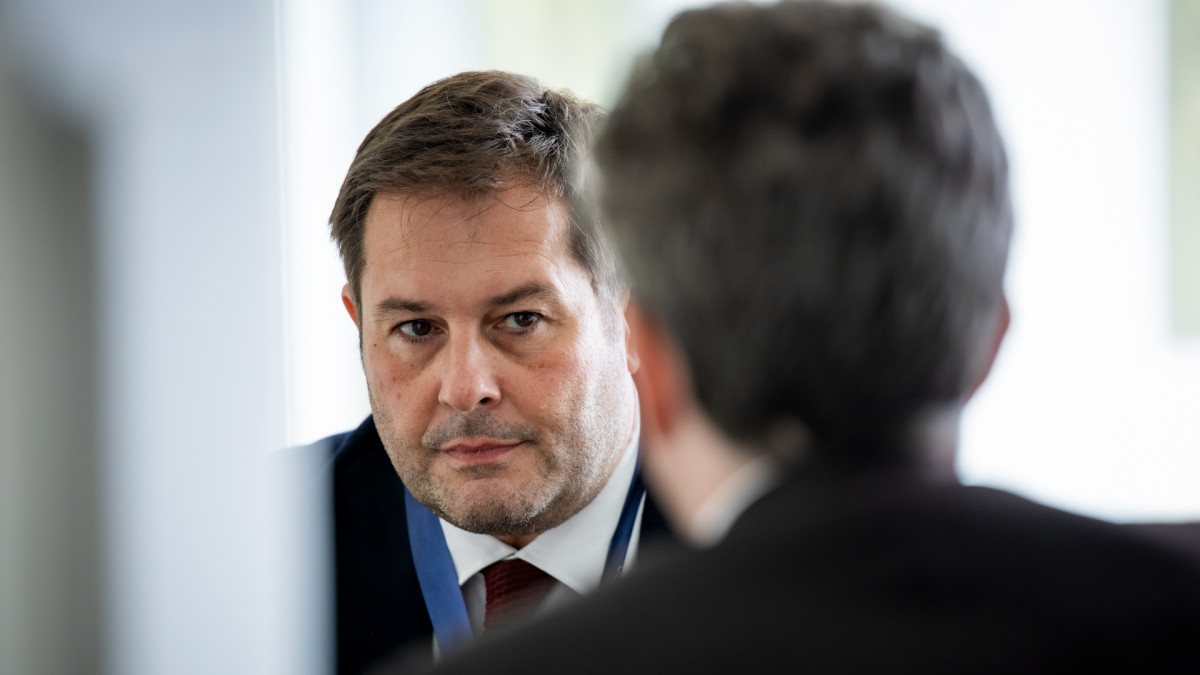
Marc López Plana listening to Jamil Anderlini. Photo: Agenda Pública / Yanka Soto
Regarding Trump and Putin, is their relationship unusual compared to historical tradition?
J. A.: I think Amanda has more information on this, having worked in the National Security Council. From a journalistic perspective, any compromising information about Trump seems financial, not personal, and nothing has publicly discredited him yet.
A. S.: Trump admires strong leaders: Erdoğan, Saudi leaders, Xi, Kim Jong Un. There is an affinity toward authoritarian figures and the aim of replicating their internal political achievements.
J. A.: There is also a bargaining component: Trump applies real estate transactional tactics to geopolitics. It works in part, but not with Putin, who is a security official with higher training.
Trump used to say he could end the Ukraine invasion in twenty-four hours. How do you see the end of the conflict?
A. S.: I spent two years in the White House working on the Ukraine war. If it were possible to resolve it in twenty-four hours, that would be extraordinary. The situation is complex: Ukraine fights bravely, Russia shows no intent to stop, and it receives support from allies. Until both leaders are ready to negotiate seriously, it is hard to foresee a near-term resolution. The future discussion will focus on security arrangements and territorial distribution.
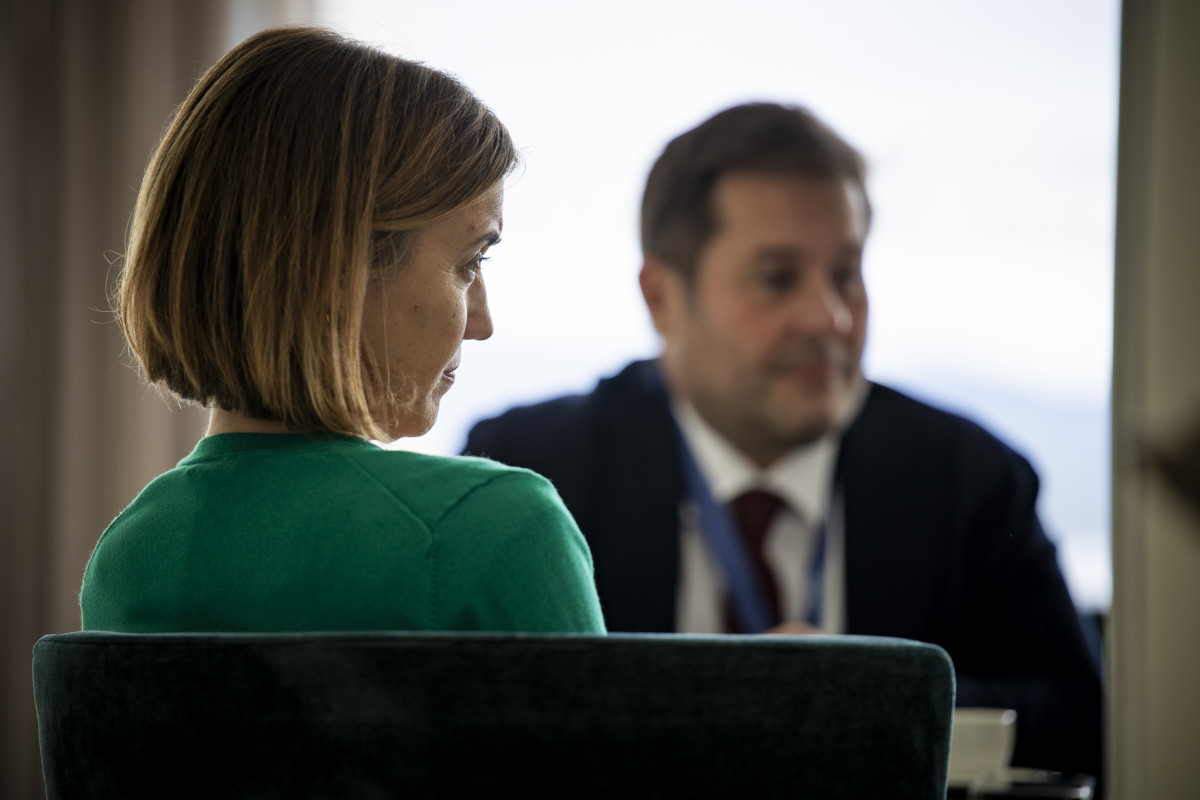
Amanda Sloat acknowledges the difficulty of diagnosing peace negotiations in Ukraine. Photo: Agenda Pública / Yanka Soto
If China wished, could it end the Russian invasion?
J. A.: China gave tacit approval to the invasion. Xi Jinping did not stop it initially and there was the supply of old armaments to Russia and economic support. The West hesitated to confront China directly.
Is Xi leveraging the war to manage his relationship with the United States?
A. S.: There has long been concern about China’s role in supporting Russia. The United States seeks to coordinate with Europe in responding to the strategic risk posed by China, especially in energy and infrastructure.
Could Europe understand and negotiate with Trump?
J. A.: It’s difficult. The EU operates with plural voices, which complicates negotiating with Trump, who prefers bilateral deals. The design of the EU seeks consensus, avoiding serious internal conflicts.
“European fragmentation can be perceived as weakness; I would recommend seeking unity to negotiate with Trump with a single voice”
A. S.: European fragmentation can be perceived as weakness. My recommendation: Europe should pursue unity, strengthen the single market and sovereignty in defense and technology, to negotiate with Trump with a single voice, while maintaining bilateral relationships.
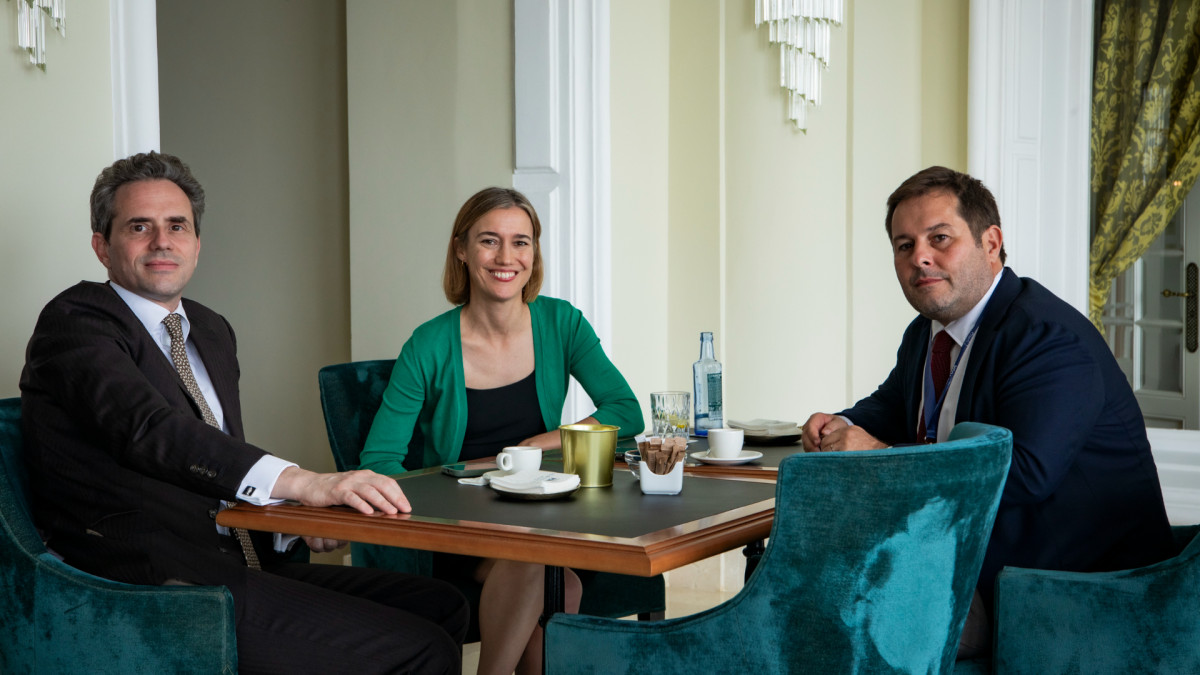
Plana, Anderlini and Sloat shared a dialogue at the La Toja Forum Photo: Agenda Pública / Yanka Soto
Is Ursula von der Leyen losing power?
J. A.: No. She has centralized the commissioners’ portfolios so that everything depends on her. Her control is absolute and effective in Brussels.
What would you recommend to Europe in terms of defense?
A. S.: Europe must invest more in defense capabilities, not only because of Trump, but out of necessity: resources, means and internal organization. Spain, for example, has lagged for years. Europe needs capabilities that allow it to operate in regional military operations and strengthen the collective defense industry.
How do you see Spain positioned in Europe and the world?
J. A.: In Palestine, Spain has relevance, although the conflict divides Europe. Economically, Spain represents dynamic growth within the EU and has shown a growing role at the business and industrial level.
A. S.: Spain could be more active internationally. It is a large and dynamic economy, with historical ties to Latin America and a skilled workforce. It should continue to consolidate its voice on the international stage.
Thank you both very much.
In alliance with