Europe is undergoing a period of profound political and geopolitical transformation. The rise of far-right parties in countries such as France, Italy, Germany, and the United Kingdom—together with the possibility of conservative and nationalist forces influencing governments like Spain’s—poses significant challenges to the continent’s internal cohesion, foreign policy, and collective security. As Amanda Sloat, former national security advisor in the Biden administration, warns: “The concern would be if far-right parties come to power and engage in undemocratic behavior.”
In this context, the conversation between Jamil Anderlini, Regional Director of POLITICO Europe, and Amanda Sloat, moderated by Marc López Plana, Editor and Director of Agenda Pública, offers a rigorous and nuanced analysis of these dynamics. Anderlini brings a distinctive perspective shaped by his experience living under authoritarian regimes: “My worry is that labeling political positions too quickly as ‘far-right’ or ‘far-left’ could increase polarization and push some movements outside the bounds of the normal democratic process.”
Both experts explore how leaders such as Marine Le Pen or Giorgia Meloni have adopted more pragmatic approaches. As Anderlini explains: “Marine Le Pen has rejected many positions of her father, who was more radical, and has shifted her party toward the center compared to others… Giorgia Meloni has also managed to keep Brussels under control while implementing her domestic agenda.”
Sloat complements the European view with an American one: “Trump has built relationships with several European leaders—Meloni, Nigel Farage, Poland’s new president, and Orbán, who has been deeply involved in MAGA politics in the US.”
The dialogue also delves into global geopolitical challenges, including the war in Ukraine and China’s role. Sloat explains: “Until both leaders are ready for serious negotiations, a resolution is unlikely,” while Anderlini points out: “Russia wouldn’t even be at war without China’s tacit and active support, whether technological, economic, or by buying Russian oil.“
Finally, the discussion turns to Europe’s defense and strategic positioning, with a focus on Spain. “Europe must invest more in real defense capabilities—not just to please the US, but because it’s necessary. Spain, for example, has lagged in defense spending,” argues Sloat. Anderlini adds: “Economically, Spain is growing faster than the Eurozone average and can play a leading role.”
Taken together, this exchange offers a comprehensive portrait of the challenges Europe faces today—blending political, strategic, and economic perspectives—and highlights the decisions that European leaders must make to preserve the continent’s cohesion and global influence in an increasingly complex and interconnected world.
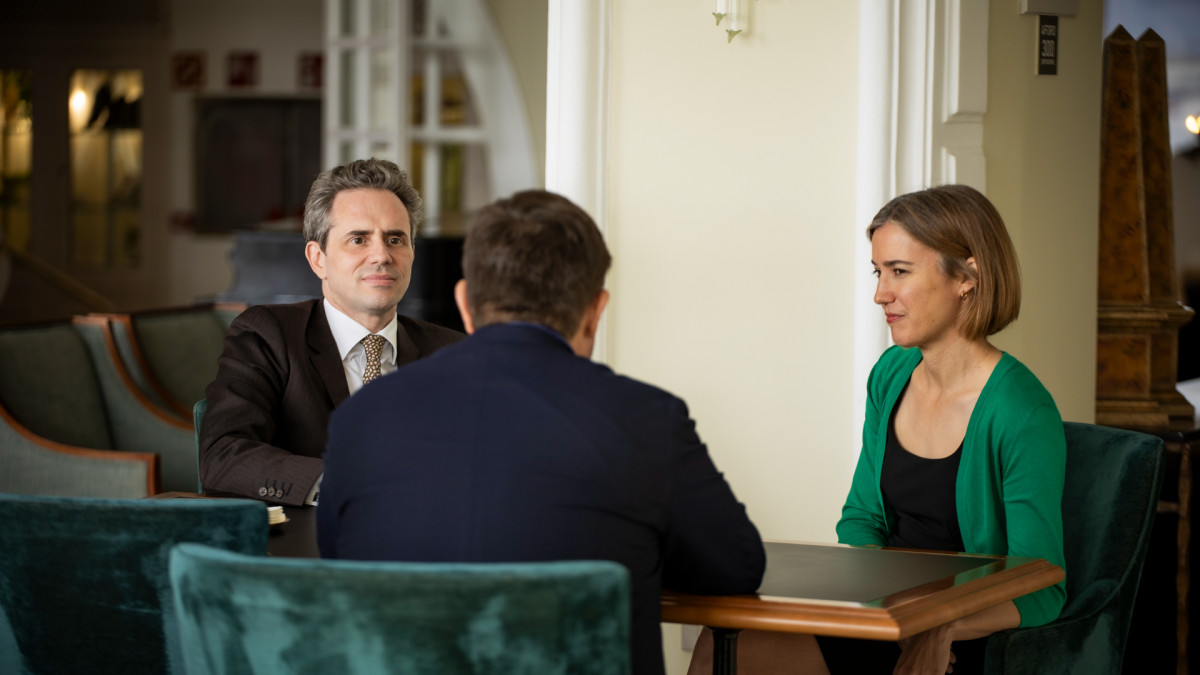
Jamil Anderlini, Editor of ‘POLITICO Europe’, and Amanda Sloat, former National Security Advisor in the Biden administration. Photo: Agenda Pública / Yanka Soto
My first question is about Europe and also national politics. For example, if Marine Le Pen wins the presidential elections in France, or if in Spain Alberto Núñez Feijóo becomes the next Prime Minister with the support of a far-right party closely connected to the MAGA movement in the United States, how important would this be for Europe? What is your opinion on this?
Amanda Sloat (A. S.): I’m very concerned about the drift toward the far-right. As you mentioned, there are already right-wing or less liberal governments in several European countries: we’ve seen democratic regression in Hungary and Slovakia, a far-right government in Italy, and strong right-wing parties in Germany, France, and the UK. From an American perspective, I’m also concerned about the Trump administration’s efforts to cultivate ties with these parties and, in some cases, interfere in domestic politics, encouraging them to perform better and criticizing judicial decisions in France and Romania. My long-term concern is that we could end up with a new transatlantic alliance defined by illiberal values rather than shared democratic ones.
“My worry is that labeling political positions too quickly as ‘far-right’ or ‘far-left’ could increase polarization”
Jamil Anderlini – Executive Editor for POLITICO Europe
Jamil Anderlini (J. A.): I have a slightly different perspective. I spent most of my adult life living in an authoritarian, now totalitarian, state—China. When I arrived in Europe, the differences between left and right in the West seemed smaller because they still operate within democratic frameworks.
My worry is that labeling political positions too quickly as “far-right” or “far-left” could increase polarization and push some movements outside the bounds of the normal democratic process. So far, we’ve seen some erosion of electoral processes, but not as much as could happen.
A. S.: Well, it’s already been joked about: Russia has elections, so elections aren’t the be-all and end-all. The concern would be if far-right parties come to power and engage in undemocratic behavior.
J. A.: Many parties labeled far-right do not identify themselves that way and have not shown any intent to subvert the democratic system. Some, like Viktor Orbán, clearly have, but in France, Germany, or the UK, parties called far-right have not expressed a desire to step outside democratic boundaries.
A. S.: That assumes they would if elected, of course.
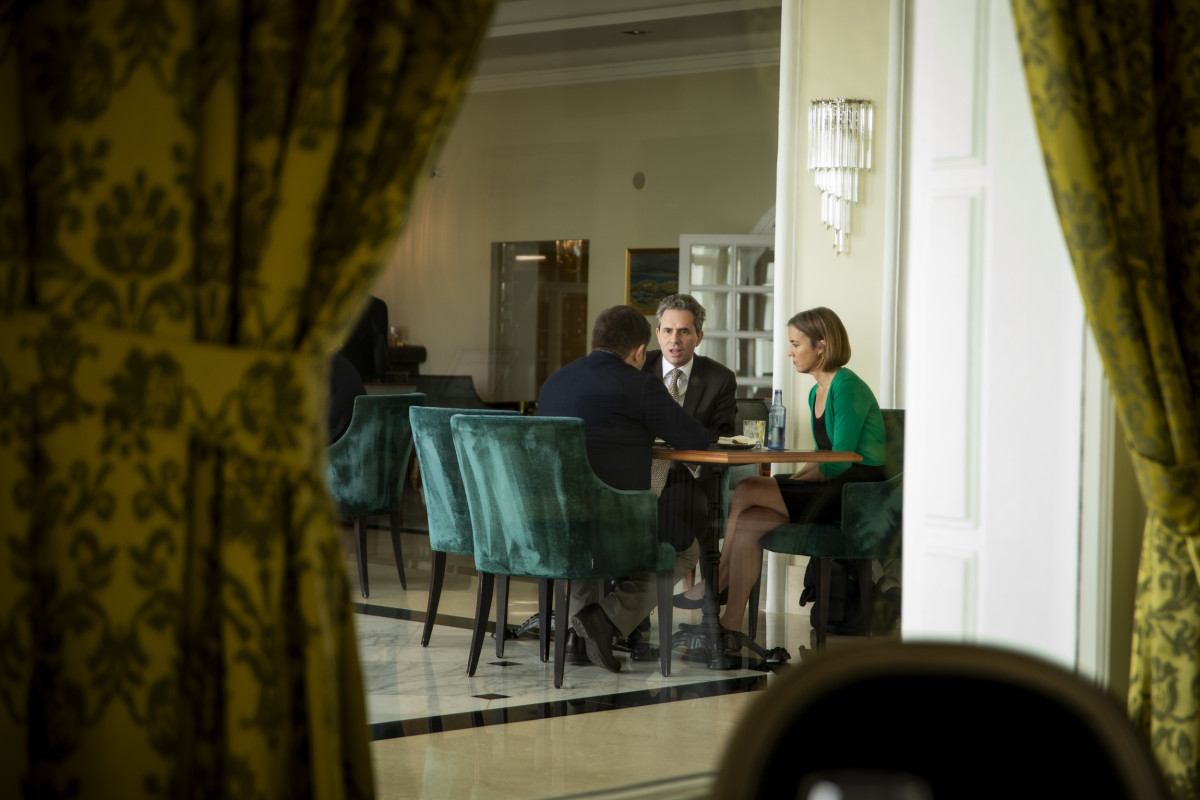
In addition to this conversation, Marc López Plana moderated a dialogue at the La Toja Forum with Jamil Anderlini and Amanda Sloat, among other speakers. Photo: Agenda Pública / Yanka Soto
I’d like to highlight two points. First, the case of Giorgia Meloni is instructive. Second, I don’t believe Marine Le Pen seeks to subvert French politics; rather, she has adopted a pragmatic approach. Le Pen has moderated her father’s positions and moved toward the center. Both she and her party reject the far-right label.
Meloni, for instance, presents herself as pro-European and manages to align domestic policy with Brussels’ expectations while maintaining autonomy on key national issues. It’s a smart strategy. She has used the tactic of appeasing the EU in order to advance on domestic matters such as media, the judiciary, abortion, and immigration. She is not a fascist, but she delivers on her electoral promises without provoking significant opposition. Her approach is pragmatic, not radical—unlike Viktor Orbán.
Regarding the MAGA movement and its intention to create a transatlantic link, who is the key contact in Europe for Trump? Meloni? Orbán?
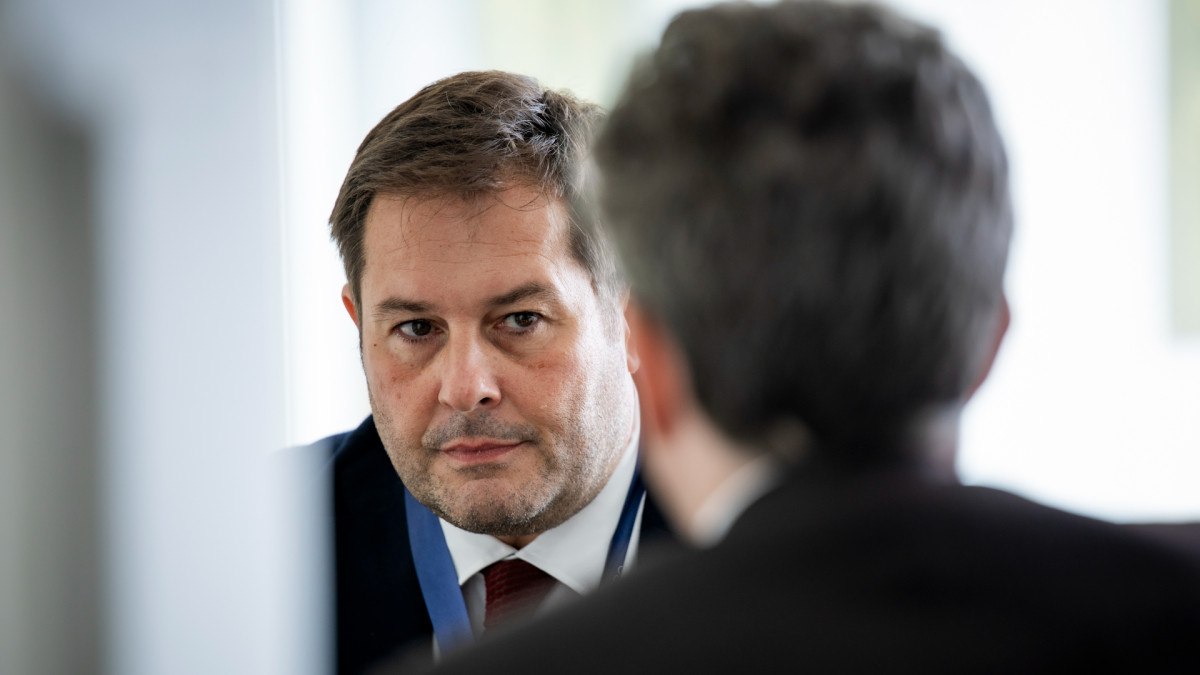
Marc López Plana listening to Jamil Anderlini. Photo: Agenda Pública / Yanka Soto
What do you think about the Trump-Putin relationship? Is it personal or unusual compared to past US-Russia presidential relationships?
J. A.: Amanda works at the National Security Council, so she has a better perspective. I, as a journalist, can only comment based on what I’ve heard: if there’s anything compromising Trump, it’s probably financial from the 1980s or 1990s.
A. S.: Trump admires authoritarian leaders: Erdoğan, Saudi leaders, Xi, Kim Jong-un. There is an affinity for strong leaders and a desire to replicate some of their strategies domestically.
J. A.: There’s also an element of “the art of the deal.” Trump applies negotiation tactics he learned in New York real estate to global geopolitics. However, this doesn’t work as effectively with Putin, who is a former KGB officer trained in elite intelligence operations.
Trump said he could end the invasion of Ukraine in twenty-four hours. How do you see the end of the conflict?
A. S.: I spent two years at the White House working on the Ukraine conflict. It’s not possible to solve it in 24 hours. Ukrainians are determined to defend their sovereignty, while Russia continues to receive support from allies. Until both leaders are ready for serious negotiations, a resolution is unlikely.
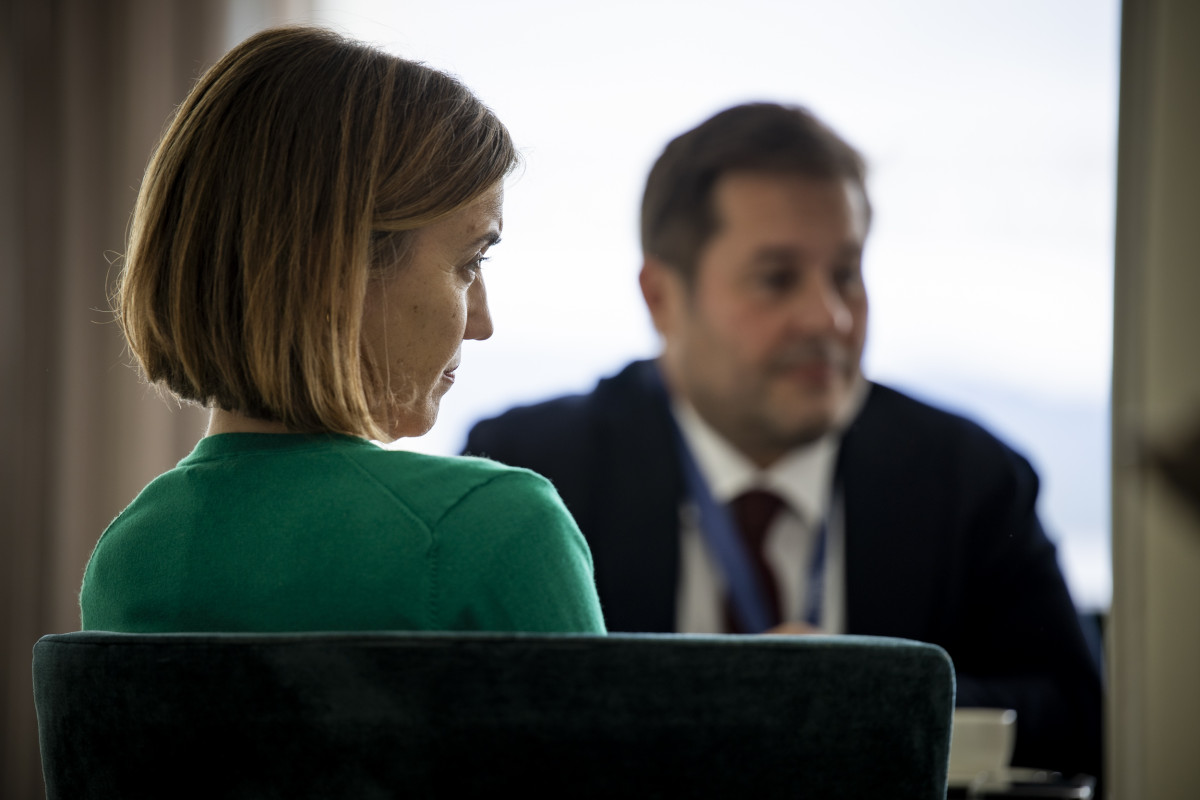
Amanda Sloat acknowledges the difficulty of making a clear assessment of the peace negotiations in Ukraine. Photo: Agenda Pública / Yanka Soto
If China wanted to, could it put an end to the Russian invasion?
J. A.: Russia wouldn’t even be at war without China’s tacit and active support, whether technological, economic, or buying Russian oil. Xi Jinping gave initial approval for the invasion, though not all operational details.
Is Xi using this war to negotiate with the United States or increase China’s global influence?
A. S.: The US has long been monitoring China’s support for Russia and its investments in Europe. The transition from Biden to Trump complicates Europe’s strategy toward China, and a stronger European-China alignment would be a strategic mistake.
Could the EU manage its relationship with Trump by using multiple voices among its members?
J. A.: It’s difficult. The EU was designed to operate with multiple voices negotiating and debating constantly to avoid major conflicts. Against Trump, this approach may not be effective.
A. S.: European fragmentation can be perceived as weakness.
“European fragmentation can be perceived as weakness; I recommend striving for unity”
My recommendation: Europe should seek unity, strengthen the single market and its sovereignty in defense and technology, in order to negotiate with Trump with a single voice while maintaining bilateral relations.
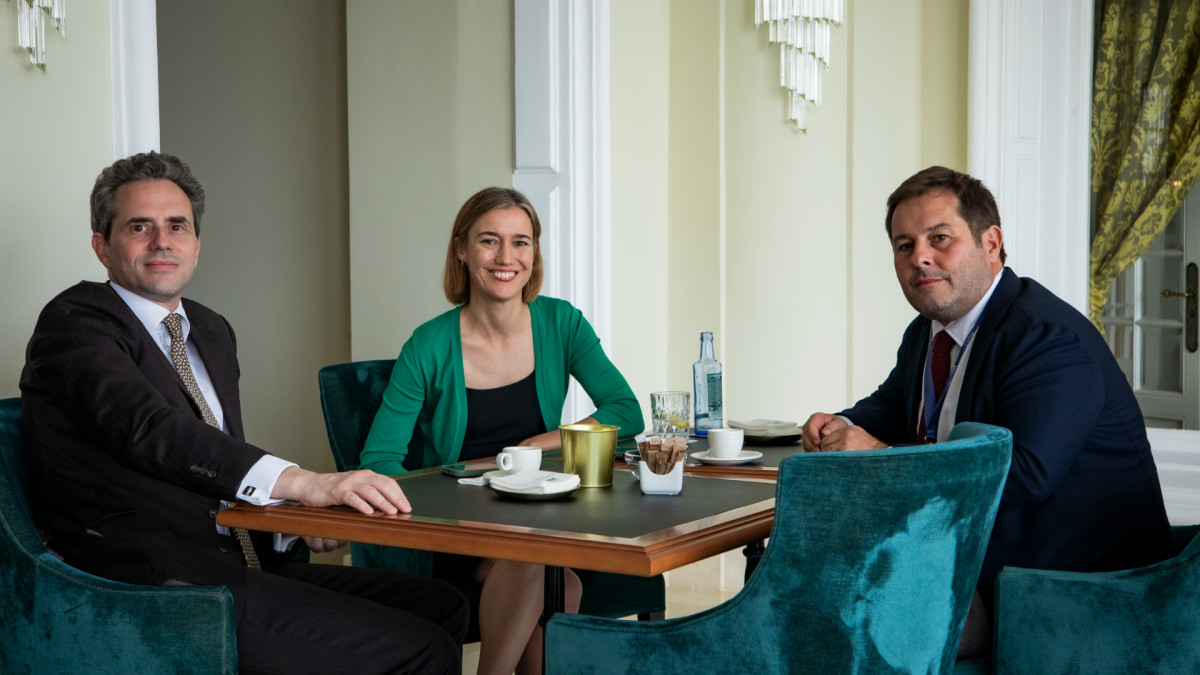
Plana, Anderlini, and Sloat shared a dialogue at the La Toja Forum. Photo: Agenda Pública / Yanka Soto
What about Ursula von der Leyen and her leadership at the European Commission?
J. A.: I don’t think she’s losing power. She has centralized authority effectively, maintaining control over commissioners and achieving agreements with the US, even against Trump, albeit with limits. Her leadership is strategic and effective, though not always visible publicly.
A. S.: Von der Leyen has represented Europe collectively in the US, especially on energy issues after Russia’s invasion of Ukraine. The transition to a Trump administration complicates her role.
From a US perspective, what should Europe do regarding defense?
A. S.: Europe must invest more in real defense capabilities—not just to please the US, but because it’s necessary. Spain, for example, has lagged in defense spending. Countries must invest in strategic assets, integrate them into a European system, and develop the defense industry collectively rather than only protecting national interests.
J. A.: And also I would add that Spain needs a strong navy.
Finally, regarding Spain’s role in Europe and globally, what do you think about its international position, for example on Palestine?
J. A.: The Palestine question is polarizing in Europe, unlike Ukraine, which united the continent. Economically, Spain is growing faster than the Eurozone average and can play a leading role.
A. S.: Spain has potential to be more active internationally: its economy is dynamic, it’s the only Spanish-speaking EU country, and it has historical links to Latin America. I hope Spain continues finding its voice globally.
Thank you very much.
En alianza con