
More: AOC argues you can’t earn a billion dollars, Mythos, hantavirus, and more…
The United States and Iran exchanged fire, yet officials insist this does not amount to a restart of the war.
Opinions naturally differ, but it seems healthy that the language around war has cooled enough for the Trump administration to at least hint at restraint.
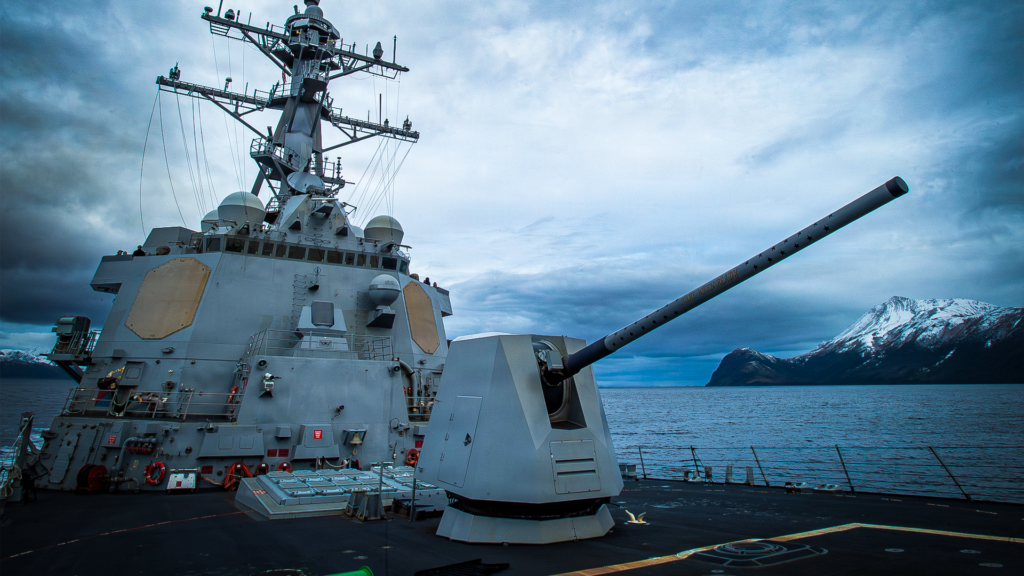
Reality, of course, matters more than rhetoric. Here’s what’s actually going on: Iran targeted three American destroyers in the Strait of Hormuz, prompting the United States to strike Iranian military facilities tied to those attacks. “U.S. Central Command (CENTCOM) eliminated inbound threats and targeted Iranian facilities responsible for attacking U.S. forces, including missile and drone launch sites; command and control locations; and intelligence, surveillance and reconnaissance nodes,” their statement reads. “CENTCOM does not seek escalation but remains positioned and ready to protect American forces.”
The Reason Roundup Newsletter by Liz Wolfe Liz and Reason help you make sense of the day’s news every morning.
Project Freedom—President Donald Trump’s plan to secure safe passage for ships trapped in the strait, which did manage to ferry two vessels out before provoking further Iranian outrage, was halted shortly after its launch. It remains unclear what the mission’s ultimate fate will be or how the U.S. armed forces could assist vessels navigating the Strait of Hormuz.
“The U.S. military began quietly laying the groundwork for a campaign to roll back Tehran’s influence over the strait as far back as April, dispatching unmanned sea drones to survey for mines and lay the groundwork for a southern safe shipping corridor,” according to defense officials cited by The Wall Street Journal. However, serious flaws plagued Trump’s plan—relying on destroyers to provide an anti-missile umbrella while U.S. helicopters would shield against Iranian fast-attack boats. The available force seemed insufficient given the blockade of Iranian ports. It does not appear the operation left a meaningful imprint, and Iran shows no intention of yielding control of the waterway.
Tariff update: “A three-judge panel at the U.S Court of International Trade (CIT) ruled Thursday evening that Trump’s 10 percent ‘global tariff’ is unlawful,” reports Reason’s Eric Boehm. “The tariffs were imposed in February, hours after the U.S. Supreme Court blocked Trump’s bid to use emergency powers to enact broad tariffs on most imports.” Trump had invoked a barely used clause in the Trade Act of 1974 that allows temporary tariffs if the United States faces large and persistent balance-of-payments deficits, which the U.S. does not possess.
“That assessment was borne out by the CIT,” Boehm continues, “which ruled Thursday that the president cannot impose tariffs under Section 122 without that prerequisite.”
Scenes from New York: I’m not sure what to make of the claim that “you can’t earn a billion dollars.” (I’m including this under SFNY because the impulse to flaunt extreme wealth while denying it seems especially common here and among its transplants, as noted earlier.) There are many paths to a billion: crafting something millions of people want and are willing to pay for, thereby greatly enriching or extending their lives (pharmaceuticals, for example). If a few million dollars can be earned fairly, why not a billion? Where should the line be drawn, and who should draw it? Is there a framework of judgment, responsibility, or accountability that warrants orders of magnitude more pay than others?
AOC: “There’s a certain amount of wealth accumulation that is unearned. You can’t earn a billion dollars. You simply can’t earn that. You can gain market power, you can bend rules, you can exploit workers, you can pay people less than they’re worth, but you can’t earn… pic.twitter.com/tUi9xTlQ2B
— Marco Foster (@MarcoFoster_) May 7, 2026
QUICK HITS
- Seems troubling: Salvadoran investigative outlet El Faro reported Thursday that assets belonging to two of its members, including a bank account and real estate, were frozen, which the outlet frames as an escalation of political persecution for its reporting on corruption in the government of President Nayib Bukele, according to the Associated Press.
- “It feels very reminiscent of the early COVID days, particularly as public health officials make complacent remarks that ‘it isn’t highly transmissible, contact tracing will work, quarantine will work,'” writes software engineer Fernando Borretti about the hantavirus spreading from a cruise ship. “Complacency at the start and severity at the end is exactly why COVID was such a fiasco.” It’s notable how various countries are handling hantavirus: some expect self-isolation for up to 45 days, a mandate many won’t fully comply with, while others like Singapore adopt far stricter measures. The virus’s long incubation period adds to the challenge.
- What’s your take on Mythos? (More here.)
Not a good day for team “Claude Mythos is just marketing hype.” pic.twitter.com/bOP52VzAfw
— Timothy B. Lee (@binarybits) May 7, 2026
- Relatedly, I’d love to see a sharp mind hired by my friend Mike Solana to dig into what the people designing these large language models (LLMs) actually believe.
