
Labour and the Tories have each endured substantial setbacks. Is a realignment in British politics on the horizon?
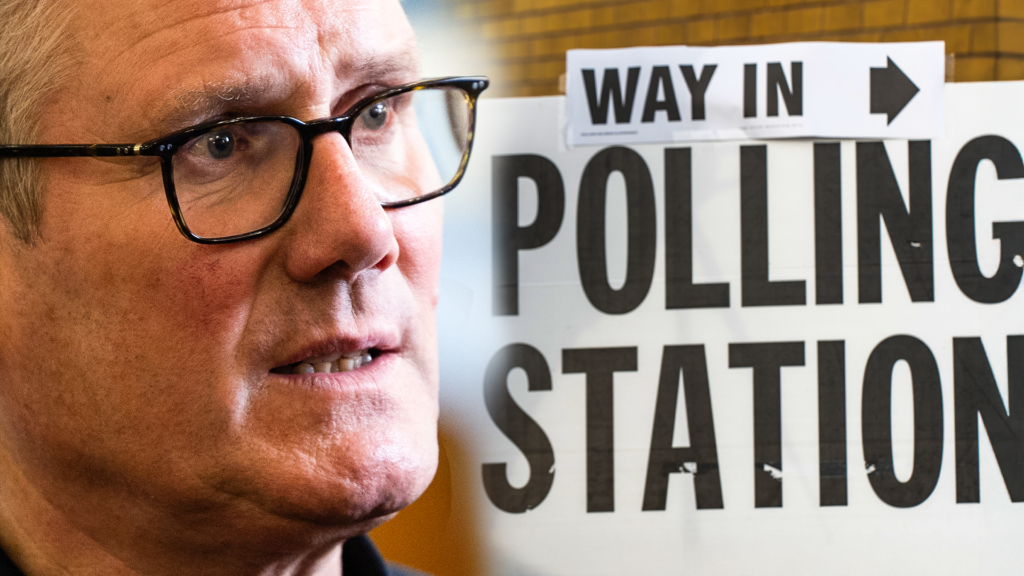
Last Thursday, nearly half of the United Kingdom was given the chance to participate in local elections. Local polls typically attract little notice, since the winners mainly shape planning permissions and rubbish collection. Yet the current state of British politics defies normalcy.
Across England, voters went to the polls to fill more than 5,000 council seats spread across 136 local authorities. Concurrently, six directly elected mayors were in contention, alongside elections for the Scottish Parliament and the Welsh devolved legislature. While these local results do not directly alter the national government, they are broadly viewed as a crucial measure of support for all parties and the most significant test for Prime Minister Keir Starmer since the 2024 general election.
With the bulk of council results in, it is evident that Starmer’s Labour Party has seen a heavy erosion of support. At the time of writing, Labour had surrendered more than 900 council seats and lost control of roughly 30 councils, including Westminster and Essex. The Conservative Party has also suffered losses, relinquishing control of six councils and more than 400 seats.
Nigel Farage’s Reform UK emerges as the standout victor. The party has netted over 1,000 seats, signaling a dramatic shift away from the traditional two-party dynamic.
Speaking to reporters on Friday morning, Farage stated: “Labour are being wiped out by Reform in many of their historic strongholds, and what you’ll see later today is the Conservative Party being swept from their heartlands.”
Farage, now a close ally of U.S. President Donald Trump, once claimed to be the sole politician “keeping Thatcherism alive.” The architect of Brexit frequently touted free-trade agreements, lower taxes, and fewer regulations. Since then, his stance has shifted in parts. Earlier this year, he pledged to keep boosting public spending on the pension system—an ambitious £138 billion program—nationalise the steel industry, and expand welfare outlays.
Reform UK’s meteoric rise is largely attributed to its hardline immigration policy. An Ipsos poll found that controlling immigration tops the concerns of Britons, and ahead of the local elections, YouGov polling showed Reform UK supporters viewing immigration as their main local priority.
The ascent of Reform UK marks a striking transformation in British electoral politics. For much of the past century, the country’s politics was dominated by two parties—the Labour Party on the center-left and the Conservatives on the center-right. Now, a party that barely existed two years ago has more local councillors than any other group in England, stands as the second-largest party in Scotland and in Wales, and is attracting larger donations than any other party.
Legally, a general election may not be required until 2029, but these local results demonstrate Reform UK’s capacity to convert its strong polling into actual votes. If the local results were indicative of a general election, Britain could be moving toward a five- or even six-party system.
If a national vote were held under current trends, Reform UK would appear to command a substantial share, while the Conservatives would stumble into a minority of seats and Labour would secure a sizable, but not overwhelming, tally. The National Equivalent Vote (NEV)—an estimate of local vote shares projected onto a nationwide scale—suggests Reform UK would win around 284 seats (short of a majority by 42), the Conservatives about 96, Labour roughly 110, with the Liberal Democrats about 80, the Scottish National Party around 36, and Plaid Cymru and the Greens each securing about 13 seats.
Put differently, had Thursday’s ballots been a general election, Farage would likely have become prime minister.
It should be noted that turnout tends to be far higher in parliamentary elections, tactical voting can sway results, and a great deal can still change over three years.
That did not dampen the mood at Reform’s headquarters. Even before any results were announced, festivities began on Thursday night, with a cocktail menu featuring items such as “Rachel Reeves ’Rita, Growth Not Included”; “The Kemi Bounce Bellini, Short-Lived Sparkle, Now with 100% less sustained momentum”; and the “Nigel Negroni, Unmistakably Strong.”
A source at Reform HQ who spoke to Reason described the atmosphere as one of high confidence, saying that “Reform is a party with a lot to be excited about, and that was the prevailing mood. There was little sign of nerves—the party operatives were calm, almost celebratory as if victory had already been assured.”
Another attendee told Reason that the mood at Reform HQ was “buoyant and jubilant.”
Reform’s triumph signals not only the apparent end of the two-party structure but also points to where the political realignment on the right has led Britain.
The bittersweet irony of Britain’s political realignment is that the waning faith in the political establishment and the two main parties has not sparked a desire for a smaller state. Instead, voters seem increasingly drawn to leaders who promise to wield state power more aggressively. This may foreshadow what lies ahead for the political right.
