
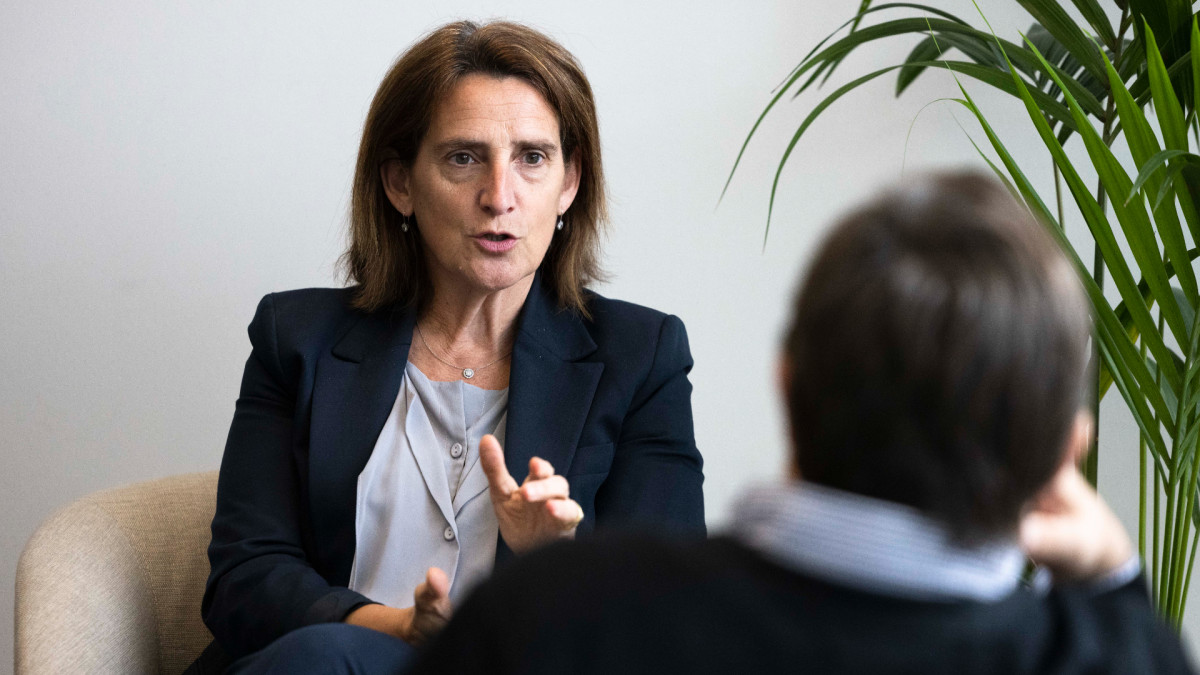
The European Union is standing at a crossroads, confronted by unprecedented external pressure paired with internal fragmentation that jeopardizes its capacity to react. During a discussion in Brussels at the Berlaymont building—the European Commission’s HQ where the Executive Vice-President maintains her office—with Marc López Plana, Ribera frames the debate as a matter of political survival: safeguarding the Union’s foundational values, steering clear of polarization, and becoming more agile without turning simplification into deregulation. To her, Europe’s challenge isn’t a shortage of diagnosis but the difficulty of acting as a genuine “political entity” at a moment when prosperity, the welfare state, and global influence hinge on swifter decision-making.
The exchange outlines the principal fronts shaping today’s European conversation: competition policy, European champions, energy, industrial policy, state aid, the single market, and the rising influence of digital platforms. Ribera advocates updating competition rules to help European firms achieve scale without granting “blank checks” to heavyweight corporations, defends Spain’s commitment to renewable energy, and warns that Europe cannot replace one reliance—on energy imports—with another in the digital sphere. Her stance blends industrial pragmatism with a defense of standards: deeper integration, stronger homegrown capabilities, and common rules to ensure that transformation does not fracture the European project.
Teresa Ribera welcomes Marc López Plana at the Berlaymont to discuss the European Union’s political moment. Photo: Bru Agency
How would you define this moment for the European Union?
This is a pivotal moment for the Union. It must decide whether to cling to its founding ideals and its ambition to continue forging a genuine union—one that can carve out enough space and scale to guarantee a high standard of living for its citizens, as envisioned in the treaties—or else fall prey to mounting polarization and the search for scapegoats amidst upheaval.
Undeniably, external pressures have generated tension across Europe. In a short span, our primary partner in building multilateralism since World War II no longer upholds that trust, directing much of its aggression toward the European Union itself.
Add to that a neighboring region pursuing an extremely dangerous and aggressive expansionist agenda. And then you have China, an industrial powerhouse growing at breakneck speed. We also struggle to stay cohesive while defending our values on the world stage, and to reconcile our domestic and foreign agendas.
“If we keep moving slowly – if we betray our values and undo the European project – we’ll be doomed to agony”
All of this is daunting. We possess strengths, values, and opportunities to keep finding solutions, but if we persist in slow motion—if we betray our values and undo the European project—we’ll face agony and profound shifts in the geopolitical order, and in our ability to offer prosperity, the welfare state, and the model of success that today’s Europe represents to the world.
It seems hard to reconcile two realities: on one side, a European Union that needs greater unity; on the other, countries that are increasingly politically fragmented. Spain, Italy, France, and Germany are finding it harder to form majorities and reach decisions. That national fragmentation then reverberates in the European Council and the European Parliament. How does this uptick in national politics align with the demand for greater European unity?
If we pause and gain a bit of perspective, which is always worthwhile when facing major problems, we find we’re actually closer than the sweeping, highly diverse parliamentary arc in our national legislatures and in the European Parliament would suggest. The values, principles, the sense of Europe, and the pride of feeling European are still very much alive. That helps.
Moreover, the European project has long demonstrated that even in highly complex circumstances, we’re capable of crafting creative solutions to shoulder our responsibilities together. Perhaps the most daunting recent test has been Russia’s invasion of Ukraine, coupled with Europe being coerced on the availability of first-class energy resources. Fragmentation was pursued, but not achieved. It wasn’t easy to address that issue, yet we managed to do so successfully.
Now external pressures are mounting, creating fertile ground for populism and for letting frustrations or fears loosen our impulse to act with courage.
So two things must guide us. First, if we take a step back, we’ll realize we’re closer than we think. Second, to succeed now, we must operate on two distinct planes.
“Now is the moment to remember what works, defend it, and keep our values in mind as we calibrate our responses”
On the one hand, we must use our proximity to shape broad European-building projects and the European response. On the other hand, we must become far more efficient and agile in delivering outcomes for citizens, in our external actions, and in defending a political creature the European Union was never designed to be.
What do I mean? When we identify the core issues—how we can simplify and accelerate responses, how we can boost competitiveness while still generating wealth at home, or how we can expand our footprint as a middle power by forging updated partnerships with third countries—we see ample room for a proposal tailored to our present challenges.
Too long we assumed our advantages would sustain themselves, without constant nurturing, leaving us free to harp on faults. Now is the moment to remember what works, defend it, and keep our values in sight as we modulate our actions.
The Commission is undertaking just such a recalibration, albeit with considerable difficulty at times, but with a clear commitment. If the usual horizon for producing an answer extended two or three years before a legislative proposal emerged, we now know that exceptional agility is required. Perhaps we should curb the will to regulate and operate within the margins we already possess—margins that are numerous, imaginative, and capable of improving ground-level action.
In our communications and justifications, we must press our political representatives—those of us within the European institutions, but also in national politics—to be more careful about how we articulate ourselves, how we critique, and how we propose ideas.
“We can’t stay stuck in a petty cycle of anger, because there are endlessly many reasons to be angry”
Everyone has the right and duty to criticize what doesn’t work. Yet this is a moment when the priority is to build bridges, unite forces, and be effective in our responses. We can’t dwell in a perpetual tirade of anger, since there are endless grounds for it.
Let’s channel that anger and dissatisfaction into concrete proposals. The list of problems is clear enough; the job of a capable politician is to devise solutions.

Ribera also serves as European commissioner for Competition. Photo: Bru Agency
Can simplifying and accelerating conflict with protecting certain rights?
That hinges on how it’s executed. I’ve been highly critical of certain initiatives, because if simplification means lowering environmental or social standards, that isn’t simplification—it’s deregulation and a return to a market open only to the strongest, with reduced social and environmental protections.
That’s not our model. It’s precisely what citizens expect. I don’t think our democratic societies could survive a crisis caused by the deregulation of our environmental and social framework.
Nevertheless, there is room for simplification. Simplification doesn’t require discarding the umbrella that covers all 27 Members, which would yield 27 separate regulations. Instead, simplification means asking how we can respond with greater speed; how we ensure the Commission’s capacity to act or fund projects is operational and faster; and how we guide the reshaping of our economies.
Simplification means envisioning ways to implement solutions so that all citizens have access to practical responses—such as heat pumps—without lowering environmental or social standards.
“Simplifying doesn’t imply getting rid of the umbrella shared by the 27 Members”
That’s the essence of simplification: avoiding a multi-year regulatory process, then waiting for national transpositions. It’s possible to be far more agile with instruments tied to the implementation, operationalization, or clarification of a regulatory framework that can sometimes contain contradictions, overlaps, and divergent developments in each Member State, plus the intermediate steps needed for application.
Thus, to simplify is to reflect on how we construct an internal market, how we push borders outward, and how we make it easier for citizens and businesses to access their everyday realities quickly—without sacrificing environmental or social standards.

Marc López Plana asks Teresa Ribera about the tension between regulatory simplification and the protection of rights on the European agenda. Photo: Bru Agency
Global champions, competition, or the single market: which should be Europe’s priority?
All three.
There’s an essential debate here. I don’t believe it serves Europe’s interests—whether for growth, consumers, or European firms—to adopt a “blank check” approach where giants set the rules of the game or decide which interests deserve protection.
In fact, we’re witnessing the opposite: a pushback against the sector where power concentration has grown the most, namely the digital realm. We’re not interested in fostering a lack of competition that would curb innovation, progress, and the capacity to craft superior products and services.
Luckily, we inhabit a world with a larger set of players capable of making substantial leaps in technology. If two vectors drive global growth, they’re green technologies and the digital domain, both expanding rapidly across a broad range of economies, not only Western ones.
There’s also an appetite to participate in our internal market, which is high-quality and comprises 450 million people with substantial purchasing power.
Yet, in many cases, building European champions capable of competing globally collides with the challenge of operating at the European scale, due to the fragmentation of 27 national markets. The internal market has so far helped mitigate this, but there’s work left to do.
“The construction of European champions capable of competing in global markets comes up against the difficulty of operating at the European scale”
Several sectors stand out here. We still lack a unified market in telecommunications, energy, and capital and financial services. This fragmentation raises costs for firms and for consumers who seek alternatives in other markets to grow or to avoid being constrained by their domestic options.
That’s where we must reconcile how to accelerate market integration, a priority highlighted by the President in her last State of the Union, and echoed by Draghi and Letta in their analyses, and again by Letta who recently revived the idea of One Europe, One Market.
From a competitive standpoint, we also need to modernize the way we assess the benefits, drawbacks, and possible harms of such integrations. If we want innovation, scale, and resilience in our internal market to support our industries, we must acknowledge that the gains from mergers or acquisitions often take time to materialize.
Consumer protection remains paramount. The potential harm is immediate and predictable after a merger, while the benefits may take longer to appear.
Our goal is to contribute, while honoring our mandate to foster innovation, resilience, sustainability, scale, and the capacity of our companies to grow—conducting this in a transparent fashion: laying out the criteria we deem important and sharing them upfront.
We also intend to initiate a dialogue from the outset to better understand the pros and cons of such operations. This allows us to evaluate from the start whether a deal would be solvent and promising in the medium term, or conversely whether risks would render it untenable, sparing us a later debate.
We’re currently in a public consultation phase on those guidelines, which I consider groundbreaking—perhaps the most innovative framework published and shared by any jurisdiction to date. Recent updates in the United Kingdom and the United States are also noteworthy and intriguing.
The path is forged by walking. Now we have an opportunity to complete our refinements and alignments. It has been a deeply participatory process in which we’ve listened to all sides. A substantial portion of the competitive-practices community—academics, legal experts, and industry players—has contributed openly and helped us reach our current position.
So we need all three elements at once: global scale, a robust internal market, and updated criteria to evaluate pro-competitive deals that can help achieve scale while preserving the ultimate purpose of our mandate.
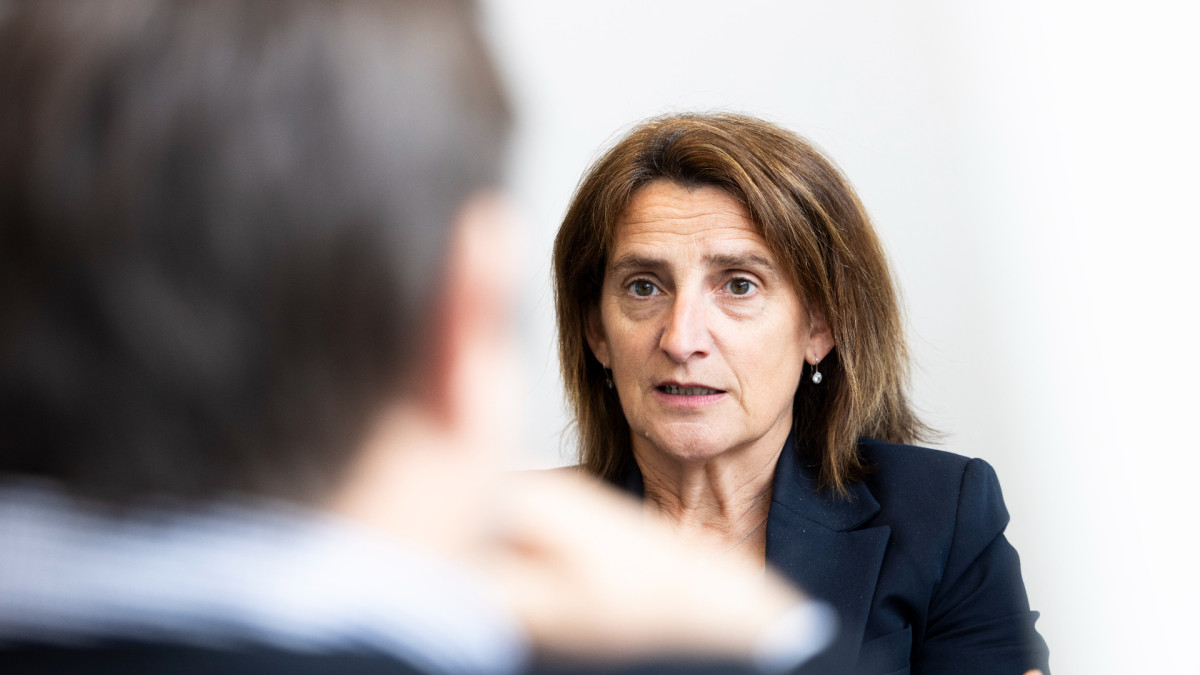
The European Commission’s first executive vice-president addresses the debate on competition, the single market and European champions. Photo: Bru Agency
Spain has pledged strongly to renewable energy and lower energy prices, more than many other nations. The European debate features three currents: inexpensive Spanish energy attracting investment but not always reaching the rest of Europe; France’s commitment to nuclear power; and Germany, which is enduring economic strain but can still lean on State aid. How can these three realities fit within Europe’s industrial program?
Beyond comments about national politics that aren’t for me to adjudicate, there are several key points. The first is a retrospective critique of those who have repeatedly thrown a wrench into the gears—continuing to do so—in terms of the green economy, sustainability, and efficient resource use. Efficient resource use frees up funds for upgrading training and further innovation.
The case of certain mass-market goods that may or may not be clean illustrates how frontal assaults on this transformation—the one Europe identified long ago and has pushed for years—have been misguided.
For over two decades we’ve been advancing electrification of mobility, recognizing the automotive sector’s importance on our continent in both direct and indirect employment. There has been intense opposition to this shift, and some have irresponsibly accused defenders of this transformation and its industrial follow-up of pursuing ideological goals.
Now two substantial factors are evident. First, rivals at the cutting edge have overtaken us in development. Second, we still rely on something we don’t possess—fossil fuels—that we continue to import despite having the capacity to electrify final energy uses.
Some countries without fossil resources have achieved electrification of final energy use well above 30%, rapidly; Europe lags at roughly 23%. Mobility and thermal uses still rely heavily on gas and oil imports, hampering the transition.
“It wasn’t merely about enjoying cheaper energy, but sustaining affordable energy”
Spain has learned well that betting on what we did have—and turning it into a motor for a powerful industrial and services ecosystem—can yield great success. It wasn’t only about cheaper energy; it was about keeping energy affordable, cutting unnecessary import costs, improving air quality and public health, reducing dependencies, and simultaneously building a robust industrial fabric of capital goods, installation, and maintenance.
I think we’ve done well. We still face arbitration from political choices made by the previous administration, but today Spain is in a much stronger, solvent, and attractive position for deploying industry—safer for domestic consumers than other EU countries that have not pursued transformation with the same intensity.
Today we understand—and the Iran conflict underscores—that accelerating electrification, energy-use efficiency, and leveraging resources we already possess isn’t only about environmental or moral benefits or public health, though those matter greatly. It’s also about energy security, economic security, and long-term stability.
We cannot remain at the mercy of coercion from third countries, geopolitical tensions, or energy-related conflicts and wars that have been tied to energy since the 19th century.
Other central European nations have taken different bets. France embraced nuclear power early and will sustain it for the coming generation. And there are countries that have long propelled Europe’s economy and led the technological wave but now face complications.
Our shared responsibility is to find a balance in which everyone can feel positive about continuing to build. That includes addressing modernization needs and reducing Germany’s potential dependencies, while ensuring that adaptations and the transformation of our continent’s economic model do not come at the cost of breaking up the single market or undoing decades of internal market-building.
That’s why, from the outset of this mandate, we aimed to demonstrate that our economic commitment and our industrial vocation are linked to clean industry. We know we’re racing against the clock, and a large portion of Member States wish to modernize their industries.
However, to advance this trajectory we need common rules. We must pinpoint market failures needing attention, understand what provisional supports may exist in one locale or another, and avoid distortions and improper use of public resources, or real inequalities within a comparable market playing field. That’s essential to guaranteeing honest, transparent competition among Europe’s diverse industrial bases.
This is the reality we inhabit today, despite the ongoing challenges governments face as they implement these rules.
“The Commission also bears the duty of guardian of the Treaties, which may involve initiating proceedings on infractions, or applying sanctions”
And again, regarding the Commission’s role and how we can simplify, I believe our duty in these tough times is to ease the transformation. It’s not enough simply to say “you can’t do it that way”—even though that is important and one of the recurring conclusions. The Commission also has the duty as guardian of the Treaties, which can entail opening infringement procedures or imposing sanctions.
Then comes a dimension that has grown increasingly salient: acting as facilitators of these changes while honoring the Treaties. Thus, openness to uncovering the simplest possible answers is paramount.

Teresa Ribera analyses the power of Big Tech and the need for platforms to respect European rules. Photo: Bru Agency
There’s a growing debate about Big Tech. For instance, discussions about minors’ access to social networks. But there’s also the question of how non-European companies behave in a market like Europe, which has its own rules. Meanwhile, it appears that the U.S. government wishes to leverage those companies in its dealings with the EU to secure greater regulatory flexibility. How do you ensure that companies with greater economic heft respect European standards?
This is an extremely fascinating area that demands rapid work for several reasons. When examining competitiveness disparities between the U.S. and European economies, they’re not uniform across all sectors; the gap is mainly in two services—digital and financial. There’s a competitiveness shortfall that adds another layer to overall productivity.
Elsewhere—in basic industry—we remain more competitive in terms of quality, pay, and worker satisfaction. Consequently, we clearly see where Europe must commit substantially—as a continent and as an economic power.
“We’re now facing a profound transformation of the economic model, of productivity, and of social relations and the ways that information, advertising, and the provision of services arrive”
Europe hosts a large number of startups as well as the knowledge, quantum development, and computing that can yield digital services. Yet, in this growth, there has been difficulty locating financial instruments that enable scale-up. The speed at which other actors have expanded means many companies are absorbed or disappear. We’re attempting to address this with our comprehensive digital-development package, which includes a strong industrial and economic component.
We witnessed companies like Skype, then acquired by Microsoft; WhatsApp, then acquired by Facebook; and Booking, among others. Many firms vanish or are integrated into large groups.
Regarding the digitization of the economy and the digital reality, we now face a fundamental transformation of the economic model, of productivity, and of social relations and the manner in which information, advertising, and the provision of services arrive, including how data is interpreted or perceived, with potential risks of bias.
The key fact is that these firms expanded in a context of tacit consent, with minimal governance and beyond the rules they impose upon themselves. Our response came late, largely through competition rules, both in U.S. jurisdictions and in our own.
Reacting post hoc is always more complex, but we possess powerful tools: the Digital Markets Act and the Digital Services Act, which I believe are faster and more effective than traditional antitrust mechanisms.
These firms—so immensely successful—derive over 30% of their revenue from the European market. Therefore, they care about and must comply with European rules. You must obey the rules of the place you operate, not merely those of the country where you’re headquartered.
This dynamic occurs everywhere, regardless of nationality. The quality and health-protection standards in the U.S. olive oil market are met by our companies, no matter where the oil is produced (Italy, Greece, or Spain). In the same vein, operating patterns in European digital markets must comply with the rules of the European digital market.
This should be beyond dispute. It’s our duty to consumers and to our market. It’s also our obligation to try to keep relations with other market-watchdog authorities in other jurisdictions as smooth as possible—the more consistent and compatible, the better.
At the core, the concerns of the average American citizen about non-consensual use of their children’s images, or the insertion of addictive elements into an algorithm, echo the worries of the average European citizen. And a U.S. court ruling may resemble that of a European court.
What we discuss isn’t radically different. Yet we’re dealing with a reality that has grown beyond the bounds of regulation because there were no rules governing that growth. It’s always harder to impose limits after the fact.
Similarly, even as we witness the rapid expansion of new digital realities, a consensus is forming. Content created from synthetic means, without human involvement, has become part of our daily digital reality. Artificial intelligence is rising at an exponential pace and is already deployed in defense, aggression, social surveillance, and rights-limitation.
Major questions arise: what ethical code governs it? What about transparency or accountability? How can we ensure this technology is used for good, for people, with human well-being at its core?
“Do democratic governments wield real power, or are they merely the architects of this vast web of dependencies?”
This also prompts the question of who truly holds power. Do democratic governments have the authority, or are they simply the ones who built this sprawling network of dependencies? Although these tools yield many benefits, they also place certain actors at the margins of national life with outsized influence.
Today we ask how it can be that limited access to digital services in daily life could become a form of civil death: access to bank accounts, transfers, hotel reservations. This has happened with decisions by judges at the International Criminal Court and with United Nations officials. A click can redefine lives.
How could we digitally identify someone and track them for life? How could artificial-intelligence tools be used as weapons of war? How could a business owner warn, “we’ve built a tool we now must stop because we know it can pinpoint our weaknesses and be used against us”?
Our air traffic, financial flows, and much of our reality are increasingly virtual. So too are public health services, citizen data, election results, and the information that reaches us. We’re facing a truly significant generational challenge.
We cannot yield to any temptation, pressure, or coercion regarding Europe’s duty to develop its own industrial base, so we do not become dependent on outsiders. We cannot be blackmailed as we once were by energy suppliers. At the same time, we must consider what governance and safeguards can ensure that our progress aligns with people’s interests.
This represents one of the greatest challenges ahead, and we cannot concede. We’re making remarkable efforts, and I’m convinced that, beyond being notable and cross-cutting, our responses must be swift, grounded in our values, and focused on early risk identification to avoid issues in the medium term.
But I insist: in many of these areas, our concerns align with those shared by a substantial portion of people worldwide.
Thank you very much.

Natalie Foster
I’m a political writer focused on making complex issues clear, accessible, and worth engaging with. From local dynamics to national debates, I aim to connect facts with context so readers can form their own informed views. I believe strong journalism should challenge, question, and open space for thoughtful discussion rather than amplify noise.