
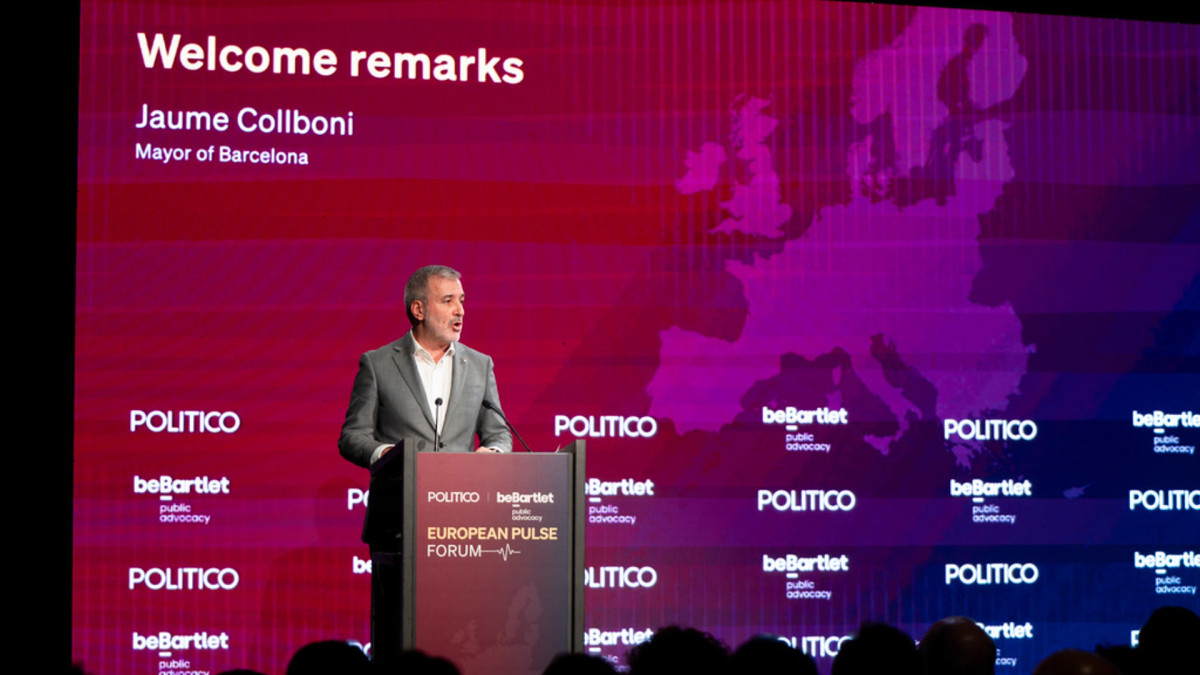
Barcelona has this week become the epicenter of political, economic, and institutional debate across the European continent. Beyond the traditional corridors of power in Brussels, Paris, or Berlin, the Catalan capital has been chosen as the stage for a pivotal summit where international analysts, heads of government, EU commissioners, and business leaders have gathered to address a reality that is increasingly uncomfortable for supporters of the traditional international order.
The framework for this unprecedented gathering is the European Pulse Forum 2026, an ambitious initiative jointly driven by the global media outlet POLITICO and the public affairs firm beBartlet, led by Adrian Jofre and Nacho Corredor. Held at the CosmoCaixa facilities, this forum was born with a disruptive focus: to use European public opinion data as a compass to structure high-level debates on security, energy, mobility, and competitiveness. It was precisely POLITICO Pulse’s latest survey that triggered a real earthquake in the sessions, forcing a rethink of the Old Continent’s strategy.
The Prime Minister of Spain, Pedro Sánchez, at the ‘European Pulse Forum 2026’. Photo: POLITICO / Tsun Ho and Rocío Curia
The Diagnosis That Has Shaped the Forum’s Agenda
The central premise that dominated the roundtables and closed-door discussions within the European Pulse Forum is as clear as it is worrying. According to data from the large-scale survey prepared by Cluster17, citizens in six of the European Union’s leading member states have drastically shifted their perception of global risk. For the first time in recent history, a broad majority of European public opinion believes that the United States poses a greater short-term threat to their stability than China.
“Europeans are losing faith in the historic ‘security umbrella’ of the United States, and this distrust is seeping into all areas of European policy”
Although Russia continues to hold unequivocally the top position as the existential and most immediate military threat—especially after the chronic instability on the eastern front—the rise of Washington to the second place in this risk-perception index has generated considerable concern. The experts gathered by POLITICO and beBartlet stressed that this is not a passing trend or a fad. In this sense, it amounts to a paradigm shift and a rethinking of the roots of the Atlantic bond. Europeans are losing faith in the historic “security umbrella” of the United States, and this distrust is permeating all areas of European politics.
The European Pulse Forum 2026: The Cartel of Decision-Makers
The gathering succeeded in bringing together those who truly have the power to steer this course change. Over the two days of April 9 and 10, the forum hosted frontline voices.
This inaugural edition opened with powerful reflections on the European project, featuring appearances by historic figures such as former Foreign Affairs Minister Ana Palacio and current high representatives. Among the most prominent speakers who convened to debate the consequences of this poll and the bloc’s future are Teresa Ribera (Executive Vice-President of the European Commission for a Clean, Just and Competitive Transition), Stéphane Séjourné (Executive Vice-President of the European Commission for Prosperity and Industrial Strategy), as well as national and regional political leaders such as the Spanish Prime Minister Pedro Sánchez; the opposition leader, Alberto Núñez Feijóo; the President of the Catalan Government, Salvador Illa; and the Second Vice-President and Minister of Labor, Yolanda Díaz.
With this lineup, discussions on geopolitics immediately intertwined with the continent’s tangible challenges: from the transition to autonomous vehicles to the urgent need for a relaunch of European industry to shield against external coercion.
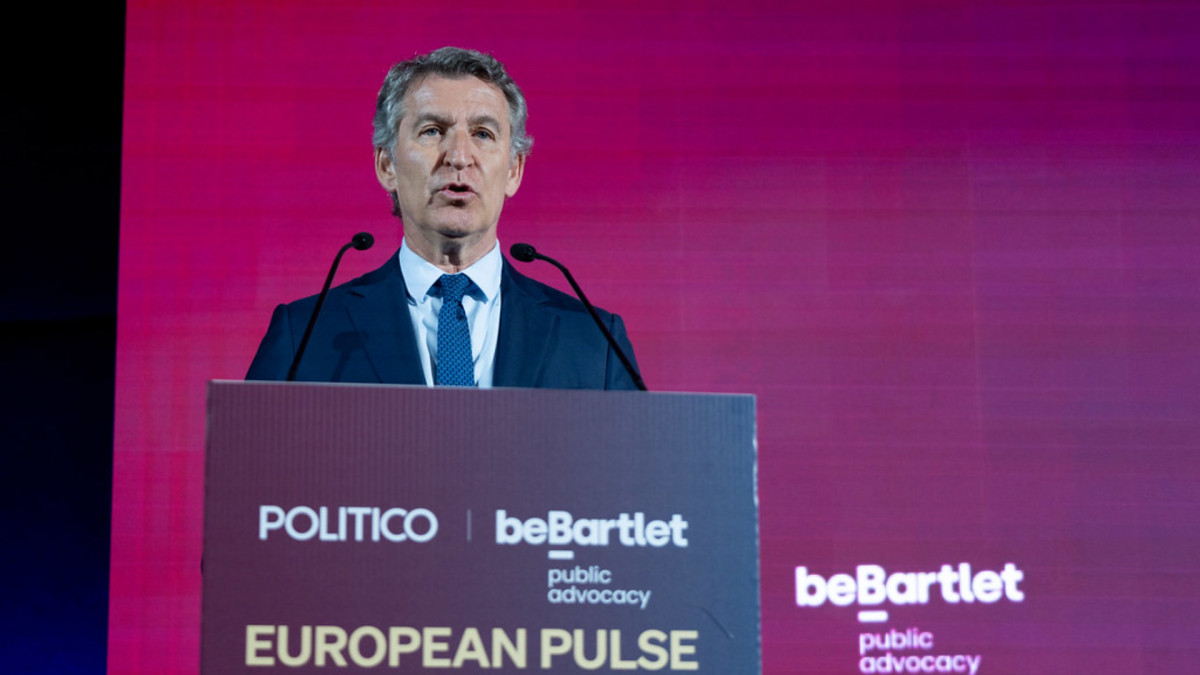
The opposition leader and head of the PP, Alberto Núñez Feijóo, at the ‘European Pulse Forum 2026’. Photo: POLITICO / Tsun Ho and Rocío Curia
Greenland, Tariffs, and the Break in Atlantic Trust
During the sessions, the speakers unpacked the factors that have driven this transatlantic fracture revealed by the surveys, pointing directly to the White House’s recent policies. The turning point, according to multiple economic analysts and business leaders present, lies in Washington’s escalation of economic coercion against its Western allies.
“This militarization of trade has taken root in the European citizen’s psyche, who now sees Washington’s decisions as a direct source of instability”
The data reflect a deep anger derived from the imposition of punitive tariffs on European products, a move that citizens have perceived as a political punishment. The spark that lit this tariff fire was the EU countries’ refusal to back the controversial U.S. plan to acquire or annex Greenland. In the forum debates, diplomats and strategists expressed astonishment that a historic ally would employ economic strangulation as territorial retaliation. This militarization of trade has taken root in the European psyche, who now sees Washington’s decisions as a direct source of instability.
Questioning NATO and the Shadow of the Middle East
However, the aspect that has most strained nerves in the security and defense conferences of the European Pulse Forum 2026 has been the purely military dimension. Public opinion trends are closely tied to the alarm triggered by the recent statements of American diplomacy. The suggestion by key figures in Washington that the United States might “reassess its need to belong to NATO” once its interests in the Middle East are resolved has been the elephant in the room.
“Industrial prosperity and the ecological transition that Europe pursues are impossible if the continental security architecture hangs by the thread of electoral whims on the other side of the ocean”
The European public rejects outright the pressure to be drawn into Middle East conflicts that do not serve the continent’s vital strategic interests. For the ordinary European, the current U.S. foreign policy is seen as a capricious force that threatens to pull Europe into distant wars while simultaneously conditioning its mutual defense commitment. As several leaders noted on the first day, the industrial prosperity and ecological transition Europe champions are impossible if the security architecture of the continent hinges on the whims of elections across the ocean.
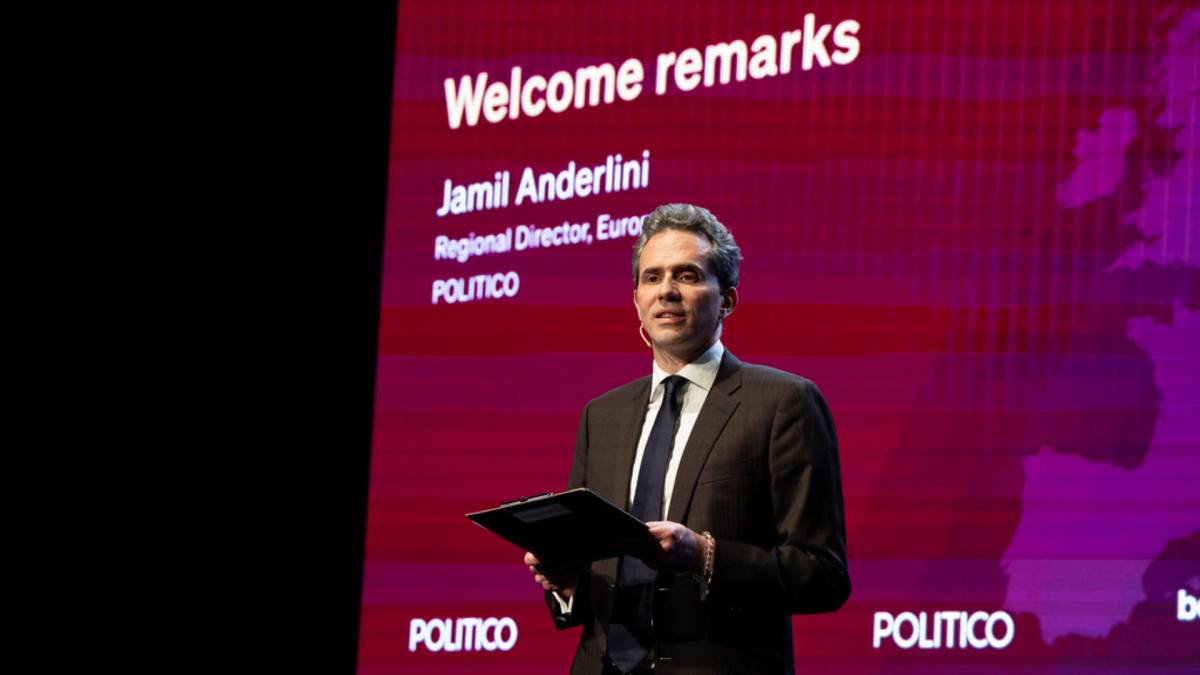
From left to right: Jaume Collboni, Adrian Jofre Bosch, Pedro Sánchez, Jamil Anderlini and Nacho Corredor. Photo: POLITICO / Tsun Ho and Rocío Curia
China vs. the U.S.: The Paradox of the Threat
Comparisons with China have featured prominently in many conversations. How is it possible that the European population fears the U.S. more than the Asian giant? The answer analyzed at the forum lies in the immediacy and unpredictability of the risk.
While China is perceived as a long-term challenge, a formidable economic competitor and a rival in the realm of democratic values (a key issue addressed by the Commission for Prosperity and the Industrial Strategy), its threat does not feel imminent in daily life. Beijing does not threaten to dismantle NATO tomorrow, nor does it interfere in a way that is so constraining for continental defense policy. In sharp contrast, Washington’s political gyrations and its trade reprisals generate immediate anxiety in markets. Europe’s enormous vulnerability to unilateral decisions by its main ally has been laid bare.
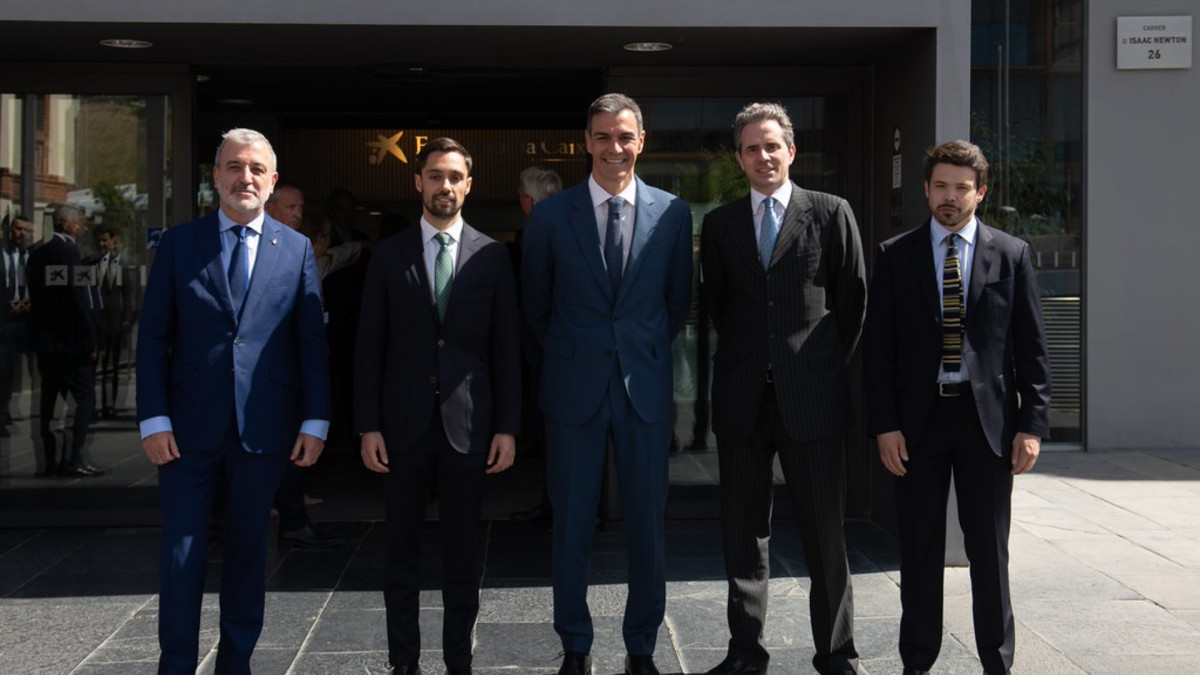
From left to right: Jaume Collboni, Adrian Jofre Bosch, Pedro Sánchez, Jamil Anderlini and Nacho Corredor. Photo: POLITICO / Tsun Ho and Rocío Curia
The Barcelona Consensus and the Pursuit of Strategic Autonomy
Faced with this challenging landscape, the European Pulse Forum 2026, far from being a space for shared complaints, has functioned as a laboratory of ideas—driven by POLITICO and beBartlet—to chart the continent’s future. Over the two days, what many are now calling the “Barcelona Consensus” began to take shape.
“Europe cannot continue outsourcing its security or relying on supply chains vulnerable to geostrategic blackmail”
This emerging concept advocates for a drastic acceleration of Europe’s strategic autonomy. In the conclusions drawn from this forum, it is clear that Europe cannot continue outsourcing its security nor relying on supply chains vulnerable to geostrategic blackmail. The Barcelona Consensus calls for the creation of a strengthened European defense architecture, an unprecedented push for domestic technology and energy industries, and the development of a proactive and cohesive foreign policy.
After the forum’s closing, the message sent from Barcelona to the world is concise: the European Union has taken note of the intense global cycle shift. It has been here, blending social momentum with high-level political leadership, where the foundations are being laid for building a sovereign Europe capable of shaping its own future on an increasingly hostile global stage.

Natalie Foster
I’m a political writer focused on making complex issues clear, accessible, and worth engaging with. From local dynamics to national debates, I aim to connect facts with context so readers can form their own informed views. I believe strong journalism should challenge, question, and open space for thoughtful discussion rather than amplify noise.