
In a world where the generation that lived through the world wars is no longer among us, we have wasted little time returning to an extremely dangerous bellicose logic. Even when defense is invoked as justification, militarism activates its own hard-to-control dynamics in the medium and long term. Today it is not enough to declare oneself, in abstract, against war. Civic lucidity is also required: without realizing it, we can move toward scenarios that no one desires and that were never part of the starting point of the decisions taken to protect us.
The Cambridge University historian Christopher Clark described with particular precision the causes of World War I in his work Los sonámbulos (The Sleepwalkers). His thesis remains highly relevant and proposes that great conflicts do not always erupt by a deliberate decision, but by a succession of seemingly rational steps that end up dragging everyone toward disaster. In other words: no one wants war, but little by little it becomes normalized.
“Europe, still burdened by the Great Recession, the pandemic and the wear from the war in Ukraine, also faces its own limitations”
Something similar is happening today. The United States has no interest in being trapped in conflicts that erode its hegemonic status and accelerate the transition toward a new global balance. For emerging powers, in many cases, it is enough to wait for their moment. Europe, still burdened by the Great Recession, the pandemic and the wear from the war in Ukraine, also faces its own limitations: a political architecture fragmented into twenty-seven voices that do not always speak clearly or in the same direction.
According to Clark, geopolitical sleepwalking advances in phases. First appears an arms race fueled by international uncertainty. Universalist and multilateral ideals weaken, replaced by discourses focused on national security against external threats. Then comes political and social contagion: governments, parties, media and part of the public begin to accept as inevitable increasingly militarized policies.
In a third phase, exclusionary nationalism and extreme positions gain ground, demanding stronger armies, more militarized societies and tougher external responses. Subsequently, that aggressive foreign policy erodes trust between states and multiplies hostility. Here arises the great paradox: we armed ourselves to defend, but ended up thinking in terms of offense. Later, revisionist or ultranationalist forces come to power. Finally, war ceases to be unthinkable and becomes a normalized option.
We are still time to wake up, but the speed with which debates that seemed settled have returned is striking: the reinstatement of mandatory military service in several European countries, the rapid increase in defense spending, the return of the rhetoric of nuclear deterrence or the growing tolerance toward wars that ignore basic international law. It is also surprising how quickly we have grown accustomed to violence.
In Germany, for example, the obligation of certain citizens to provide information to the state so as to be located in case of mobilization has sparked controversy. Five years ago, debates of this kind seemed unthinkable. Today they form part of the public conversation in various European countries. These are not isolated cases, but symptoms of a broader trend.
“Las sociedades pacifistas necesitan estar más alerta que nunca. Algunos países, entre ellos España, han mostrado en ocasiones mayor cautela respecto al aumento del gasto militar”
The good news is that it is not too late to react. Pacifist societies need to be more alert than ever. Some countries, among them Spain, have at times shown greater caution regarding rising military spending and have expressed reserves about certain external interventions. Yet other actors advance with less prudence or join without much debate to dynamics of confrontation that rarely benefit in the long term.
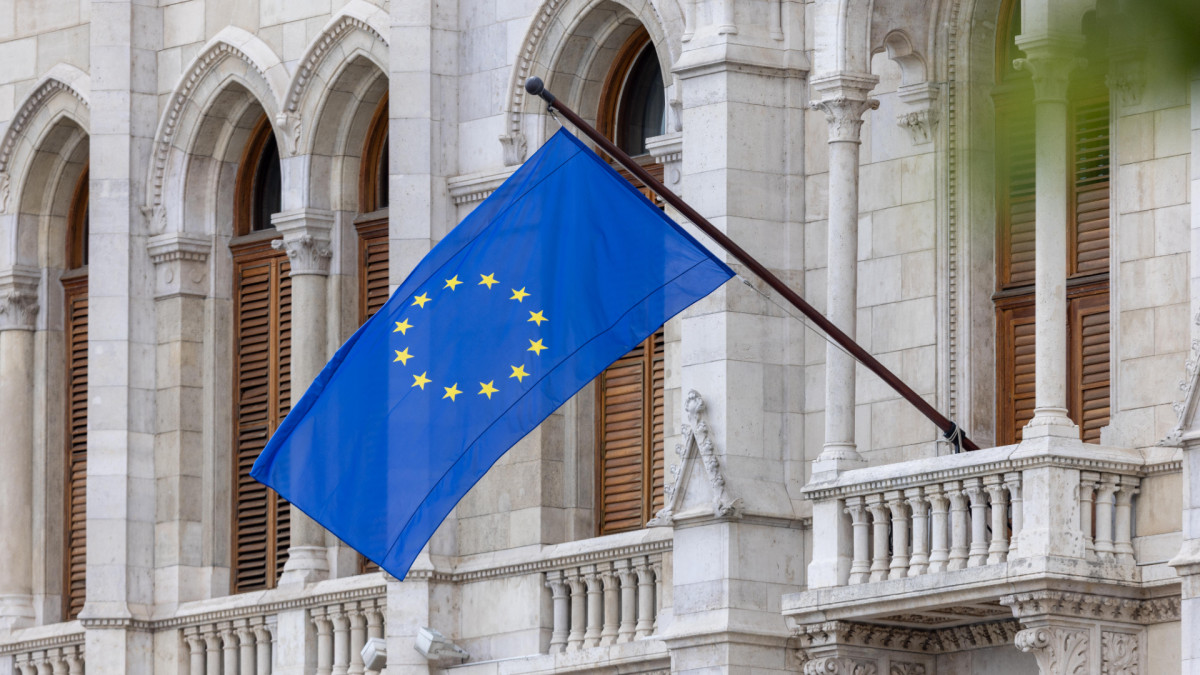
What we need, more than ever, is political leadership and civic courage to defend multilateralism, to remind ourselves what our representatives were elected to do and to accept that bellicose spirals have already shown where they lead. The European Union was born as a peace project both within and beyond its borders. It is wise not to forget it.
We must wake up from this collective sleepwalking and return to discussing what is essential: what security model we want, what values define us and what role we aspire to play in the world. Security, yes; but without renouncing our democratic identity or the vocation of peace that gave meaning to the European project. If we continue to believe in that idea of Europe, now is the moment to prove it.
