Washington continues to view a greater European weight within NATO favorably, but not necessarily an autonomous strategic autonomy understood as independence from the United States. This is how the international moment is understood by the director of the Hudson Institute, who explains his analysis clearly from an American perspective. In his view, Europe has decades of accumulating “more talk and white papers than real action”, and the challenge is no longer just to spend more, but to turn that spending into effective military capabilities.
In this Lisbon conversation, during the latest La Toja Forum, Rough surveys the main axes of U.S. foreign policy: China, Ukraine, Iran, the Mediterranean, Spain and Europe’s difficulty acting as a unified actor. Rough maintains that “strategic autonomy continues to generate considerable skepticism”, defends a more pragmatic reading of the international order and warns that, in Ukraine, “the most likely outcome is, simply, more war”.
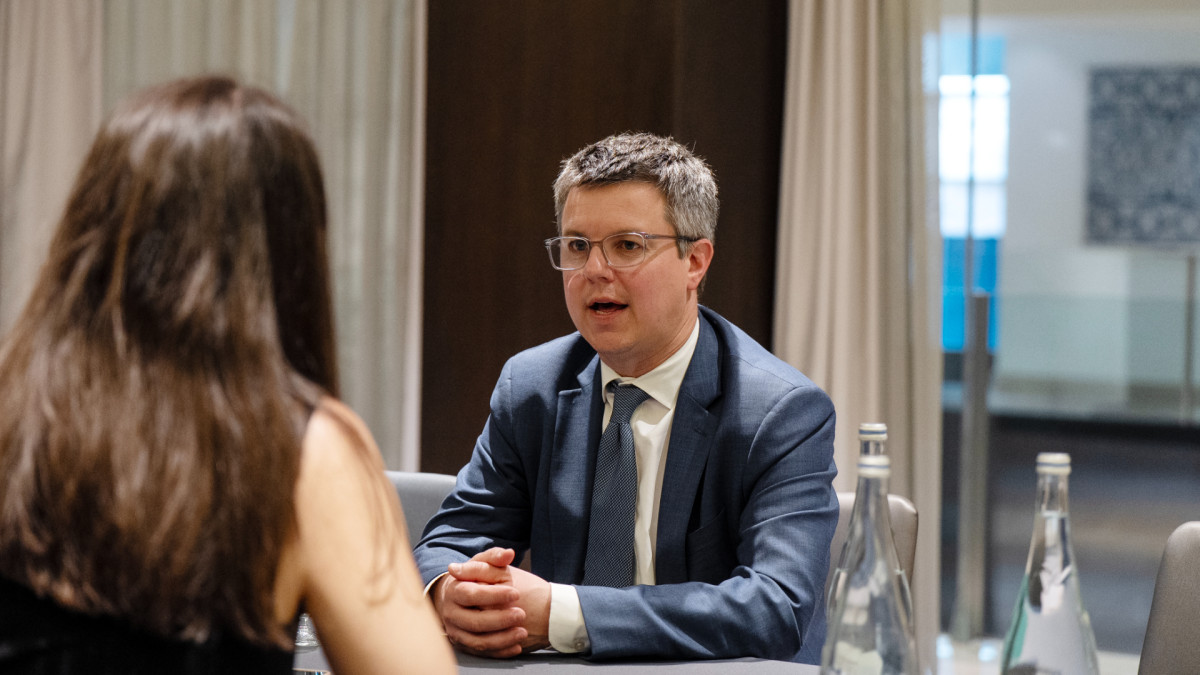
Peter Rough was one of the speakers at the latest La Toja Forum – Atlantic Link in Lisbon. Photo: Agenda Pública / Ana Brígida
¿Percibe usted un verdadero interés en la comunidad política de Estados Unidos por reforzar el pilar europeo dentro de la OTAN, o sigue existiendo un escepticismo de fondo hacia la autonomía estratégica europea?
I think it depends on how we define the terms. Strategic autonomy continues to generate considerable skepticism, but an European pillar within NATO is generally seen as a positive thing and would be well received.
We have spent decades talking about strategic autonomy. From initiatives like PESCO, which had very little funding, to more recent efforts to move toward greater autonomy, there have been more speeches and white papers than real action. In some areas, capabilities remain so nascent that it probably makes sense for Europe to proceed gradually, relying on the United States while building its own defense industrial base.
“The real debate in the coming years will be less about where the money is spent and more about how to ensure those investments translate into real capabilities”
Now there is a lot of debate about instruments like the SAFE mechanism: whether European defense spending should follow a transatlantic logic or be more protectionist. But with so much funding already underway, the real debate in the coming years will be less about where the money goes and more about how to guarantee that those investments translate into real capabilities. A substantial amount of funds are being committed, and often, capabilities take a long time to materialize.
That is where the real tension in defense lies, more than the debate over strategic autonomy.
¿Diría usted que nos encaminamos hacia una relación transatlántica más basada en intereses y menos guiada por valores?
The transatlantic relationship still has a values component, but it also has an economic argument and a geopolitical logic.
I do not think we should frame the world as a confrontation between democracies and autocracies. If we want to prevail in this competition against what I consider a real threat to the international system —the Leninist regime in Beijing—, we need to attract non-democratic countries like Saudi Arabia, Azerbaijan and Vietnam. They are hinge countries in the competition with China.
If we impose the same human rights standards on them that we apply to ourselves, at a minimum we limit their potential for cooperation and, at most, we risk pushing them toward the Chinese camp. And if we lose that competition by alienating those hinge countries, we could enter a new dark age that would make those criticisms of specific countries seem naïve and almost quaint in retrospect.
“The relevant category is whether countries are willing to operate within the international order that the United States has built since the end of World War II”
For me, the relevant category is whether countries are willing to operate within the international order that the United States has built since the end of World War II. Saudi Arabia generally says yes; Iran says no; Vietnam essentially says yes; China and Russia say no; and our European allies say yes. That is the threshold we must set.
Mirando más allá de la presidencia de Trump, ¿espera usted que la trayectoria actual de la política estadounidense de defensa y alianzas se mantenga, independientemente de quién esté en el poder?
If the Democrats come to power, they will be less inclined to support the large defense budgets proposed by President Trump. In general, they focus less than the Republicans on hard power capabilities. That said, they do not ignore defense entirely—would be unfair to suggest otherwise—but it is clear that it occupies a less central place in their approach.
To illustrate simply, in U.S. budget debates, whenever Republicans ask for an additional dollar for defense, Democrats typically argue that an equivalent amount should be allocated to domestic priorities. That sums up the underlying tension: Republicans prioritize defense; Democrats, domestic spending.
Where Democrats differ more clearly is in the tone of the relationship. They will focus on language and the overall climate of the transatlantic relations. They will seek to repair ties with Europe, with a more reassuring and conciliatory approach. Republicans tend to fear that, while that may seem effective on the surface, it could be counterproductive by fostering complacency in Europe.
“It gave the impression that the problems of the transatlantic relationship were solely a product of Donald Trump, and I don’t think that’s an accurate diagnosis”
In other words, it could lead European countries to conclude that defense spending does not need to rise; that maintaining current levels is enough, especially when domestic pressures compete for those resources, such as pensions. That was one of my main criticisms of President Biden: he gave the impression that the problems of the transatlantic relationship were solely the product of Donald Trump, and I don’t think that’s an accurate diagnosis.
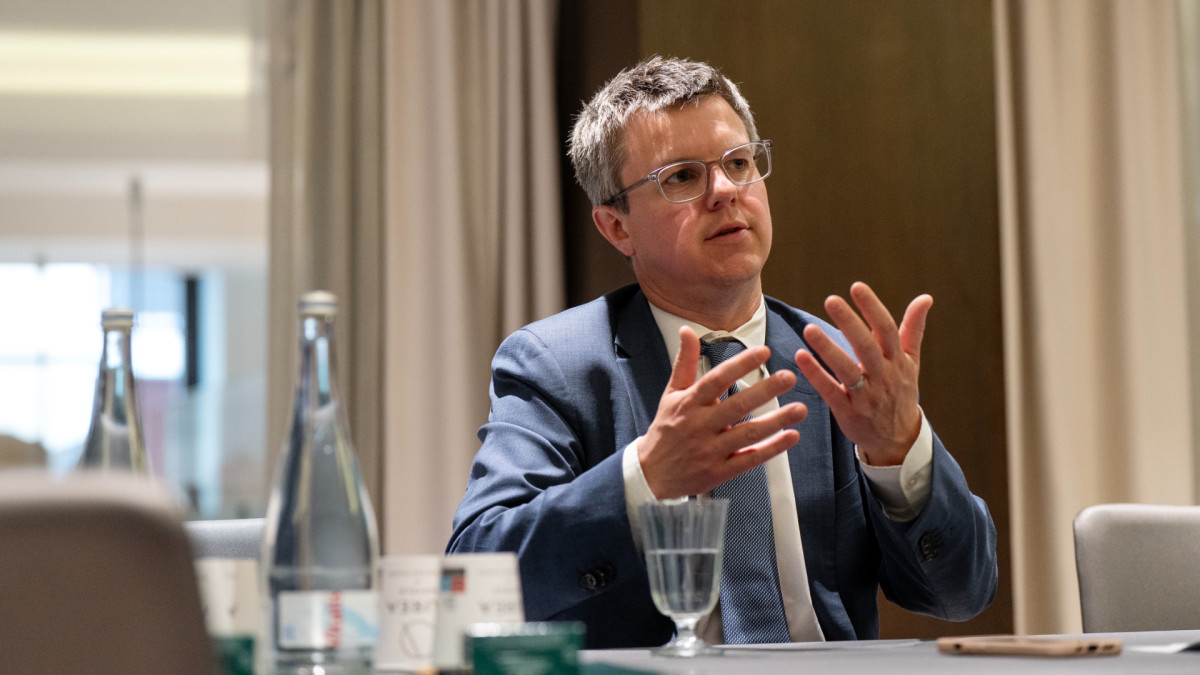
Esteban and Rough discuss the evolution of U.S. foreign policy. Photo: Agenda Pública / Ana Brígida
¿Hasta qué punto ha cambiado estructuralmente el trumpismo la forma de pensar la política exterior estadounidense?
We ought to acknowledge President Trump’s lasting shift in policy toward China that began in 2017. We will see how far he aims to compete with China, starting with his planned trip to Xi Jinping’s Beijing in May, if it finally takes place. But, more broadly, the idea that integrating China into the World Trade Organization and other Western institutions would shape its behavior has ended up strengthening the country that is now our main adversary.
That approach is generally considered a failure. The expectation was that greater prosperity would lead to political liberalization: that China would become richer, more democratic, and more aligned with the West. It simply has not happened. That is why I believe this change in mindset has come to stay.
Secondly, it’s not that Democrats will apply trade policy exactly the same as Trump, but they are already more inclined toward economic intervention. They are closer to social democrats than to free-market conservatives. As a result, Trump’s willingness to use tariffs and manage trade, rather than promoting free trade, is something Democrats may adopt and develop.
“These two trends —a tougher stance on China and a more interventionist approach to the international political economy— are likely to endure”
Part of this stems from domestic politics. Trump has made significant gains among working-class and blue-collar voters, and Democrats are responding. So these two trends —a tougher stance on China and a more interventionist approach to the international political economy— are likely to endure. And, alongside that, there will continue to be talks with Europe to shoulder a larger share of the burden.
¿Cómo ve usted que la polarización interna de Estados Unidos afecte a sus compromisos exteriores, en particular hacia Europa?
We are here in Lisbon, perched above some ruins of the Roman Empire, which we hope are not a metaphor for the fate of the United States. That said, I am not sure that domestic polarization —and, at times, dysfunction— is as relevant to foreign policy as it might seem.
Americans tend to vote based on domestic issues, unless there is a major international crisis. In foreign policy, yes they have instincts, and polls reflect it. Overall, they view Europe positively and recognize Vladimir Putin as an aggressive and problematic actor.
However, under the U.S. Constitution —particularly Article II—much of foreign policy authority rests with the president. If, in addition, the rest of the world lies geographically far away, it is really up to the president to lead, define and shape public opinion on foreign policy. Political science literature is quite clear on this: leadership matters more in foreign policy than in areas like tax policy, where public opinion is more settled.
The American public has a broadly positive and healthy disposition toward Europe. At the same time, some of the criticisms voiced by President Trump have gained traction, largely because they come from the Oval Office.
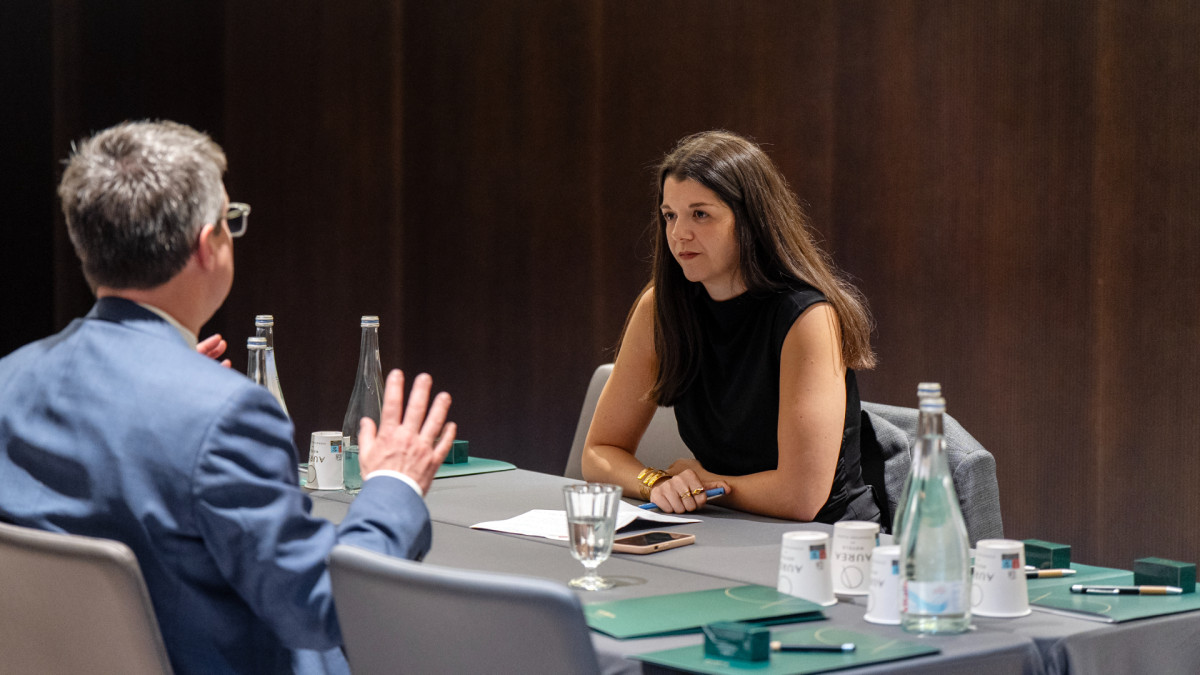
Rough analyzes the relationship between domestic polarization in the United States and its foreign commitments. Photo: Agenda Pública / Ana Brígida
Cada vez se habla más de una posible alineación entre Estados Unidos, Marruecos e Israel en el Mediterráneo occidental. ¿Cómo podría afectar esto a la posición estratégica de España?
No conozco este asunto en detalle. Dicho eso, como observación general, las relaciones de la Administración con Israel y Marruecos son extremadamente sólidas, mientras que sus relaciones con Madrid son relativamente débiles. En la medida en que exista esa dinámica triangular —algo que no puedo valorar por completo—, situaría a España en desventaja.
No pienso que Portugal ni el Gobierno actual allí tengan un peso significativo en esta ecuación.
El sur de Europa no parece ser una prioridad para la política estadounidense en este momento. ¿Podría cambiar?
La cuestión que más moviliza al presidente Trump en relación con el Mediterráneo y el sur de Europa es la migración. Es un foco constante para él y sigue estrechamente vinculado tanto a su concepción de la seguridad nacional como a las preocupaciones de los países mediterráneos.
Sin embargo, cuando hablamos de asuntos de seguridad dura, la principal preocupación del Pentágono es Rusia, en particular la amenaza que representa para los flancos oriental y septentrional de Europa, así como para el flanco suroriental. Eso pesa más que la migración procedente de África.
Puede haber una excepción parcial: el reciente aumento de actividad en torno a Libia durante los últimos seis meses, aproximadamente. Pero, más allá de eso, hay un foco adicional limitado.
En su opinión, en lo que respecta a Irán y teniendo en cuenta los acontecimientos recientes, ¿la política de Estados Unidos se decide principalmente en Washington o está significativamente influida por aliados regionales como Israel?
Es cierto que los países árabes del Golfo e Israel —especialmente Israel— tienen acceso al presidente, han presentado sus argumentos y él los ha escuchado.
“Esta ha sido una estrategia estadounidense sobre Irán, liderada por Donald Trump”
Pero, en última instancia, esta ha sido una estrategia estadounidense sobre Irán, liderada por Donald Trump. En el momento en que el presidente decida —en función de la fase del conflicto— que las operaciones deben detenerse, ajustarse o intensificarse, y se lo comunique al primer ministro Netanyahu, la respuesta desde Jerusalén será aceptarlo, aunque en privado pueda haber reservas. Israel actúa dentro del marco de una campaña liderada por Estados Unidos y no se apartará abiertamente de la dirección marcada por Washington.

Esteban and Rough discuss the U.S. policy toward Iran and the role of Israel. Photo: Agenda Pública / Ana Brígida
¿Cómo afectarán las próximas elecciones de medio mandato a la política exterior de Estados Unidos?
No considero que las elecciones de medio mandato importen demasiado, porque la política exterior y la seguridad nacional son, en última instancia, dominio del presidente.
Si los demócratas se hacen con la Cámara de Representantes —algo que la mayoría de analistas espera, dada la estrechez de la actual mayoría republicana—, eso podría llevar en realidad al presidente Trump a estar más activo en la escena internacional. Hemos visto patrones similares en otros lugares. Emmanuel Macron, por ejemplo, carece de mayoría parlamentaria y se ha volcado más en la política exterior. Incluso se podría argumentar que la posición internacional de Pedro Sánchez está parcialmente condicionada por presiones políticas internas.
En ese escenario, Trump podría concluir que ya no son viables grandes reformas internas y centrarse más en los asuntos exteriores. Es completamente plausible.
Ha mencionado a Pedro Sánchez, que ha sido bastante crítico con el umbral del 5%. ¿Cree que esto tiene un impacto real en la política del presidente Trump?
A veces me sorprenden las preguntas recurrentes sobre la interferencia estadounidense en la política europea, cuando, por ejemplo, Pedro Sánchez acaba de acoger la Internacional Socialista, una coalición de actores internacionales de izquierda. Estas críticas no pueden ir solo en una dirección.
Esa comparación me viene a la cabeza porque algunas de las críticas que Sánchez dirige a Trump podrían aplicarse en sentido inverso. Hay, hasta cierto punto, una dosis de proyección ahí.
“La oposición activa y pública de España a la operación Epic Fury tendrá consecuencias”
En cuanto al impacto, sí creo que la oposición activa y pública de España a la operación Epic Fury tendrá consecuencias. Podría haber una revisión de la postura militar estadounidense, y bases como la de Rota podrían formar parte de esa discusión. Pero, más allá de eso, también hay medidas más sutiles que podrían afectar a España y a sus diplomáticos.
Por ejemplo, dentro de la OTAN, Estados Unidos podría impulsar cambios en el papel de España en determinados formatos, limitando potencialmente su influencia, incluso de manera informal. También existen instrumentos más suaves: el orden de intervención en reuniones clave, el acceso o los niveles de interlocución. Son señales que importan en órganos como el Consejo del Atlántico Norte o el Comité Militar.
En otras palabras, hay múltiples formas en las que Estados Unidos podría señalar su malestar, incluida una simple reducción del nivel de cooperación cotidiana.
Dicho esto, conviene señalar que existen formas legítimas y constructivas de criticar la guerra. Los gobiernos pueden trasladar sus preocupaciones en private to the U.S. Administration and make them public to their own citizens, siempre que sea de una manera seria, medida y creíble.
La dificultad es que la estrategia de Irán consiste, en parte, en abrir una brecha entre Washington y sus aliados —en particular en Europa y el Golfo— para forzar un desenlace en sus propios términos. En ese contexto, una retórica desde Madrid que parezca alineada con esa dinámica corre el riesgo de reforzar las percepciones iraníes y, por tanto, podría tener consecuencias tangibles.
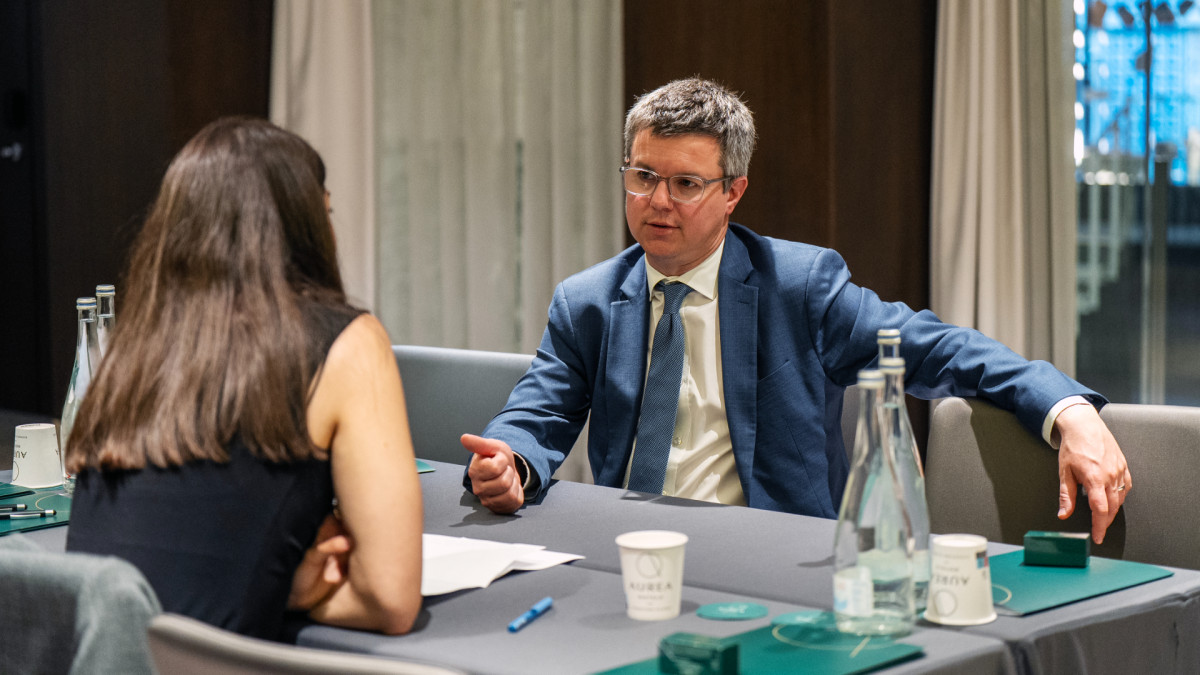
Rough analyzes the impact of tensions between Spain and the United States within NATO. Photo: Agenda Pública / Ana Brígida
¿Se percibe a Europa como un actor unificado en Estados Unidos?
A mi juicio, para proyectar poder globalmente se necesitan tres cosas: poder militar, poder económico y una estructura cohesionada de toma de decisiones; en otras palabras, una autoridad ejecutiva.
Europe has some military power, but not enough to act as an independent pole in global affairs. It certainly has economic power, so that criterion is met. But when it comes to executive decision-making, it falls short.
Ursula von der Leyen has authority as president of the Commission, but she is not the actual political leader of Europe. If someone like Friedrich Merz took on that role, it would likely generate tensions with figures like Emmanuel Macron. And if Macron claimed that position for himself, others —particularly in Germany— would oppose. Meanwhile, the United Kingdom continues to assert its role as a nuclear power. And I have not even mentioned the Eastern or Southern European states. So there is no clear center of leadership.
As a result, Europe can sometimes reach common positions, but only through complex bureaucratic processes of consensus-building. The outcome is usually the lowest common denominator, and the pace can be a serious constraint.
“Even Europe — geostrategically connected, historically intertwined, and broadly aligned in political values — has difficulty acting in a unified way”
That is why I am skeptical of the idea, debated today, that middle powers can form a coherent bloc. Even Europe — which is geographically connected, historically intertwined, and broadly aligned in political values — has difficulty acting in a unified way. It is hard to see how countries like Indonesia, South Africa, Brazil or Turkey, each with distinct strategic interests, histories and geopolitical positions, could form a cohesive group.
Washington engages with Europe on a case-by-case basis, depending on where competencies lie. Where the European Union has a clear authority, it is treated as a relevant interlocutor. For example, the Trade Commissioner, Maroš Šefčovič, has real influence because that power has been delegated to him, and his U.S. counterparts act accordingly.
By contrast, in realms such as foreign and defense policy, where authority is more dispersed, European representatives are often seen as less relevant. Access and outreach depend a lot on whether a given actor is perceived to have real decision-making power. It is, in fact, a very pragmatic American approach.
We have seen this in practice. President Trump closed a trade and investment deal with Ursula von der Leyen because she was considered the right counterpart. It is similar to what happened during the eurozone crisis, when the focus was on Angela Merkel and Wolfgang Schäuble. But in a different context —for example, when it came to a military action in Syria against Assad—, the United States looked to the United Kingdom and France.
¿Ve alguna vía creíble hacia una solución negociada en Ucrania? ¿O estamos más bien inclinados hacia un conflicto congelado o atrapados en él? ¿Existe el riesgo de que el cansancio de la guerra en Europa y otros países occidentales modifique el cálculo estratégico?
It is unlikely that we will see a short-term deal because both Russia and Ukraine believe they have a viable path forward. As long as that remains the case, neither side will be inclined to make significant concessions.
The Russians believe they can wear down the Ukrainian armed forces. They see divisions, or at least tensions, between Washington and European capitals, and they also observe that U.S. resources —such as Patriot interceptors— are being used in other theaters, which could limit support for Ukraine. From their perspective, this creates an opportunity to advance on the battlefield, potentially isolate Ukraine, and ultimately win the war. That is their theory of victory.
The Ukrainians, however, have their own path. They are in a very different position than a year ago, not to mention two years ago, in terms of their defense-industrial capacity. The European defense-industrial base is also slowly but steadily improving. Meanwhile, the United States continues to provide essential intelligence support.
As a result, Ukrainian forces have been able to inflict significant losses on Russia — tens of thousands of casualties per month — and at the same time strike key economic infrastructures, such as refineries and export terminals. This pressures the Russian economy and forces the Kremlin to make tough decisions, including raising the costs to sustain recruitment and the risk of broader economic strain.
“These competing victory theories play out in a negotiating deadlock: Ukraine will not voluntarily cede Donetsk or Lugansk”
From the Ukrainian perspective, this creates a path to weaken Russia over time and reach a resolution. These competing victory theories play out in a negotiating deadlock: Ukraine will not voluntarily cede Donetsk or Lugansk, while Russia still regards control of Donbas as a minimum objective.
More than a frozen conflict, we will probably see ongoing active fighting, possibly with a new Russian offensive in the coming months.
Only if, within the next six to twelve months, one side concludes that it cannot achieve its strategic objectives will conditions for a negotiated settlement likely emerge.
The President Trump has also mentioned July 4 —the 250th anniversary celebrations of the United States— as a possible deadline by which he would like to see the war ended. One possibility is that he seeks to increase pressure on President Zelensky to achieve that objective.
Nevertheless, Ukraine continues to receive substantial European funding and retains significant own capabilities. That is why I believe the most likely outcome is simply more war.
Muchas gracias.
In partnership with