
In a fragmented global landscape, Catalonia’s strategy centers on bold diversification that does not shut doors to Beijing. Rather than closing ranks in the face of geopolitical panic, the Government seeks to channel Asian interest as a growth lever. The key, Gibert explains, lies in “conditioning that investment to our European standards,” guaranteeing productive and employment returns in sectors where the region already excels, such as biotechnology, pharmaceuticals, or the emerging hub of artificial intelligence. After all, the secretary recalls, “in the past the Japanese came […] or the Koreans arrived, and the same debate was not opened.”
But this macroeconomic revival requires solid foundations at home. The administration of Salvador Illa faces the imminent challenge of approving public accounts deemed “very necessary” to steer infrastructure ahead of the looming end of Next Generation funds. Moreover, Catalonia demands its place on the new Spanish industrial map, insisting on participating in groundbreaking and lucrative debates such as the defense industry.
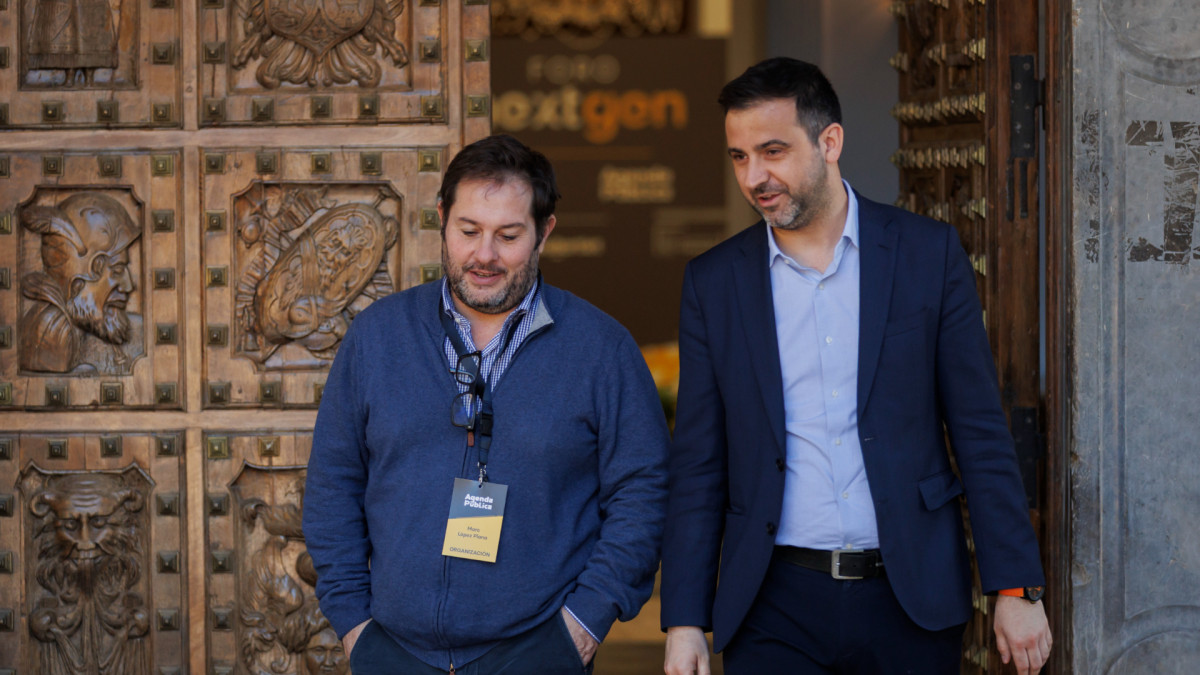
López Plana and Gibert share the experience of having been members of a Government. Photo: Agenda Publica / Álex Cámara
Let’s begin with Catalonia’s strategy toward China. How is the Government shaping its relationship with Beijing?
In the current context, with trading partners that vary and whose reliability isn’t always what was expected years ago, the overarching bet isn’t solely on China: it is about diversifying our sources, both for imports and exports, to gain stability in a climate of uncertainty.
“The Chinese investor, often with institutional support, sees an opportunity to invest in Europe through Spain. From Catalonia and from Spain, what we do is condition that investment to our standards.”
The growing interest in China is also explained by a framework of relations between Spain and China that goes back a long way and has created a favorable environment for investment. The Chinese investor, frequently backed by institutions, sees a chance to invest in Europe via Spain. From Catalonia and from Spain, what we do is condition that investment to our European and Spanish standards so that it happens as we want: in productive terms and also in terms of jobs. It’s an opportunity we shouldn’t miss.
In the past the Japanese came and established Nissan, or the Koreans arrived, and the same debate did not open. Now, when Chinese investments come, there is a second reading that I can understand, but our approach must be the same.
What is the Government’s objective with those investments?
That they be investments like any other and that they meet the minimum standards required in the European Union. From there, it’s about generating opportunities for the people living in Catalonia and further strengthening the industry already on the ground.
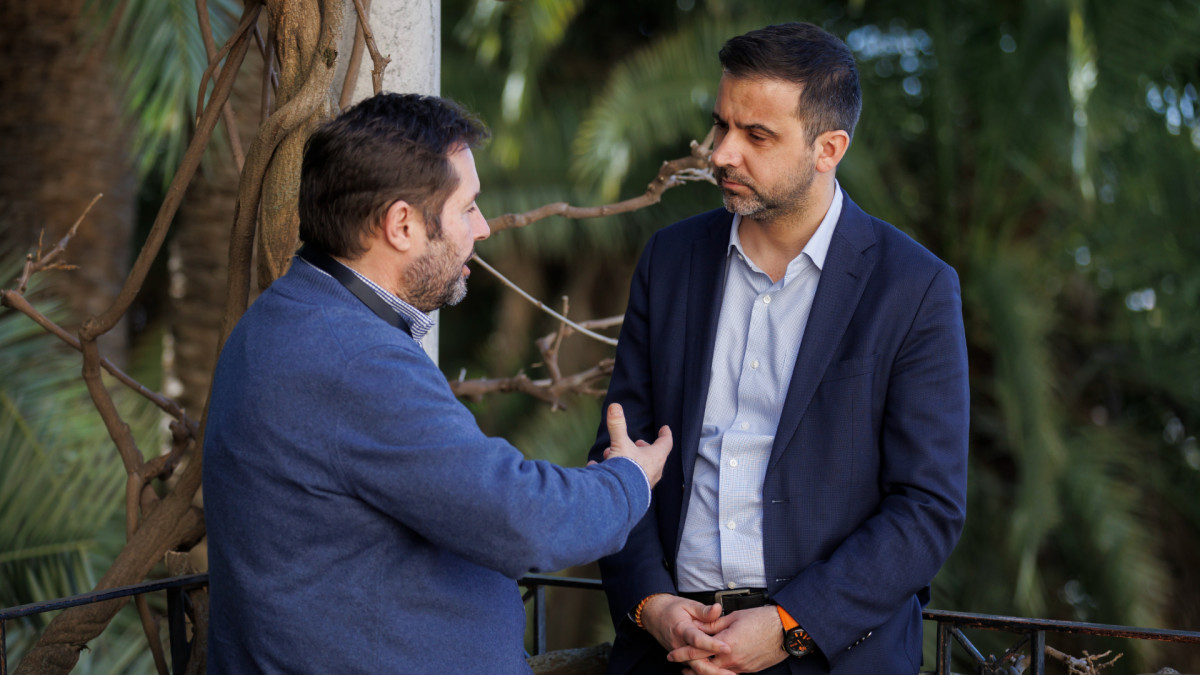
Pol Gibert details the current state of foreign investment in Catalonia. Photo: Agenda Publica / Álex Cámara
Which industry in Catalonia would you highlight as capable of contributing to European strategic autonomy?
Above all, biotechnology, health, pharmaceuticals, and chemistry. We have been strong there for a long time and hold a leadership position that is solidifying. We are attracting substantial investment around Barcelona: international companies with headquarters or production in Catalonia, and research centers that are progressing very positively. I think of AstraZeneca’s new center and investments like HIPRA, which are helping shift research lines from the animal domain toward human applications.
But we do not rule out other fields. We are seeing a very significant surge in artificial intelligence (AI). In Catalonia a hub of AI is being created that did not exist before, and we also want to contribute a political vision: a more humane, more social AI, with clear limits on what it can contribute and to what extent. It’s a debate that goes beyond industry, but one we also want to address.
Catalonia has spent years under the procés, though it now seems to be regaining ground. Do you share that diagnosis?
The Catalan brand, the Barcelona brand, is highly resilient. It has endured well even in difficult moments, and that has allowed us to navigate turbulent times without losing the entire potential along the way. Obviously, some ground has been lost: denying it would be counterproductive and, moreover, not true.
“The current government’s position is clearly to recover economic potential, and we are working on it with an ambitious plan.”
It is also true that the post-pandemic economic context has helped us reclaim positions. The current government’s stance is clearly to recover economic potential, and we are working on an ambitious plan. I believe we are in a position to recover that lost time without clinging to the past, and we do so with optimism.
The climate is very different and the productive sector acknowledges it. This is what we aimed to stabilize in the first year and a half of the mandate and, from now on, to accelerate. Yesterday we learned export figures: we are above 100 billion euros, a record high. And in attracting investment we are also breaking records. The challenge is to seize this moment to firmly anchor Catalonia’s potential.
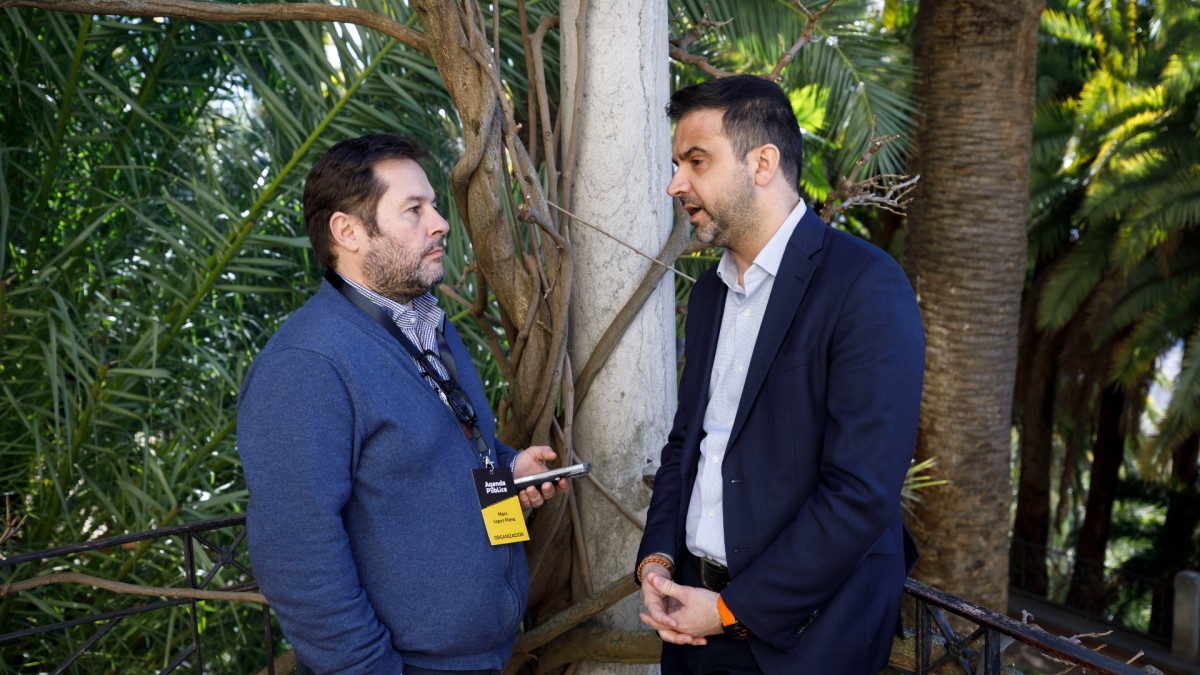
The Secretary General of Business assesses the current regional situation after the procés and the pandemic. Photo: Agenda Publica / Álex Cámara
To what extent are budgets in Catalonia necessary to consolidate the early stage of Salvador Illa’s government and relaunch the industrial sector?
They are very necessary. Essential? I’m not sure, but certainly highly advisable for any country. We’re talking about budgets built almost from scratch: since 2023 the context has changed significantly and, with a new government, a new budget is needed.
From a business perspective, we advocate for accounts that allow reorienting priorities: basic infrastructures we want to tackle, support for productive investment in industry, and, in general, adjusting objectives that have shifted and require a new budgeting framework.
Although Next Generation funds end this year, experts say investments will have effects two to three years later. How does Catalonia plan for a scenario without those funds?
It’s a complex debate, because we’ve grown accustomed to a prominent source of project financing. In some areas, part of it can be replaced by funds the State creates to back lines it considers important. In other areas, of course, they will disappear.
“We want to keep pushing so that the productive fabric adapts to this trend. There is a significant effort, and again the key is having a budget.”
From the autonomous perspective, we want to maintain lines that align, as much as possible, with those started under Next Generation. We won’t be able to cover everything, but there are clear priorities: innovation, resilience, and sustainability. We want to keep pushing to adapt the productive fabric to this trend. It’s a major effort, and again having a budget is crucial.
With the new fit of the Government within Spanish governance, what does Catalonia need from the central government? What role should peripheral hubs play versus the center in industrial policy?
What is needed is a debate that acknowledges there are several powerful economic poles in the territory: not only Barcelona and Catalonia, but also Andalusia or the Valencian Community. That requires a joint vision. The Government shares it and is deeply involved with the region.
There are also new debates, such as defense, that will mobilize substantial resources and can spur industry and innovation in Spain. Catalonia also wants to participate in this new phase: for various reasons, we have not done so until now, but we believe that, with its technological and industrial appeal, Catalonia cannot be left out. In these areas we are working now, with an alignment that, for the moment, is full with the various ministries involved in the Government of Spain.
Thank you very much.
