
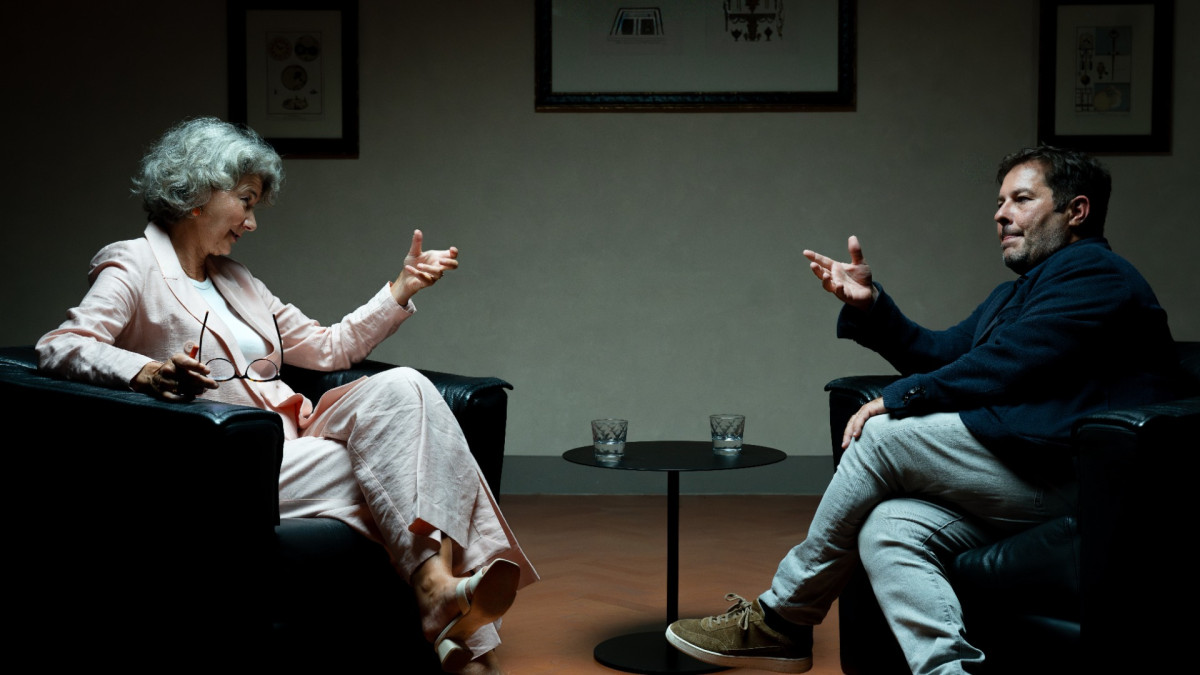
The European University Institute (Instituto Universitario Europeo, IUE) is, in the words of The Economist, the Hogwarts of the European Union. And its German president, Patrizia Nanz, is its Dumbledore. The IUE, based in Florence, has opened its doors to the editor and director of Agenda Pública, Marc López Plana, for a conversation with its president about the institute’s work, Europe’s role today, and the threats to the future of the European project among other topics.
During the dialogue, Nanz has shown optimism about her leadership at the IUE, noting that the pursuit of “excellence in research and education” continues and acknowledges that the institute’s research work is “a key element for guiding the member states’ institutions and Brussels to find a path forward”. Therefore, her perspective, on the eve of Ursula von der Leyen’s State of the European Union speech (SOTEU, for short in English), is essential to uncover the intricacies of Europe’s future.
The role of the IUE and Nanz in the evolution of the European Union is pivotal. From Florence, the German warns that “the engine of social transformation is digital sovereignty” and cautions that “Trump understands it, China understands it” and we Europeans “should wake up.” For all this, her figure becomes key to addressing today’s Europe.
Patrizia Nanz recognises that there are pressures against the university, the social sciences, and the humanities. Image provided by the IUE.
Do you think the European University Institute is the laboratory that the member states requested for Europe?
I think it is exactly a laboratory for Europe. It was founded in 1972 by the six member states of the Union at the time. It opened its doors in 1976, precisely with the mission of thinking about the direction of the European project and guiding the institutions in general and also the societies.
The question is, then and now, to think about Europe, even before having a fully developed European Union. Now that the European Union is in crisis, we must rethink how it should be.
We are a laboratory in its most authentic sense, and also a mini-Europe, in the sense that we host researchers and academics from across the continent and beyond.
There is therefore no dominant national culture. Nor an academic one. It is among the various cultural and academic perspectives ——— where this idea of Europe is forged.
I know there are many alumni who now work in the European Commission and other European institutions. How does the Institute transfer its academic knowledge to contemporary policymaking?
Transfer is not measured solely through alumni; it is also transmitted through people and ideas in a broad sense. Of course, there are alumni. We have around half of them, roughly four thousand today, who we know did not go into academia or become professors, but joined public institutions or became public servants. Also those who work for NGOs, the media, etc.
So it is a fairly large number that we can rely on. And they are truly formed in the most authentic sense of Europe, because they become European while socialising here. But it is also through the ideas of people that transfer occurs. I experience it daily. We really stay in touch and connect with policymakers, but also with NGOs and the private sector, in order to change ideas about policy, transferring not only through ideas but also through people.
“We do not imagine ourselves as a factory for civil servants, but as a place for people who have the capacity to play a useful role: whether in the public sector or in the private sector”
Therefore, we never see ourselves as a factory for civil servants, but rather as a space to step back, to question assumptions and, in doing so, to play a very useful role, whether in the public service or in the private sector.
But you know there is a big debate in the academic world about whether academia can transfer knowledge and make that knowledge policy-relevant. So what does that mean for you? What is your stance in this debate about the role of academia? Not in policy formulation, but in its capacity to influence policies and policymakers.
It is a very important question that I have been asked in previous roles, as I worked as a bridge between science and politics. It is about the famous gap between knowledge and action. And after twenty years dedicated to the interface between science and policy, and also to how to do it, I tested different formats.
I can say that it primarily depends on political institutions, which find it very difficult to absorb knowledge. It is not just that science cannot communicate; for example, ministries are organized in a certain way that can be counterproductive to this end.
Another problem is that, given that we face different challenges and crises, it is not that yesterday’s answers no longer work. We must imagine a different kind of institutions to be able to address these issues.
First, we must rethink the institutions and then think about how science could interact with these institutions. And for that we would need spaces for cocreation. We need empirical, research-based foundations for analysing certain issues. But then we also need, of course, knowledge from other people in other sectors to gain a fuller understanding of the landscape.
“The university should create a space that allows it to step back, analyse the panorama, and then arrive at solutions”
In my view, the greatest service a university can provide is to create a space. Not just to feed into the intricacies of the political cycle, but to think about what the real problem is, how it relates to other issues. In other words, to take a step back to understand the overall panorama and then proceed with solutions.
Do you think the research conducted at your institute right now has the potential to influence policy, both in European institutions and in the member states?
Not necessarily. I mean, we also have very practical research, for instance on water regulation or energy, electricity, and gas. It is obvious how this relates to policymakers. I sense that trying to think about competitiveness, what it should mean in the future, or democracy, seems abstract.
In the long term, I think it could be a key element for member state and Brussels institutions to have a path to follow. So, without a doubt, yes.
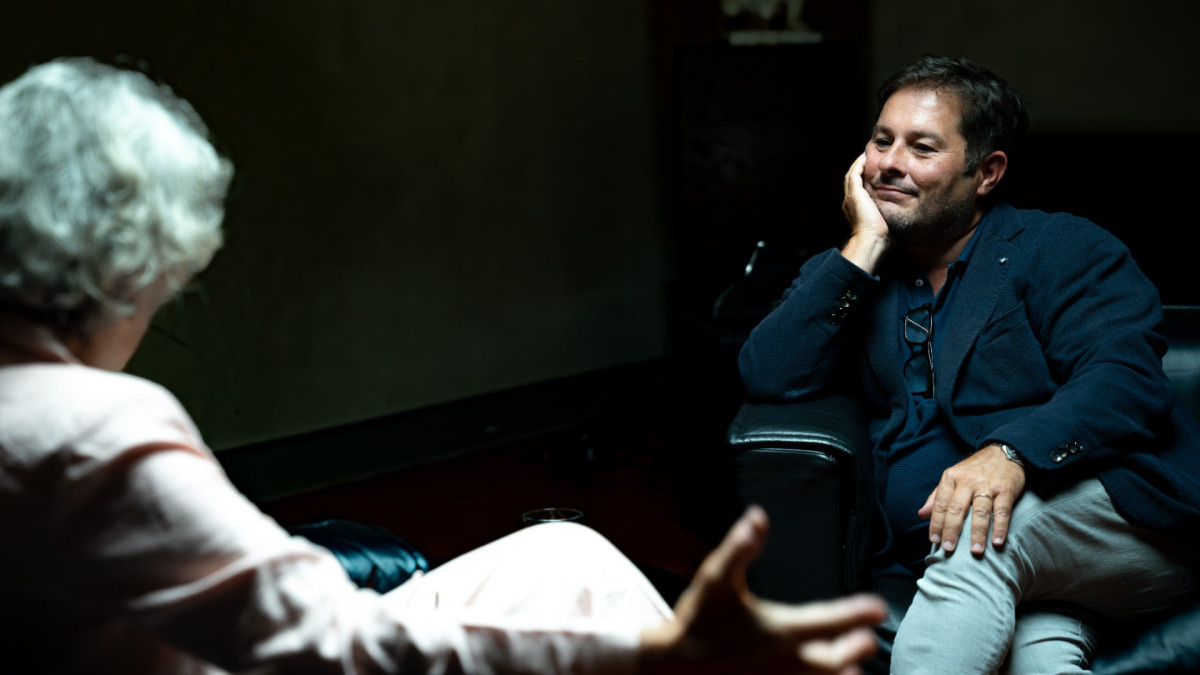
Marc López delves into the Europe-vision Patrizia Nanz holds. Image provided by the IUE
After a year and a half as president of the European University Institute, what is your assessment of this first term?
When I arrived here I tried to understand the situation. Even before becoming president, because this is where I did my PhD twenty-five years ago, so it isn’t completely new to me this institute. Of course, more than two decades ago the debate about Europe was very lively because it was a constitutional moment. Now, interest in Europe is much less present in the member states, but also in society in general.
“Universities are being attacked and Europe does not occupy a leading place on the international agenda”
It is a tougher moment to be a university, which, as you know, is Europe-oriented. On one hand, universities are being attacked, but on the other, Europe often does not hold a priority place on the agenda. That is my first point. I tried to understand how the departments have evolved: they have grown much larger.
We have the Robert Schuman Centre, we have the School of Transnational Governance… I try to weigh what there is, but also to think, together with faculty and researchers in particular, what the university’s role should be. We have a working group, and we have even secured a grant to research the issue of academic freedom, which is also the responsibility that comes with this freedom toward society, because it concerns public funding.
That was my first point. On the other hand, it should be noted that this is an international organisation and not just a university. Therefore, its mission is that of a university, but the organisation is intergovernmental, not merely international. In other words, it can host governmental organisations. I believe that, and it is written in the founding document that a linkage with societies and institutions in general should have been established.
So, how do you do that? First, we said we had to rethink what the “mission” is. Once that is resolved, we asked: what is the long-term vision that guides us? So I returned to the founding document and asked myself: what does it mean that today we have three dimensions? One is, obviously, excellence in research and education.
The other is communication beyond the academic realm. And I’ve strengthened it a lot. So, it is really about building communication from the outset of research, toward societies and institutions. The last dimension is collaboration with social and economic actors. Then, how can we create places where knowledge interacts with the knowledge of other actors, to share ideas and refine the knowledge we produce?
To this end, we are now creating infrastructures. Not just projects, but infrastructures to host other actors. I’ll give you a couple of examples.
First, we will have an initiative on security in which, rather than merely establishing connections, as has been done to some extent at the Munich conference, we will hold in-depth political dialogues with the member states on EU security issues. Not only regarding defence, but also in terms of security in that sense, energy, food, democracy, disinformation, etc.
The second is to give three examples: a technology hub, understanding that today, without technology, we cannot understand societies. I don’t know if they understand it now, but there is a precise role for the social sciences and humanities on which we base ourselves. Right now, both are very important to guide society.
“We need digital sovereignty as a prerequisite for other sovereigties: democratic, prosperity, food, etc.”
It is also important to understand that this is not about technology, but about the engine of social transformation. I will perhaps discuss it more deeply, because it is a crucial point for me. Today, if Europe wants to be independent in a geopolitical triangle where our world used to be China and the United States, we need digital sovereignty as a precondition for any other kind of sovereignty—democracy, prosperity, food, energy, etc.
And the third, just to give you an example, how to reach citizens, which is one of the most difficult questions. Of course we would like to fund an open laboratory with a format more oriented to the public, focusing more on creativity to think about the future and to harness also social imagination, together with artists.
Thus we could create a museum of the future with more tangible exhibitions for citizens, both in digital and real formats, and also connect with Florence, which is very important to me and to Italy.
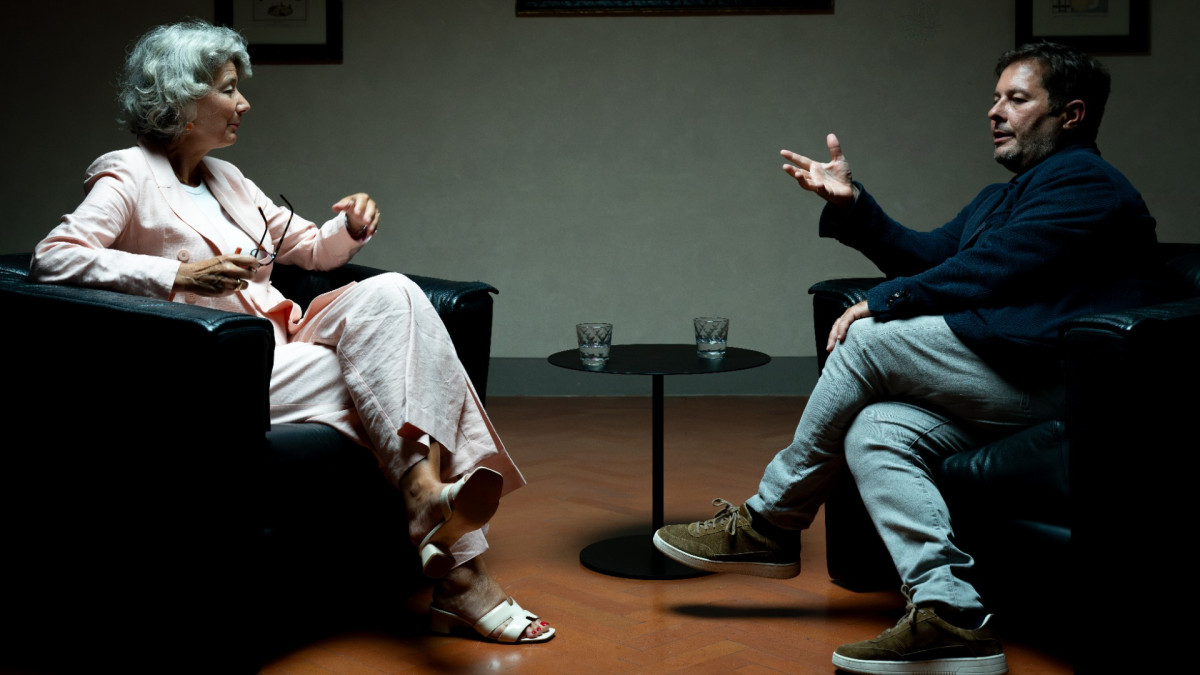
The IUE president Patrizia Nanz, together with the director of ‘Agenda Pública’, Marc López Plana. Image provided by the IUE.
What about the relationship with the media?
I began reflecting with the community we have here. What is the role of universities today? I think it’s not a good idea to go on the defensive and say: “We are excellent.” And this comes from The Economist article, in other words, it is not enough to be excellent.
There are pressures from many forces, not only in the United States, but also in Europe, against the university and, in particular, against the social sciences and the humanities.
It is a good idea to show the necessity of social sciences and the humanities. And I think it’s important that researchers, academics, and professors understand this and incorporate it into their responsibilities, because we know that it is a privilege to be here, but it is also a responsibility toward societies.
There are professors, academics, and researchers who are natural communicators and do not need training. We often provide training and now we have a very good communications unit to help them. But, as you said, it is important that they incorporate this communication from the outset of their research.
And, of course, we can offer infrastructure. We can offer podcasts and, you know, videos and everything else on the website. But it also has to come from them. Interestingly, I think younger researchers are very open and very interested in that as well. I consider this a good moment to rethink it.
The role of science sits at a time of high polarization and when politics often reduces to small adjustments rather than ideas. We need, more than ever, not only evidence or a basis for any policy, but also the ability to interact with political forces, widen the common understanding of a problem, and perhaps even see where differences can serve as a common denominator to take bold actions. Without that, we will never act. That is why it is so important.
Do you think it is necessary for social scientists to better understand how politics and policy-making work?
Well, in my life I have worked in different sectors. I have changed roles, so I can serve as a bridge. But I know how exhausting this is. I do not think all scientists need to know how politics works.
Yes, I think there is a space, and we will work on it, for a new figure: a scientific and political advisor. A kind of translator. Not only to obtain peer reviews, of course. The articles should not be translated into fragments that are readable for policymakers, but to truly close the gap between knowledge and action.
“Parliaments and governments also have an important role in bringing policy and science closer together”
I think we must train them, perhaps through a master’s program, not sure yet, but I truly believe that parliaments and governments have a role to play in this sense. And thus, once we work for one government, we can do so for all governments of the European Union and for EU institutions as well.
And I consider this an important role because we need more scientific evidence and because it is necessary for us to have a common ground and then try to see to what extent the political forces behind the common origin can be broadened.
A few days ago, the U.S. Health Secretary said we do not need experts. What is your view?
We need experts.Of course we need them.
Yes, but you know we are at a moment when some political actors, some political parties, are trying to persuade society that we do not need experts. You are the president of an institution that trains experts. How do you address this anti-expert discourse?
I think it relates to self-reflection and self-criticism. I believe this rejection of expertise has, how should I put it, some reasons we must take into account when there is a kind of self-awareness among experts that they do not need to communicate with the general public.
But if we show that we are capable of communicating, and perhaps also of listening, that is very important, right? And we must be able to present ourselves as a specific component that is part of a broader landscape. That would be the beginning of being visibly useful in a legitimate way.
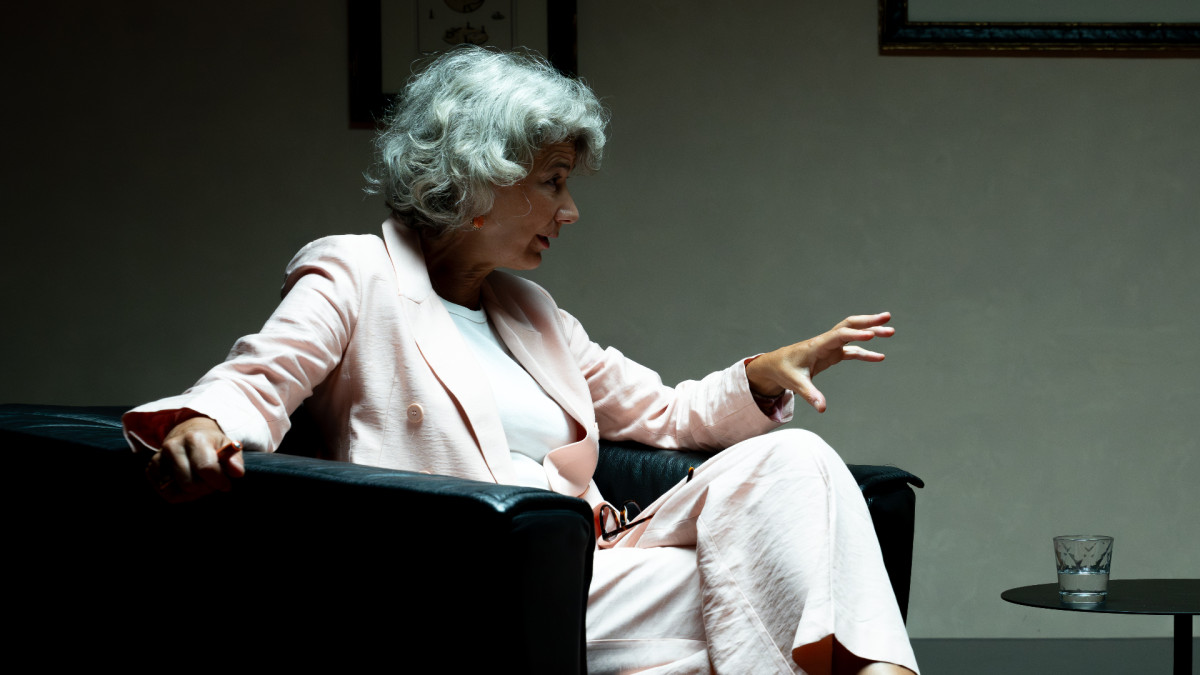
The IUE president believes governments and politicians must also fulfill a role in scientific outreach. Image provided by the IUE.
What about the European University Institute as a global actor? Because, as stated at the start of the interview, you have many researchers from Europe here, but also many people from the rest of the world.
First of all, when I arrived here, I made reorienting the focus toward Europe a priority. But, of course, it is not an inward-looking vision. On the contrary, I think foreigners often have more hope and also more ambition regarding Europe than Europeans do. That is why it is very important to count on their opinions, from outside. I refer to the experience I also have in the G8, where there are many policymakers, but also students from all continents, who really want to be inspired by European integration, the rule of law, and democracy.
They want to study Europe, but they can also contribute important perspectives. I would say we have a global perspective, but our mission is to help and support the European project.
Do you think it’s the right moment to try to recruit social scientists from the United States?
First, I would try to bring back Europeans who left. I mean, generally, diplomatically, I would say it’s a good idea that people who are under threat can come to Europe.
Right. But if we experienced a brain drain of liberal-leaning scholars from the United States, that would not be good for Europe in the long term either. I think we should reinforce liberal forces in civil society and in the sciences in the United States. But if someone is under threat, they should be able to come.
Do you think it is possible to build a European public sphere?
That is the Institute’s mission. That is why we are here. We create a kind of mini-Europe to bring together all national perspectives in its construction. And the question is: how can we expand it? That was the focus of my doctoral thesis.
As you know, public universities are often naturally organised as national media, which makes it very hard to address European issues. Therefore, I think that, once again, the dimensions beyond division and excellence are the communication beyond the academic realm and collaboration with social and private actors from all member states. The ultimate goal would thus be to build a European public sphere.
In my view, it is hard to build a European public sphere if we do not vote for a President of the European Union.
That is a very difficult question. You know, it’s a normative and pragmatic answer. First, I would say there are many issues that are symbolic. For example, if there is a runoff between the two main candidates, it would be very good to be able to vote differently for the European Parliament, that would already entail a small change.
The symbolic link I would say is no more than that. But we have a fundamental problem that is much bigger. There is a disconnection between politicians and citizens everywhere. It’s not only at the EU level but also at the national level. Perhaps it is somewhat smaller at the local level. Leaving that aside, we face the problem of democracy.
“From a pragmatic viewpoint, it would not be wise to have the current debate about wanting more or less European federalism”
I would say it is not so much a matter—this is a pragmatic answer—of whether we would opt for more or less federalism, given that we have member states that are more anti-European and more nationalist. Consequently, it would not be a good idea to have that debate right now, from a pragmatic standpoint, but rather to rethink the institutions, because I think we have a problem with political institutions to fulfill and with citizens who guarantee that problems can be resolved properly.
I think the complexity between European legislation, for example, which is 80% implemented nationally and then filters down to the local level.
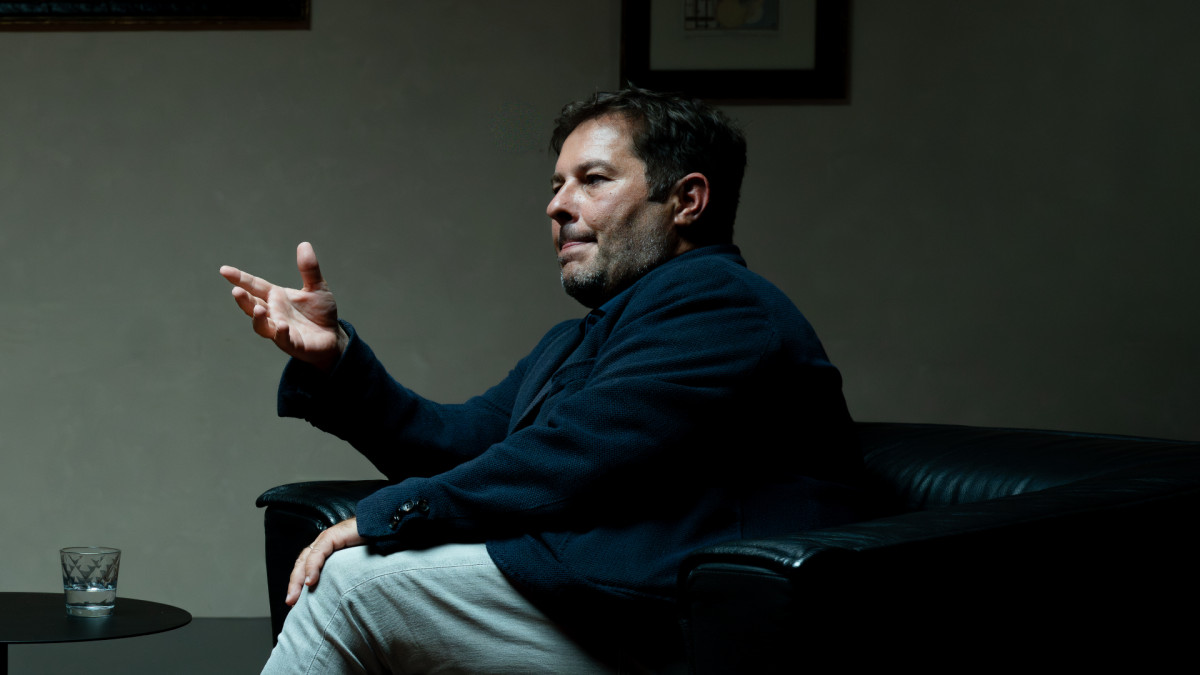
Marc López asked Patrizia Nanz for her assessment of the current state of the European Union and how to seek greater legitimacy. Image provided by the IUE.
But we do not vote on this.
Exactly. It is also a legitimacy problem. If we wanted, and it is not that complicated, rethinking these institutions would be possible. And I think the debate about over-regulation versus deregulation is a false dichotomy. It is about better regulation, not merely simpler regulation, but better regulation.
Better and legitimate. That is the rule.
We are currently immersed in a major project to ensure that, vertically speaking, these institutions can operate much more effectively to meet, for example, the needs of member states and the local sphere. Therefore, it is not by chance that it must be implemented; now, with AI and other technologies, it could also open up horizontally to make things more democratic.
If we carry out this kind of reform of political institutions, the problem will be resolved much more, not only so that European institutions correct the disconnection between citizens, real problems, and political institutions, but perhaps also for the observation of scientific evidence.
Could you elaborate, before the interview ends, on the problem our democracies are facing?
Let me give you an example. I think citizens, and probably increasingly politicians and civil servants, feel that we are at a crossroads. “We either make it or we lose it.” If we remain inactive and fail to be proactive, we will lose our independence.
We lose our sovereignty, today a buzzword used by many nationalist governments that claim their own. Now, if you look at the broader picture and sovereignty in many of its dimensions—from markets to energy—you quickly reach the conclusion that the prerequisite for being sovereign, i.e., choosing for ourselves the direction of our society and what we want to do, is digital sovereignty, because technology—and this takes us back to The Economist article—forms its foundation.
Even in historical examples, such as silk production in Catalonia in the late Middle Ages, we see how production, trade, and technology were engines of regional integration and social transformation.
So, moving quickly through to the 1950s, the intellectual father of the European Union—Jean Monnet—tried to understand the turning point from which everything derived. And he correctly discovered that coal and steel were the pivot that would lead to unity and prosperity after the war.
What is that turning point today?
The starting point today, because it is the engine of social transformation, is digital sovereignty. It is not about technology. It is not about innovation. Not even about the economy. Draghi is right to say that it is about shaping societies and markets. Trump understands it, China understands it. And we should wake up.
But we are not in a strong position when it comes to digital sovereignty.
Indeed. But if we pursue this, one could argue that although we still have some time, it would not mean having all critical infrastructure on European terms. Perhaps enough to not depend entirely on the United States and China. Therefore, we need to analyse which parts are truly critical.
Exactly. And that is how national governments that want to be sovereign would understand it. No one can do this alone. Consequently, we would need a European consortium to even begin to act and do it quickly. And then they would understand their own interests and understand that European sovereignty is not a bad thing, but important for their own survival, because otherwise they would lose any form of independence at the level of the member states.
What legacy would you like to leave when your term as president ends?
I would very much like the institute to return to being a genuine laboratory. A place with time and space to think deeply, and to invite people from the political or social sphere to step back and think more profoundly.
This would foster creativity and social and political imagination. As I said before: to know how to think about public institutions, how to think about technology, in a way that generates bold ideas, and to make the institute a truly conducive place for bold ideas, just as it was conceived.
