
Plus: A fresh look at seasteading, a close read of genocide claims, and more…
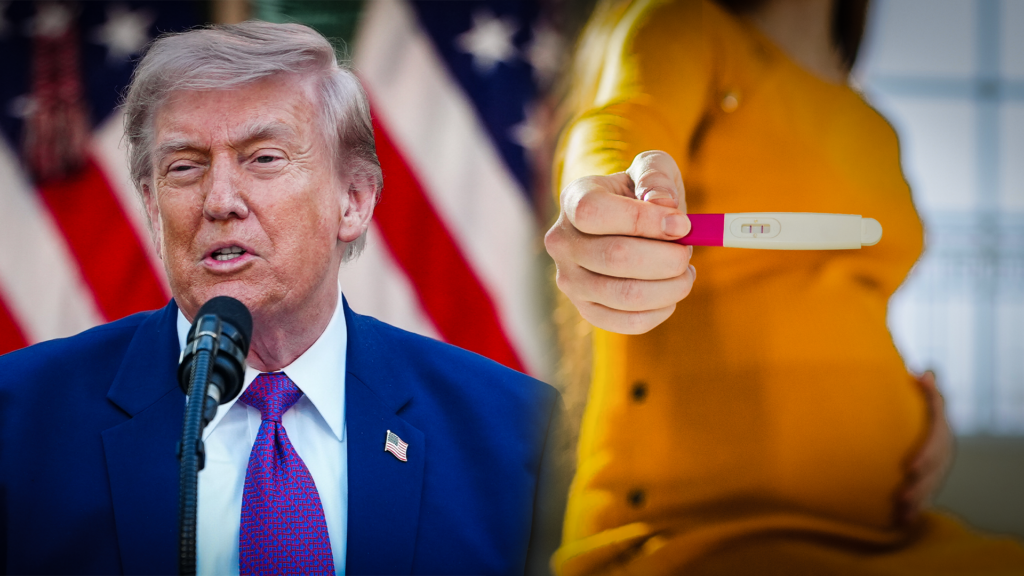
Our fertility-minded president: The self-styled “father of fertility” (ugh), President Donald Trump announced new guidelines on Monday intended to make it simpler for employers to offer standalone fertility coverage as part of health insurance plans.
The Reason Roundup Newsletter by Liz Wolfe Liz and Reason help you make sense of the day’s news every morning.
“The rule would create a supplemental insurance option employers could offer, similar to vision or dental insurance, for in vitro fertilization services and other fertility treatments,” PBS reports. “Currently, most health plans don’t cover IVF or related benefits.” It isn’t exactly a pro-IVF move, though, at least according to Trump: “This will hopefully reduce the number of couples who ultimately need to resort to IVF, because challenges can be identified and addressed very early in the process.” (“The fertility journey is a very interesting one,” he mused from the Oval Office. “Oz and Bobby, I can tell you, we speak about it a lot,” he added, referring to Health and Human Services officials Mehmet Oz and Robert F. Kennedy Jr. I am fascinated by what those conversations sound like and would give anything to be a fly on the wall of the Oval.)
But as with many Trump administration initiatives, the practical effect remains murky; roughly a quarter of large employers already provide fertility-related benefits as part of their health plans. (“Among firms with 200 or more employees that offer health benefits, 37% provide coverage for fertility medications in their plan with the largest enrollment, 26% provide coverage for intrauterine (artificial) insemination, 27% provide coverage for in-vitro fertilization (IVF), 12% provide coverage for cryopreservation, sometimes called egg or sperm freezing,” reports KFF.) If workers can opt into added fertility benefits more easily, does that pose major cost concerns for the people who would actually use them? And would add-on policies like these, typically funded by the employer, meaningfully drive down costs for those seeking fertility help? If the aim is to bolster birth rates—710,000 fewer births occurred in 2025 than at the 2007 peak—does this policy target the right demographic? (Many proponents of pronatal policy argue it makes more sense to encourage existing would-be parents who want several kids to start earlier so they can achieve one or two more rather than pushing a zero-to-one transition.)
That said, the design is arguably less heavy-handed and disruptive for employers than some alternatives. “The proposal, which must clear a 60-day public comment window before a final decision, does not require the federal government to fund IVF treatments,” states Washington Examiner. “It also does not compel insurers to cover the procedures. Instead, it introduces a new class of benefits that employers may voluntarily provide and employees may choose to participate in.” This could suggest Trump is attempting to appease parts of his coalition that oppose mandatory IVF coverage.
There’s also a rather cynical interpretation: corporate entities would naturally prefer benefits (including egg freezing and IVF) that allow workers to delay parenthood indefinitely. Maternity leave remains a costly burden for firms! It isn’t entirely clear how much the Trump plan would alter behavior, but it signals where the administration’s priorities lie and how difficult it is to appease a broad, unwieldy coalition.
Scenes from Austin, Texas: I swear you can’t make this up… Yesterday I went canoeing on Town Lake with my parents and my kid. We spotted a homeless man practicing “lake seasteading.” Think seasteading, but a bit wilder. Austin has long wrestled with homelessness—and a certain political tension about how permissive the city should be toward public camping versus enforcing space on public land so others can use it safely. It was the first time I’ve seen someone attempt water-based habitation like that. I suppose it’s a creative—though controversial—solution.
QUICK HITS
- “The accusation that Israel is committing ‘genocide’ in Gaza has become commonplace in protests, university activism, social media campaigns, and international legal rhetoric. But one striking feature of the debate is how little attention is paid to a basic question: what would genocidal behavior actually look like, and does Israel’s conduct resemble it?” writes David Bernstein for The Volokh Conspiracy. “Genocide is not simply a war that causes extensive civilian casualties. It is the deliberate attempt to destroy a people as such. Historically recognized genocides share recognizable characteristics: civilians are targeted precisely because of their identity, and the perpetrators seek maximum civilian death rather than military victory. Israel’s conduct in Gaza looks very different….The danger of stretching the term genocide beyond recognition is substantial. If every brutal urban war involving high civilian casualties becomes genocide, then the concept loses the distinctive moral and legal meaning that made it powerful in the first place.”
- Positive change in Utah?
My bill clarifies the definition of neglect to support, not punish, parents who encourage independent play. Learn more here: https://t.co/WsvZhGhQAA
— Congressman Blake Moore (@RepBlakeMoore) May 12, 2026
- Is the administration laying the groundwork for military action against Cuba?
Secretary Pete Hegseth just testified before Congress that Cuba poses a national security threat to the United States. pic.twitter.com/dLPQsmVB4M
— Kassy Akiva (@KassyAkiva) May 12, 2026
- “We’re more than a quarter way through the new century and we can now ask: what is the aesthetic of the twenty-first century?” wrote Tyler Cowen and Patrick Collison last year. “Which are the important secessionist movements of today? Which will be the most important great works? Today, futuristic aesthetics often mean retrofuturistic aesthetics. So, what should the future actually look like? There will not be singular answers to these, but we are very interested in attempts to answer the questions. In particular, we would like to fund some artists who are thinking about them.” One such artist:
I was recently awarded a New Aesthetics grant from @patrickc and @tylercowen to try to invent a new ornamental style of architecture.
I’m going to do this through drawing, because just as writing is thinking, drawing is imagining. You might invent something new when you sit down… pic.twitter.com/OSFQd0V9vU— Megan Gafford (@megan_gafford) May 12, 2026
(I really like “America was supposed to be Art Deco.”)
- New York City Mayor Zohran Mamdani scrapped his plan to raise property taxes.
- Children be like, “It’s time to build”:
Children are born staring reverently at bulldozers, and yet we’re supposed to believe mankind was meant to preserve neighborhood character?
— Caleb Watney (@calebwatney) May 12, 2026
