
John McTernan observed the crisis of the British Labour Party from a stance that is far from complacent. The former director of political operations for Tony Blair believes that Labour’s recent electoral setbacks are not only the usual wear and tear of a government, but are connected to “doing things that are very, very not Labour for two years.”
In an interview with Agenda Pública, McTernan argues that the main risk facing Britain’s center-left is not the radical right represented by Reform UK. On the contrary, he contends that a large number of votes could slip toward the Greens, the Liberal Democrats, nationalist movements, or independent candidates allied with Gaza. Regarding the country’s electoral future, he notes that in an increasingly fragmented system like this, “the right can win with only a portion of the vote if the center-left is divided.”
In short, the former Labour adviser tackles the party’s future, the threat of Nigel Farage, the United Kingdom’s relationship with Europe, defence, energy, immigration, and housing, before proposing an alternative: the party must return to being recognisably Labour, break with the errors of the Starmer Government, and offer “a positive reason to vote Labour beyond simply stopping Reform.” Because, as he summarizes, the upcoming elections could become a choice between “socialism and barbarism.”
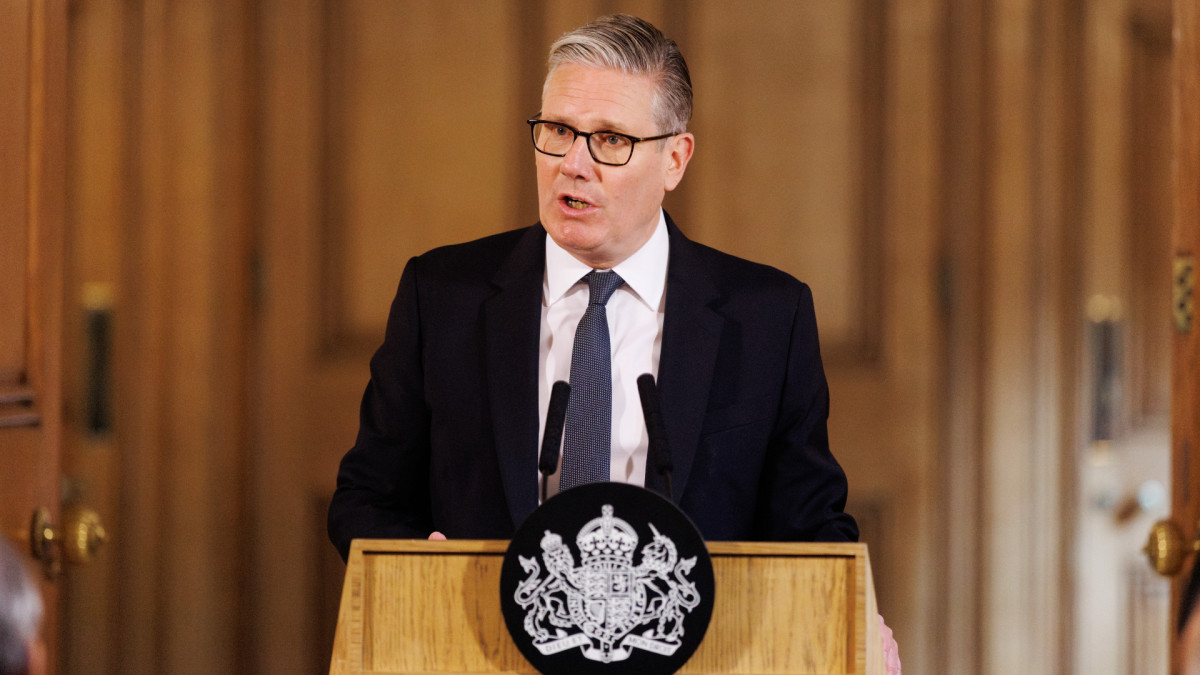
Photo: John McTernan. Image adjusted.
The pressure on Keir Starmer has intensified after Labour’s recent electoral setbacks. Do you interpret this as a contingent reaction or as a deeper and more structural problem within the party?
Both. These are the worst electoral results Labour has had in more than a century, and it has been about a hundred years since Labour became a governing party. Therefore, it isn’t surprising that there has been a negative reaction.
What those who talk about contesting the leadership, or who call for it to be contested, are proposing are arguments about why the governing programme has performed poorly. This is not about communications. It’s about substance.
“It has been a historic defeat in local elections and a defeat clearly caused by the actions of this Government”
It has not been a normal defeat. It has been a historic defeat in local elections and a defeat clearly caused by the actions of this Government. It has nothing to do with mid-term unpopularity or anything similar. It has to do with doing things that are very, very not Labour for two years and then hoping people will vote Labour.
You have argued that Labour should worry more about the Greens than about Reform UK. Why do you see the Green Party as a bigger challenge?
Reform UK is a threat to the Conservative Party, and it has lived up to that threat. It has destroyed the Conservative Party. Reform is a right-wing party, a far-right party, and it has supplanted the dominant right-wing party in Britain.
It is not a threat to Labour. It is a threat to the Tories. Only about 2% of Reform voters would ever consider voting Labour. Chasing that vote is a waste of time. Even if one thought there might be a path to do so, Reform is a far-right party. It wants to imprison and then deport 2 million people in the United Kingdom. Therefore, it must be defeated.
In our half of politics, the centre-left, Labour has been the dominant party for a century. But now support for Labour is split with Greens, Liberal Democrats, nationalists, and independent candidates, often people who represent Gaza’s independents.
In that situation, when the Greens do well, they siphon votes away from Labour. As a result, the right wins, even if it only has 27% of the vote. In the United Kingdom, under the single-member plurality system, 27% can be enough to win in a four- or five-party political landscape. And now we really have a five-party system.
“The further to the right you shift to win votes from the right, the more votes you lose on the centre-left”
So, when you’re in trouble, you have to go where the votes are. The votes are on the left. They are not on the right. The further to the right you shift to win votes from the right, the more votes you lose on the centre-left. It’s not just a misinterpretation. It’s a destructive interpretation.
The UK poll landscape now seems highly fragmented. Looking ahead to the long term, is this sustainable for the next elections? Do you think some parties will retreat and others will grow?
The next elections will be a choice between socialism and barbarism. If you want to unite all the left’s votes, you have to change your behavior.
We cannot change the electoral system. If this fragmentation continues under the current system, Nigel Farage will become prime minister, and he will stop and deport 2 million people in the United Kingdom. That would alter our country. In the UK, the powers of a prime minister with a crushing majority are virtually unlimited. That is why these elections are so consequential.
Labour is the only party positioned to defeat Farage. We have 400 seats. We are the dominant party. So, if you want to vote for someone to defeat Farage, you must vote Labour, because in most places there is already a Labour MP.
However, Labour needs a story, a reason, and a set of policies that speak to someone who is green, nationalist, Gaza-independent, or Liberal Democrat. It must say: Labour understands this battle in these terms. Labour recognises that Keir Starmer has alienated those voters. Labour has distanced itself from Keir Starmer and has, in fact, adopted a new policy package.
“Every strand of the coalition needs a positive reason to vote Labour, not just the negative reason of stopping Farage”
Those policies must give every part of that coalition something positive to vote Labour for. A Green voter must be able to say: Labour not only wants to defeat Farage; Labour also wants all of us to have electric vehicles, decarbonize the grid, and advance toward renewables. Every part of the coalition needs a positive reason to vote Labour, not just the negative reason of stopping Farage. That means something on housing, something on the environment, something on foreign policy, and something on the Middle East.
On the other hand, I don’t understand why the British Government isn’t creating a Gaza reconstruction board. We should ignore Trump’s Peace Commission and do something real. Convene an international donor conference and ask: what does Gaza need? Bring in the Palestinian Authority and ask how that reconstruction board should look. Hospitals, infrastructure, schools, universities. Describe what is needed and then assemble the funding.
Britain is a permanent member of the United Nations Security Council. We are a significant actor. Significant actors should take significant actions. The same logic applies to rebuilding the global order. The rules-based order we once had has been eroded by Trump. It was imperfect, and we are not going back to it. So, where do we go from here? That is a whole field of debate.
Again, the United Kingdom could lead it, because we are not a small player. Diplomatically, we are a major power. Militarily, we are a major power. We could lead a new European defense alliance, including an European military force. You cannot have a European military force without the United Kingdom, and you cannot have Europe without a European military force.
So there is a need to open new debates on the progressive front. We must show the energy Pedro Sánchez demonstrated in Barcelona at the Global Progressives meeting. But that cannot be done with Keir Starmer. It is clear that he cannot do it. He did not even attend that gathering.
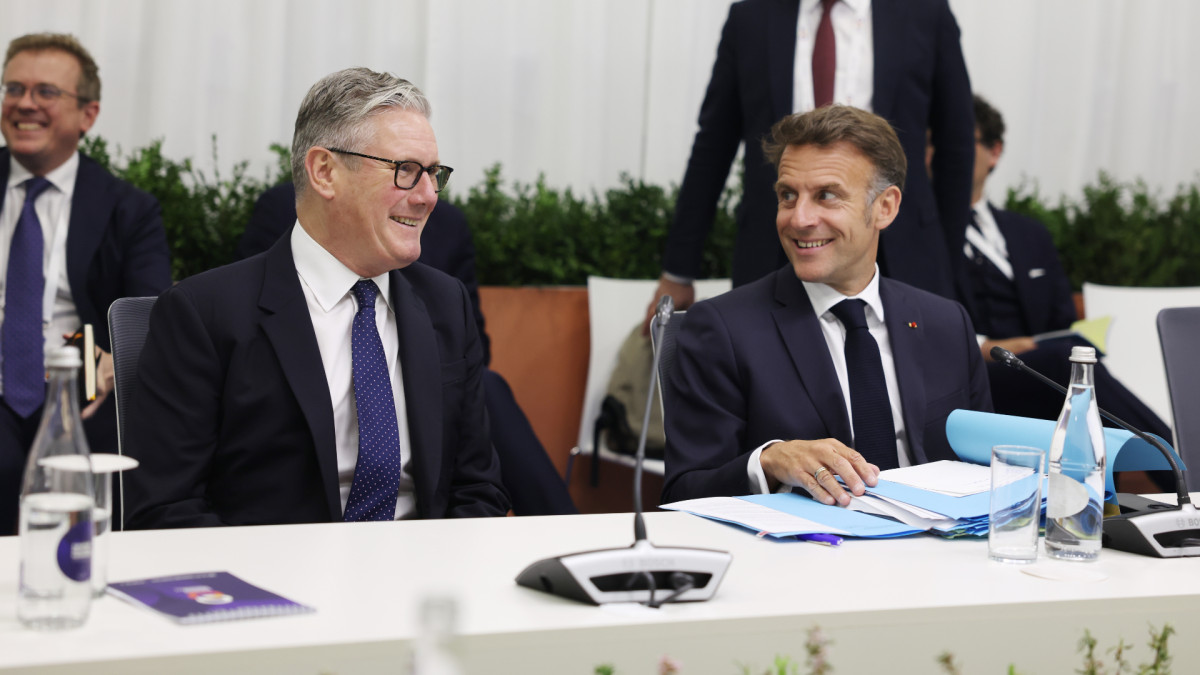
The UK Prime Minister alongside French President Emmanuel Macron. Photo: Office of Prime Minister Keir Starmer
Starmer has attempted to reboot the UK’s relationship with the European Union. If he were to fall, would that rapprochement with the EU be at risk?
No. Everyone in Labour believes in that rapprochement. We probably need to go further. It’s possible that a new leader would say we should return to the customs union.
And what would happen if the Greens won the next elections?
I think it’s impossible. But if there were a Green government, it would pose a massive threat to Europe. The Greens don’t believe in NATO. What they would do with defense and security would not only weaken the United Kingdom; it would weaken Europe.
“If the UK is destabilized, which is what the Greens would do, European security is weakened”
Britain is a critical part of NATO, especially in this post-Trump world where the alliance’s most reliable partners are France and the United Kingdom. If the United Kingdom becomes destabilized, which is what the Greens would do because they oppose defense spending, oppose nuclear deterrence, and do not have a coherent defense policy, European security is weakened. In general, they do not believe in the defense industry.
That would be one of the fundamental risks. The second is that, even though they call themselves Greens, they also oppose housing development and renewable projects. They don’t want the cables, poles, or transmission infrastructure needed to connect new energy sources to the markets where they’re needed.
Moreover, they remain anti-nuclear. They oppose nuclear deterrence and nuclear energy. Nuclear energy, as Spain knows, is a fundamental part of the energy mix. You need baseload power, and for that baseload you need nuclear. Renewables are also needed, but you need poles for those new energy sources.
The Greens would be enemies of all those things. It would end in a very unbalanced, and in fact very dangerous, situation. For these reasons, I don’t think they would ever win in the United Kingdom, because those positions would be unacceptable to British voters.
You say that Starmer has already lost authority. Is there a risk Labour responds by moving toward Reform UK’s immigration and national identity agenda, getting trapped in internal cultural wars instead of focusing on foreign policy, defense, energy or Europe?
No. There is no possibility that Labour would elect a leader who wants to be a touch more racist or a bit more like Reform. Labour militants and MPs are fed up with the Government trying to move close to Reform.
“I hope everyone formulates some version of the argument that we should return to a European framework, even if only on immigration”
I anticipate that one of the steps Keir Starmer will take before there is a leadership challenge is to roll back or abandon some of the immigration reforms that would make our system much more punitive. In a leadership contest, I expect everyone to formulate some version of the argument that we should return to a European framework, even if only on immigration, to be part of a united European migration system.
Right now, if someone seeks asylum or refugee status in any European country and is denied, they cannot apply in another country within that system. But they can apply in the United Kingdom because we are outside. So we have become a kind of appeal court for the system. If they cannot enter through France, they come to the United Kingdom. If they cannot enter through Italy, they come to the United Kingdom. If they cannot enter through Germany, they come to the United Kingdom.
That must stop. We must join a European agreement. Everything the United Kingdom needs to face its challenges is easier if we do it with Europe, rather than feeding the fiction that Brexit was a benefit.
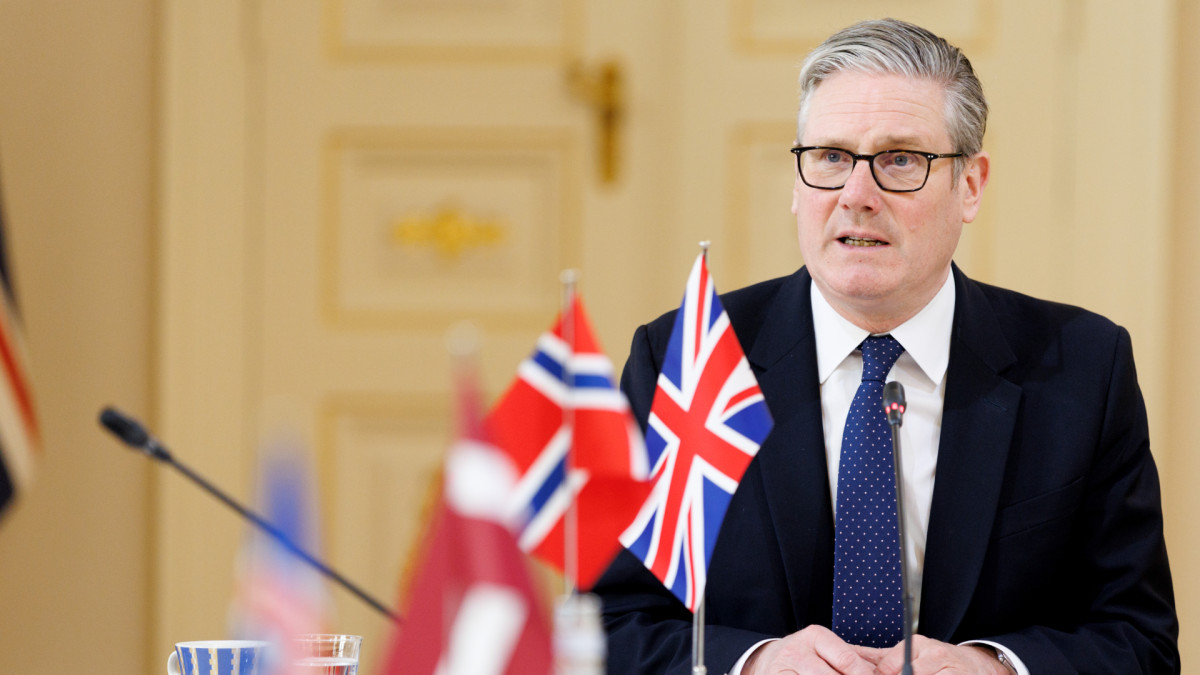
McTernan proposes Labour adopt more left-wing public policies to emerge from the crisis. Photo: Office of Prime Minister Keir Starmer
You have written that Labour should be a real Labour, not a softer version of Reform. In practice, after all that we have discussed —defence, energy, Europe, immigration and the economy— what does it mean for the party to be truly Labour?
It means abandoning the racist immigration policies proposed by the Government. That is one thing. It means abandoning attacks on the Welfare State. It means transferring power from Westminster to England’s cities and regions.
It means the Government taking control of the housing program that is needed: a government-run social housing program, not one driven by the market. It means being much clearer that the Government has a greater role and the markets a smaller one, because society’s and the country’s economic needs are linked.
It also means being less generous with retirees regarding pensions, which are a growing part of public spending, and more generous with the young, who are not being treated fairly. So, it means addressing the intergenerational injustice that is absolutely evident. It is apparent for both grandparents and their grandchildren.
There is a way to unite the country around a progressive agenda, but you must be honest about the inequalities you want to address. When this Government has done things well, it has followed the Labour manifesto. When it has erred, it has done things we did not say we would do.
There is also a need to be honest about the lack of discernment. Appointing Peter Mandelson as ambassador to the United States was a catastrophic decision. No one has explained why it happened. Why appoint the ambassador to a friend of a convicted sex offender [Jeffrey Epstein]? A man who stayed at that man’s house while he served time for trafficking girls for prostitution? And that was a plea deal. The charges were more serious than that.
Someone who stayed at that man’s house while he was serving a prison sentence — after having gone through the system, confessed and accepted the sentence — should never have held a public office.
That is a failure of judgment. And judgment is fundamental to leadership. If you have bad judgment on this, you will have bad judgment on other things. If Keir Starmer wants to continue leading, he must explain why he was wrong, what convinced him, and why he will never do it again. At the very least.
“To take responsibility means to say: this is what I did, this is why I did it, this is why I was wrong, and this is why I will not do it again”
But if you simply say “I take responsibility” and then you walk away, you are not actually taking responsibility. Taking responsibility means saying: this is what I did, this is why I did it, this is why I was wrong, and this is why I will not do it again.
There is a vacuum at the center of the argument. The Labour Party has made these mistakes in two years. Labour has halved its vote in two years. Labour cannot win an election by halving its vote. It only has a chance to return if it has a story. And the only story claiming it has broken with those mistakes is to replace the leader.
Thank you very much.

Natalie Foster
I’m a political writer focused on making complex issues clear, accessible, and worth engaging with. From local dynamics to national debates, I aim to connect facts with context so readers can form their own informed views. I believe strong journalism should challenge, question, and open space for thoughtful discussion rather than amplify noise.