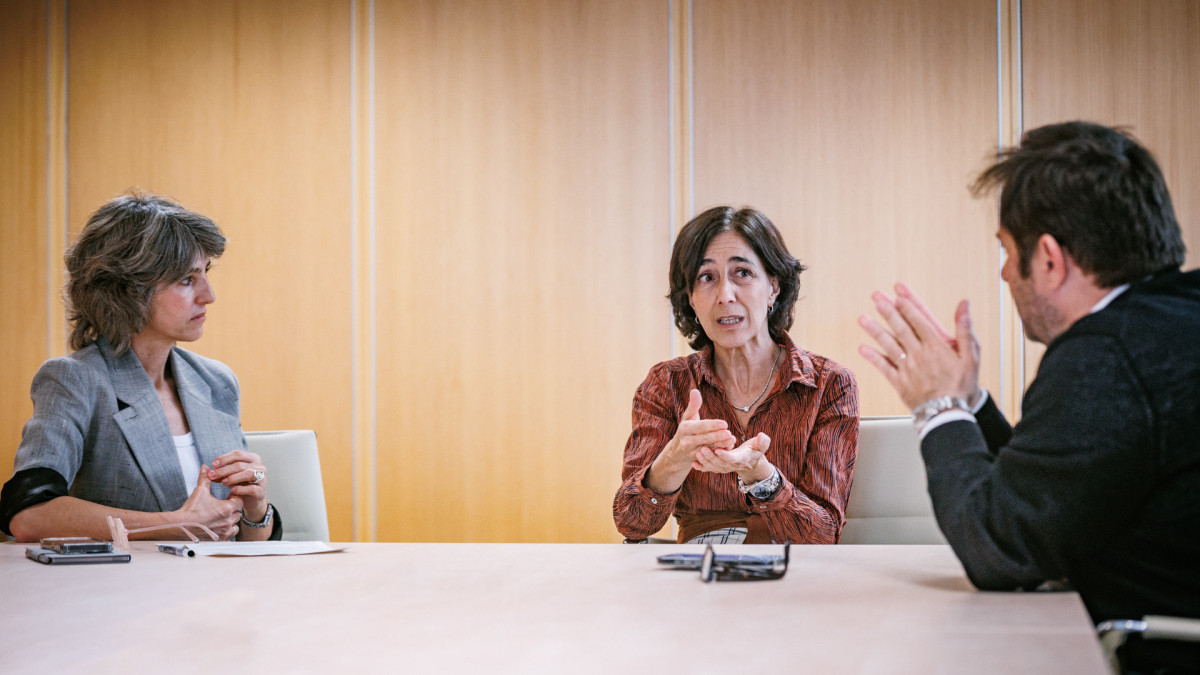
In the debate on sustainability and competitiveness, the circular economy occupies a leading place. In this conversation, Teresa Parejo Navajas, from the Ministry of Industry and Tourism, and Begoña de Benito, from Ecoembes, propose understanding the circular economy from the center of a discussion aimed at boosting Spanish industry.
From the Ministry, Parejo argues that Spain has sufficient assets —renewable energies, established industrial sectors and capacity for innovation— to aspire to a leading position. But she warns that this leap requires aligning environmental policy with industrial policy, activating incentives, supporting SMEs, and defining clear, measurable and realistic objectives.
De Benito, for her part, stresses that circularity implies changing the way we think about waste: “There is no waste, only resources,” she explains. In her dialogue, the main pending challenges are explored: the low circularity rate in Spain, the lack of scale, the need for better data, the role of large companies as tractors of their value chains and the urgency to turn public-private collaboration into concrete projects.
Teresa Parejo Navajas and Begoña de Benito discuss the circular economy, industrial competitiveness, and public-private collaboration. Photo: Agenda Pública / Tania Sieira.
How do they align policies and strategies to foster the circular economy from Ecoembes and the Ministry of Industry?
Teresa Parejo Navajas (T. P. N.): The circular economy, although initially it was a matter for the Ministry for the Ecological Transition and the Demographic Challenge and was approached from a predominantly environmental perspective, has clearly evolved in recent years. That initial vision has transcended.
Today we no longer talk solely about an environmental policy, but also about a genuine industrial policy. And that is precisely what we are promoting from the Ministry of Industry.
We believe that the circular economy represents a great opportunity for the industry in Spain. It is the model we should move towards, not only because it defines the European Union’s values and strategic priorities, but also because it fits with the capabilities and strengths of our country.
Spain has enormous potential, especially due to its leadership in renewable energies, which provides a very solid foundation for developing a more circular, resilient and competitive industrial model. Therefore, we believe this should be a strategic priority.
“The circular economy will be one of the key elements, not only from a regulatory point of view, but also through incentives and tools”
From the Government —and specifically from the Ministry of Industry and Tourism— we are working to align environmental policy with industrial policy, taking advantage of the opportunities offered by this transition. In the industrial strategy we are defining for the coming years, the circular economy will be one of the key elements, not only from the regulatory standpoint, but also through incentives and tools that will make it a tangible reality for companies.
Begoña de Benito (B. B.): From Ecoembes’ perspective, we believe that the apparent dichotomy between sustainability and competitiveness is now completely overcome. Circular economy policies are not only environmental policies; they are also industrial and competitiveness policies.
If we focus on the very concept of a circular economy, simply understanding that there is no waste, but that we are talking about resources, already implies a profound change. And talking about resources is talking about efficiency. In turn, talking about efficiency implies talking about costs, competitiveness and strategic autonomy.
Moreover, the circular economy is intimately linked to innovation, because we are working with secondary raw materials that require treatments different from the traditional ones. That forces redesigning processes, developing new capabilities and training people. Therefore, the relationship between the circular economy and competitiveness is direct.
However, embracing this relationship means going beyond the regulatory framework. Regulation is necessary because it sets objectives and provides clarity, but by itself it is not enough. It needs to be accompanied by public policies, incentives, support programs, training —including targeted training— and, of course, a decisive commitment from the private sector.
How does Spain stand in the circular economy compared to other European countries?
B. B.: In terms of the circular economy, we remain in a relatively weak position. Spain’s circularity rate stands at around 8.5% in 2024. Globally, the figure is similar —6.9% in 2025—, but the European average reached 12.2% in 2024 and there are countries that far exceed 20%.
Countries like the Nordic nations, the Netherlands or Belgium show much higher circularity levels. In fact, the Netherlands recorded the highest rate, at 32.7%, followed by Belgium at 22.7%, and Italy at 21.6%.
Spain not only lags behind these countries, but the latest data also shows a certain decline from the previous figure, which underlines that there is still a long way to go.
T. P. N.: Probably the global context also influences this, generating a certain sense of complacency or even distrust among parts of the public and some economic sectors.
B. B.: Indeed, the international context is having a significant impact at the national level. Add to this the geopolitical environment and competitive pressure from countries outside Europe. All of this requires combining short-, mid- and long-term perspectives.
“Companies need to deliver immediate results, but without losing sight of the strategy”
Companies need to deliver immediate results, but without losing sight of the strategy. And that requires leadership, stability and a clear long-term vision. In any case, the data show that we are still far from the level of circularity Spain should aspire to.
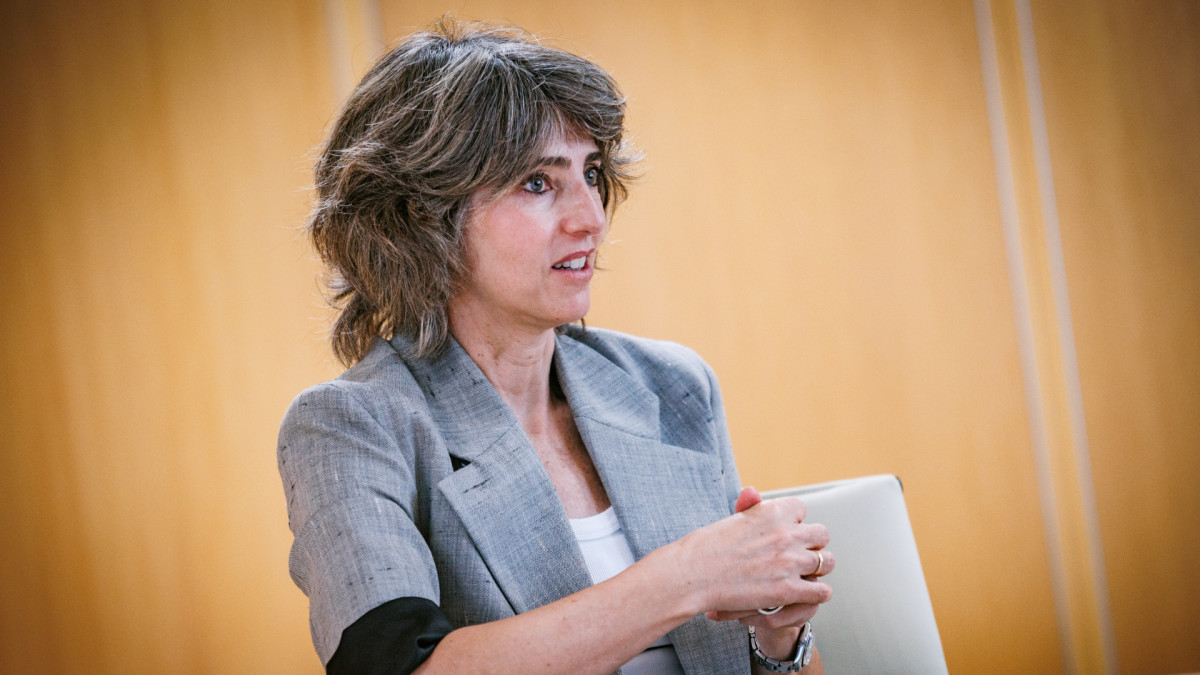
Teresa Parejo Navajas believes that a lack of confidence may stem from factors derived from the global context. Photo: Agenda Pública / Tania Sieira.
In a country like Spain, where the weight of SMEs is so significant, how can they join this transformation process?
T. P. N.: The Spanish business fabric is composed of 98-99% SMEs and micro-SMEs, and that represents one of the major competitiveness challenges our country faces. In the Ministry we are fully aware of this.
That is why one of the central lines of our strategy is to help SMEs grow, so that they can compete not only globally but also in Europe. Our industrial fabric needs to be stronger and more resilient, and that necessarily involves activating that growth capacity.
It is not about all of them stopping being SMEs, but about having a representative mass of larger companies — mid caps — that can compete on better terms both in Europe and internationally.
To achieve this, it is not enough to rely solely on economic or financial aid. We are also working on demand-activation policies. It is a complex challenge, no doubt, but it is a strategic priority.
Ultimately, one of the key axes of our strategy is how to help the industrial fabric —and especially SMEs— become more competitive and resilient. And we know that, to a large extent, that involves gaining scale and transformation capacity.
B. B.: We work with around 24,000 client companies, and approximately 90% are SMEs. Therefore, we know very well their difficulties and needs.
Moreover, we carry out periodic surveys to understand how we are perceived, what problems they encounter and what kind of support they need. From there we identify three main needs.
The first is information. Many SMEs lack the capacity to know all the regulations that affect them, unlike large companies that do have specialized departments or greater resources. In that sense, we act as providers of information and guidance.
The second need is interpretation. Once they know the regulations, they need to understand what impact it really has on their business, their processes and their way of working.
The third is implementation. They need concrete tools, services and solutions that allow them to undertake that transformation path.
“Many of these SMEs are part of their value chains, and large companies are increasingly clear about the path they want to follow in sustainability and circularity”
These are, essentially, the three lines on which we work with SMEs. And there is also a very important tractor effect from large companies: many of these SMEs are part of their value chains, and large companies are increasingly clear about the direction they want to follow in terms of sustainability and circularity.
T. P. N.: Exactly. From the Ministry we also work on that logic: to support the large companies so that, through them, the entire value chain is driven. Because the competitiveness of large companies also depends on the competitiveness of their suppliers.
Do you observe that the more information there is, the more interest there is from companies to join the circular economy? Is information the key element, or are there other factors, such as public support or the role of large companies within the value chain?
B. B.: I wouldn’t dare say there is a single determining element. It is not only information nor solely the role of large companies. It is a set of factors that must operate in a coordinated way.
But there is a very clear reality: we are talking about transforming a production model, and that requires investment. Therefore, access to financial instruments —grants, public funds, tax incentives or other support mechanisms— is fundamental.
Companies face a transformation that they must turn into a business, and that is not easy. Moreover, innovation is a key element. And in this area digitalization brings capabilities, efficiency and time to address those changes. In short, we are talking about a combination of factors: training, investment, innovation, public-private collaboration and institutional support.
T. P. N.: All this, moreover, is advancing at a rapid pace. It is no longer only about digitalizing SMEs — something for which public programs have been promoting numerous forms of support — but now embarking on the leap toward artificial intelligence. And that process is happening very quickly, which adds even more complexity.
That is why, although we speak of a broad set of measures, some are particularly relevant. One of them is access to financing, which may also include consultancy support to help companies understand where they should move based on regulation and market changes.
Innovation is also fundamental, because this transformation necessarily involves innovating. And innovation is complex: it requires capabilities, knowledge and mechanisms to protect the ideas that arise.
“Not only regulatory training, but also technical and strategic training”
Teresa Parejo Navajas
All of this implies training. Not only regulatory training, but also technical and strategic training. It is one of the main demands of companies: they need to train their workers, especially in industrial contexts, but also their management teams. In a context of rapid change, managers must have enough tools to guide corporate strategies with judgment and long-term vision.
B. B.: I agree. Companies need tools, but also institutional support to detect opportunities and understand the context in which they operate.
For example, the current rise of the defense industry is creating a new and complex environment, but it can also become a development path for many SMEs.
The circular economy and the transformation it entails can generate significant business opportunities. However, many small businesses are not even aware that their activity could fit into these emerging sectors and add value.
It is an area that interests both businesses and the Administration, because it contributes to meeting strategic objectives and generating new industrial and productive fabric.
The problem is that, in many cases, companies do not know exactly what they can do or how to access those opportunities. And that is where it is essential to accompany them and jointly identify development routes.
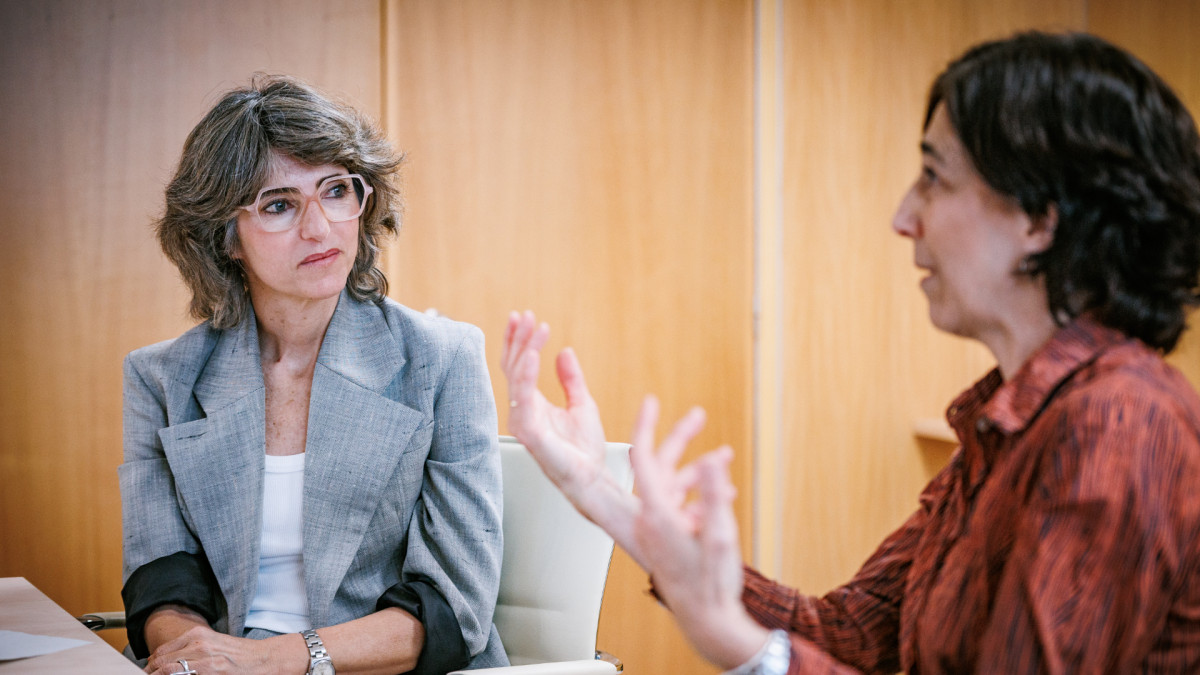
The conversation shifts toward SMEs, their information, financing, and support needs to join the circular economy. Photo: Agenda Pública / Tania Sieira.
Given that this conversation centers on public-private collaboration, it would be useful to provide concrete examples or success stories that help understand how this collaboration works in practice in areas like the circular economy.
T. P. N.: The main thing —even if it may seem obvious— is precisely public-private collaboration. And within it, the essential element is dialogue.
It is necessary to establish real dialogue between the public and private sectors to understand the current needs of companies, but also so that the private sector understands the government’s limitations and timelines. That mutual understanding is key, also when designing regulation: the objective should be to accompany companies toward greater competitiveness, not strangle them.
Now, however, dialogue must move to action. And there the public sector must define concrete projects, with good governance, clear objectives and a regulation that sets the course.
In the field of the circular economy, from the Ministry of Industry we are beginning to work precisely along this line. It is a relatively new approach for us, because traditionally the circular economy was addressed from environmental policy and now we want to fully integrate it into industrial policy.
We have begun working intensely with the Ministry for the Ecological Transition, initially starting from some concrete sectors and even identifying pilot projects.
However, in that process of dialogue with the various industrial sectors we have found that there are industries that could advance more quickly and where perhaps it is easier to achieve short-term results. Therefore we have decided to partially redefine the approach of the strategy to better specify which projects can drive the circular economy across sectors.
“We have decided to partially redefine the approach of the strategy to better specify which projects can drive the circular economy”
Teresa Parejo Navajas
All of this is being articulated through specific plans —such as the automotive plan, the capital goods plan or the basic industry plan— and through the identification of niches of opportunity where to develop concrete projects. In any case, we are still in a phase of definition and construction.
B. B.: Ecoembes is, in itself, a good example of public-private collaboration. Waste management is the responsibility of public administrations, specifically local authorities. But the funding of that service corresponds to producers, i.e., the industry, which creates Ecoembes precisely to articulate that model.
This system is based on agreements that go far beyond economic conditions. If they were limited only to funding, they would be relatively simple documents, but they actually incorporate numerous operational and management aspects.
They have several objectives. The first is to comply with the regulations. And the second, to do so efficiently, bearing in mind that the cost ends up affecting the entire value chain.
That is why these agreements translate into concrete action plans that allow implementing the model in practice. In some cases it involves improving infrastructures; in others, developing municipal ordinances, reviewing sorting plants, boosting communication campaigns or working on ecodesign with companies.
All of this sets up a very clear example of public-private collaboration, organized through committees, working groups, monitoring commissions with regional administrations and dialogue spaces in which our clients also participate.
It is important that this model be well understood, because sometimes it is not clear whether Ecoembes is a public or private entity. And understanding that it operates precisely on the basis of collaboration between both spheres is essential.
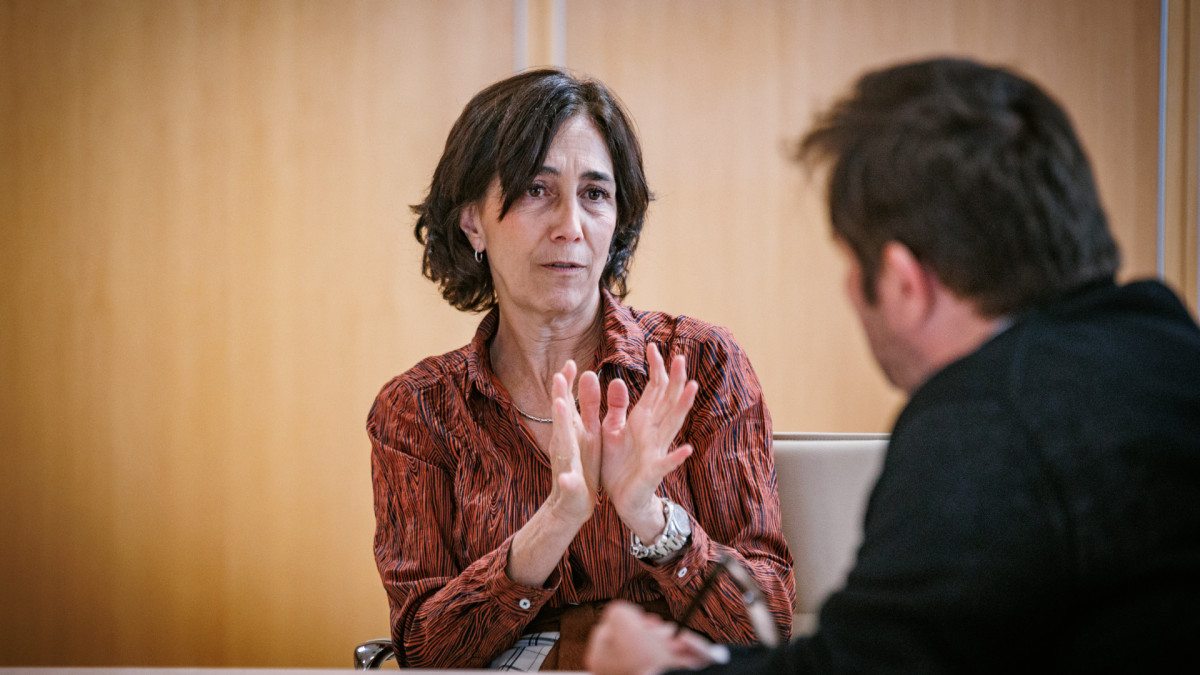
Parejo and De Benito anchoring public-private collaboration in concrete projects, from industrial plans to the waste management model. Photo: Agenda Pública / Tania Sieira.
How is the outcome of all this measured? How do you determine if a public policy or a plan —such as the Auto Plan— has been successful?
T. P. N.: It is a complex matter, because measurement is continually evolving. In realms such as decarbonization there are more developed metrics, although they also present complexities. But when we speak of social impact or economic transformation, measurement is much more difficult.
Sometimes indicators are used that do not truly reflect the final result sought. The European Union has advanced a lot in standards, especially in corporate reporting, and that can also serve as a reference for public policy.
From the public sector we must analyze aspects such as resilience, transformation capacity or the costs involved, to better guide decisions. And in any case, maintaining dialogue with the private sector to define useful, comparable and realistic indicators is essential.
B. B.: Without a clear starting point, it is very hard to know where we stand. And setting objectives without that reference is practically impossible.
The first step is to define what we want to measure and have a reliable initial data point. That diagnosis, moreover, must be shared by all involved actors, because only then can common objectives be established and the evolution truly evaluated.
From there, the next step is to define a monitoring methodology, ensure good traceability of data —of KPIs and indicators— and ensure that the entire system is transparent.
“If the private sector is asked to undertake a deep transformation of the production model, there must also be the capacity to evaluate whether real progress is being made”
Esa información debe ser pública, visible y auditable, de modo que no pueda alterarse de forma arbitraria. En definitiva, los principios fundamentales son tres: saber qué medir, conocer el punto de partida y garantizar la trazabilidad y la transparencia durante todo el proceso de seguimiento. Y esto es especialmente importante porque, si se exige al sector privado una transformación profunda del modelo productivo, también debe existir la capacidad de evaluar si realmente se está avanzando en la dirección adecuada.
That information must be public, visible and auditable, so that it cannot be arbitrarily altered. In short, the fundamental principles are three: know what to measure, know the starting point, and guarantee traceability and transparency throughout the monitoring process. And this is especially important because, if the private sector is asked to undertake a deep transformation of the production model, there must also be the capacity to evaluate whether real progress is being made.
T. P. N.: In this regard, European regulation is quite clear, and that is fundamental.
It is very important that defined objectives exist: if we speak of decarbonization, we must specify exactly what it means, what levels of emission reductions are required for each industry and within what timeframes. And if we speak of the circular economy, we must also specify what it implies for each sector.
However, those objectives must be defined within a dialogue framework that allows them to be ambitious but also realistic. The transformation must lead to greater competitiveness; otherwise, there is a risk of weakening the industry.
And industry is essential. If we lose it, we move toward a model overly based on services, with all that implies in terms of wealth, employment and the sustenance of public services.
That is why this is a key moment to seize the opportunity. It can be done, but with clear, shared, measurable, long-term objectives, so that companies can develop competitive and sustainable strategies.
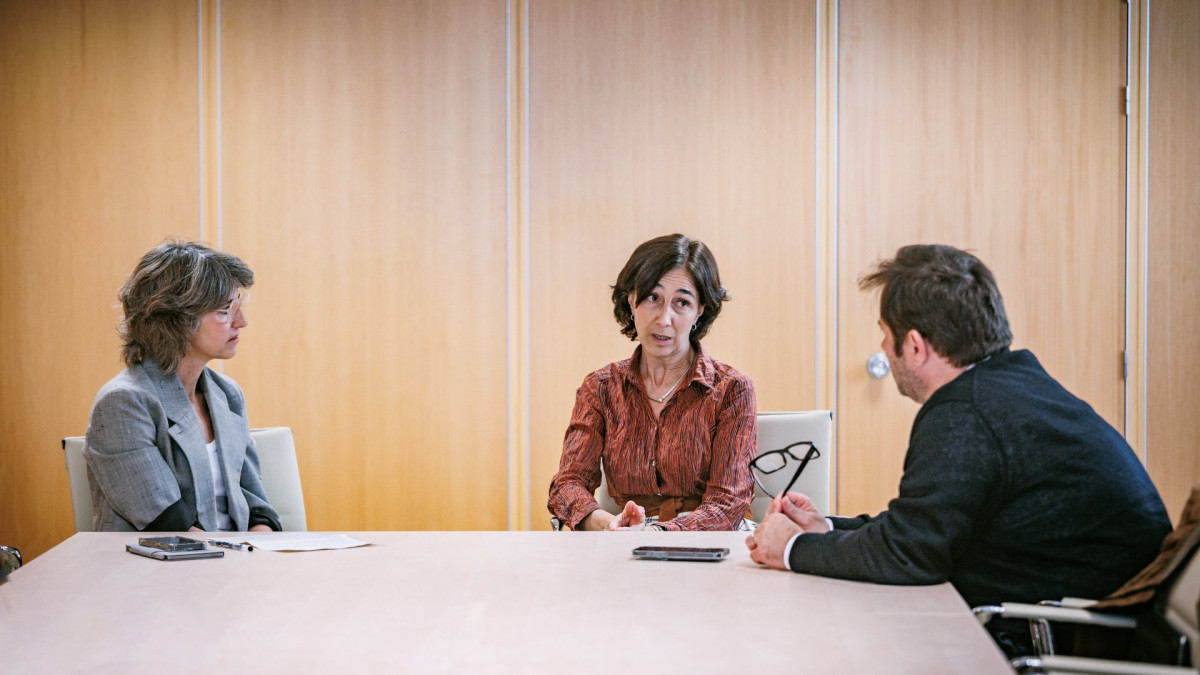
The dialogue turns to measuring public policies, data traceability, and the need for clear objectives for the industry. Photo: Agenda Pública / Tania Sieira.
Where should Spain be in five years in terms of competitiveness and the circular economy?
T. P. N.: Spain can become a leading country. It is not just a matter of optimism, but because we have numerous elements that make it possible.
Not in every sector, but in several particularly relevant ones where we can position ourselves among the leading countries and compete at a high level.
There are clear examples: automotive, where we are already strong; the textiles sector; the pharmaceutical sector. Additionally, we have a highly competitive renewable energy sector, which should become a real engine of competitiveness for the industry.
If we add other strategic assets of the country, there are real opportunities for Spain to consolidate as a powerful and competitive economy within a five-year horizon and within the European model of decarbonization and transition toward a sustainable economy — where the circular economy will be a key element.
“We can aspire to lead several strategic sectors with a model based on sustainability and competitiveness”
Teresa Parejo Navajas
To achieve this, it will be necessary to activate the right levers from public policies and strengthen collaboration with the private sector. With that approach, we can aspire to lead several strategic sectors with a model based on sustainability and competitiveness.
B. B.: In the specific area of the circular economy and sustainability, we are at a particularly favorable moment to jump on a train that will allow us to do things right.
In the case of packaging, we have spent more than thirty years working on the concept of extended producer responsibility. But new flows are entering that represent a huge opportunity: textiles, footwear, furniture and household goods, cigarette filters, wipes or agricultural plastics.
All of this places us at a key moment to rethink the municipal waste management model.
For decades, a certain way of working has prevailed, with infrastructures designed to respond to the needs of that moment. However, today the goals are much more ambitious and require new capabilities and, above all, scale; without scale it will be very difficult to reach those goals.
At the same time, there is a great opportunity, because many of the current infrastructures can be adapted. It is not the same to sort packaging as to sort textiles, but there is already a basis —spaces, licenses, machinery or operational experience— on which to build.
That is why rethinking current infrastructures —such as the 97 packaging plants— to analyze how they can adapt, open up to new waste streams, and gain efficiency represents a great national opportunity.
It is the right time to push a true state policy on waste management infrastructures. It will be essential to achieve circularity goals.
Moreover, in a five-year horizon, we should have also resolved debates related to data. It is essential to know where we stand, because without that diagnosis it is very difficult to define policies and strategies: knowing where we want to go, when and how to do it.
“If we do not advance simultaneously on these three elements —infrastructures, data and effective support for companies— it will be difficult to reach circular economy goals”
Begoña de Benito
And finally, public policies must accompany regulation. Regulation is necessary and must be ambitious, but it is not enough by itself. There are many companies —especially SMEs— that need resources, training, guidance, and an understanding of the framework in which they operate. If we do not advance simultaneously on these three elements —infrastructures, data, and effective support for companies— it will be difficult to achieve circular economy goals. But we are at a moment of opportunity and there is a clear vision of where to go. Now the challenge is to turn that vision into reality.
Thank you very much.
In alliance with