On February 27, I had the opportunity to participate in the Circular Economy Advisory Council in representation of the Spanish Group for Green Growth. The Advisory Council is an advisory body of the General State Administration, created under the Spanish Strategy for Circular Economy, in which actors of different kinds have the chance to put forward proposals to boost circularity in Spain. The meeting allowed us to gauge the interest surrounding the challenge of moving away from the linear economic model and advancing toward more sustainable schemes based on eco-design, efficiency, waste prevention, reuse, or the utilization of secondary raw materials. The gathering constituted, in particular, the starting point for the Third Action Plan for Circular Economy, which will be developed over the coming months.
In a somewhat analogous manner, Ecoembes, the collective system of producer responsibility for packaging, organized last year a series of forums for discussion with public and private agents to debate measures that would enable progress in circularity and which crystallized into a roadmap for turning the circular economy into a national project. This document envisions the transition to a circular model as a commitment that not only has an evident environmental dimension, but also constitutes an opportunity for the competitiveness of the industry and for Spain’s strategic autonomy.
“There is a realm in which not only is there no tension between competitiveness and sustainability, but there is explicit recognition of important synergies: the circular economy”
We cannot ignore that these initiatives are being proposed at
The continuity in the European and national commitment to the circular economy also aligns with growing geostrategic concerns. In the current context, reducing dependence on external sources has become a priority. Resource-use efficiency, the exploitation of critical raw materials, and the promotion of access to and use of recovered materials have become central axes of that strategic autonomy which is critical in these unsettled and uncertain times.
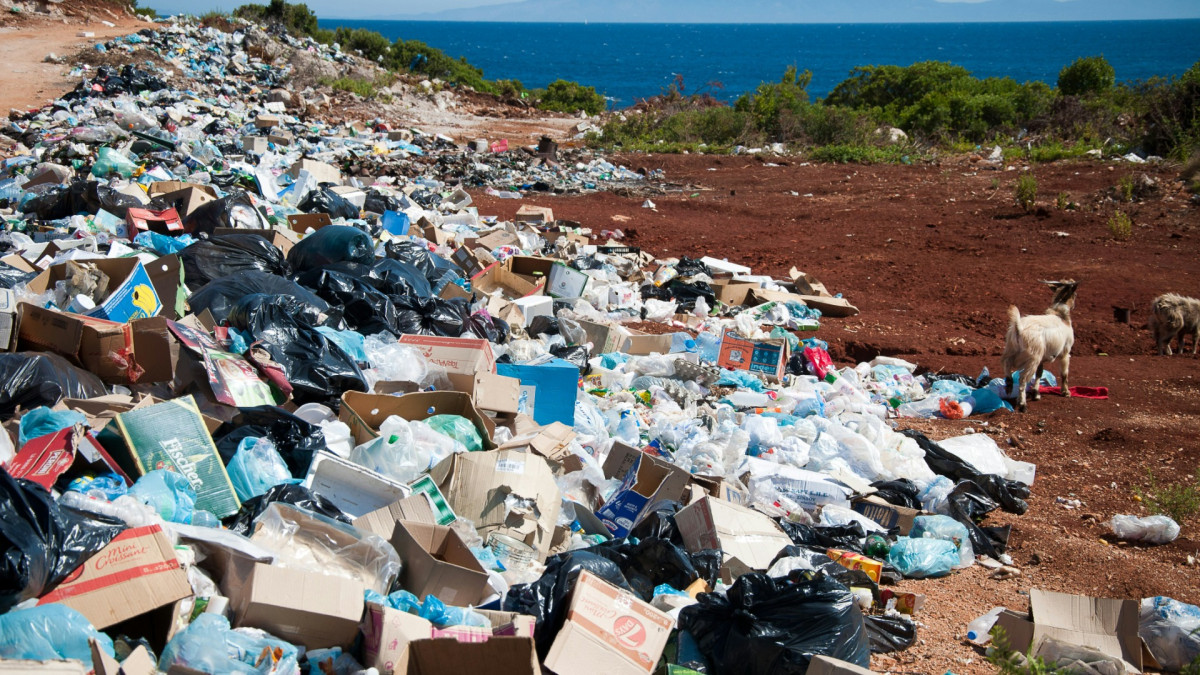
The circular economy, therefore, appears to be in good health, at least in terms of narrative and its position on the public agenda. However, the data are not encouraging. According to INE, the Spanish economy generated 112.7 million tonnes of waste in 2023 (the latest year for which data are available), a 3.5% increase compared with the previous year. The circularity rate of the Spanish economy stands at 8.5%, according to a recent report from the Fundación Fórum Ambiental, which means that less than one tenth of the materials used return to the production system after use.
We therefore face the challenge of turning words into action. There must be support for the discourse with concrete steps aimed at progressing, in a real and tangible way, in the deployment of circularity.
“It is essential to adopt measures that shift the focus of waste management toward the design phase of products, requiring that prevention, durability, repairability and recyclability be taken into account from the start of the life cycle”
It is essential, firstly, to adopt measures that shift the focus of waste management toward the product-design phase, requiring that prevention, durability, repairability, and recyclability be considered from the outset of the life cycle. In this regard, upcoming sustainability requirements under the Ecodesign Regulation and other sectoral standards will compel manufacturers and other actors to facilitate the repair, reuse and recycling of their products. Well-directed producer responsibility systems, whether through regulation or through the RAP systems’ own initiative, can also play a central role, through ecodesign modulation, in driving these changes.
But it is also necessary to strengthen the market for secondary raw materials. This involves facilitating and speeding up procedures so that properly managed waste can cease to be regarded as waste and be utilised in new production processes, always safeguarding health and the environment. It is also essential that these recovered materials be able to compete with virgin raw material whose extraction and production often have lower short-term costs. Various measures can be adopted to address this challenge, ranging from more ambitious green public procurement, to revising taxation to incentivize the use of recovered materials, or to extending regulatory requirements for minimum recycled content in a variety of products.
However, this transformation also requires, particularly in Spain, a coherent industrial policy aligned with these goals. The Spanish industry faces the challenge of strengthening its competitiveness in a complex international context while addressing decarbonization to reach climate neutrality by 2050, to which the EU has committed. Circularity must be a critical ally in this transition, contributing efficiency, innovation, reduced resource consumption (including water and energy), and lower emissions across the life cycle of products.
We are thus at a critical moment, a moment of transforming our economy marked by environmental, geostrategic, and competitiveness challenges, a moment of necessary change in which circularity is called to play a central role. Realizing this transformation requires a decisive and shared action by public and private sector players, and the establishment of a facilitating framework to make it possible. It is time to translate the discourse into action.
In alliance with