
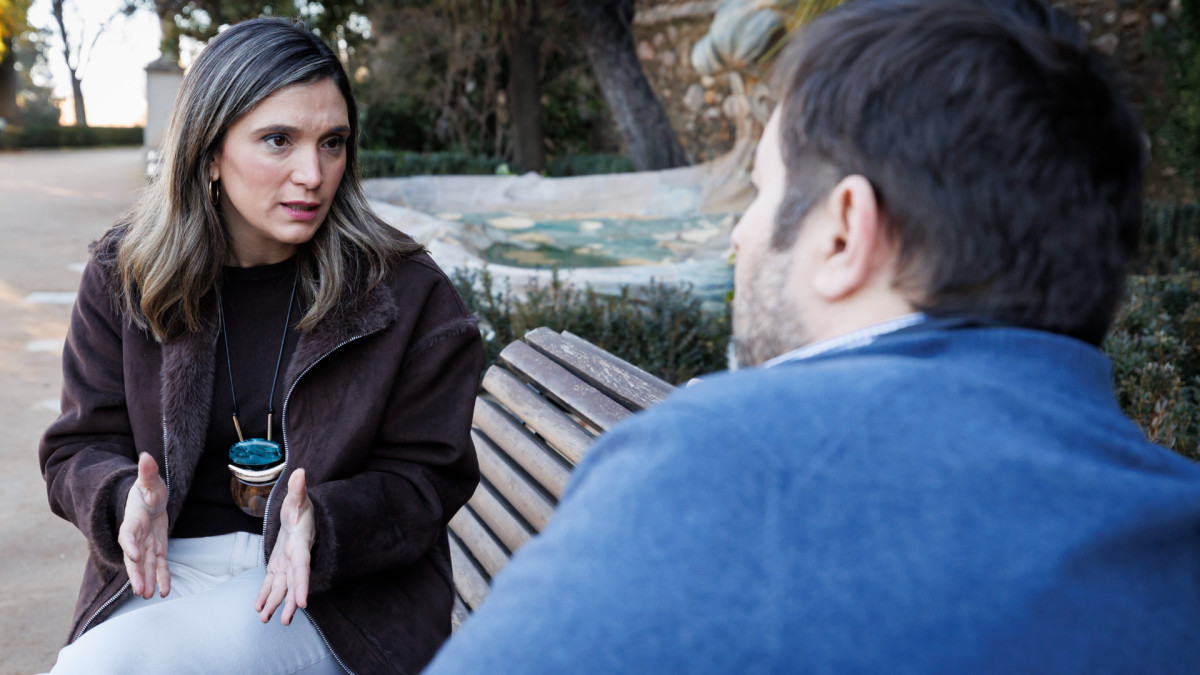
She is a political leader of the millennial generation. That is why she was one of the guests at the Next Gen Forum in Granada. María Márquez (born 1990), a deputy for Huelva, notes that her province “is very affected by the Adamuz accident.” She also analyzes the consequences of climate change, increasingly present in the public debate as demonstrated by the necessary and recent eviction in Grazalema, and the socialist leader emphasizes that “there was a contingency fund that must be organized to have predictive capacity in the face of this kind of events. The contingency fund in Spain is put at more than 80 euros per inhabitant.” However, she denounces, “the fund for Andalusia does not reach 2 euros per resident: it totals 16 million euros.”
Regarding the Spanish Government’s proposal to update the autonomous financing system, she is clear: “Does it benefit Catalonia? Yes. Does it benefit Andalusia? Also. So what’s the problem, then?” she states. “Now we’ve seen it with the floods: we lack money,” she warns, while defending the new proposal. “What government in its right mind rejects money?” she concludes.
Márquez and López Plana dialog in the palacete of Carmen de los Mártires (Granada). Photo: Agenda Pública / Álex Cámara
Ya son siete años de gobierno de Juan Manuel Moreno Bonilla en Andalucía. ¿Qué valoración haría de esta etapa?
Moreno Bonilla is the president, after Manuel Chaves, who has spent the most years at the helm of the Andalusian Government. In these seven years, the big projects that Andalucía needed and deserved have not been carried out, nor has the great transformation that he touted occurred. He is in the closing stretch.
We understand that this is a exhausted phase. It is a government that dedicates itself to posing, to appearing in photos, to smiling, but it is not a government with depth, with important and transformative projects for Andalucía. They seem like lost years for progress and advancement.
And these have been very harsh years in terms of managing public services. Clearly evident in healthcare. That is the thermometer that Andalusians identify with most clearly. The gravest case we have seen is breast cancer: women who participate in a screening program to prevent cancer and, having cancer, were not notified.
That is the most shocking thing we have witnessed in Andalucía in recent years.
Do you think the health system has suffered a significant setback in recent years?
Undoubtedly. Public healthcare in Andalucía is worse than ever. And privatization data is also reflected in private insurance. Andaluces used to have little to no private insurance: below 10%. Today, 25% of Andalusians have private insurance, one in four.
“Given the uncertainty and the unease of not having the guarantee of a public health system when you get sick, people have turned to private insurance”
We were the autonomous community with the least private insurance, and now we are at the top of the chart. That means that, faced with the uncertainty and the unease of not having the guarantee of a public health system when you get sick, people have turned to private insurance.
Is this a lack of investment?
No. The Andalusian Government has more resources than ever. This is stated by Moreno Bonilla himself. The Government has a budget of 51,000 million euros and a large part of those resources goes to healthcare.
What is the problem? That they are directed to private healthcare, with more contracts than ever. In fact, precisely because of uncontrolled privatization, taking advantage of the pandemic and the emergency mechanisms, at this moment their government is being investigated in the courts for how that money was spent: because they contracted under emergency when there was no emergency and because they split the contracts into as many pieces as possible to keep funneling money to the private healthcare companies they favored.
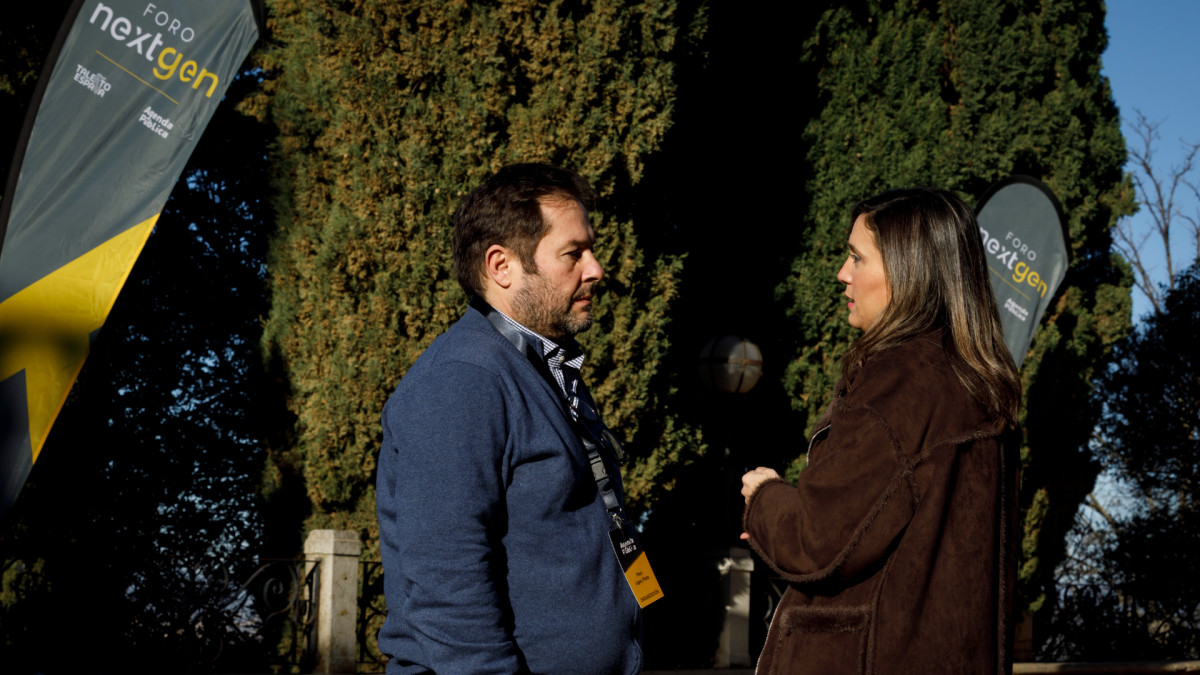
María Márquez takes stock of Moreno Bonilla’s years in Andalusia. Photo: Agenda Pública / Álex Cámara
¿Cuál es el otro punto más negativo, a su juicio, de los siete años del presidente Moreno Bonilla?
Besides healthcare, the devastation of public services has also brought about an increase in inequality. Before, in Andalucía, study was by merit. Today, those who have money study.
There are no places in public vocational training to study what one wants. Andalucía is among the autonomous communities where private vocational training is most expensive, and at present, thousands of families in Andalucía are taking out loans to be able to send their sons or daughters to vocational training.
“Currently, thousands of families in Andalucía are taking out loans to be able to send their sons or daughters to vocational training”
There are also no spots in public universities for the degrees people want to study. In 2018 there was one private university in Andalucía, and now there are five, precisely competing with the most popular, the most demanded degrees.
For all of the above, we understand that the destruction of public services has brought, without a doubt, a widening of inequality. Moreno Bonilla has wrecked the middle class in Andalucía.
After seven years outside the Andalusian Government, on what basis does the PSOE build its electoral offer? Do you think the public has already moved past the socialist cycle in Andalucía?
The PSOE is ready, undoubtedly. The Socialist Party wants to face this electoral campaign —which will be called in a quarter of an hour— at the level that Andalusians deserve.
People are tired of the political confrontation of “and you, more” and of short-sighted bargaining. Moreno Bonilla is an expert at that: he is obsessed with marketing and with what he tells, not with what he does or with governance.
We must offer a political project worthy of what the Andalusians deserve. In our view, the backbone is to safeguard public services, and there we will devote absolutely all efforts, with proposals and measures that truly solve the problems, and also incorporating dreams, wishes and inspiring future projects.
A fundamental policy of that commitment will be housing. A week ago, María Jesús Montero announced that, if she becomes president of the Junta of Andalucía —which she will—, 100,000 public housing units will be launched and the subjective right to housing will be guaranteed.
That means people can go to a court to claim their right to housing, because we understand that housing is a right, not a business, as the latest law recently passed by Moreno Bonilla in Parliament suggests.
In my view, it is the most important measure because it brings the daily reality down to earth: today it is cheaper to pay a mortgage than to pay rent. People try to buy a house, but when they sit before the bank’s director, he says: “Give me 20% of the down payment,” and the dream ends.
If you lack savings, if you do not have a family that can guarantee and help you, you fall into a gap of inequality and into a loop where the working person, who spends a large portion of their income—almost half of the salary, or half in many cases—to pay for housing—gets poorer.
“Ideally, in many cases the bank would give us 100% of the mortgage, but since it doesn’t, the administration offers to help people access decent housing”
What have we said? That the Andalusian Government, with María Jesús Montero as president and with the Socialist Party governing, will advance that 20% so that if you want to buy a home you have the guarantee that the administration is behind you. Obviously, you will later have to repay that part.
Ideally, in many cases the bank would give us 100% of the mortgage, but since it doesn’t, the administration, to bridge that inequality gap, offers to help people access decent housing. I think it is a very important measure and I know most people understand that it is necessary. We are here to do that kind of thing: to be useful.
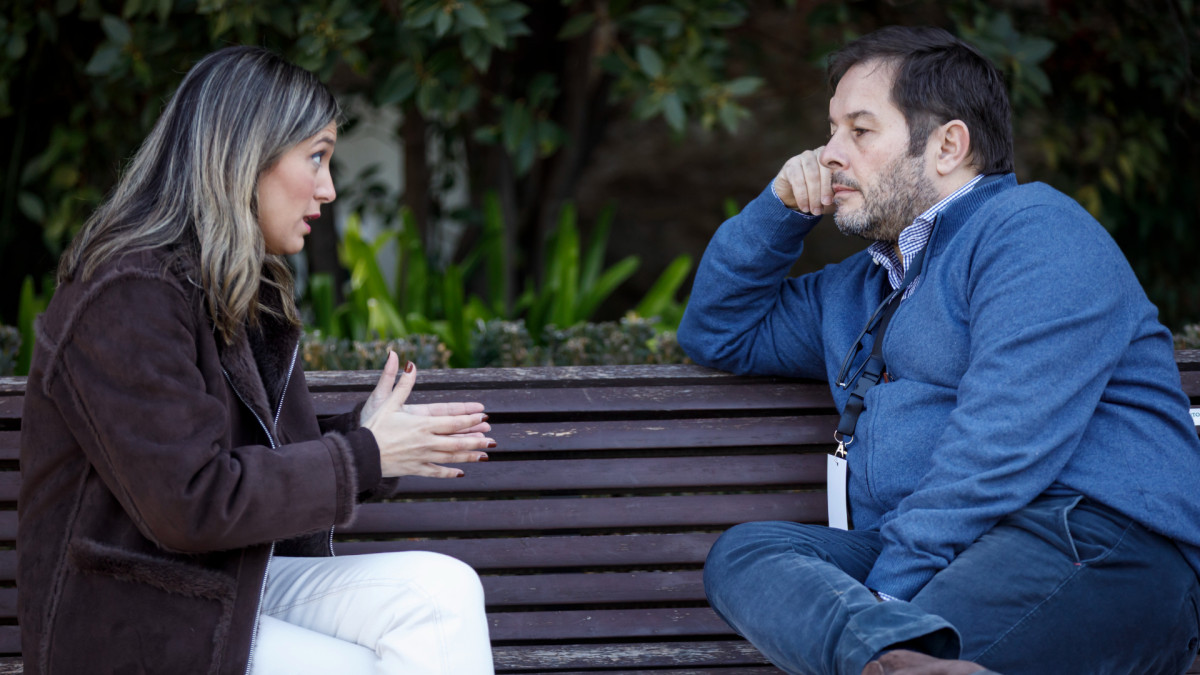
López Plana takes an interest in the Andalusian vision of the autonomous financing model. Photo: Agenda Pública / Álex Cámara
PP and Vox insist that the financing proposal is a pact with Catalunya. With the finance minister as candidate, how do you assess this?
Does it benefit Catalunya? Yes. Does it benefit Andalucía? Also. What is the problem, then? This is part of a calculated strategy by the People’s Party to discredit, at national and Andalusian levels, everything coming from the Government of Spain. Moreno Bonilla dislikes everything good María Jesús Montero does for Andalucía.
On November 15 he asked in Parliament for 4,000 million for Andalucía. And María Jesús Montero puts 4,800 million on the table, plus the 1,000 from the interregional compensation fund —which ends up being 5,700—. From 4,000 to 5,700: if you asked for 4,000, 5,700 will seem very good to you, right? Well, no.
And of course the financing model has Andalusian flavor. I insist: this is like living in a block of flats and the company owner comes and says: “We’re going to raise your salary.” And you reply: “I don’t want mine raised, because the guy in unit B next door will also have his raised.” But what kind of foolishness is that? And what a lack of respect, because the money is not theirs: the money belongs to the Andalusians.
Of those 5,700 million euros, the Vice President herself has already said that 1,000 million would be used to build housing. Andalucía cannot waste a single euro.
“What government in its right mind rejects money? It makes no sense. They can pour all the ‘marketing’ they want, but the truth is what it is”
Now we have seen it with the floods: we are short of money. We are asking Brussels for help for the Andalusian countryside. We are asking for help to advance the money from insurance to people who do not even have a fridge or a washing machine. The ruin is tremendous: the business sector, small shops affected, large farming operations as well.
We need resources. What government in its right mind rejects money? It makes no sense. They can pour all the marketing they want, but the truth is the truth.
Do you consider the possibility that general elections could be called at the same time as the Andalusian ones?
According to the information we have, no.
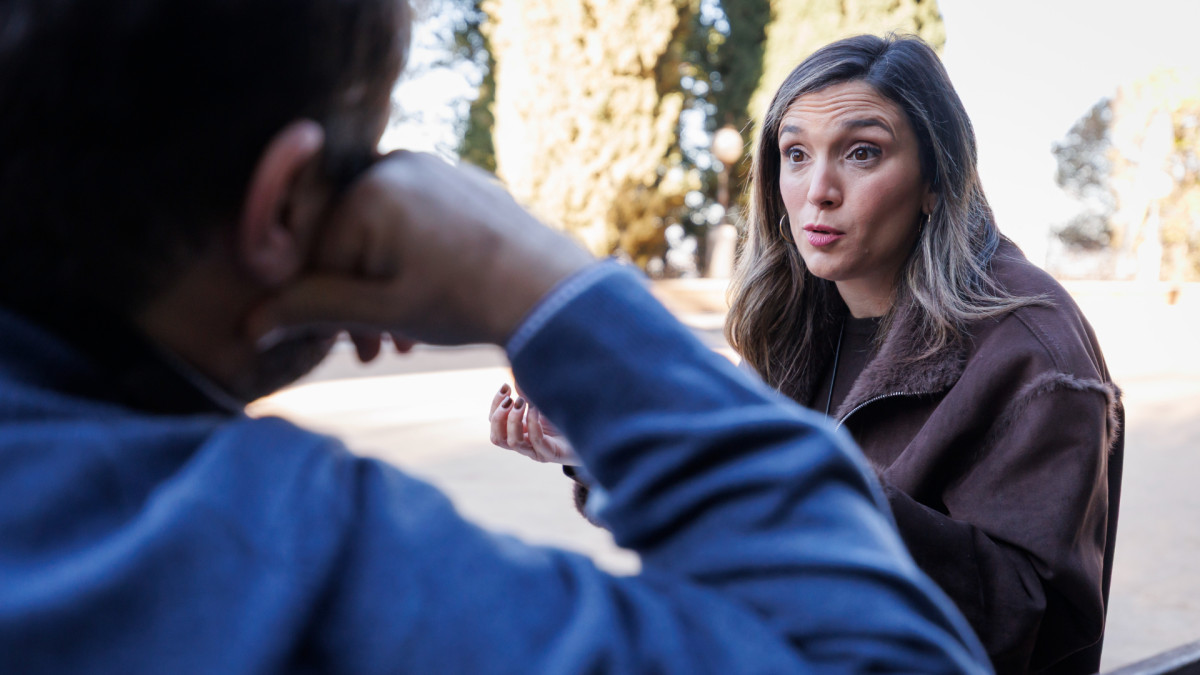
Márquez, number two of the Andalusian PSOE, also participates in the first edition of the Next Gen Forum. Photo: Agenda Pública / Álex Cámara
About climate change, we have seen periods of strong inclement weather in recent months. Is the regional administration prepared to respond to these situations?
There was a contingency fund that must be organized to have predictive capacity for these kinds of events. The contingency fund in Spain is estimated at more than 80 euros per inhabitant. However, Andalusia’s fund does not reach 2 euros per Andalusian: it is 16 million euros, and it has been frozen by the Partido Popular since 2018.
In 2018, when they took office, there were already 16 million raquíticos that do not reach even 2 euros per Andalusian. And that clearly shows there is no predictive capacity for emergencies or natural disasters of this kind.
What happens when these tragedies occur? Moreno Bonilla commits an imprudence at the first opportunity: he tells people not to approach the river and then goes into the river to take a photo, prioritizing the image he conveys.
When he has to manage and solve a problem, he looks up, points at the Government of Spain and says: “Hey, give me money; hey, solve the problem.” No. The president of the Andalusian Junta is you: you sit in the chair not only to take photos, but, above all, to solve people’s problems.
You are from Huelva, how do you see your province at the moment?
The province is very affected by the Adamuz accident. I myself have had to bury militants of the Socialist Party, friends, colleagues, people I loved and admired greatly, and it is shattered with pain.
“The people of Huelva have shown unity, solidarity and support: in the end, even in tragedies, the best of human nature comes out”
This kind of tragedy is very hard. But the Andalusian character and the Huelva character help us push forward and overcome adversity together and united. The people of Huelva have shown unity, solidarity and support: in the end, even in tragedies, the best of human nature comes out.
Thank you very much.

Natalie Foster
I’m a political writer focused on making complex issues clear, accessible, and worth engaging with. From local dynamics to national debates, I aim to connect facts with context so readers can form their own informed views. I believe strong journalism should challenge, question, and open space for thoughtful discussion rather than amplify noise.