
For many years, Germany has been Europe’s anchor of stability. Its economy was expanding, political consensus held firm, and the major parties—CDU/CSU (“the Union”) and the SPD—ensured a foreseeable alternation within a shared framework. Even amid Europe’s crises, Berlin projected a sense of institutional order and democratic rationality.
Today, that portrait of Germany appears fractured. The AfD now leads in certain national surveys, overtaking both the Social Democrats and the Christian Democrats. In several eastern Länder, like Saxony-Anhalt, support for it approaches 40%, a level that could grant it real leverage to obstruct the political process. At the same time, at the federal level, the traditional parties continue to rule in a grand coalition that many Germans no longer view as a stabilizing mechanism, but rather as a symptom of exhaustion. Is Germany slipping into a crisis of political representation and faith in the future?
The slow collapse of the SPD
The decline of the SPD didn’t begin with former Chancellor Olaf Scholz, nor with the war in Ukraine, nor with inflation or the energy crisis. It really started in the wake of Gerhard Schröder’s tenure.
When Schröder became Chancellor in 1998, the SPD captured more than 40% of the vote. And even after seven years in government, support in 2005 remained around 35%. From that point onward, an almost continuous decline ensued. Scholz’s victory in 2021 – achieved with roughly 25% – stood out as an anomaly that could have been mistaken for a revival.
The diagnosis for Germany’s Social Democrats is also echoed at the European level. France, Austria, and even the Scandinavian countries display similar symptoms: a loss of ideological coherence, electoral fragmentation, and difficulty in constructing a coherent economic and cultural narrative amid a global era shaped by globalization, migration, and fear of decline. Spain remains an exception, with Pedro Sánchez sustaining support from about 28% of intended voters under highly challenging conditions.
“It’s fairly common in coalition governments, but holding together Germany’s grand coalition has taken a heavy toll on the SPD”
And the dynamic in Germany faces another challenge: the grand coalition. As in eras past, the SPD has governed as a minority partner within a coalition with the Union. Politically, this has meant tangible costs for the Social Democrats. For instance, public policies that were both progressive and broadly acceptable—such as the minimum wage—ended up being politically credited to Angela Merkel. That’s commonplace in coalitions, but maintaining Germany’s grand coalition has imposed a heavy burden on the SPD.
The problem of Merz
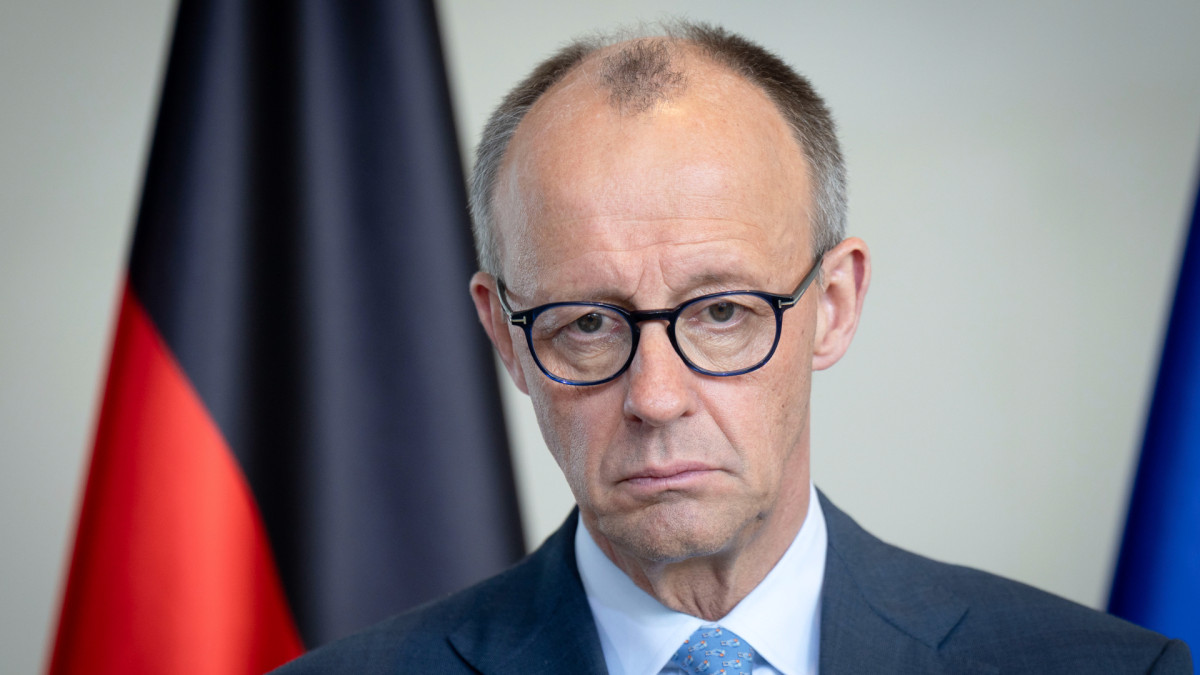
The current chancellor assumed office with promises of a conservative makeover and a rejuvenated German leadership in Europe, but thus far, neither has materialized. Merz now finds himself deeply unpopular, even among segments of the conservative electorate. According to surveys, no government has ever been so unpopular after only a year in office.
Germany is in urgent need of structural reforms: industrial competitiveness, pensions, defense, energy, bureaucracy, and the labor market. Yet the two main parties disagree on almost everything.
The conservatives advocate an agenda more oriented toward competitiveness and deregulation. The SPD presses for stronger redistribution and the preservation of the welfare state. Those divergences have produced a government paralyzed by mutual distrust.
There’s also an element rarely discussed beyond Germany: neither Merz nor vice-chancellor Lars Klingbeil had genuine executive experience before taking office, which may help explain some of the social frustration. Germany is simultaneously facing an economic crisis, an immigration crisis, a security crisis, and a crisis of political confidence.
Moreover, the Executive seems unable to craft a convincing narrative about the future. A Koalitionsausschuss gathering between the CDU/CSU and the SPD was convened only after several weeks of strain within Merz’s and Klingbeil’s government.
The end of the German model
For years, Germany’s success rested on three unusually stable pillars: affordable (Russian) energy, privileged access to the Chinese market, and the protection of U.S. military security. Then all three supports collapsed in quick succession. The war in Ukraine forced an end to dependence on Russian energy. A slowdown in China hit German exports, especially the automotive sector. And Donald Trump (along with a new strategic consensus in the U.S.) signaled that Europe must invest much more in its own defense.
Germany must now redesign its entire economic model in record time. This reality fuels debates that provoke considerable concern in Brussels and Madrid. Teresa Ribera, Executive Vice-President of the European Commission, recently warned in an interview with Agenda Pública that a necessary “reduction of dependencies” by Germany cannot be achieved “at the cost of rupturing” the European single market.
The worry in Spain is evident. In Berlin, pressure is mounting to relax rules on State aid, speed up deregulation, and permit more aggressive national industrial policies. Germany fears losing competitiveness to the United States and China, and it wants to move quickly. Meanwhile, southern Europe fears that such a strategy could fracture the internal market and entrench a two-speed industrial model for the continent.
Spain is watching this debate from a complex vantage point. On the one hand, it seeks to capitalize on the new European industrial map to attract investments in renewables, batteries, and green hydrogen. Madrid believes the energy transition can redraw Europe’s economic balance.
“The most strategic dimension of this crisis may not be only in the polls but in the battle for Europe’s future energy and industrial model”
On the other hand, Spain worries that Germany could fall under the sway of a national logic that weakens European cohesion. The most strategic dimension of this crisis may lie not only in polls but in the struggle for Europe’s future energy and industrial framework. In the past, Germany shaped many EU economic rules, but the green transition threatens to upend that balance. Meanwhile, Spain has become one of the great energy and industrial hubs of southern Europe.
This explains the divergent attitudes of Madrid and Berlin on State aid, deregulation, and industrial policy. Spain fears that a weakened and politically pressured Germany could prioritize a strategy of national reindustrialization that might harm the single market. This trend is already visible in the defense industry.
And there’s another worry: that the rise of the radical right in both countries could reshape Europe’s green consensus. If the AfD ever reaches national government, Germany could slow parts of the European climate and energy agenda. In Spain, Vox is already steering regional governments aligned with the PP toward a posture more hostile to climate regulation, the deployment of green infrastructures, and certain goals of the European Green Deal.
At stake is who will govern Germany, but above all which economic model will govern Europe in the coming decades. The paradox for Germans is that they need greater European solidarity to secure strategic survival, yet domestic political pressures push them toward national solutions.
The AfD and the politics of fear
In this political vacuum, the AfD is gaining ground. Germany’s radical right has long since laid the groundwork for its own institutionalization, and today it is capitalizing on economic anxiety, fears about immigration, and the exhaustion of the political center.
This unfolds in a fragile milieu: Germany maintains a far more rigid dividing line than most of Europe. Unlike Spain—where the PP collaborates with Vox in several autonomous communities—cooperation between the CDU and the AfD remains largely taboo. Within the German political establishment, a widespread belief persists: if the Christian Democrats were to strike a deal with the AfD, they would likely fracture. That’s a formidable firewall, but it does not come without costs.
Regionally, a plurality of coalitions still exists: leftist governments in Hamburg and Bremen; conservative alliances in Bavaria; and pacts between the CDU and the Greens in several large states.
Nevertheless, the system appears blocked at the federal level. The democratic parties must govern together, while the opposition is led by the AfD, and to a lesser extent by Die Linke. This undermines one of democracy’s basic tenets: the ability to experience a clear alternation of power.
“There’s a mathematical possibility that the AfD could win a parliamentary majority with just over 40% of the vote”
The danger is that the AfD could become the sole effective vehicle for electoral punishment, potentially triggering explosive scenarios in eastern Germany. In Saxony-Anhalt and Mecklenburg-Western Pomerania, discussions have emerged about the need for all democratic parties to unite to thwart “ultra” governments. There is even a theoretical prospect that the AfD could achieve a parliamentary majority with just over 40% if several minor parties fail to reach the 5% threshold. Why? Because the more the traditional parties unite against the radical right, the more they reinforce the perception that they are part of the same bloc.
A democracy without a future?
Beyond the polls, the country’s emotional climate warrants attention. German politics has grown defensive: defending democracy, defending Europe, defending Ukraine. Defending the industrial model. Defending the welfare state. Yet hardly anyone offers a compelling vision for the road ahead.
And that absence of vision connects to a broader European crisis. The ecological transition, artificial intelligence, and European strategic autonomy all present potentially mobilizing narratives, but most European governments treat these shifts as inevitable sacrifices rather than as collective projects capable of enhancing citizens’ lives.
Today, Germany embodies that psychological exhaustion more than any other country. There is also a notable difference with Spain: while the German political system radiates rigidity and deadlock, Spanish politics—though imperfect—remains much more competitive and open to embarking on new projects.
Perhaps that explains why the AfD keeps growing. The less the major parties are willing to embrace new projects, the more space there is for radical factions to fill.
