
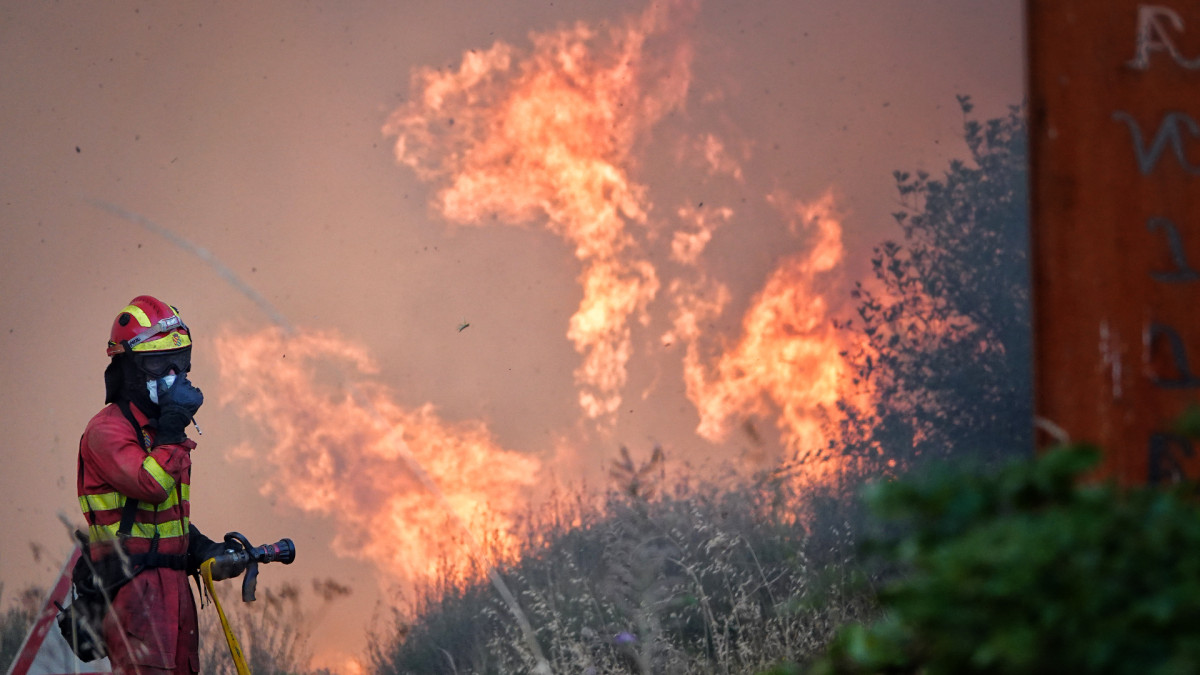
There is no need to reiterate—or perhaps there is—that the worst effects of climate change have arrived to stay, and we must learn to live with them and adapt to the new climate reality. The Government itself has brought into public debate, after multidisciplinary working sessions, the need to create a State Pact to face the climate emergency. We do not need more sixth-generation fires or a new DANA (a cut-off low weather pattern) that devastates the Levantine coast to know that, alongside mitigation, it is urgent to design, finance, and implement adaptation measures.
“We do not need more sixth-generation fires or a new DANA sweeping the Levantine coast to know that it is urgent to apply adaptation measures”
The problems of a mismatch between the pace of development, the data bases, and the financing between mitigation and adaptation are of a different nature. Mitigating is relatively straightforward. We have the technology available, there is investment, and the measurement variables are standardized, because we have a clear determinant factor to reduce. That is, one ton of CO₂ emitted is one ton of CO₂ in Bangkok, in Ushuaia, or in Barcelona.
Adaptation, by contrast, demands diagnoses that are highly territorialized, local, and multidisciplinary, with cross-cutting policies and a strong sociological component. What happens with the Ebro or Tagus river basins and the cities or neighborhoods through which they run? What community health protocols are applied in heat waves in Andalusia? The need for flexible plans, almost tailor-made for each territory, implies small, specialized projects with significant local and neighborhood coordination. In other words, there is a high risk that such plans escape the upper echelons of politics and institutional frameworks. Also, the local level, in many cases, lacks information and robust, verifiable data to carry out ambitious action.
Another problem is
“The current media and political bias toward the urgent, the present, rather than tomorrow, is more favorable to mitigation than to adaptation”
The State, as the institution that must ensure the best welfare conditions, is called to be a driver and funder in certain cases. In this framework, the media and political bias toward the urgent, today and not tomorrow, is more favorable to mitigation. Conversely, “planting seagrass Posidonia to protect shoreline erosion” or “improving irrigation protocols and digitization in areas at risk of desertification” are mid- to long-term tasks, without pompous inaugurations or newspaper headlines. Moreover, the results are invisible during the electoral cycle, until the big storm, the big fire, or the extreme drought arrives.
Pacto de Estado y propuestas para la mejora de la adaptación climática
The great challenge of adaptation policies and, therefore, of the future State Pact, is none other than avoiding short-term whirlwinds. We need to take advantage of the climate urgency to drive a structural mechanism for urgent adaptation in specific zones of Spain.
As we argue at the Renovables Foundation, it is necessary to move toward a model of adaptive forest management, based on integrated landscape stewardship. A model that enjoys the backing of public administration, combining prescribed and preventive burns, controlled grazing, and reforestation with native species, and integrating forest policies with agricultural and rural policies, with economic incentives. In water matters, a National Response for Water Resilience is proposed to modernize infrastructure through Nature-Based Solutions (NbS) and smart technologies, funded through a National Fund against Desertification. To protect citizens against heat waves, the creation of regional indices to measure the urban heat island effect and a Global Plan for Heat Adaptation is proposed, focusing on renaturalizing cities with green and blue infrastructures (applying NbS).
“The essential thing is that we must stop being reactive to disasters, to become predictive and prevent human and economic losses”
It is indispensable to permanently maintain the technical and human resources to face emergencies, consolidate collaborative governance, and establish a State Agency for Climate Prevention with financial autonomy and national coordination capacity. Furthermore, to stop funding disparate measures, it is proposed to create a National Adaptation Fund with stable funding from the general state budgets, complemented by regional funds, prioritizing the most exposed and vulnerable regions. There are more measures in the pipeline, but the essential point is that we must stop being reactive to catastrophes, to become foresighted and prevent human and economic losses.
We are not starting from zero. We are fortunate to have an Adaptation to Climate Change Plan for 2021-2030, whose action plans are being implemented, albeit without sufficient monitoring. Perhaps the most pragmatic and efficient step is to review it from top to bottom, extend its time horizon, update it, and provide it with enough funding so that the measures reach the ground and begin to improve and secure the well-being of Spanish society. Only in this way will we achieve a consensus on adaptation that ensures we can live in good conditions over the coming decades, without having to migrate to other areas or leave anyone behind.
