
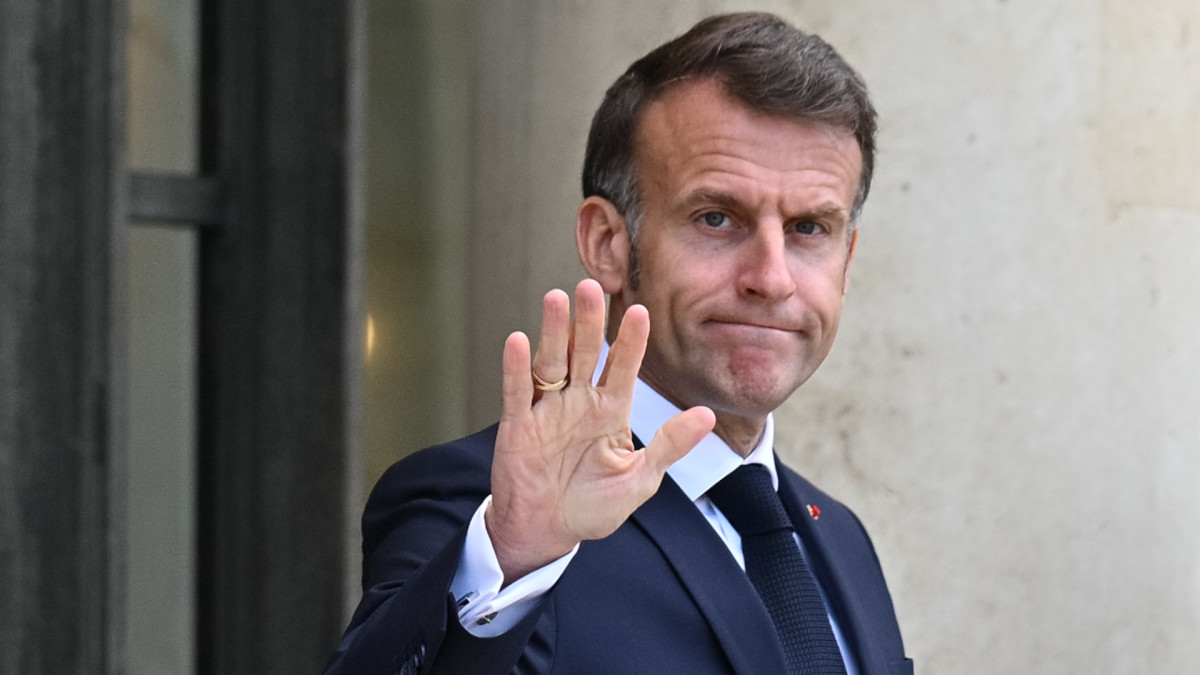
Seen from Spain, it gives the impression that, one year before President Emmanuel Macron finishes his term at the head of the French Republic, the political and economic situation of the country has been put on hold, as if only the 2027 presidential elections could unlock it. However, this impression is far from reality.
In recent months, France has taken on a very active role in international geopolitics. Although it has not led the opposition to attacks on Iran, more closely associated with the Spanish and Italian governments, the invasion of Lebanon has nonetheless pushed Paris to press to contain the escalation of the conflict, given the risk that the entire region becomes a tinderbox difficult to manage. On the other hand, the Gaulish country has intensified activity around resolving the war in Ukraine, largely as a response to the United States’ disengagement since Donald Trump came to power. Since early 2026, France has pushed several joint initiatives with Ukraine and Germany to address the next stages of the conflict. Moreover, it has been one of the countries that has pressed hardest to unlock the international aid packages to that country, considered essential to sustain the long-term stability of the Ukrainian defense front.
“Inflation, which stands at 2%, and the little room left by the debt-to-GDP ratio weigh on the growth forecasts”
At the national level, the situation seemed calm. Until now. Sébastien Lecornu had managed to calm the turbulent parliamentary waters with the approval of the current year’s budgets, but the outbreak of the conflict in the Middle East has upended all conservative forecasts. On May 19, the prime minister warned that social cuts could be larger than expected given the circumstances. The generalized rise in prices, especially fuels, and the frictions in the supply chains of the French industry have been felt strongly in recent weeks. Therefore, he warned that the aid packages announced at the beginning of the conflict will have to be revised so that the allocations are distributed in such a way that the burden of the measures does not fall exclusively on the State, as it is a priority to meet the deficit targets. Inflation stands at 2%, and the little room left by the debt-to-GDP ratio weighs on growth forecasts.
As was to be expected, these statements have not sat well with the different forces of the parliamentary spectrum, which have already expressed their opposition to an increase in taxation on labor incomes, as well as to greater cuts in social programs. While a press conference is expected to clarify the line to follow, all indications point to the end of 2026 implying an economic slowdown and a rise in social discontent, which, by the way, was already quite high.
The emotional balance of Macronism
That unease, in some sense, summarizes the emotional balance of Emmanuel Macron’s two terms. That of a president who promised to change everything to restore confidence in the republican system and guarantee its long-term stability. The feeling is that that objective has not been fulfilled. Ten years later, the country appears more socially divided, more politically polarized, and more economically depressed than then. The republican institutions are, in many respects, discredited, and French society shows little hope about the future of its own country, regardless of the ideological spectrum in which it moves. This demoralization is also reflected in voting trends. The polls point to a comfortable victory for the National Rally in the first round during the 2027 presidential elections. Whether Marine Le Pen or Jordan Bardella leads the candidacy, the possibility that the party reaches the Élysée after the second round can no longer be ruled out, since there does not seem to be a candidate facing a majority of voters as the “lesser evil” in a potential second round.
“The question, then, is what should be done from the presidency immediately after defeating Le Pen’s party in the elections”
But suppose that profile existed. The question, then, is what should be done from the presidency immediately after defeating Le Pen’s party in the elections. First of all, it is worth clarifying that the names currently discussed as presidential candidates, such as Gabriel Attal or Édouard Philippe, would not represent, a priori, a revolution capable of upending the state. Additionally, the country would continue with the same pressing problems, such as reducing the annual deficit to levels near 3%, as well as lightening the debt-to-GDP ratio, which heavily conditions the maneuvering space of any government aiming to undertake structural reforms. Considering the current political situation, it would be a liberal-conservative government. But that does not have to translate into inertia. At least since the end of World War II, the centre-right has often played an active role in the country’s structural and institutional changes. The key lies not so much in what cannot be done, as drastic and unjustified increases in spending, but in what has not been done for lack of political will and that would be perfectly feasible for a future administration emerging from the 2027 elections. This can be summarized in the following three points:
A more conciliatory and magnanimous presidency. In domestic policy, polarization and distrust in the republican institutions go hand in hand, with no clear what comes first. One might have thought that Emmanuel Macron, a young president who ten years ago seemed aware of the growing polarization and the discredit into which the political system was sinking, would show more flexibility in dealing with the various forces and social sensitivities once in power. It has not been so, especially after his re-election. From the start, Macron showed certain authoritarian tics that earned him rejection from both the left and the right. With a personalist style in domestic politics, his actions have been characterized by notable improvisation and a limited ability to gauge the consequences of his decisions. The dissolution of the National Assembly was the most evident example: far from unlocking the situation, he left an ungovernable parliament and opened a period of instability, which has given rise to a cascade of prime ministers in the last two years. Moreover, he has not known how to contain the advance of the radical right, despite the illegal financing scandals that have surrounded it, including the disqualification of its leader. The profile that succeeds him, if he overcomes the National Rally in the presidential elections, will have to deal with a fragmented parliament and a radical right that is no longer an expression of weariness and anger, but rather positions itself as a real alternative government, Within that more radical right, there also coexist two opposed visions, although that issue would deserve its own analysis. All signs point to after 2027, if action is not taken with diligence and flexibility, there is a risk that the traditional parties and ideas of the post-1945 consensus will be erased from the map, at least for a long period of time.
“Whether with Merz or, previously, with Scholz, the blindness with which Germany has faced the recent challenges for the European industry is blinding”
Economic security and strategic autonomy. In this regard, Germany and the countries closest to its stance, such as the Netherlands or Austria, have become the main stumbling block within the EU to crafting a coherent, relevant and long-term sustainable economic plan. Whether with Merz or, previously, with Scholz, the blindness with which Germany has faced the recent challenges for European industry is blinding, particularly its lack of action regarding what is already known as the China shock 2.0, about which it would be worth a more detailed analysis, and which is profoundly affecting the productive capacity of the German economy. In the last two years, Chinese exports have grown almost exponentially, especially to the countries traditionally identified as the EU’s core economic region. Not long ago, the rise in imports from China was offset by surpluses with other regions, but this is starting to be outweighed. European companies already compete with Chinese ones both globally and within the EU.
Sectors such as batteries or electric vehicles are paradigmatic cases of this. While Macron and his government have pressed to counteract the most negative effects of the shock (destruction of the industrial fabric, reallocation of investments, etc.), their actions have been viewed with suspicion by Germany for apparently favoring French interests over those of the Community. The liberal dogmas of the 1990s have become outdated. China’s success in strategic sectors responds to massive subsidies, systematic public intervention, and economies of scale in a huge domestic market. Given that Beijing is unlikely to give up these instruments, the threat of competitive displacement in areas such as critical minerals, semiconductors, or aerospace will continue to intensify. Convincing the various partners of the need to act will not be easy; therefore, it will be necessary to weave broader alliances among the Member States to advance in the right direction.
“France faces the need to set military objectives that are both ambitious and achievable, tailored to resources that, despite their diversity, remain finite”
Leading edge of European geopolitical power. France is the European power in defense and intelligence. In a critical moment for the EU’s future, with an armed conflict at its doorstep and an unstable geopolitical scenario, it is important that the French state keep wide horizons and dedicate all possible efforts to crafting a coherent and common defense strategy. The profile that succeeds Macron should take into account several factors. On one hand, regardless of who sits in the White House, the cultural and political distance with the United States will grow ever larger. Therefore, concepts such as the utility and relevance of NATO will have to be redefined in the future, and in that context the European Union must find its place. With defense spending slated at 413 billion euros for 2024-2030, and being the largest investor in military equipment, applied research, and experimental development across the EU, France faces the need to set military objectives that are both ambitious and achievable, tailored to resources that, though diverse, remain finite. The real challenge lies in reconciling the building of a common European defense with national security powers, which historically have formed an indispensable pillar of state sovereignty, consolidating a European geopolitical sovereignty that does not satisfy Washington’s demands or its military interests. Overcoming resistances within the EU will be a massive task that Macron’s successor will have to tackle, while also trying to correct the mistakes made in joint projects such as the SCAF, the Future Air Combat System.
2026 is, therefore, a decisive year for France, in which the foundations of its institutional development and international reach for the next decade will be laid, once the presidential elections are behind us. The EU is interested in a strong France, with a sound economy and clearly defined community objectives, just as France should be interested in building bridges with those partners with whom tensions have existed and being more flexible about the future together of the European project.
