
Another prime minister, and the third in less than a year. The resignation of Sébastien Lecornu has brought French politics to a new stage of uncertainty. The results of the latest legislative elections have driven the country to an unprecedented degree of parliamentary fragmentation, which at this moment threatens to destabilize the economic situation through an ungovernable system in which no political force is willing to bear the slightest electoral cost. This is because, if we assume that Macron will not be removed from office —there are added difficulties for such a measure to be carried out successfully— the next presidential elections would be in 2027, which makes nobody want to risk their political prospects through the implementation of unpopular reforms. So much so that the structures of the Fifth Republic are beginning to be extensively questioned by different forces across the parliamentary spectrum.
“The system that De Gaulle carefully assembled, returning France to the path of economic prosperity, is beginning to show cracks”
Parties such as La France Insoumise (LFI), the Parti Communiste (PCF), or Rassemblement National (RN) have criticized the rigidity of the system, as well as the enormous elitist state structure on which it is built, with politicians who come from ordinary backgrounds and replicate attitudes aimed at benefiting only a small percentage of the population. Consequently, the system that De Gaulle carefully assembled, returning France to the path of economic prosperity, begins to show cracks and the population is increasingly skeptical about its viability, redistributive capacity and representation.
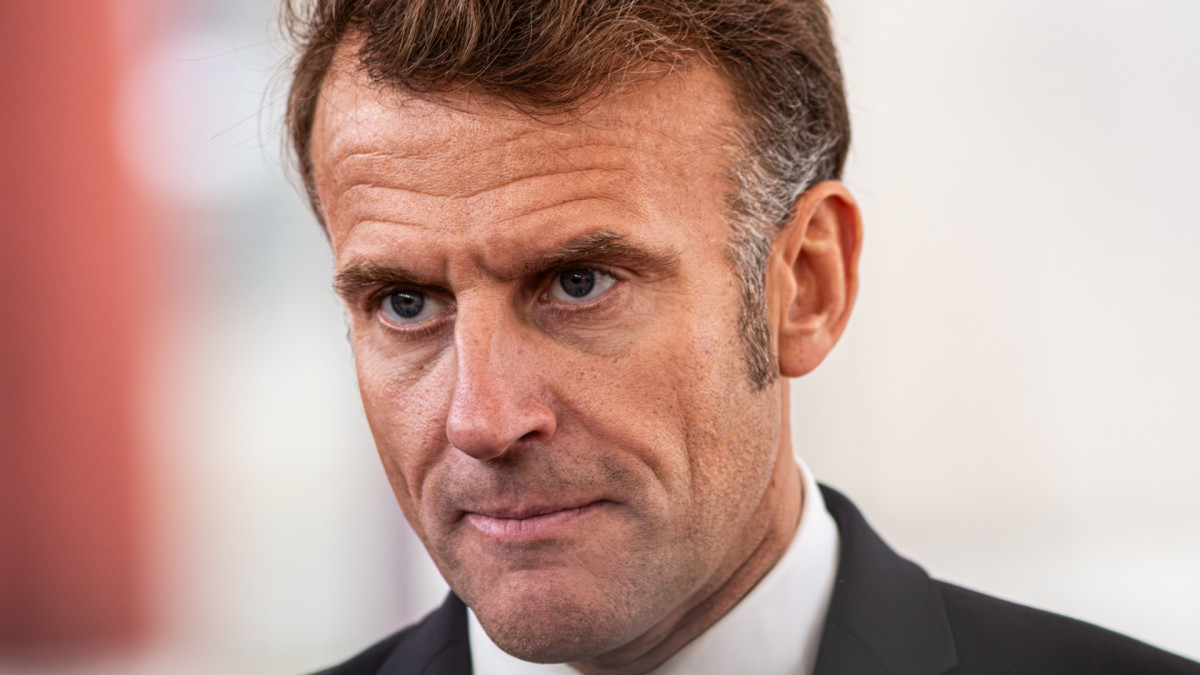
On this day, therefore, what has been observed in the last year brings to mind the postwar unstable Fourth Republic, a regime that became a grinder of prime ministers and broad-spectrum politicians, and that led the country to institutional collapse in the 1950s. Although the wear of the republican system is multifactorial, Emmanuel Macron and his actions have contributed greatly to increasing the distrust of the French population toward its own institutions. What began in 2016 with a presidency promised to be brilliant, led by a young, charismatic and bold figure, has ended up turning into a failed political cycle, full of erratic decisions, scandals and the widespread sense—even among his own ranks—of always staying halfway between the stated objectives and the results achieved.
Some therefore point out that political instability will lead the country to a prolonged economic stagnation due to the deterioration of several indicators, among which stands out the public debt as a percentage of GDP, which already exceeds 110% —as shown in the following chart—. The growth of the public debt, which is not a new difficulty, may lead to a gradual loss of market confidence due to, among other things, potential future indebtedness and access to credit. Not to mention, the —on the other hand, predatory and biased— rating agencies already downgraded their debt assessment in September, attributing it to political problems and the lack of measures taken in the last year. On the other hand, the new EU fiscal stability agreements include annual reviews to reach the targeted goals, and France is far from making progress.
“Political fragmentation has played an essential role in that sense, for it has not allowed the implementation of reforms that generate consensus”
As noted earlier, political fragmentation has played an essential role in that sense, as it has not allowed the implementation of reforms that generate consensus and at the same time permit improving the tax collection system as well as controlling spending. All reform programs have thus faced strong opposition from French society followed by mass mobilization. This means that, with less than two years to presidential elections, no political force wants to entangle itself in the drama into which the figure of the prime minister has turned up.
The OFCE’s annual report on the French economy points to the government’s ineffective work on debt consolidation in order to facilitate its repayment, as well as to political instability. According to the data handled, this latter indicator has weighed on economic growth due to the absence of solid reforms aimed at accelerating production, revenue collection, and reducing public spending. Additionally, they note that while the French economy is resilient and the country possesses a dynamic industrial fabric, the overall perception of it has changed considerably over the last two years. Finally, the report indicates low employment growth — a variable usually solid in the country, unlike Spain —, as well as a decline in households’ purchasing power due to rising prices. Taken together, this could be the spark that lights the fuse of mobilization in a highly polarized country with a political class detached from the daily problems of the population. Notably, Lecornu has faced strikes and demonstrations without having taken office. This is evidence that French society is alert to any move that could be aggressive or harmful to the entire population.
In the face of this, few alternatives remain. Macron could well lean toward an early election that is expected to increase support for Le Pen’s party (RN) and the definitive collapse of the political center, or he could appoint a new prime minister capable of leading a government with a more “concentrated” profile — surprisingly, Lecornu is making efforts in this direction—. The problem with the latter scenario is that parliamentarily the numbers do not add up, and we would still have a cabinet with a very limited room for maneuver. The coming days will provide the key that will probably define the political and economic future of our Gallic neighbor during the year 2026.

Natalie Foster
I’m a political writer focused on making complex issues clear, accessible, and worth engaging with. From local dynamics to national debates, I aim to connect facts with context so readers can form their own informed views. I believe strong journalism should challenge, question, and open space for thoughtful discussion rather than amplify noise.