
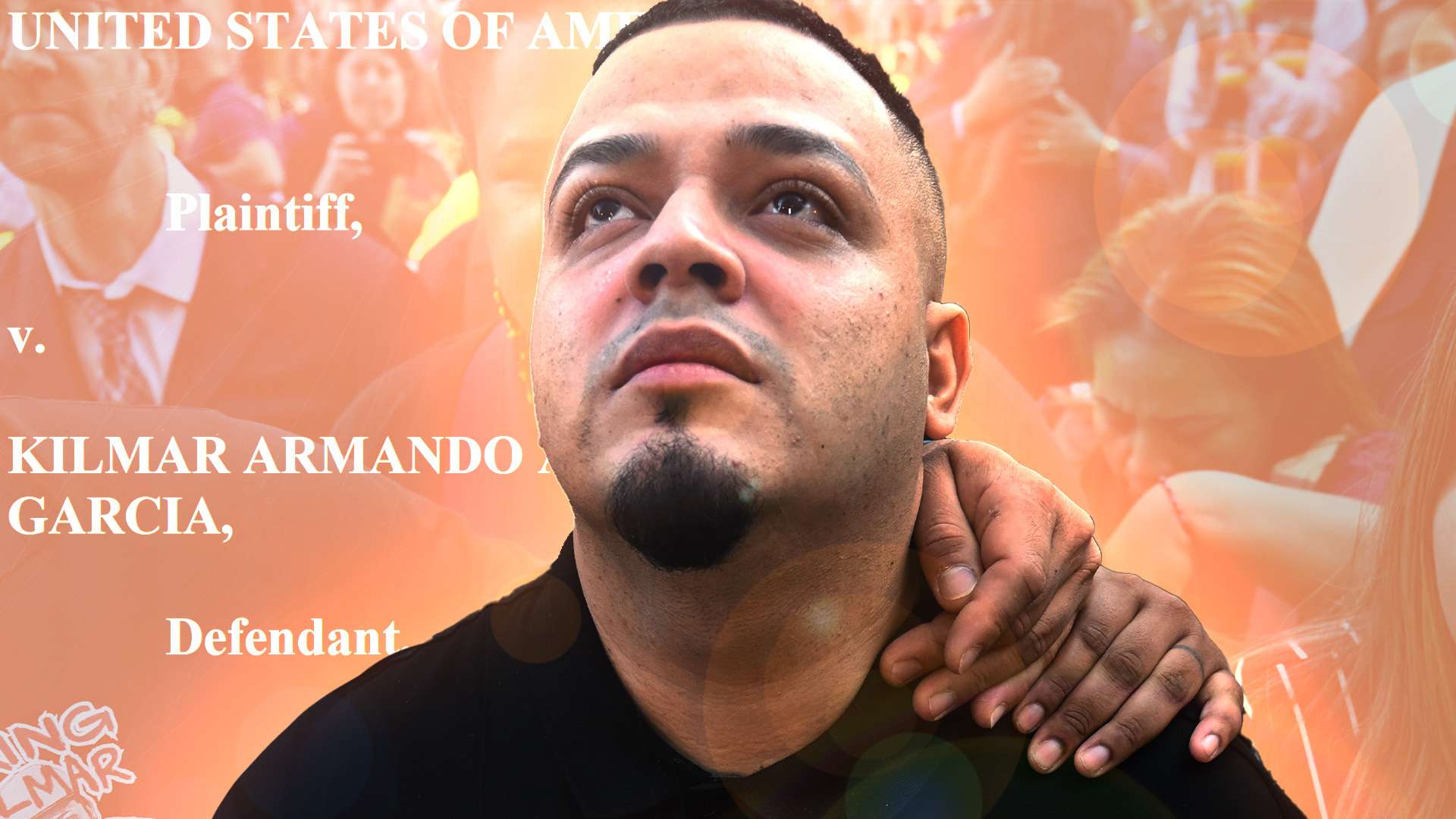
Last week a federal judge dismissed the criminal case against Kilmar Abrego Garcia, the Salvadoran national whose case became a flashpoint in the immigration debate the previous year, after ruling that the indictment was corrupted by vindictiveness in an unconstitutional way. The Justice Department, saying it would appeal, issued a statement describing it as evidence that “another activist judge has placed politics above public safety.”
That accusation carries irony. Abrego Garcia might indeed have been involved in smuggling people across the border. Yet the charges against him, stemming from a 2022 traffic stop and the subsequent investigation that had been closed without charges, were always rooted in political calculations rather than public safety. The truth was laid bare by the Trump administration itself, in ways that go beyond the scope of the ruling. Most telling is that he could probably have faced deportation long before.
Abrego Garcia rose to prominence as a symbol of unlawful migration and the federal government’s tactics to curb it in March 2025 after the administration sent him to a notorious megaprison in El Salvador. The government claimed it was an “administrative error” that forced the move, and it was compelled to acknowledge that he held a withholding of removal to the very country to which he had been deported. The U.S. District Court for the District of Maryland ultimately determined that the executive branch had an obligation to “facilitate” his return, a requirement that the Supreme Court later unanimously confirmed.
The news cycle ignited a political fight that, in many respects, extended far beyond a single person. Government officials condemned Abrego Garcia or urged for his sake; among them was Sen. Chris Van Hollen (D–Md.), who traveled to El Salvador to meet him in person.
Abrego Garcia came back to the United States in June. It did not align with the Trump administration’s earlier claim that it lacked the authority to bring him back. This time he faced a criminal indictment. “We got him out of here,” Todd Blanche, then the deputy attorney general, told Fox News’ Laura Ingraham that month. (Blanche has since ascended to the top office.) “And a judge in Maryland and many members of Congress…questioned that deportation decision.” So the government “started…investigating him.”
That admission would prove decisive in court. “Blanche’s remarks plainly confirm that the Executive Branch reopened the criminal investigation because the Judicial Branch required the Executive Branch to facilitate Abrego’s return from El Salvador,” writes Judge Waverly D. Crenshaw Jr. of the U.S. District Court for the Middle District of Tennessee. “The objective evidence here shows that, absent Abrego’s successful lawsuit challenging his removal to El Salvador, the Government would not have brought this prosecution. The Executive Branch closed its investigation on the November 2022 traffic stop. Only after Abrego succeeded in vindicating his rights did the Executive Branch reopen that investigation.”
Yet although the ruling does not address it, a vindictive thread runs through another facet of Abrego Garcia’s tale—an aspect that few have examined—that further complicates the claim that this is about “public safety” rather than “politics.”
Many overlook the fact that Costa Rica agreed to take Abrego Garcia in August. The country maintains a standing arrangement with the United States to absorb deportees who cannot be sent back to their home country. The federal government initially supported this plan—it had itself proposed it. But it came attached to a plea deal linked to the (now-dismissed) criminal indictment. When Abrego Garcia declined to plead guilty, the Trump administration pursued punishment by another route: deporting him to Uganda.
Problem: Uganda would not accept him. So the federal government pivoted to Eswatini. Eswatini’s spokesperson, Thabile Mdluli, stated that the country had “not received any communication regarding this person” after the news broke. No agreement ever materialized. The Trump administration then did another about-face, turning to Ghana.
“Ghana is not accepting Abrego Garcia,” Ghana’s foreign affairs minister, Samuel Okudzeto Ablakwa, said in October. “He cannot be deported to Ghana.”
At a court hearing soon after, the government announced it would aim to send Abrego Garcia to Liberia, which agreed temporarily. Costa Rica was no longer an option, the administration informed the court, because it no longer “wish[ed] to receive him.”
That was news to Costa Rica. “That position that we have expressed in the past,” Mario Zamora Cordero—Costa Rica’s minister of public security—said in November, “remains valid and unchanged to this day.”
Yet the Trump administration has chosen to spend taxpayer money prolonging this case—not because there is no viable deportation plan, but because officials appear intent on awaiting one that would maximize suffering. In his ruling, Crenshaw wrote that the government did not explain its “change in position to remove Abrego and not prosecute him to then prosecute and not remove him.” The answer, unfortunately, speaks for itself.
