
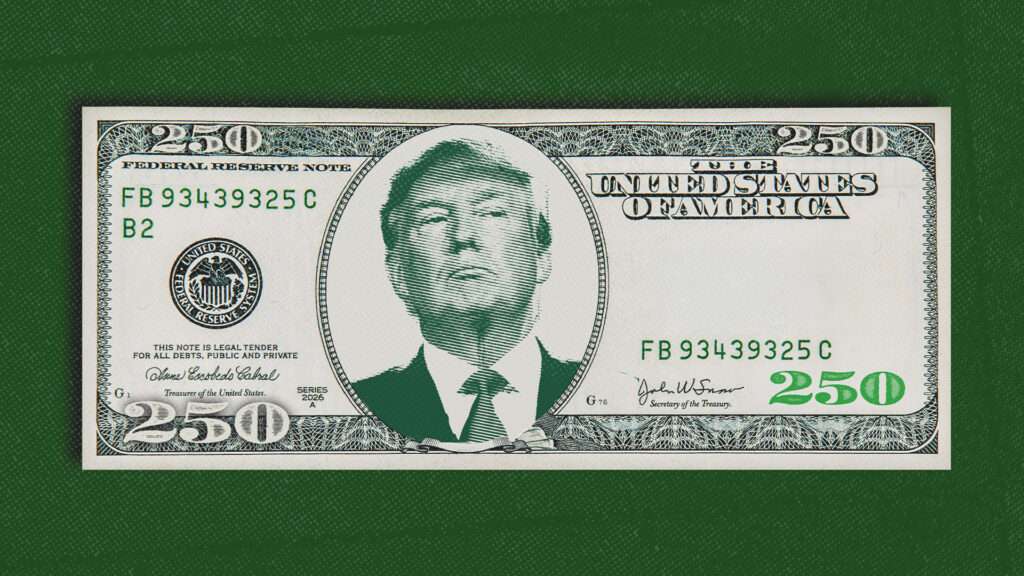
George Washington deliberately resisted the idea of having his likeness minted on U.S. coins, because such adulation would mirror the veneration reserved for monarchs.
Some people are deeply enamored with the presidency and the politicians who chase it. The Guardian has noted that this enthusiasm can morph into something more volatile—a zealous fervor that borders on worship, even suggesting it resembles a cult or a church. After all, a church needs a Messiah, so some treat the president as if he were “the One.”
But that was then, and this is now. In the 2008 campaign, Barack Obama and his supporters faced sustained criticism over the perception that people were revering the future president as an icon. Although I wasn’t yet eligible to vote, that election was the first I could engage with in a meaningful way, and the phenomenon repelled me. I still vividly recall walking into Urban Outfitters, a true high school hangout, and seeing T‑shirts bearing Obama’s image. Why would anyone want to wear a politician—a government official—as a fashion statement?
How far we have come. The Trump administration is pushing to imprint his face not on a shirt but on U.S. currency, advocating for a $250 bill with him front and center. There are several issues with this plan, including that it would require an act of Congress; current law forbids placing any living person on “the bonds, securities, notes, or postal currency of the United States.” But more importantly, it runs directly counter to the essence of the American project. The 250th anniversary, meant to celebrate the Founding, is a reminder of a system defined by a rejection of monarchs and veneration of leaders. This helps explain why George Washington opposed the U.S. Mint’s idea of putting his portrait on coinage—the kind of flattery that he believed was incompatible with the nation he sought to build. He wasn’t alone in that view. As the proposal was debated in the House, an early representative cautioned against “imitating the flattery and almost idolatrous practice of Monarchies with respect to the honor paid to their Kings, by impressing their images and names on their coins.” Lawmakers ultimately chose the emblem of Liberty instead.
It’s difficult to know whether Washington would be disappointed that U.S. currency now honors past leaders who have made significant contributions. Yet the law’s constraint—that living individuals may not appear—aligns with the reservations the first president voiced about indulgent reverence for the highest office, regardless of who occupies it. America appeared to be leaving that nonsense behind. A $250 bill dedicated to the sitting president would be the very kind of egotistical vanity project the Founders abhorred.

Trump has not limited this idolatry to currency alone. His visage is slated to appear in a new edition of the U.S. passport, also supposedly in honor of America’s 250th. Along Washington, D.C., streets, his portrait already graces several federal buildings. After leaving a restaurant last month, I walked past a huge banner of his face displayed—ironically—on the Justice Department building. Private individuals who turn a politician into a personality trait are unhealthy. Forcing the public to participate in that worship is grotesque.
I suspect it brings some of Trump’s allies and supporters joy to remind people who holds power. Yet it comes at the expense of their own dignity. Beyond offending the core principles of the Founding, there is something fundamentally weak about worshiping a politician, especially one whose movement prides itself on male bravado.
Many, like me, balked at turning a politician into a fashion statement. Now we have a leader who seeks to be an idol, showcased on banknotes and travel documents, financed by taxpayers. It’s hard to say which is more demeaning.
