
Marine Tondelier is one of the architects of the French New Popular Front, which in 2024 was the leading force in the legislative elections. Despite the success of this unitary front, which brought together from the radical left led by Jean-Luc Mélenchon to the center-left Socialists of Olivier Faure, the formula seems exhausted. The reason? The Insoumis and the Socialists do not seem willing to repeat. She laments it: “It seems to me a very selfish, even indecent attitude”, she states.
She is the general secretary of Les Écologistes and has spent more than a decade in local opposition in Hénin-Beaumont, a small town in northern France known, among other things, for being Marine Le Pen’s stronghold. Therefore, she knows well what the proposals of the French radical right are.
All European capitals have marked the French presidential elections of 2027 on their calendars, and the ecologists’ leader already warns: “If France falls, Europe falls”. In the face of the possibility that the National Rally (RN) comes to power, she emphasizes her rejection of both the Socialists and La France Insoumise discarding a common front, but also warns of the risks for Europe and France: “If Europe tilts because France has tilted, we truly enter another world”.
Regarding her project and the ecologist vision in an increasingly turbulent world, she notes that “our industrial, energy, cultural, or digital vulnerabilities are being used as weapons by our enemies, especially Trump and Putin”. On the demographic front and the maintenance of the Welfare State, Tondelier, who is awaiting her second child, believes that “the drop in birth rates is also a kind of quiet strike by women’s wombs who are not well and who do not project themselves into that life”.
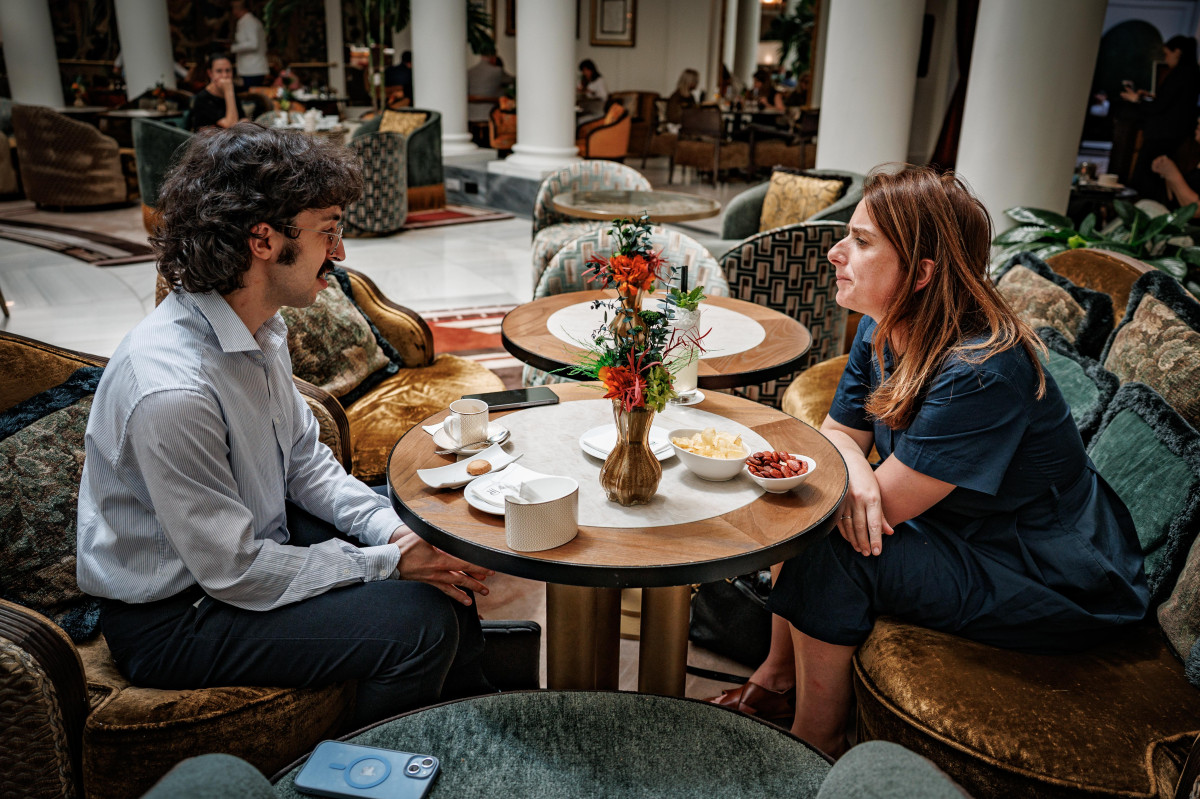
Marine Tondelier talks with Jorge de Diego about the future of the French left and the risk of a National Rally victory. Photo: Agenda Pública / Tania Sieira
Across all European capitals, it has been discussed that the political calendar is set by France’s 2027 presidential elections. If a National Rally candidate reached the Élysée, what would change for France and for Europe?
I have been a city councilor in the opposition in Hénin-Beaumont since 2014, a town governed by the National Rally. That is why I have seen firsthand the changes that the far right brings to power. What is clear is that, in a world where great democracies—even the United States, with a long democratic history—shift toward the reactionary side, we see a domino effect beginning: states fall one after another and drag each other down in the fall. The next domino could be France.
“In a world where great democracies—even the United States, with a long democratic history—decide to go to the reactionary side, we see how a kind of domino effect has begun”
And if France falls, Europe falls. Today in Europe there are not many progressive countries left, and even fewer left-wing countries. Europe is what remains to confront imperialism. The only entity with the critical mass to face them is Europe. If Europe tilts because France has tilted, we truly enter another world. Therefore, as an ecologist and in view of the French presidential elections, I will do everything in my power, not only for the ecologists but for my entire political camp, to avoid that scenario.
In view of those presidential elections, how do you think the French left should present itself? And beyond the tactical, how would you like it to present itself?
From the start, what we ecologists advocate is that we need a common candidacy between the left and the ecologists. Our position has been constant and coherent: we have defended it, proposed it, and are doing everything we can to build it. But it is not easy at all.
“Mélenchon and the Socialists agree on not wanting to work together again, and that undermines any left-wing victory ambition”
Today we are in a situation where we understand that Jean-Luc Mélenchon does not want to work with others and goes off on his own, while many Socialists are tempted to go the other way. In the end, both agree on not wanting to work together again, and that undermines any ambition for a left-wing victory, now and in the future. I think this is a very selfish, even indecent attitude, because it means we will not be worthy of the people we must defend: some vote for us, others do not, and others do not vote at all.
We ecologists look with fear at what is happening, but we do not change our minds: we will persist in vigorously defending a common candidacy.
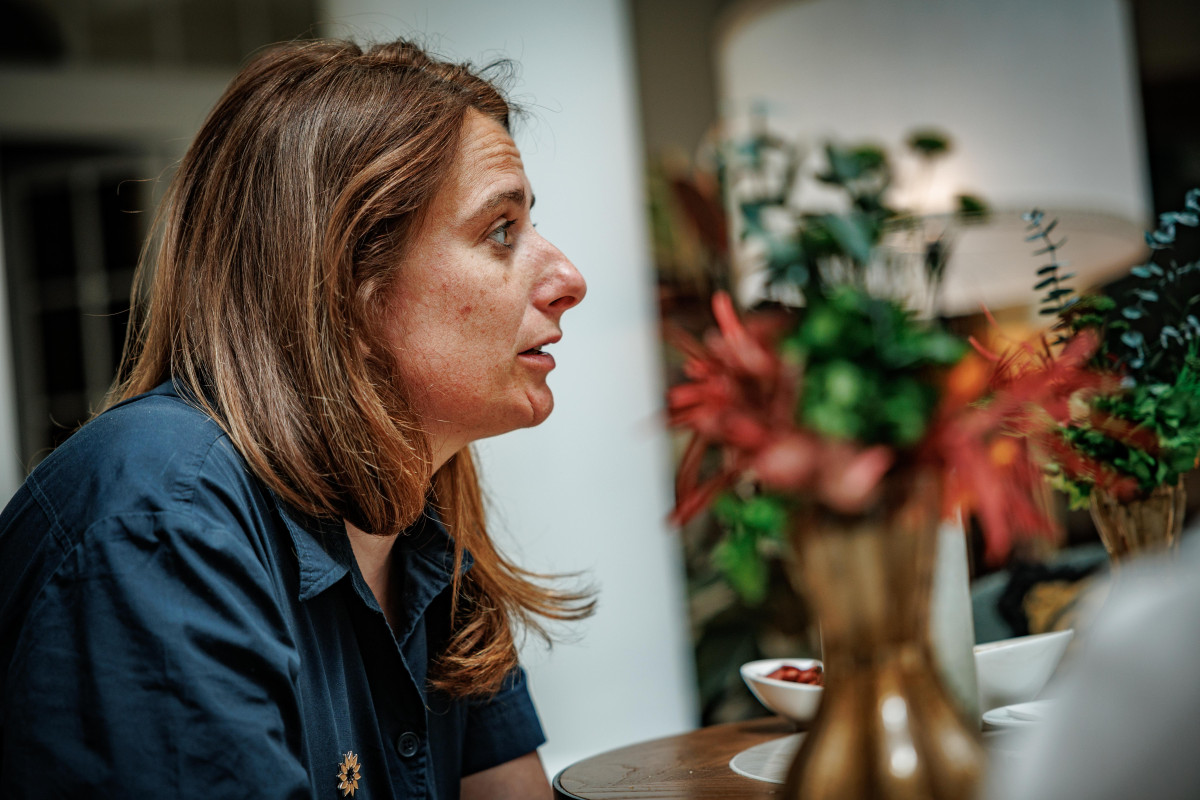
In 2024, Marine Tondelier was one of the leading figures of the New Popular Front. Photo: Agenda Pública / Tania Sieira
The New Popular Front was seen in 2024 as a success. If now the challenge is greater, why does it seem harder to repeat that unity?
That is exactly what I say all the time. Is the danger of the National Rally coming to power any smaller today than yesterday? No. Nothing proves it. That is why I spoke earlier of indecency and the irresponsible nature of this strategy.
It is true that since 2024 the idea of an irreconcilable left has taken root in France. It is fueled by some Socialists and also by Jean-Luc Mélenchon. It is like mining the battlefield: once you have placed mines all over the place, even if reconciliation occurs later, the mines remain. There is something irreversible about what is happening, and that worries me greatly.
One of the most recognizable contributions of The Greens in France has been in cities: mobility, urban pacification, re-naturalization, housing, or proximity. What is today their model of city and what have they learned from governing in major municipalities like Lyon? Do you think Spain has something to learn in this area?
I don’t have a complete view of Spain, but today we are in Madrid, a large city like Lyon, and there are common problems. The first issue, even stronger here than in Lyon, is housing: tensions with Airbnb, tourism, or very rich people who want to own an apartment in every European capital while those who simply want a home cannot find a dignified place to live. These are problems we share.
What I am extremely proud of in the French cities governed by ecologists is their determination to change life, to change the city, and thus to truly change people’s lives. They are very concrete improvements: kilometers of bike lanes, organic and local food in canteens, the right to vacations for everyone, cooling islands to withstand heat waves. It is a clear improvement in the quality of life.
I also think that in Spain the urban concentration phenomenon is stronger. When arriving by train from Barcelona, we saw fields, very small villages, and low density outside the major cities. In France we have more mid-sized cities.
“It’s good that Spanish cities draw inspiration from French ecologist cities, but French ecologists also draw inspiration from what is being done in Spanish cities”
And France can also draw inspiration from Spain. In my presidential project I am working on loneliness, because it affects one in four French people. It’s astonishing. The World Health Organization says that feeling lonely equals smoking fifteen cigarettes a day for health. It is a social, societal, and public health issue. That is why I have decided to address it, drawing inspiration from the United Kingdom or Japan, where there are ministers in charge of loneliness.
In Barcelona there is a department dedicated to this issue and a 2020-2030 plan with measures of interest for France, such as social prescription: that a doctor can prescribe activities or free resources offered by the city, from museum visits to nature walks or adapted sports activities. It is good that Spanish cities draw inspiration from French ecologist cities, but French ecologists also draw inspiration from what is done in Spanish cities. Not so much Madrid, which is governed by the right.
Poner en el centro del debate ideas como la transición ecológica parece aún más difícil en un contexto caracterizado por crisis geopolíticas e inestabilidad económica, pero quería preguntarle: ¿cómo lo perciben ustedes? ¿De qué manera intentan hacer valer sus temas?
Putting ideas like ecological transition at the center of the debate seems even more difficult in a context characterized by geopolitical crises and economic instability, but I wanted to ask you: how do you perceive it? In what ways do you try to make your issues count?
No estoy del todo de acuerdo con la forma de plantearlo, porque lo que estamos viviendo en el plano geopolítico demuestra precisamente que los ecologistas tenían razón desde hace tiempo y que es urgente aplicar sus propuestas.
I do not fully agree with the way it’s framed, because what we are living in the geopolitical plane precisely shows that ecologists were right for a long time and that their proposals need to be implemented urgently.
Durante mucho tiempo, los europeos creyeron que defender un proyecto de paz bastaría para protegernos. Era la famosa idea del fin de la historia: paz, prosperidad para siempre y, por si acaso, unos ejércitos suficientes. Pero hoy vemos que la paz no está ahí y que no basta con tener bombas, municiones y aviones. Nuestras vulnerabilidades industriales, energéticas, culturales o digitales son utilizadas como armas por nuestros enemigos, especialmente por Trump y Putin.
For a long time, Europeans believed that defending a project of peace would be enough to protect us. It was the famous idea of the end of history: peace, prosperity forever, and, just in case, enough armies. But today we see that peace is not there and that having bombs, ammunition, and airplanes is not enough. Our industrial, energy, cultural, or digital vulnerabilities are being used as weapons by our enemies, especially Trump and Putin.
“What we are experiencing in geopolitics precisely shows that ecologists were right a long time ago”
Al principio de la guerra en Ucrania hubo una toma de conciencia sobre nuestra dependencia energética de Rusia. Francia, en 2024, dio más dinero a Putin comprándole fertilizantes, uranio y energía que en ayuda directa a Ucrania. Es un problema. En aquel momento se dijo que había que invertir más en el aislamiento de viviendas y en el llamado leasing social de coches eléctricos, un programa de alquiler asequible para facilitar el acceso a vehículos eléctricos, pero duró poco. Después, todo el mundo siguió como si no pasara nada.
At the outset of the war in Ukraine, there was an awakening to our energy dependence on Russia. In 2024, France gave more money to Putin by buying fertilizers, uranium, and energy than in direct aid to Ukraine. It is a problem. At that moment it was said that more should be invested in insulating homes and in the so-called social leasing of electric cars, an affordable rental program to facilitate access to electric vehicles, but it lasted little. Afterwards, everyone carried on as if nothing had happened.
Y luego volvimos a sorprendernos con el bloqueo del estrecho de Ormuz, aunque el Club de Roma ya advirtió en 1972 de que un día tendríamos un problema geopolítico por nuestra dependencia del petróleo.
And then we were surprised again by the blockage of the Strait of Hormuz, although the Club of Rome had warned in 1972 that one day we would face a geopolitical problem due to our dependence on oil.
Para mí, esto no cuestiona los ideales ecologistas. Al contrario, demuestra que llegamos demasiado tarde y que no se nos escuchó. Al comienzo del conflicto, con el Partido Verde Europeo hicimos una campaña que decía: “Aislemos nuestras casas, aislemos a Putin”. Hoy, si queremos garantizar nuestra seguridad y nuestra soberanía, debemos invertir en energías renovables, que son las únicas que sabemos construir rápido y que nos hacen completamente independientes y autónomos. Y también hay que invertir en reindustrialización de manera concertada a escala europea.
For me, this does not question ecological ideals. On the contrary, it shows that we arrived too late and that we were not heard. At the start of the conflict, with the European Green Party we ran a campaign that said: “Isolate our homes, isolate Putin.” Today, if we want to guarantee our security and sovereignty, we must invest in renewable energies, which are the only ones we know how to build quickly and which make us completely independent and autonomous. And we must also invest in reindustrialization in a coordinated manner at the European level.
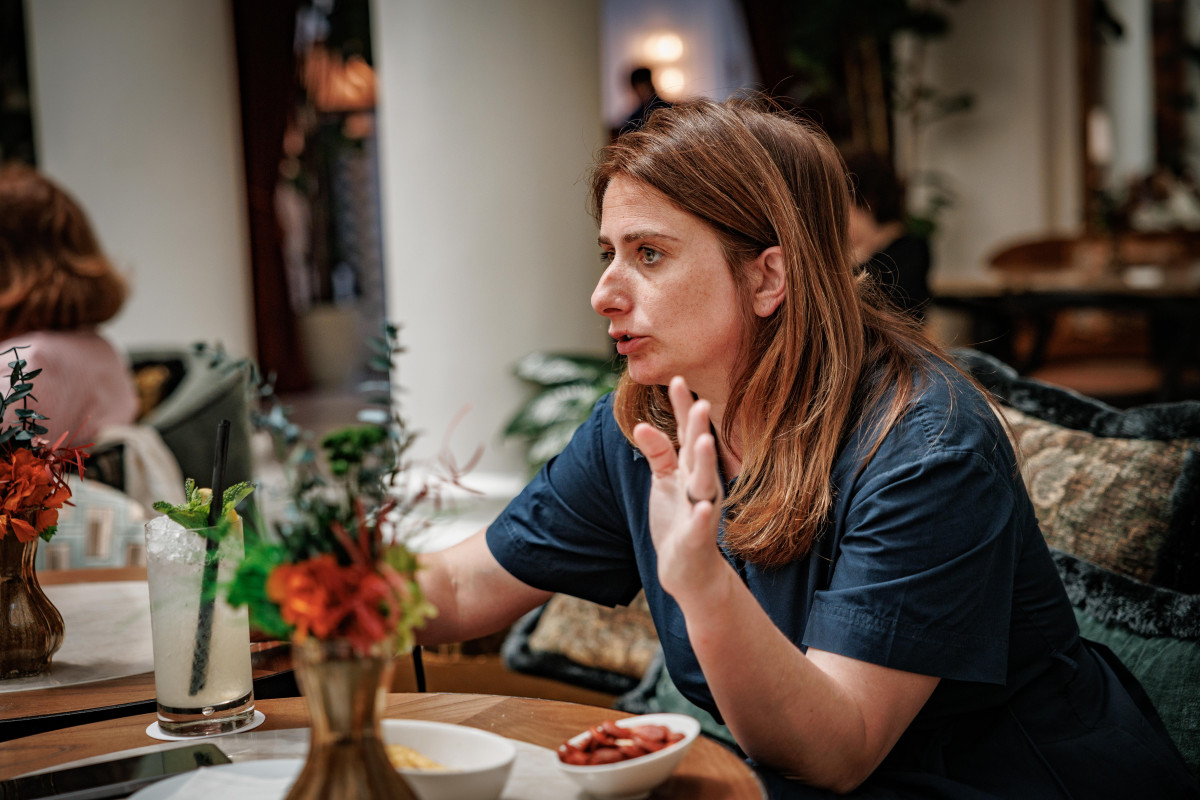
Tondelier argues that the ecological transition is part of Europe’s response to energy and industrial vulnerabilities. Photo: Agenda Pública / Tania Sieira
In Europe there has been a backlash against parts of the Green Deal. Beyond the rejection from the radical right, even from the PPE, the party’s secretary-general, Dolors Montserrat, said that the pact was a disguised “plan of deindustrialization.” I won’t ask you to weigh in on those statements if you don’t want to, but I ask: is it possible to get Europe out of stagnation by boosting a green industry, or do we perhaps need to recalibrate our goals?
No creo que el Pacto Verde sea un obstáculo para la industria. El Pacto Verde es la condición de nuestro futuro, de la justicia ambiental y de la justicia social. Si lo hubiéramos hecho mejor, habría habido más justicia social. El error de los centristas es creer que se puede hacer ecología sin justicia social. No estamos de acuerdo.
No es apropiado oponer Pacto Verde e industria. Estamos trabajando en un plan para la presidencial francesa con objetivos claros para Francia, pero también queremos una estrategia europea. No sirve que todo el mundo haga de todo. Debemos saber qué hacen bien unos países, en qué sectores somos vulnerables como europeos y cómo puede contribuir cada país que tenga capacidad y voluntad para cubrir esos huecos y reducir nuestras vulnerabilidades. Hace falta inteligencia colectiva europea.
Pongo un ejemplo: el acero. Yo vengo del norte de Francia, donde antes estaban las minas de carbón y hoy está ArcelorMittal. Si Arcelor cierra en Dunkerque y Fos-sur-Mer, no podremos hacer acero europeo. No es verdad que se pueda reabrir en dos años. Si se cierra, se cierra. Y durante el resto de nuestras vidas dependeremos del acero chino y estadounidense.
“Los ecologistas reivindicamos cuidar la industria mucho mejor que quienes están dejando caer la industria francesa y europea”
No soy hipócrita: cuando lucho por la calidad del aire, voy a Arcelor y digo que hay que tener cuidado, pero prefiero acero producido en Dunkerque, con mejores condiciones ambientales y sociales, que acero chino que ha cruzado medio planeta y que no se ha producido con la misma energía. Los ecologistas reivindicamos cuidar la industria mucho mejor que quienes están dejando caer la industria francesa y europea. Somos muy ambiciosos y estamos muy preocupados por este asunto.
Europa atraviesa un debate cada vez más intenso sobre demografía: envejecimiento, baja natalidad, sostenibilidad del Estado del bienestar, migración y equilibrio territorial. Desde la perspectiva ecologista, ¿cómo debería abordarse este reto?
Everything starts from a phrase by Emmanuel Macron about the French’s “demographic rearmament.” It touched me personally because at that moment I was in a process of medically assisted reproduction and in vitro fertilization. I already had one child and faced many difficulties to have a second. Now I am naturally pregnant, but for three years I lived through that very complicated journey that many European couples go through. Many feel it as a kind of provocation, and the couples and women affected do not take it well.
On television we see many older white men talking about demography as if women’s bodies were theirs: that if the welfare system will collapse, that if we will lose the next world war, that if the economy will lose power. There is a very strong blaming of women.
History shows that when these topics are tackled like this, especially between the two World Wars, it was when very liberticidal laws against women were passed. In France, in 1920, contraception and any campaign in favor of its use were prohibited, with disastrous consequences. And what we see in Europe is that natalist reforms aimed at women, as in Italy or Hungary, have never truly increased birth rates. The countries with the highest birth rates are those that promote equality.
“Demography is not a problem, it is a fact. And if we want to address it, we need a living feminist policy”
That means that a woman who does not want to have children should have the right not to have them; a couple who does not want children, too; and a woman who does want to have them should have the conditions to carry out that project. If there are housing problems, if you live in substandard housing, if there are difficulties such that you cannot skip meals or you have to cut rations, you will not necessarily plan to have a child. If you are a woman and you think you will have to stop working because you do not know if there will be a place in the daycare, and that will affect your retirement, it is not very encouraging. And if you also ask yourself in which society that child will grow up, with climate or war, it does not help either.
The decline in birth rate is also a kind of quiet strike of the wombs of women who are not well and who do not envision this life. We must leave alone the women who do not want to have children, but also take care of those who would like to have them and hesitate because of the conditions in which they could raise them. That is the task of politics. Demography is not a problem, it is a fact. And if we want to address it, we need a living feminist policy, much more relevant than all the moral sermons we hear on television.
To finish, what is her wish for France in 2027?
Avoid the worst and, perhaps, achieve something better.
