
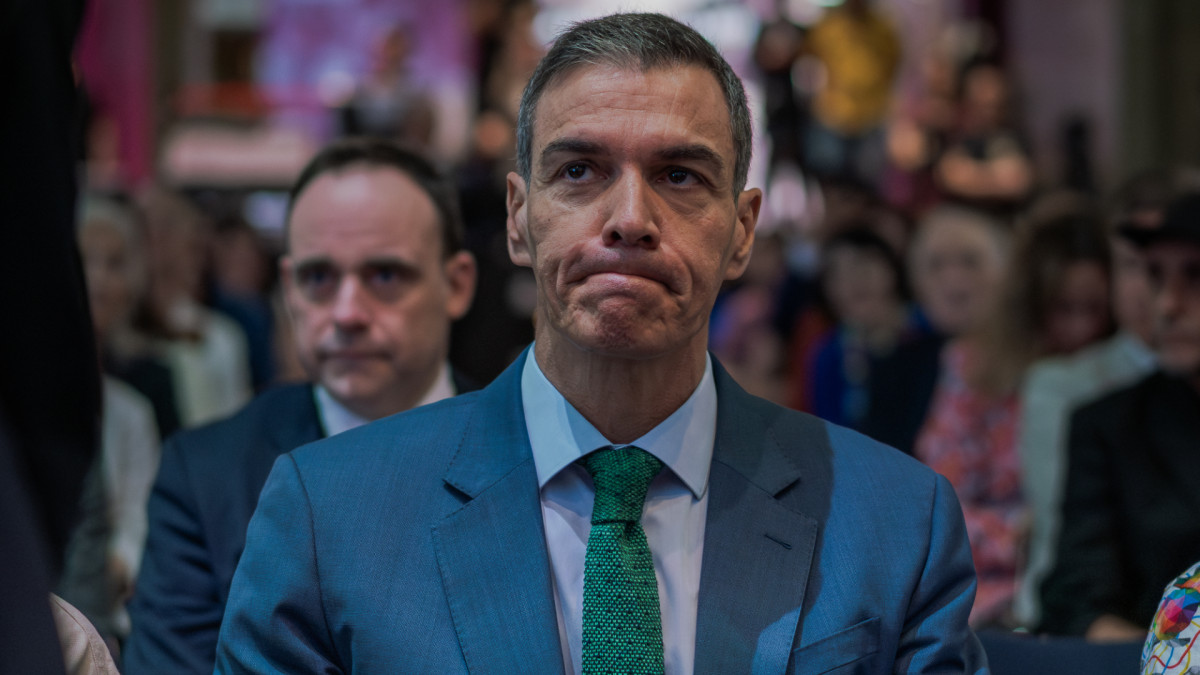
Pedro Sánchez has a move that could change the board and the game: calling elections and not running. It doesn’t suit his persona, they tell me, but who knows? It would be useful if, at the same time, he opened space for a candidate who represented a generational shift and a change of approach, for a PSOE more united and with answers, as far as possible, to the complex problems of all kinds that we live with.
“Voters end up tired of their leaders, even more so when cases pile up”
Even in the best of cases, voters end up tired of their leaders, even more when the “cases” accumulate. Eight years (or two terms) are starting to become the norm in Spain. And in this case, the latest events work against the current president. In any case, whether he runs again or not, the president has to declare, up to the last moment, that he will stand. If he does not opt for another term, he would have to do so with a surprise effect, that is, first dissolve, and then announce that he will not run. And set in motion the process to choose a candidate and to build a program.
To avoid harming the chances of Socialist candidates, more affected by the “Sánchez brand” than by their own merit — in light of what happened in other recent elections —, the president should call for March or early April at the latest. In any case, before the municipal and regional elections, scheduled for May 23 of next year. Although what happens with the United States Congress elections on November 3 will also influence, a factor that Sánchez will take into account for the Spanish calendar. From autumn onward — and it doesn’t seem they can be held earlier — they will no longer be considered “early elections”, despite the persistent calls for it from the PP since the start of the legislature.
When, as he himself has recounted, Felipe González, back in 1993 or 1995, was weighing whether to run or not, Helmut Kohl told him that a leader of stature, in our European systems without term limits, should leave power after losing an election, not after stepping back. And there is a temptation in many to think that they can lose and then, somehow, return. It does not happen (almost) ever. But one would have to ask why in democratic Spain all the prime ministers end up badly (even though, over time, their image recovers). And the kings.
“This time it will be harder for the left to stir the specter of ‘the wolf is coming’, the radical right. A certain resignation is beginning to spread”
Naturally, a question that immediately arises from the approach analyzed here is: then who? It would be up to the PSOE to decide, though it doesn’t necessarily have to be a party member. Two names that are often mentioned are Nadia Calviño (57) and Carlos Cuerpo (45). Both, despite having served in Sánchez’s governments, would represent a new approach, with economic policies that in these years have yielded generally good results. Although right now in Spain it’s not about “the economy, stupid”, not even about foreign policy, in which this Government has made headway and earned credibility. But they could attract voters from the center-left, even from the center-right who have drifted away from socialist ballots. Another, already from within the PSOE, could be Carlos Martínez, 52, mayor of Soria for nearly two decades and secretary-general of the PSOE in Castilla y León.
Any of them — and others — would be a boost. That would not imply they could win enough to govern with allies, though presumably they would improve the margin Sánchez could command. All this when, this time, it will be harder for the left to stir up the specter of “the wolf is coming”, the radical right. A certain resignation is spreading. And Vox is managing to introduce concepts into the public debate, such as the “national priority,” whether viable or not, as reflected in the latest CIS barometer.
“The regeneration of politics will not come while the party apparatuses are the ones who choose”
Not enough are the people. We are facing a crisis of politics in democracy. The great revulsive, not just for this or that party, but for the system, would be, at the very least, to unlock the lists so that voters had margins of preferences. Who knows who, in a general election, will be in the 10th, 15th or 20th spot on a list, in constituencies like Madrid and Barcelona? The regeneration of politics will not come while the party apparatuses decide. And beware, for the idea of allocating some seats by lottery is gaining ground, not to mention governance by AI.
