
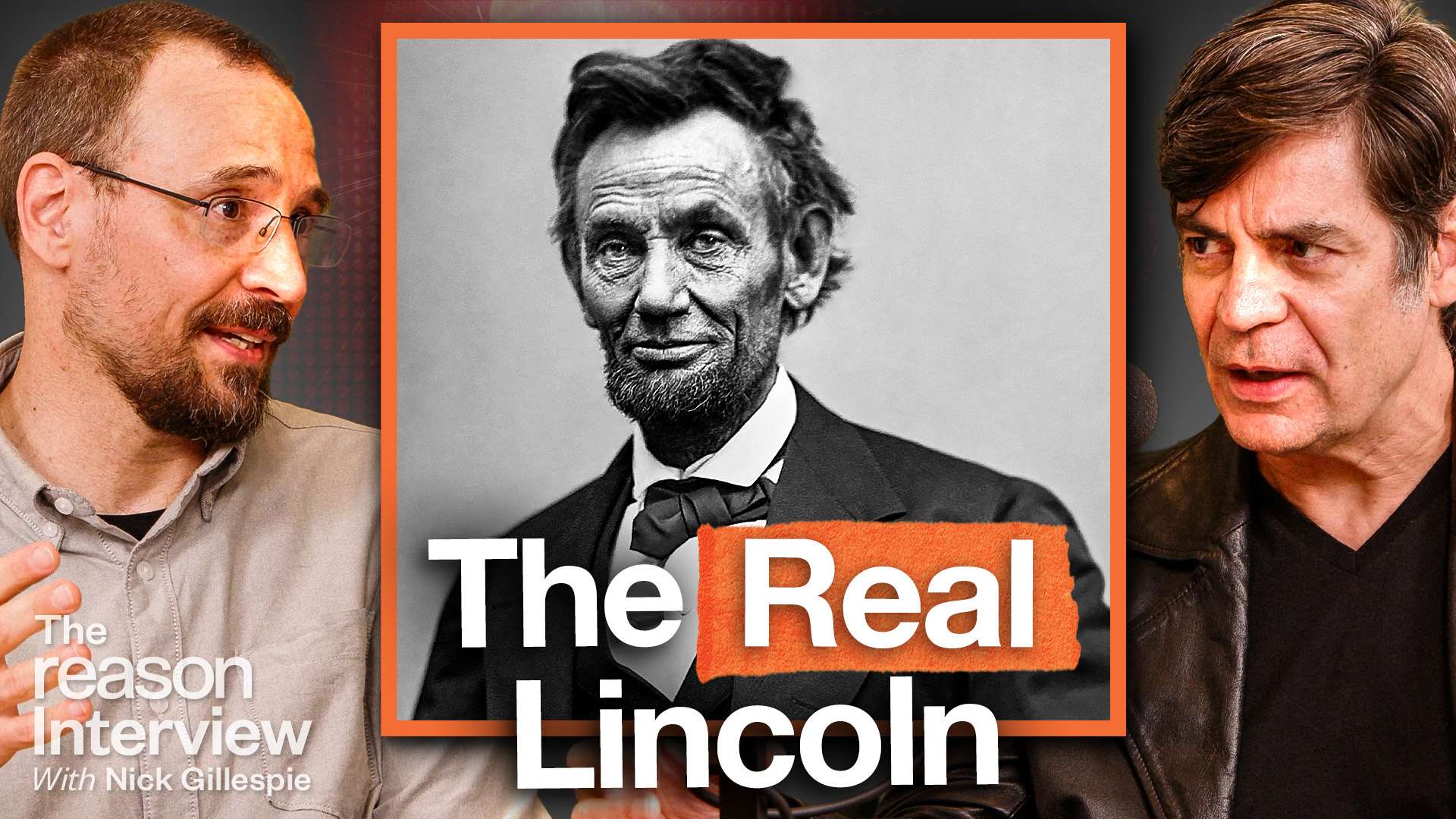
Damon Root examines the path to emancipation, the arduous effort to secure liberty after the Civil War, and the constitutional transformations that remade the United States.
HD Video Download
When Abraham Lincoln took the oath of office in 1861, he backed a constitutional amendment designed to keep the federal government from banning slavery in states where it already existed. In a remarkably short span of years, he helped push through the 13th Amendment, which ended slavery across the entire United States and its territories.
Today’s guest is Senior Editor Damon Root, whose new book Emancipation War probes one of the most compelling chapters in American history. Root and host Nick Gillespie also discuss the Reconstruction era that followed the Civil War, Root’s prior work on Frederick Douglass, and how the Supreme Court might decide in Trump v. Barbara, the birthright-citizenship case that is expected to be resolved soon.
Root authors a twice-weekly Reason newsletter addressing legal issues, titled Injustice System. You can subscribe here.
Earlier appearances:
“Damon Root: Why Frederick Douglass Loved the Constitution (and You Should Too),” December 8, 2020
“Willett, Bolick, Sykes: Three Great Picks to Replace Anthony Kennedy,” June 27, 2018
“The Libertarianism of Frederick Douglass,” February 8, 2018
“Obamacare at the Supreme Court: Damon Root on King v. Burwell,” March 3, 2015
“Battle for the Supreme Court: Judicial Activism vs. Restraint,” November 5, 2014
“3 Supreme Court Decisions to Watch,” January 24, 2012
0:00–Lincoln’s early stance on preserving slavery in 1861
8:38–The Northwest Ordinance and the precedents for banning slavery
11:27–Frederick Douglass and the place of slavery in the U.S. Constitution
14:07–Salmon Chase
18:40–Lincoln’s generals who emancipated enslaved people
23:37–How Lincoln’s views on slavery evolved over time
29:47–The Civil Rights Act of 1866
37:13–The 13th Amendment, citizenship, and national identity
39:30–Reconstruction
45:00–The Supreme Court
49:57–Birthright citizenship
