
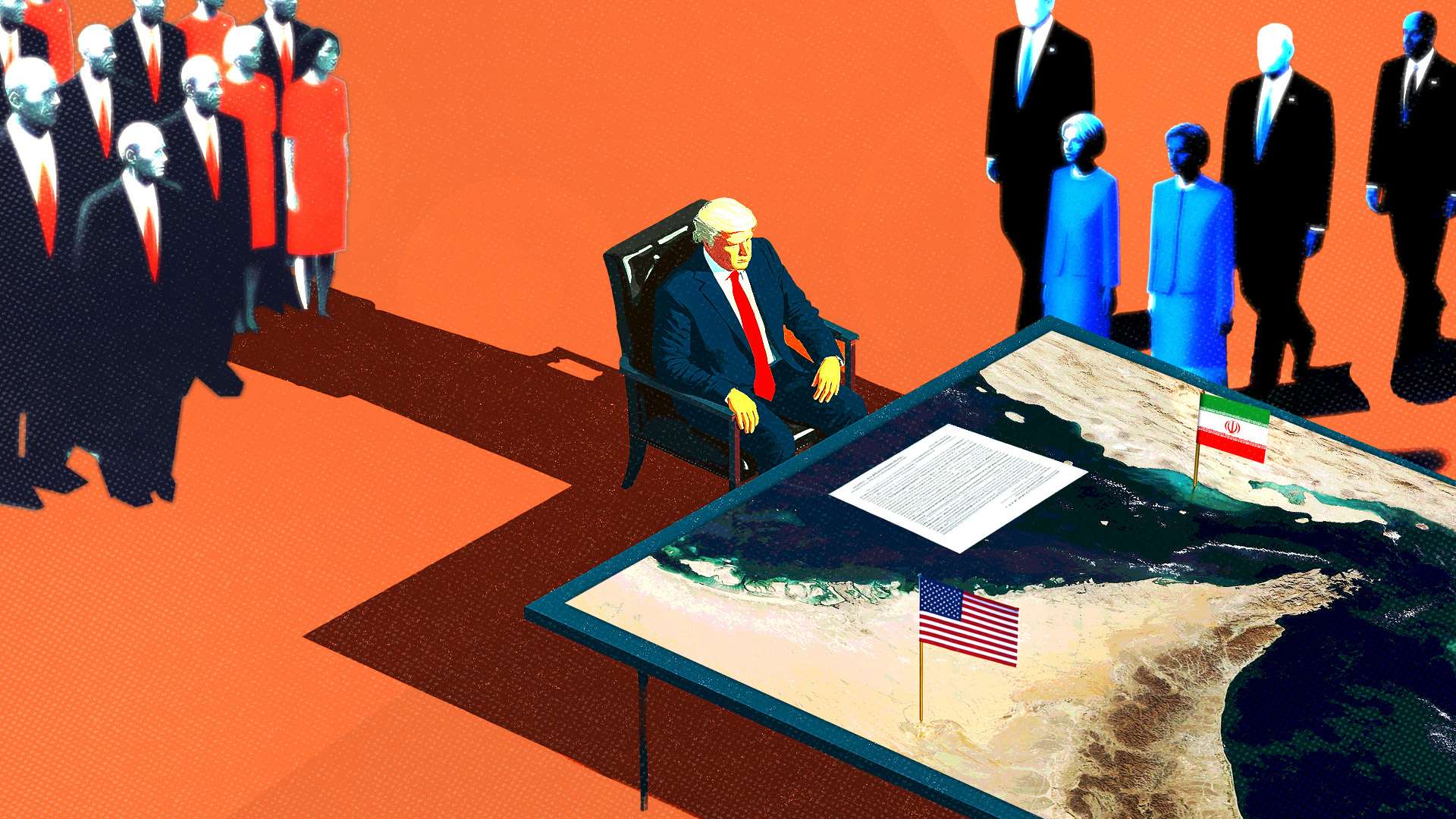
Cross-party pressure continues to fuel the ongoing conflict.
Democrats who once condemned President Donald Trump for dragging the country into a confrontation with Iran are now scrutinizing his efforts to close it out. In a Tuesday congressional hearing, Sen. Cory Booker (D–N.J.) told Secretary of State Marco Rubio that the halt-fire and the contemplated peace framework could allow the Tehran regime to marshal funds to rebuild, acquire more drones, and sow greater disruption, saying, “This [Iranian] regime is getting money to rebuild, purchase more drones, cause more havoc.” And in a separate exchange, Sen. John Fetterman (D–Pa.) accused Trump of attempting to “cave [to Iran] just for political convenience” in an interview with the Jewish Insider published on Wednesday.
These lawmakers have become unlikely bedfellows for Republican hawks who want the conflict to restart. When news broke on May 24 about a potential agreement, former Secretary of State Mike Pompeo accused Trump of following the Obama administration’s playbook and urged him to “take out enough Iranian capability so it cannot threaten our allies in the region” instead. The same day, outspoken pro-war advocate Sen. Lindsey Graham (R–S.C.) implied the deal would be a “nightmare for Israel,” while Senate Armed Services Committee Chair Roger Wicker (R–Miss.) warned that the ceasefire would not allow Trump to “finish the job he started.”
The hawks on the right are at least candid that their opposition to a deal stems from a preference for war. Fetterman has also cultivated a reputation as a strong supporter of Israel. By contrast, Booker’s stance appeared to oppose Trump’s initiation of the war. In March, he called it “outrageous and never conceived of that we could have this level of a military engagement without the people’s house, Congress, doing something about it.” Just as Democrats who attacked Trump for intensifying tensions with North Korea and then criticized him for attempting to de-escalate, opportunistic critics are making it harder to withdraw from the confrontation with Iran.
And this pressure seems to be bearing fruit. On May 23, Trump said the peace accord with Iran was “largely negotiated.” Confronted with a flood of criticism, he went on a social media push, claiming he was a superior dealmaker to former President Barack Obama. (The Atlantic reports that Trump has been especially sensitive about any comparisons to Obama.) Last week, officials told The New York Times that Trump returned the memorandum of understanding to Iran with new, “tougher terms.”
Even as talks lag, both sides seem to share a basic framework for a peace accord. Iran and the United States would lift the mutual blockades of the Strait of Hormuz, after which negotiations would proceed toward a lasting agreement in which Iran would concede elements of its nuclear program and the U.S. would remove economic sanctions, enabling Iran to rejoin global markets.
Trust remains the central hurdle, and many of the extra demands from either side have revolved around ensuring the other party cannot walk away. On the ground, both sides have been testing limits with force. On Monday, Trump announced that he had brokered a ceasefire in Lebanon where Israel fights the Iran-backed Hezbollah, yet fighting continues near the border. On Tuesday, the U.S. military blew a hole in an Iranian oil tanker, and the Iranian military bombed Kuwait and Bahrain, which host American troops.
As more dovish Democrats have argued, Hormuz was not on the table before the war. “It’s just sad that we had to go through all of this just to talk about a diplomatic agreement that brings us back to where we were but lowers our leverage,” Sen. Chris Murphy (D–Conn.) told CNN last week. Unlike Fetterman and Booker, he avoided blaming Trump for a weak deal and instead grilled Rubio on whether the administration was jeopardizing a rapid end to the Hormuz crisis by attempting to secure too much up front.
“It sounds to me like what this agreement will do is take us back really to the prewar status quo. The Strait of Hormuz will be opened again, although it sounds like Iran will have a little more control,” Sen. Chris Van Hollen (D–Md.) told Fox News on May 24. “I think this was a blunder. When you’re digging a hole, you should stop digging, and that sounds like maybe what we’re doing finally.”
