
Occasionally, one has the right questions (or at least believes so), but not the person to ask them. Since I was told I would be able to speak with Professor Elias Dinas, I knew I would face someone capable of answering all those questions.
The Greek researcher is the director of the Swiss Chair of Federalism and International Governance at the European University Institute. In Florence, on the occasion of the institution’s fiftieth anniversary, I had the opportunity to talk with him — in perfect Spanish — about the erosion of democratic norms, the radical right, and, above all, immigration.
This conversation arrives on the eve of a tightening of the European Union’s migration policy, following, among other measures, the approval of the creation of deportation centers in third countries. The researcher offers a reading that starts from the roots of the problem, beginning with how immigration enters the political agenda: “Immigration enters the agenda through new actors, outsiders to the system, who hoped to divide the traditional elites”, he explains.
Then he focuses on the role of the center-right both in contesting these frames and in upholding democratic norms. “When we talk about immigrants,” he continues, “contagion effects are produced” and the consequence is that “people begin to believe that the norm is changing and, acting in line with that expectation, contribute to making it change”. He also acknowledges that it is a complex challenge, because “we must not deny that accepting demographic changes where one lives is not always easy.”
Finally, there is also time to discuss Spanish politics. Of Pedro Sánchez, whom he calls the “new Tsipras”, he highlights “his ability to survive politically and to master the center-left space.” At the same time, he expresses doubts about his shift to the left on certain issues and does not know “whether all this started from intrinsic conviction or from a more strategic motivation”.
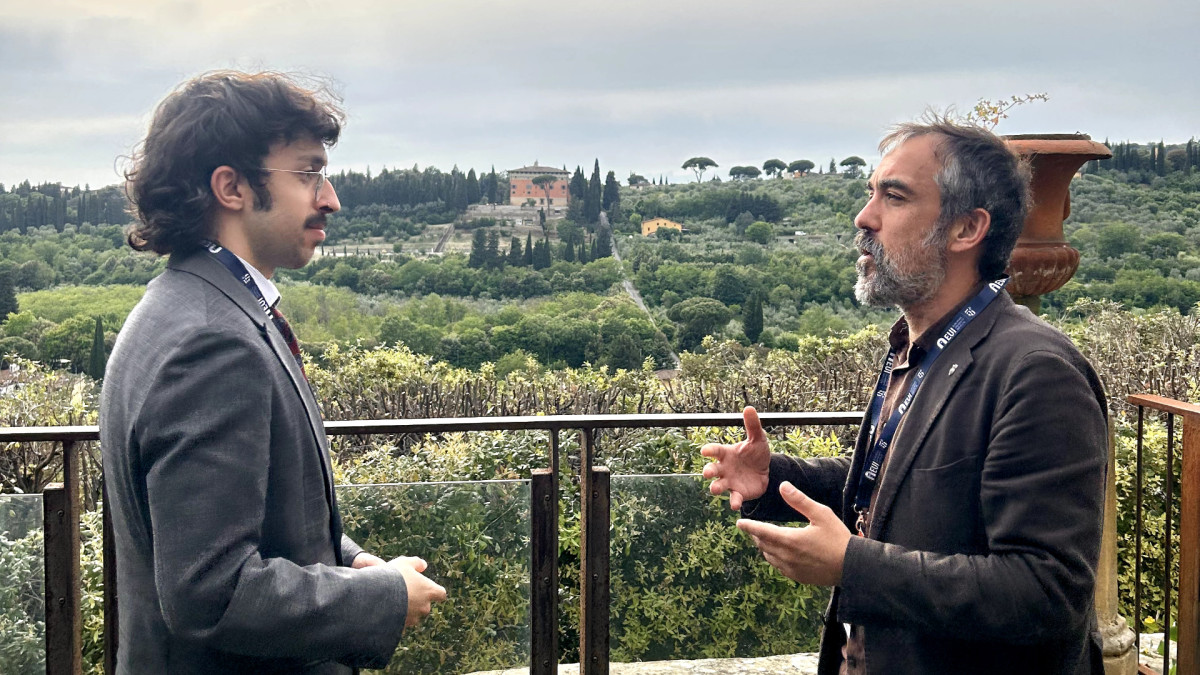
Dinas and De Diego, political scientists, discuss the center-right’s role in the migration discourse. Photo: Agenda Pública
On the plane, I was reading his piece about how it affects democratic norms when a traditional party speaks about immigration within a negative frame, compared with when a radical-right party does so. People often focus on the voter, but this research concentrates more on the elites. What role do they play in transmitting or changing frames, especially on immigration?
Immigration has reshaped European politics over the last nearly thirty years for two reasons. The first is that there was a certain distance between the median voter and the elites. The elites were more liberal than the median voter, and this wasn’t always visible.
The second reason is that political systems tend to create entry points that exclude actors who come from outside the system. To enter, these actors must think of topics or strategies outside the ordinary. One of them was precisely opening a new topic: immigration. Moreover, it was a topic where it was known that the established elites could be internally divided.
That is what happened. Immigration enters the agenda through new actors, outsiders to the system, who hoped to divide the traditional elites. And that destabilized European party systems quite a bit.
In some countries it happened as early as the nineties. It reached Spain later, also under the shadow of dictatorship, which made it harder to create a political market for a radical-right party. A similar thing happened in Portugal. In Greece it occurred earlier.
“Centre-right parties have opted to accommodate and incorporate parts of that rhetoric into their own discourse”
Once immigration enters the agenda, the established elites must respond. They can accommodate, i.e., try to attract voters who have moved toward harsher positions on immigration; they can challenge those frames; or they can try to ignore them. But ignoring them does not work as a long-term strategy, because when a topic is on the agenda, it is already on the agenda.
What has happened in many cases is that center-right parties have chosen to accommodate and incorporate part of that rhetoric into their own discourse. The problem is that, when that happens, those arguments gain credibility. They no longer come from a force outside the system, but from a party that is part of it.
That carries a very strong signaling effect: if they also say it, then it seems the problem is important, serious, and real. Thus, the risks and threats associated with immigrants, or with people perceived as outsiders to the group, begin to erode democratic norms and norms of coexistence. I think this is one of the roots of what we are seeing now.
The moderate right may stay outside that frame, try to rebut it, or even anticipate it. But from the left it sometimes seems that talking about security or immigration is simply not possible. If someone does, other sectors accuse them of playing into the hands of the radical right. How does one escape that loop?
The problem is that democratic norms are upheld precisely because they are norms, not only because everyone deeply believes in them. In Spain, for example, there were people very favorable to the Franco regime, but for a long time they did not say so publicly.
“When we talk about immigrants, about other groups, or about the so-called ‘antiwoke’ agenda […] contagion effects are produced”
With the process around the referendum in Catalonia, something interesting happened: it facilitated a certain coordination among people who discovered that others shared similar views. When someone updates their perception of how many people think like them, and begins to believe that their opinion is less stigmatized than they thought, they are more likely to express it in public.
That is also happening with democratic norms in general. When we talk about immigrants, about other groups, or about the so-called antiwoke agenda, and when basic rules of respect for political adversaries are questioned, contagion effects are produced.
There are new politicians achieving success who openly challenge these norms. This produces a kind of self-fulfilling prophecy: people come to believe that the norm is changing, and by acting in line with that expectation, they contribute to making it change. Thus the new norm spreads and the older norms are broken. This is what we are witnessing in many European countries and also in the United States.
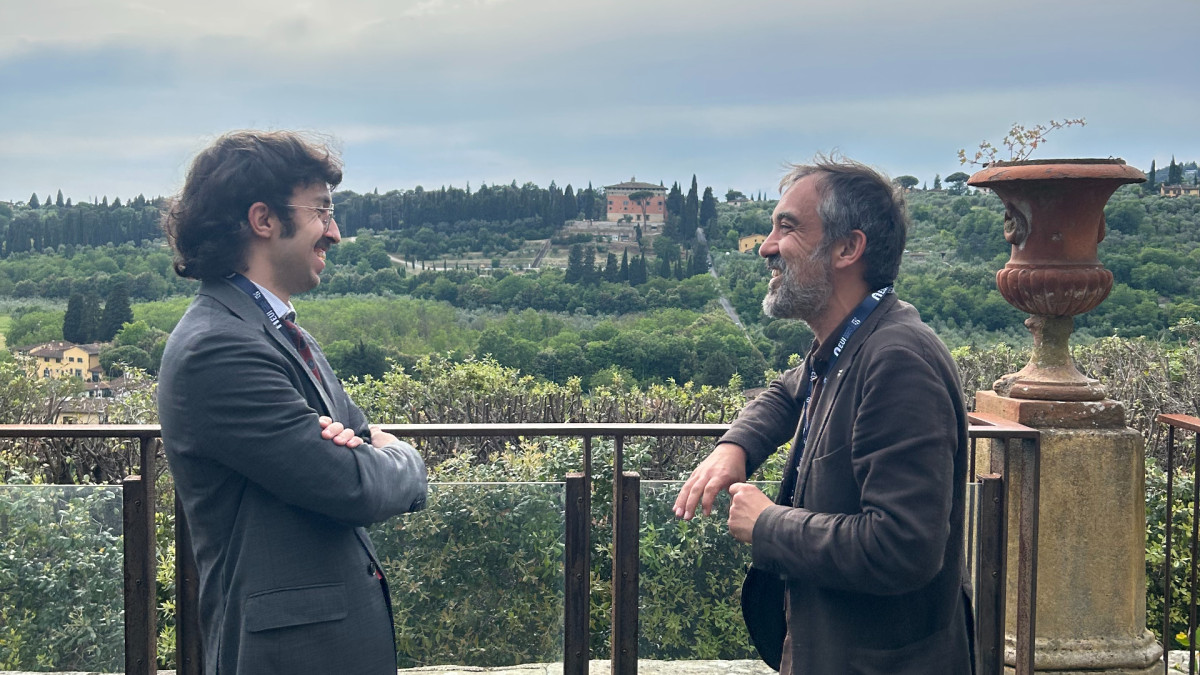
Dinas explains how immigration has destabilized European party systems in recent decades. Photo: Agenda Pública
There does not seem to be a clear recipe to slow the growth of radical-right movements, except perhaps for them to enter government and become exhausted.
Yes, that is true. When these parties enter government, they are often more marginalized or return to a minority position. Governing does not usually help them.
But there is an important nuance: once they have been in government or in positions of power, not only institutionally but also in terms of public perception, things do not simply revert to the way they were. A new equilibrium is created, and that equilibrium is no longer where it stood before.
Although one generation of radicals may burn out from the experience of governing, that experience creates a chain of new elites who can replace them. We have seen this, for example, in the Netherlands. In countries where radical-right has endured, it has not always done so through a single party, but through a succession of parties or leaderships. France is partly an exception, but even there new actors emerge in the same space.
Once a political family is created, it becomes a hard animal to hunt. If you cut off one head, others will appear.
Traditional party leaders often say they lack rhetorical tools to combat the radical right. Is it being explained well, for instance, why immigration is necessary or why a border cannot be simply closed?
There are many studies showing the positive effects of immigration, both in the medium and long term, on the economy and in other areas, including culture. There are even explanations of part of Italy’s recent football failures by not taking full advantage of the human capital generated by immigration, as other teams have done, including Spain to some extent.
Delving into the data could spark a conversation in which the idea that immigration is positive becomes majority. The problem is that such a conversation requires resources, time, favorable conditions, and a process. Those conditions do not always exist.
It is much easier to construct a scapegoat. It is much easier to blame people who are not there to defend themselves. This also happens with Europe and with other international institutions, but with immigrants it is even easier because they have less status, less ability to defend themselves, and are more vulnerable to accusations about employment, crime, or other problems.
The media’s role also matters. If the media focus more on exceptions, on non-representative cases, that is what most people end up seeing.
“It is important to look at things more objectively and rationally, without always being swept away by emotions that hinder reasonable conclusions”
Dicho esto, tampoco hay que negar que aceptar cambios demográficos en el lugar donde uno vive no siempre es fácil. Es un proceso. Pero precisamente por eso es importante mirar las cosas de forma más objetiva y racional, sin dejarse arrastrar siempre por emociones que dificultan conclusiones razonables.
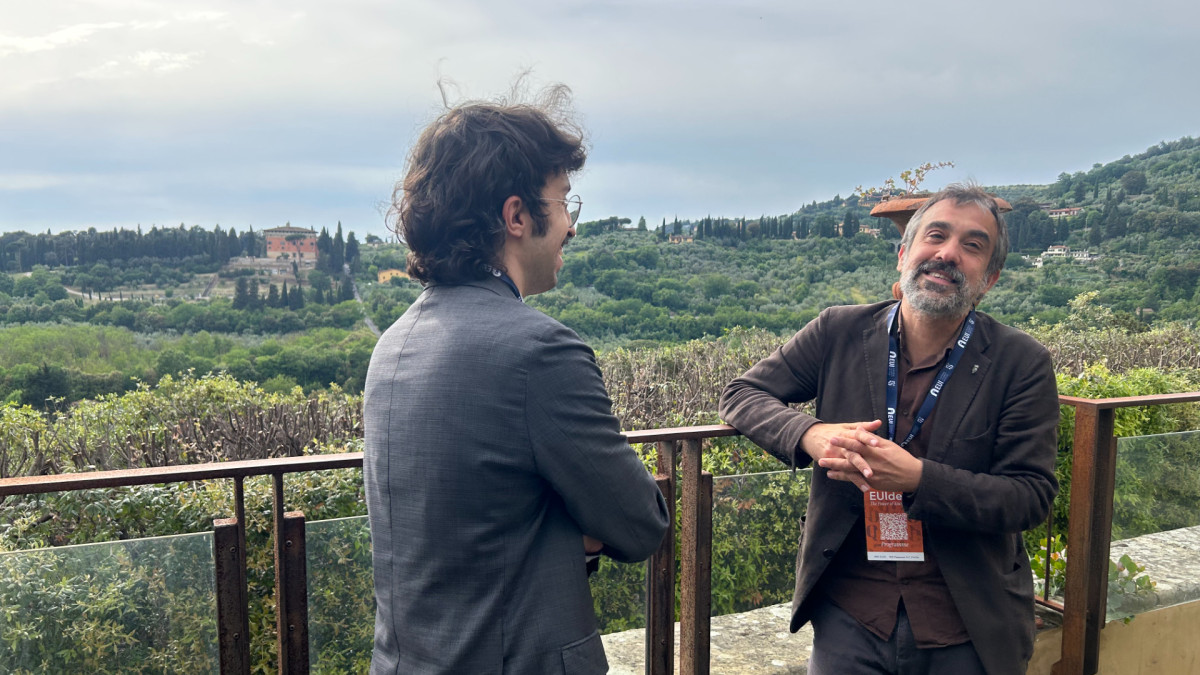
The Greek researcher analyzes Spain’s stance on immigration and Pedro Sánchez’s leadership in Europe’s left.
Spain is attempting to regularize more than half a million people, marking a certain break with other European countries. What do you think about this decision?
We are living through a very interesting period. Colleagues in Greece have repeatedly asked me to speak about the Sánchez phenomenon. I am more critical of Pedro Sánchez than some of the left in Italy, Greece, or abroad—perhaps because I know his track record and his shifts better.
That said, I must acknowledge I admire his capacity to survive politically and to dominate the center-left space in Spain. I would call him, in a way, the new Tsipras. Tsipras inspired the more radical left in 2015; even in Italy there were small parties with his name. Sánchez is doing something similar, but in a far broader space: the center-left, the left, and the left in general.
That can have positive effects. Spain has been on the favorable side of migration policy in recent years. I also see it in public opinion: Spain has not suffered the same level of hostility toward migrants or Syrian refugees as other European countries. It has been much more liberal on these issues.
I believe it is positive that Spain exercises some leadership on this issue, at least within Europe’s moderate left. It is already visible in discussions in Italy, with the Democratic Party and Elly Schlein, and also in Greece. I do not know to what extent it can travel further north in the continent, but I do think it has the potential to become a turning point.
“Germany moved from Merkel’s decision to accept a million people to a strong internal backlash”
The unfortunate overlap is that this is happening just as Germany is heading in the opposite direction. Germany shifted from Merkel’s decision to accept a million people—also tied to a historic opportunity to assume responsibilities from its own history—to a strong internal backlash. When Germany reacts in this way, there is always fear of returning to very dark times. To prevent that within the country, a much stricter European immigration agenda is pushed.
This could become a major European fault line in the coming months.
To balance and conclude: you mentioned earlier that you know aspects of Sánchez that make you more critical. What did you mean?
In Greece and Italy, many people see Pedro Sánchez as a kind of Zapatero, a politician very focused on identity issues or a second dimension. But Sánchez was also the first to say from the outset that he would defend the Spanish flag because it mattered and he would not give it away to the right.
He carried a huge Spanish flag during his campaign, he reached an agreement with Ciudadanos, and when he realized he needed the votes of the nationalists and regionalist parties, he shifted his rhetoric.
He could no longer occupy that Spanish nationalist space from the left. So he did the opposite: he built a division between the right and the left based on the memory of Franco’s era. He keeps reminding that Franco is on the opposite side and draws a line between “us” and Franco’s heirs.
With that narrative come policies too. It is positive that he continues and pushes further policies akin to those of Zapatero and other governments on migration, social rights, and women’s labor rights. I think all of that is good.
The doubt I have is whether all of this began from intrinsic conviction or from a more strategic motivation.
Thank you very much.
