
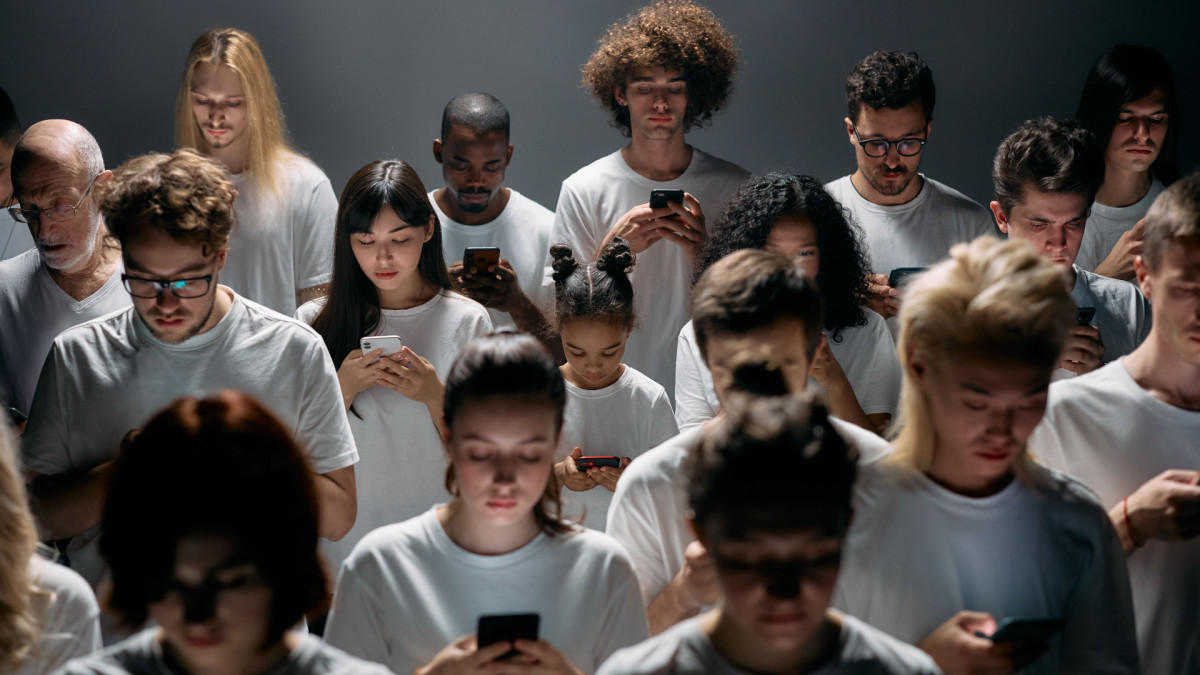
Happiness remains the most important life goal for human beings. Each year, an international team of researchers from the University of Oxford, using data from the Gallup World Poll, computes an indicator of happiness and life satisfaction for 147 countries. By taking the average of the data from the last three years, the life satisfaction index is calculated. For this, more than a thousand people are interviewed in each country over three years. The research effort is impressive. People are asked how happy they are and what their life satisfaction is. The reliability of these data is high, because global data are fairly consistent and relatively stable. The surprise is that Spain is not a very happy country: it ranks 41st, with less than two thirds of the population fairly satisfied.
The World Happiness Report 2026 has just been published, with the title Happiness and Social Media, focused on uncovering the relationships between social media use and happiness. It is produced by the Wellbeing Research Centre at the University of Oxford. Global data come from Gallup and the United Nations Sustainable Development Solutions Network. The report, edited by six international professors and led by John F. Helliwell, from the Vancouver School of Economics at the University of British Columbia in Canada, has 268 pages and is freely accessible online. I encourage you to read it.
“The decline in youth happiness and the falling birth rates worldwide coincide with the rising use of digital media”
The general hypothesis is that the decline in youth happiness and the worldwide fall in birth rates coincide with the rising use of digital media. The COVID-19 pandemic greatly accelerated the use of the internet to substitute personal relationships. In recent years, the notable increase in mental health problems among youth and the abuse of violence coincide with the daily overuse of digital media.
Jessica Mouzo recently published “Nearly 1.2 billion people worldwide live with psychiatric disorders”. In the piece she notes that “teenagers aged 15 to 19 and women of all ages are the most affected, according to a mental health study” published in the prestigious journal The Lancet. That represents more than 14% of the planet’s population. The gender gap is evident, with greater problems among girls. “Spain allocates less than 7% of the health budget to mental health […] Mental health care remains, in practice, a privilege for those who can pay for it.” The hypothesis is that the rise in mental illness is somehow linked to the digitization of daily life and to what is defined as “a decrease in social connectedness,” especially among adolescents.
The OECD’s recent report Child, Adolescent and Youth Mental Health in the 21st Century shows that the mental health of children and youth has deteriorated in the last decade. Mental health declines between 3% and 16%. It is worse for girls, mainly due to victimization — bullying — online, which even leads to self-harm. But suicide — contrary to some sensationalist reports — remains stable. The problem is multi-causal and has several risk factors. “Digitalization plays a central but complex role,” notes the OECD report: it amplifies anxiety, depression, and self-harm. Everything leads to new digital policies of supposed early action: bans on phones in schools and other educational institutions, age verification to enter platforms, and, in general, restrictions on social media, networks, and platforms. In any case, proving causality is difficult, but an association alone is enough to act on the public agenda.
Happiness and life satisfaction
The happiness and life satisfaction are often treated as equivalents in these studies. For example, in the international PISA study, conducted by the OECD among fifteen-year-olds, they are asked: “Overall, are you satisfied with your life as a whole these days?” The PISA study covers 47 countries and does not include the United States, Russia, China, or India. This leaves out a large portion of the planet. Among the rest, the young people most connected to media and social networks are those in Latin America — about 24% more than five hours daily on average — and those in the Middle East and North Africa, internationally known as MENA — about 20% more than five hours daily. Globally, life satisfaction declines sharply for girls as their exposure to social networks increases. The risk of depression increases by 13% for each additional hour of daily screen time on social media.
“It is hard to deny the psychological deterioration associated with a life filtered through TikTok, Instagram, and the constant anxiety of comparing oneself to others”
The problem has worsened worldwide due to the rapid use of mobile phones at early ages, excessive screen time, escalating isolation, and misinformation online, often biased and ideological. Fake news are ubiquitous. All of this leads to a lack of trust in adults and in society. Social networks foster alienation, depression, relative loneliness, a decrease in personal interactions and face-to-face communication. A high school teacher tells me: “It’s curious how young students find it hard to look you in the eye. And they can’t hold the teacher’s gaze, nor even look at each other.” The circle of social friends shrinks. The ills and misfortunes of this digital world rise considerably with increased daily hours of exposure to networks. In many cases they represent a true addiction. The adolescents who spend more than six hours a day in front of screens are also the youngest. The use, then, is accelerating. Dr. Enrique Granda notes in “Can happiness be measured?” that “it is hard to deny the psychological deterioration associated with a life filtered through TikTok, Instagram, and the constant anxiety of comparing oneself to others.”
The happiness index is complex to calculate, but it is possible. In Table 1 I present the data of the new happiness index for a selection of countries. It is the proportion of the population who self-identify as happy or satisfied with their life. The top twenty happiest countries are listed in order above. Then I include other countries necessary to assess the global situation. These percentages and rankings do not vary much in recent years, which ensures a relative stability of the indicator. Also, these are not single-year percentages but the average of the last three years, in this case 2023-2025.
Among the ten happiest countries in the world, eight are European; in the next ten, from 11th to 20th, seven are European; then, in the next ten, from 21st to 30th, only four remain. The trend is one of convergence among European countries. The top ten countries are all democracies. Costa Rica ranks 4th. The surprise is that this group includes Israel, at the 8th position. Personally, I do not understand how Israel’s population can define itself as happy when it is in the middle of a war. Perhaps the war strengthens national cohesion and provides life satisfaction. Or perhaps nationalism and a biased reinterpretation of Judaism as an exaggerated martyr complex. I do not know. In any case, it seems like an exaggerated and counterintuitive relationship. The collective memory of war also has negative effects on happiness.
What defines those ten happiest —or most satisfied— countries are certain variables. All are highly developed countries in the global context. Not only are they largely European and democratic, but they also have a broad and efficient public social security system. Most are Northern European countries: Finland, Iceland, Denmark, Sweden, Norway, and the Netherlands. They are cold countries, but I don’t think that factor helps explain their extraordinary situation.
The second group of ten countries is also largely democratic, and seven out of ten are European. But the list includes Mexico, in the favorable 12th position, and Kosovo, in 16th place, about which there would be doubts about its democratic status and even its public social protection system. They are countries with strong family cultures. Family, and sometimes religiosity, can help explain happiness. Further down are the United States, at 23rd, and Canada, at 25th. Taiwan, as an Asian and democratic country with a progressive government, is in a favorable global position, at 26th place. It can be compared with Japan, which is at 61st. Uruguay and Brazil, within Latin America, are democratic countries and that likely explains their good standing.
“Nevertheless, Spain should not be satisfied with 41st place in the happiness ranking”
France, Italy, and Spain are a bit lower, at 35th, 38th and 41st places, and in similar positions. But it is surprising that the happy population is so low in Spain: barely 65% of people are satisfied with their lives. France is only one point above. In democracy rankings, Spain typically sits around 20th place, for example, in V-Dem or in The Economist Intelligence Unit. It is also a Latin country, which proverbially maintains higher happiness levels than other countries, or at least higher than expected. Nevertheless, Spain should not be content with 41st place in the happiness ranking. It is evident that this position should improve. If the classic democracy variables —welfare state, public health, separation of powers, free elections— join with the “Latin character” —family role, a certain level of religiosity, good climate, sociability— and even with abundant tourism, one would expect Spain to be the happiest country in the world. Although it must contend with the collective memory of the Civil War. Perhaps that explains 41st place. In addition to political tension. A literature professor suggests: “I think Spain is baroque in its mindset: the complaint after complaint… and suffering with hedonism.”
The results for the happiest countries are similar. There is a very visible convergence among European countries in recent years. The unhappy countries are more dissimilar. Western industrialized countries are currently less happy than two decades ago. Latin American countries have higher happiness levels than expected, though systematically lower than the Nordic countries. Perhaps this depends on family structure and the lively social life in Latin America. Of course, there are variations within each country. For example, among the twenty happiest countries in the world, the native-born population’s average happiness is higher than that of foreign-born individuals. On the other hand, it is known —by the WHO— that happier people are more likely to live longer.
Southern Europe occupies lower positions than Northern Europe given equal other variables: Portugal is 69th, Greece 85th, and Turkey 94th. Compare with Morocco, which sits at 112th, toward the bottom of the table. Not only does democracy improve a country’s population satisfaction, the opposite is also true:
As can be seen, life satisfaction—personally assessed—depends greatly on geographic location. Western Europe is the best region on the globe due to its democratic political regime, its not excessively industrial development, and the existence of a publicly accessible social security system for all the population.
Screen Addiction
“Social networks are one of those topics where both right and left see the harm children are suffering”, says Frances Haugen in an interview with El País. Structural inequalities linked to excessive screen use, up to the point of social media addiction, are shaping the daily life of adolescents, who feel increasingly unhappy. Let us see how.
Many people spend their time and resources on activities that are unnecessary, that they do not even like and end up hating. It is part of the syndrome called fear of missing out — FOMO — or fear of missing something that could be important. But obsessive screen use is a way of wasting time. Perhaps life is, in fact, a form of wasting time. It is like the English expression killing time. In the Oxford report it is also called “problematic social media use” — problematic social media use, or PSMU —. It is not clear whether the problematic aspect lies in the social media themselves or in their use. Or perhaps both.
“Problematic” social media use is associated with psychological problems, somatic symptoms, eating disorders, sleep disturbance and, in general, a negative attitude in adolescents. The challenge is how to demonstrate a causal relationship between digital behavior —exposure to screens— and social inequalities, especially among adolescents. We know that upper-class youth enjoy better mental health. There is also a need to explain why those youths fail when trying to reduce the time they spend glued to screens, to social media, and even to influencers. These adolescents often lie to their parents and friends.
“Globally, the observed trend is a worsening quality of life for all these adolescents”
In Spain, the association of adolescents with psychological problems is still relatively low within the European context, including Russia, but more notable with the assessment of their happiness and life satisfaction. Low-income adolescents are the most vulnerable population. In the assessment of happiness and life satisfaction, social class differences are consistent, but not necessarily linear. Globally, the observed trend is a worsening of the quality of life for all these adolescents. It is observed that both psychological problems and the overall happiness assessment worsen in the last four-year period. Hence the idea of “the unhappy years,” referring to adolescence and youth. It is even worse in preadolescents, aged 11 and 12; among the lower classes; and among girls. In the Mediterranean region, social class differences are not as high.
Table 2 provides information on the proportion of young people aged 16 to 24 and adults aged 25 to 64 who typically use online social media — and social networks — in a range of European countries. The proportion of the adult population varies quite a bit, from 43% in France to 93% in Iceland. Northern Europe achieves the highest percentages: Iceland, Norway, Denmark, Finland, and Sweden. In the United Kingdom it is 72%. However, Germany maintains a relatively low share, at 54%; Italy, even lower, at 50%; and France, the lowest on the list, with 43% of the adult population. Spain sits in the middle, with 62% of the adult population using social media.
“Although a portion of the adult population has not yet joined online social media, youth participation is much more intense”
For the same date, the proportion of young people aged 16 to 24 who use social media online shows much higher percentages, with little variation: from 74% in France to 98% in Iceland. In these years, then, the youth population has decisively entered the digital and online world, from information channels and internet communication to social networks and attention to influencers. The youth population has almost universalized their participation in networks, and often with more hours per day dedicated to them. Some young people are connected all the time, even on the subway or train, and even at night. It is observed that, although a portion of the adult population has not yet joined online social media, youth participation is much more intense. Generational differences are considerable. The entire world is increasingly digital and online.
Social media — networks and platforms — have nearly universal use among youth. In Europe it reaches between 90% and 98%. This evolution is partly due to the COVID-19 pandemic, which accelerated the digital use of communication, especially in the daily lives of adolescents. In turn, the development of mobile phones in the second decade of the 21st century coincides with the rise of mental illnesses in many societies.
Northern Europe — Iceland, Norway, Denmark, Finland, Sweden — digitalized immediately. They currently have the highest indicators. However, these countries are reconsidering seriously limiting exposure to networks. For example, Denmark will limit access to platforms until after age 16. Australia has already done so. France and Spain are considering it. They will ban the use of mobile phones in the entire education system and reduce the use of computers, except in essential classes. The policy is a “return to books and printed writing.” They even plan to raise the prices of tablet e-books to reduce accessibility. These countries have realized that the enthusiastic and mass adoption of the digital world and social networks has been a mistake. Given their pull and the speed they impose, they cause addiction among minors.
The Difficult Years
In modern society, youth is the new marginalized group. It concentrates issues such as the cost of education, bullying, unemployment, the difficulty of obtaining a decent job, lack of affordable housing, dependence on various drugs, violence, and even new forms of self-harm. It also suffers from strong polarization, populism, exposure to misinformation — fake news — and ideologies. Birth rates are falling sharply. When reliable statistics exist, for example in North America and Europe, young people are less happy than fifteen years ago. That is, even though they are the ones assessing their own happiness. In Mediterranean countries, differences are not as large, perhaps due to family ties — the so-called “familismo” — and the support of friends and peers. It is the familismo as a protective mechanism. The happiness assessment does not depend so much on social class in Southern Europe. Those are good news.
The PISA study in 47 countries, conducted among 15- to 16-year-olds, shows that those who devote several hours each day to social networks have much lower happiness — and life satisfaction. In the case of girls, the problems are even greater. The impact of social networks is always more negative for girls. People who use social networks a lot show problems, especially in Western Europe and in English-speaking countries. In contrast, in the Middle East and North Africa region, known in English as MENA, despite high use of social networks and platforms, life satisfaction has not fallen as much. Perhaps religious involvement plays a role.
“In NANZ, life evaluation for those under twenty-five fell three times more than in Western Europe”
The problem is more serious in English-speaking countries. Yet the reason remains unclear. In the United States, Canada, Australia, and New Zealand — the NANZ region — self-rated happiness declines. It is a mystery why English-speaking people suffer much more from problems associated with platform and network use.The decline in happiness — and life satisfaction — in these four English-speaking countries is very evident. This NANZ region is exceptional and different from the rest of the world. Happiness declines and emotional negative symptoms increase. In NANZ, the life evaluation for those under twenty-five fell three times more than in Western Europe. Young women in those four countries are more dissatisfied — and unhappy — than men. Social networks are doing more harm to young people in NANZ. Sadness has risen from 15% to 25% in these four countries. In turn, youth happiness declines.
That many social media platforms and networks operate in English cannot be the sole reason for such a large drop in happiness in English-speaking countries. The happiness of young people in the English-speaking world is quite lower than would be expected given levels of development and democracy. They are highly technological countries with little regulation. The tech sector has begun to dominate the market, becoming hegemonic players. They have done so using addictive algorithms. It is a business model.
By contrast, Latin America shows the opposite trend. Frequent use of digital media is associated with average levels of life satisfaction. It is not clear why this occurs either. It is suggested that close family ties and communal life play a role. It is also suggested that some networks are more beneficial, such as WhatsApp and Facebook, than others more “malignant,” like Instagram, TikTok, and X. The latter three relate more their use to mental health symptoms. Latin American students use social media and platforms more positively than in other regions. Part of this favorable relationship in Latin America could also apply to Spain.
The PISA study shows that fifteen-year-old girls spend more hours on social media, while boys spend more time on digital gaming. Girls’ happiness declines more the more time they spend in the digital world. In both cases — girls and boys — the use of media and social networks is associated with lower life satisfaction. This is more pronounced for girls. The social pressure regarding body image and the showroom effect of networks places greater demands on women. The higher happiness is associated with using less than one hour per day on these platforms. All indicators suggest that women suffer more from the effects of digitization than men. That is why it is striking that some feminist associations advocate greater access for girls and women to social media; it should be the opposite. Across regions of the world, women report lower life satisfaction than men. The more time they spend daily on platforms and social networks, the lower their satisfaction. The negative impact of influencers can be very damaging. By fifteen, the stage of life is reached when girls’ self-rated happiness is lower than boys’. The visual artist Marta Azparren puts it this way: “Our image has swallowed us, devoured our reality.”
“Young people, for example in the United States, are hooked on social media for an average of five hours a day”
For the entire population there is a gradient between the number of daily hours spent on social media and unhappiness. The more hours, the greater the dissatisfaction. In all cases, girls show less life satisfaction than boys. But limited use of media and social networks can be beneficial. That beneficial use is limited to less than one hour per day across all platforms. In PISA, moderate internet use is associated with higher life satisfaction than those who never use platforms. But young people, for example in the United States, are hooked on media and social networks for an average of five hours a day. In fourteen MENA countries, some reach up to ten hours daily. Extensive use of social networks is associated with depression, anxiety, cyberbullying, sextortion, and aggression or self-harm. But the use of these platforms does not only cause individual harm to youths: it also affects society as a whole.
Social networks
“During the first ten years of social networks, from 2004 to 2014, we believed they were fun and positive for the world,” says Frances Haugen. American teenagers currently devote almost five hours a day to social media. This includes around two hours daily on YouTube, one and a half hours on TikTok, and another hour on Instagram. A quarter of young teenagers, aged 13 and 14, use social media for seven hours or more every day. The Oxford report contends that watching very short videos for many hours each day probably alters neural development. Especially networks such as Facebook, Instagram, Reddit, Snapchat, TikTok, X (Twitter), and YouTube lead to interacting with adults they do not know.
Media and social networks
| Visual expression and lifestyles BeReal Snapchat TikTok |
Private and social communication FaceTime iMessage Telegram Signal Slack Viber Zoom |
| Public news and community participation Clubhouse Mastodon X (Twitter) |
Entertainment consumption YouTube Influencers (across various platforms) |
| Basic platforms Facebook, Instagram, LinkedIn, Pinterest, Reddit, Snapchat, Telegram, TikTok, WhatsApp, X (Twitter), YouTube |
|
Note: Truth Social could be added, which is the personal platform of the U.S. President Donald J. Trump. It is defined as “Your voice. Your freedom” and also as “Truth Social is the Real Voice of America !!!”
The direct damage of social networks includes, in certain cases, exposure to pornography videos and networks, real violence —not just drawings, even of real humans—, cyberbullying, hoaxes or false news of all kinds, personal challenges, contact with sexual predators, and even obtaining or purchasing legal or illegal drugs. It gives young people an extreme and sensationalist view of society. They also spread an excess of violence.
According to the Oxford report, progressively these social networks turn some teenagers into anxious and depressed individuals, prone to self-harm and to eating disorders. Moreover, this behavior leads them to video addiction and difficulty stopping watching them, even at night. The networks are adept at linking images and videos in such a way that there is no space to stop. As the saying goes: “The deceit lies in speed.” TikTok, for example, creates a considerable difficulty in controlling viewing time. Obviously, the big companies do this on purpose: business is business. It is a business model in which tech companies seek to make people addicted, especially in childhood and adolescence. The most harmful aspect is the use of these networks among teenagers, even preadolescents, who spend five or more hours a day in front of screens.
The hypothesis is that the use of these social media —social networks and platforms— since 2010, with the expansion of mobile phones, coincides with an increase in depression, anxiety —even distress— and self-harm among adolescents. It began in North America and a few years later continued in European countries. The connection and its causality are not clear, but the temporal coincidence is evident. A decline in youth mental health and life satisfaction is observed in many European countries. There is also an increase in loneliness and isolation within the educational system.
“There is sufficient evidence to justify protecting children and youth”
The emphatic conclusion of the Oxford University report is that social media are not safe for adolescents. The main social networks —such as Facebook, Instagram, TikTok, and X— harm adolescents massively. There is sufficient evidence to justify taking action to protect children and youth. The proposed measure being discussed is to prohibit these social networks for children and adolescents until they reach 16 years of age. If this measure is not applied, there would have to be an assumption of a substantial increase in mental illness, self-harm, and online victimization among these youths. After 16, this damage may be lower; but that is not guaranteed either. It will have to be tested.
In the United States, research shows that at least one third of adolescents are connected almost constantly to a platform or network, or to several. Among those who use Instagram from ages 13 to 15, 13% say that in the last week they have received unwanted sexual advances. A similar proportion has seen violence, blood, and unpleasant images. More than double, 28% in the same age range, reports having seen bullying on the platform. All of this disrupts sleep. Girls complain that these networks make them feel worse about their own bodies. In Spain, in the 4th year of secondary education, there is a mandatory reading that fascinates them: Under the Blue Umbrella.
In a British study, 62% of parents express concern about TikTok and X. Half of the adolescents feel it would have been better if some of these networks had never been created: 47% for TikTok and 50% for X. It is striking that some state governments continue to use X to disseminate information or official opinions. Once they join and gain followers, it is difficult to leave. Some wanted to switch to Bluesky, which aimed to be X’s alternative. But it was too late. Trump has his own network, Truth Social. More and more families believe that mobiles and social networks are harming their children. Teachers consider this digital world a distraction in the educational system. Among the clinical professionals consulted —psychologists, psychiatrists, and even social workers—, 81% say it increases anxiety issues, 78% depressive episodes, and 85% believe these behaviors can be addictive. Adolescents on networks and platforms often lose track of time.
Parents witness a change in attitude and in the feelings of their own children. They change behavior, become more irritable, alter their sleep hours, sometimes change eating patterns, decrease self-esteem, and neglect their studies. If they are scolded for their addiction to networks and platforms, they become furious. They always reply: “Let me finish, it’s just a few minutes.” But then they can continue for hours. It is considered a compulsive consumption pattern. The effects are subtle but effective: loss of analytical skills, memory, contextual thinking, depth of thought and conversations, empathy gaps, and, in general, a noticeable increase in anxiety. In particular, they lose their ability to control the time they spend in front of the screen. The report even states that TikTok employees themselves know they are harming millions of children. The networks themselves know there are cases of sexual extortion and cyberbullying that, in some cases, lead to suicidal behaviors. In other cases drug and even weapon use increase.
Often, young people spend about five hours a day connected to social media. But this time is higher among girls, with 5.3 hours daily, than among boys, with 4.4 hours daily. This also causes sleep disturbances. Young people who are connected for five or more hours a day have twice the likelihood of developing depressive symptoms. This depression is greater among girls. It also increases with each additional daily hour in front of the screen. It is clear that excessive use of networks and platforms has much worse consequences for girls. The damage is greater among younger people as well. Access to drugs is also easier online.
“As the saying goes: ‘If you are not paying for the product, you are the product’.” Also, there are the effects of commercial propaganda”
Profit models of social networks and platforms are not often analyzed. What is the business? Some can be paid. All rely on advertising for funding. As the saying goes: “If you are not paying for the product, you are the product.” In addition, there are effects of commercial propaganda. Often propaganda and misinformation are politically charged in the hands of major networks and global powers. It is a highly disruptive business model. Some messages are clearly destabilizing, undemocratic, and favorable to certain electoral candidates. They are also conspiracy-laden. Populism is rampant. There are hate speech and discrimination. But there are no exact data on all these cases.
People acknowledge they waste a lot of time using media and social networks. As the saying goes, time is money. If you remove network use for a month —an experiment that has been done—, people return to being happier, less anxious, more satisfied with life, and less depressed. But they stay on networks because others are there. It is the FOMO syndrome. In very early stages, the need to be connected to friends is the fundamental excuse to obtain a mobile. The pressure exerted by very young people toward their parents, and their persistence, is often considerable until they get the mobile and access to networks. The parents’ justification is that the mobile is only for playing, or for their children’s safety. In many cases it is also a means to distract babies when they are in their stroller. Also for young people in restaurants, so they won’t be bothered.
These addicted youths trust less in adults, in their parents, and, in general, in authority. This is a process taking place worldwide in the 21st century and that does not depend solely on the digital world. Trust in authority —including science, the state, even teachers and others— is declining.
The relationship between social media use and happiness —or life satisfaction— is not linear. The Nordic countries in Europe adopted social media immediately and intensively. Yet they are usually very happy countries. They were among the first to digitalize education and are among the first to roll it back. The MENA countries are those where young people spend the most time on social networks and screens. They are highly digitized groups that rapidly adopt new platforms. A large portion of these youths uses more than five hours daily, and in some cases up to ten. They engage with several platforms at once and also follow multiple influencers. But the ills associated with digitization seem to affect them somewhat less, for now. Men tend to be more addicted: most of these countries are patriarchal. Moreover, these fourteen countries are not full democracies: Algeria, Egypt, Iraq, Jordan, Kuwait, Lebanon, Libya, Mauritania, Morocco, Qatar, the State of Palestine, Sudan, Tunisia, and Yemen. In any case, through social networks they become aware that other people, and in other cultures, live more satisfying lives. At the same time, social networks and platforms have surpassed radio and television as a major source of news. This is also related to a lower level of happiness and life satisfaction.
“That excessive use of social media is also associated with anxiety, social phobia, and growing dissatisfaction with one’s body image”
Influencers are very popular in these countries. Young people who follow more influencers maintain a more pessimistic view of life. That excessive use of social media is also linked to anxiety, social phobia, and increasing dissatisfaction with one’s body image. Self-esteem declines and family conflicts rise. These youths tend to feel they are worse off than their parents. The use of multiple platforms, extensive following of several influencers, and the replacement of news with messages on networks create a negative view of life and the future.
Immediate conclusions
Some developed countries are the future. The Nordic countries of Europe —Norway, Sweden, Finland, Denmark, Iceland— are the strongest democracies on the planet, according to V-Dem. In addition, their level of education at fifteen is among the highest, according to PISA. They were also the countries that most quickly and extensively incorporated population connectivity — especially children and youth — into the digital world, social networks, and platforms. But lately they have noticed that the quality of young people’s education is declining, precisely due to widespread screen access. Governments have decided to curb it. They will prohibit access to platforms until age 16, ban mobile phones and even computers in schools. They propose returning to books and to educate in thinking. Every day starts with reading books in class. They consider tablets to be the cause of the deterioration of reading and mathematical skills. “Everyone agrees that restricting phone use is good for children’s attention,” The Economist pointed out in a piece about the Nordic return to books, pens, and paper. They also close the internet during exams. This contrasts with Spain, where schools install digital screens, replacing blackboards. Chalk disappears.
The bigger problem is usually childhood. They begin the whole process with games like “kill the aliens.” They kill time by killing it. Then they move on to social networks, screens, and influencers. You can already see babies in strollers playing with a phone. This makes it hard to stop this process later.
“If social networks did not exist, many people would live a better life”
The Oxford University report, the World Happiness Report 2026: Happiness and Social Media, concludes that platforms and social networks are not safe for children and adolescents. They are especially harmful for girls. Many people use social media because others around them are connected and use them. If social media did not exist, many people would live a better life.
But it is difficult to put gates on the field. The spread of social media, social networks, and platforms among youth seems already unstoppable. At least some of the most pernicious consequences should be mitigated and the youngest protected. Prohibiting access to social networks until age 16, and eliminating mobile phones and partially computers in classrooms, libraries, and restaurants are incomplete but potentially effective solutions. Just like quitting tobacco was.
The main problem is massive, intense, and prolonged screen use. The relationship between mental harm and access to media is not linear. The greatest problem is use for several hours a day, five or more, and even constant connectivity. Several studies show that the happiest people are those who connect less than one hour a day. They have life satisfaction levels even higher than people who do not connect at all. Of course, the challenge is to connect “in moderation.” One fundamental problem is that screen connectivity is an addictive behavior sped up. When online, youths lose track of time, even though time-use indicators exist.
As the Spanish saying goes, “great evils require great remedies.” We need, on the one hand, to regulate platforms and social networks. We must compel international companies to greater transparency and accountability. It is also essential to raise awareness among families and schools. On the other hand, it is wise to strengthen adolescents’ resources to navigate a saturated digital ecosystem in an unequal world. The Oxford University report ends with a wish: that these conclusions be shared worldwide. It is also a goal we share.
Thanks to Professor Miguel Morillas, of ICADE, Madrid, for his excellent corrections and ideas. Also to Dr. Enrique Granda, Guzmán Carles Martí, and Andrés Socias Carles. The comments of Professor Patricia González Almarcha are always inspiring.
