
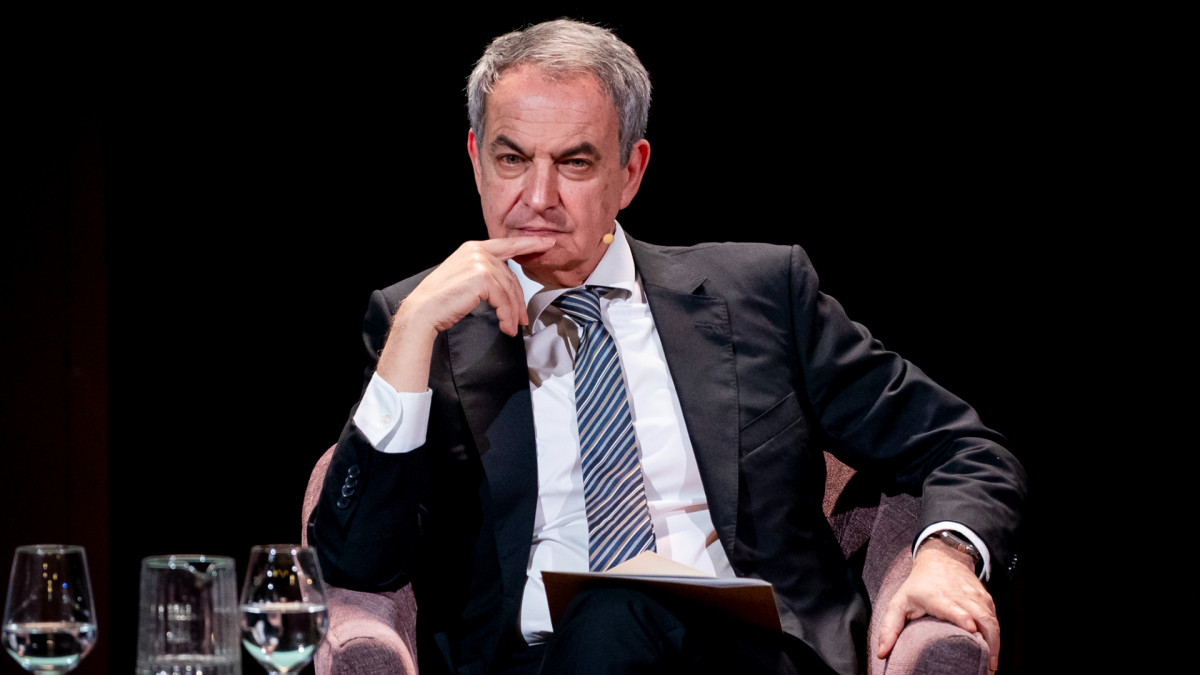
Over the past few weeks, media coverage in Spain has largely centered on former Prime Minister José Luis Rodríguez Zapatero, who is under investigation for alleged money laundering and alleged influence-peddling, among other offenses. In the United States, meanwhile, there has been little coverage of this case, and it seems that Spain’s reputation is enjoying a positive moment in Washington, D.C.
A political and judicial earthquake of transatlantic dimensions
To be clear, the former president Zapatero is innocent until proven otherwise. As an American and as a columnist in Washington, D.C., I have no opinion on this matter. I am not a lawyer. I am not for or against the PSOE, nor for or against the PP or any other Spanish political party. Spain is an open and democratic society, and I am confident that its judicial system will address this matter fairly and impartially.
That said, this investigation contains an interesting detail from an American perspective: as recently reported by other outlets, the U.S. Department of Homeland Security (DHS) assisted Spanish authorities in their investigation into former President Zapatero. According to Reuters in May, Homeland Security Investigations (HSI) collaborated with the Spanish National Police in an inquiry that eventually led to Zapatero’s indictment.
“The deep bilateral relationship continues to operate on technical levels between the two countries”
According to Kevin Hulbert, a former senior official at the Central Intelligence Agency (CIA), “despite the clear political differences at the highest levels of government, which have led to some exchanges over defense spending levels and the U.S. military involvement with Iran, it is encouraging to see that the deep bilateral relationship continues to function at the technical levels between the two countries [the U.S. and Spain], with information sharing between police and intelligence agencies,” he explained to Agenda Pública when asked about the matter.
“The U.S. is always concerned about international money laundering, so it is not surprising that the U.S. and Spain have collaborated in this recent case to support an investigation by the National Police,” Hulbert added, who also served on the president’s Intelligence Advisory Board during Trump’s first term.
Former CIA agent Bjorn Beam — who was part of the daily presidential briefing team during Trump’s first term — shared a differing perspective with : “HSI [Homeland Security Investigations] has continually expanded its global footprint and its priorities have become more politically oriented under this Administration [Trump’s].”
Beam, currently head of technology and geopolitical research at Arcano Partners, added: “Regardless of the case’s substance, that pattern makes any decision to hand over evidence to a foreign court deserving of additional scrutiny.”
Meanwhile, in Washington…
While the Zapatero investigation dominates media coverage in Spain, Spain’s diplomatic efforts appear to be increasingly well received in the U.S. capital. In May, Spanish ambassador Ángeles Moreno Bau was invited by the America First Policy Institute (AFPI) to participate in a roundtable during its North American Summit.
“Ambassador Bau made an excellent contribution to AFPI’s North American Summit in May,” said to Agenda Pública Rear Admiral Peter J. Brown, retired from the U.S. Coast Guard and senior security researcher for the Western Hemisphere and maritime affairs at the America First Policy Institute.
“The ambassador’s presence reinforced the importance and vitality of the transatlantic relationship for the security, stability, and prosperity”
“Her presence reinforced the importance and vitality of transatlantic relations for the security, the stability and the prosperity of the democracies, societies, and economies of the Western Hemisphere. As a speaker, she clearly explained the lasting cultural, linguistic, familial, and commercial connections between Spain and the countries of Latin America, as well as the benefits those connections bring to Europe and the Americas,” Brown added.
“Her willingness to participate, despite substantial political differences between the Trump and Sánchez administrations, is evidence of both the importance of dialogue and diplomacy and her personal leadership qualities,” Brown, who served as National Security Adviser during Trump’s first Administration, stated.
Recently, Ambassador Ángeles Moreno Bau was invited to a ribbon-cutting ceremony commemorating the reopening of Columbus Circle, in Washington, D.C. As we approach the FIFA World Cup — co-hosted by the United States, Mexico, and Canada — we should expect greater public diplomacy efforts focused on promoting Spain’s participation in the tournament.
The road ahead
Whatever unfolds with the Zapatero investigation, it seems unlikely to have a notable impact on the United States–Spain relationship. The U.S.–Spain relationship is solid and enduring.
Hopefully the World Cup will serve to further strengthen those historical ties between the two nations. We may not be world champions like our Spanish friends, but here in the United States, we love watching a great game and enjoying it with our friends. For my part, I hope that in the future we can talk more about soccer and less about this; sorry, about football.
