
The administration continues to press the claim that a settlement is within reach, even as hostilities persist among Israel, Iran, and the United States.
On Monday morning, President Donald Trump asserted that a Middle East peace accord is imminent, noting it hinges on the caveat that ignorance or folly does not block progress. He posted this remark just hours after Iran and Israel exchanged blows for the first time since a ceasefire took effect on April 7.
The truce had originally given both sides two weeks to draft a final agreement aimed at ending the U.S.–Iranian confrontation and guiding the region toward stability. Now, after two months, no accord has emerged, and the two sides have been carrying out increasingly provocative tests of each other’s red lines, which Trump has dismissed as “love taps.”
The Sunday-night airstrikes began in Lebanon, where Israel has been fighting the Iran-backed Hezbollah. Tehran has pressed for an unconditional ceasefire in Lebanon to be part of any peace deal, while Washington seeks a ceasefire that would be “contingent” on Hezbollah’s withdrawal and on direct talks between Israel and Lebanon—a framework favored by Lebanon’s government but rejected by Hezbollah.
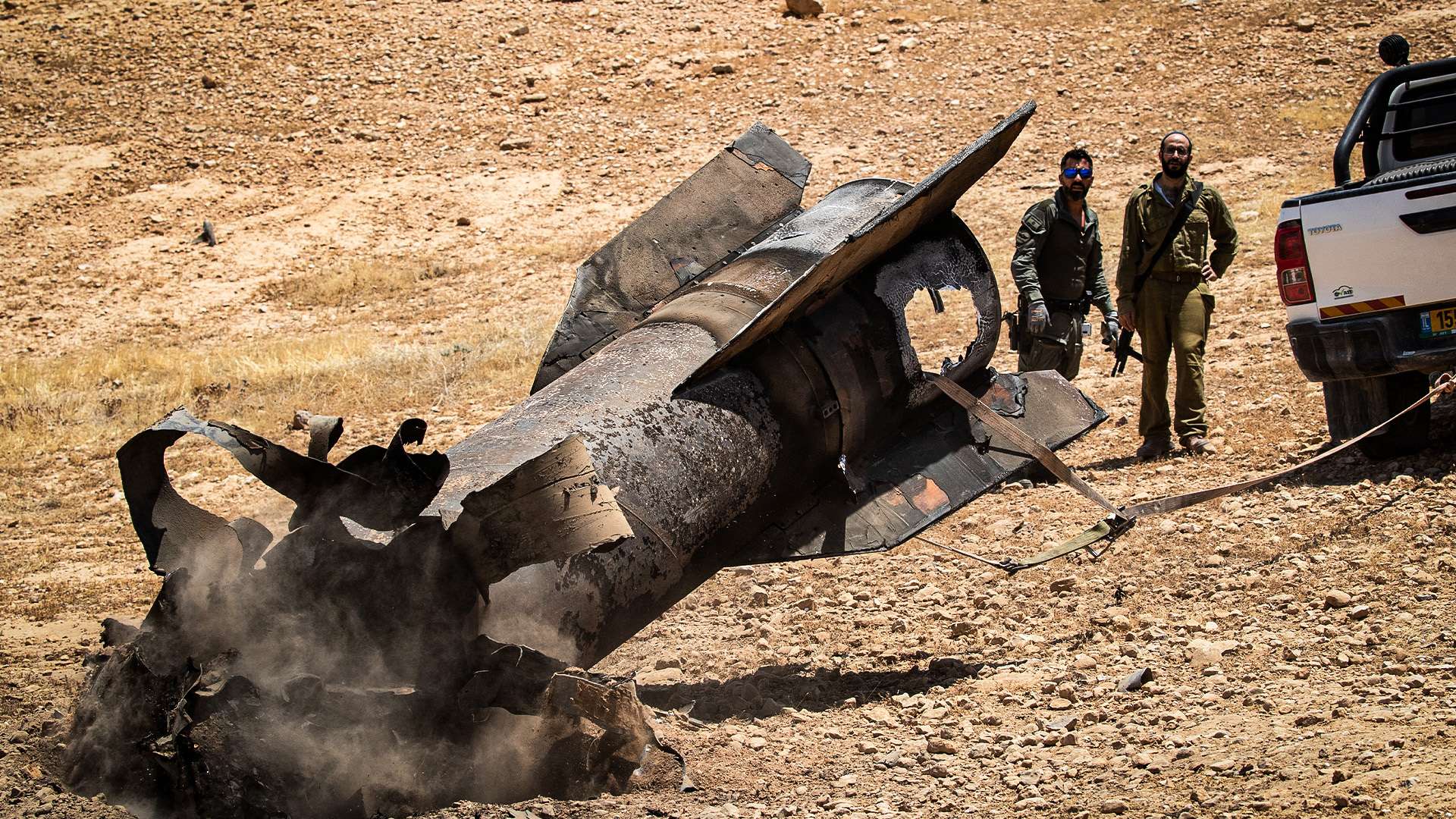
Despite its demands, Iran had seemed willing to refrain from direct involvement in the fighting around southern Lebanon, an area largely dominated by Shi’ite communities near the border. Then Israel blasted what it described as a “terrorist headquarters,” killing two people in Beirut, the Lebanese capital, a city that had previously been spared the worst fighting. A few hours later, the Iranian military announced it had targeted Israel’s Ramat David Air Base with missiles—the first Iranian strike on Israeli soil since the ceasefire began.
“The Iranian strikes didn’t injure anyone. Hopefully Israel won’t retaliate. If [Prime Minister Benjamin Netanyahu] hits back, the cycle will persist just as it has for decades—whether 47 years or 3,000 years,” Trump told reporter Barak Ravid. An anonymous U.S. official later said Trump had “bought some time” and avoided an “imminent” outbreak of fighting.
That forecast quickly proved inaccurate. Within hours, the Israeli army claimed an attack on the Karun petrochemical complex in Iran, a facility described as producing materials used in the development of ballistic missiles. (The plant manufactures precursors for plastics such as polyurethane foam and wooden laminates.) Shortly thereafter, Iranian forces asserted that they had hit an Israeli oil refinery in Haifa.
Trump then wrote on Truth Social that “both sides, Israel and Iran, are aiming for an immediate CEASEFIRE!” and insisted that a comprehensive peace deal was just around the corner. The Islamic Revolutionary Guard Corps in Iran announced that it would pause “military operations” unless “the violations and mischief continue, including in southern Lebanon.”
It remains unclear how long this ceasefire-in-a-ceasefire will endure. Israeli forces and Hezbollah continue trading fire in southern Lebanon. Israeli Defense Minister Israel Katz warned that any Iranian attempt to connect Lebanon to Iran and attack Israel would be met with overwhelming force, though his wording suggested Israel would now respond primarily to attacks on Israeli soil rather than pursuing Beirut directly.
Weeks earlier, economist Esfandyar Batmanghelidj argued that Iran’s push in Lebanon was not simply about Hezbollah or Lebanese Shias; rather, it was a test of Trump’s seriousness about sealing a peace agreement. After all, Trump had promised a Lebanon ceasefire as part of the April 7 deal, only to walk it back at Israel’s urging.
The Sunday flare-up comes amid a broader pattern of escalating “tests” elsewhere in the region. Last month, Iran shot down a U.S. drone over the Persian Gulf; Washington retaliated by striking Iranian naval bases, and Tehran answered with missiles at a U.S. base in Kuwait. The U.S. military said it destroyed all incoming missiles, but ABC News reported that several American troops were wounded in the exchange.
On Saturday, the United States again bombed Iranian bases in response to drones threatening commercial shipping, while Iran targeted the U.S. naval base in Bahrain and Kuwait’s international airport, killing a civilian worker in the latter strike.
Sources within the U.S. Treasury reportedly circulated to CBS and the Financial Times over the weekend, suggesting a plan to seize Iranian assets abroad—such as oil tankers or money held in foreign banks—to cover damages in Arab states. Mohsen Rezaei, an adviser to Iran’s government, told CNN that the fate of those bank accounts would stand as another “test of trust” in the ceasefire.
In the end, Trump is not entirely off the mark about the possibility of lasting peace. Both Tehran and Washington appear to be converging on a rough bargain: Iran and the United States would lift their mutual naval blockades of the Strait of Hormuz, renounce the use of force, and then trade concessions on the remaining issues—namely, the Iranian nuclear program in exchange for the easing of U.S. sanctions.
Yet hawks in both the United States and Israel are dissatisfied with the terms on offer, and Trump is mindful of their criticism. Keeping Israel engaged in Lebanon, sustaining pressure in the Gulf, and pressuring Iran’s economy are all methods by which Trump can erode Iran’s leverage, at least incrementally.
“It’s just a love tap,” Trump told ABC News after last month’s Iran air raid. “The ceasefire is holding.”
The approach of incremental peace has historical precedent for the United States and Israel. In November 2024, the Biden administration brokered a truce in Lebanon that tied Israeli withdrawal to Hezbollah’s disarmament. Under that arrangement, the Israeli army was able to push deeper into Lebanon than during the war, while the Trump administration appeared to delay or pause the Gaza and Yemen clashes as it saw fit.
Yet Iran—unlike Hezbollah, Hamas, or the Houthi movement—retains the capacity to push against the bounds of any ceasefire. And Trump seems to be more reluctant than either Israel or Iran to resume full-scale conflict, as his reaction to Sunday’s fighting demonstrates. For now, the region remains in a limbo state—neither at war nor fully at peace. It’s, in the familiar phrasing of cable news, “fiery but mostly peaceful.”
