
Our political decisions are not always tied to strictly political events. There are many spillovers that can position us in one direction or another come election day or when we respond to a survey. In fact, there is a whole range of studies that aim to show the relationship between events such as winning the lottery, shark attacks, or major sports events and our political behavior.
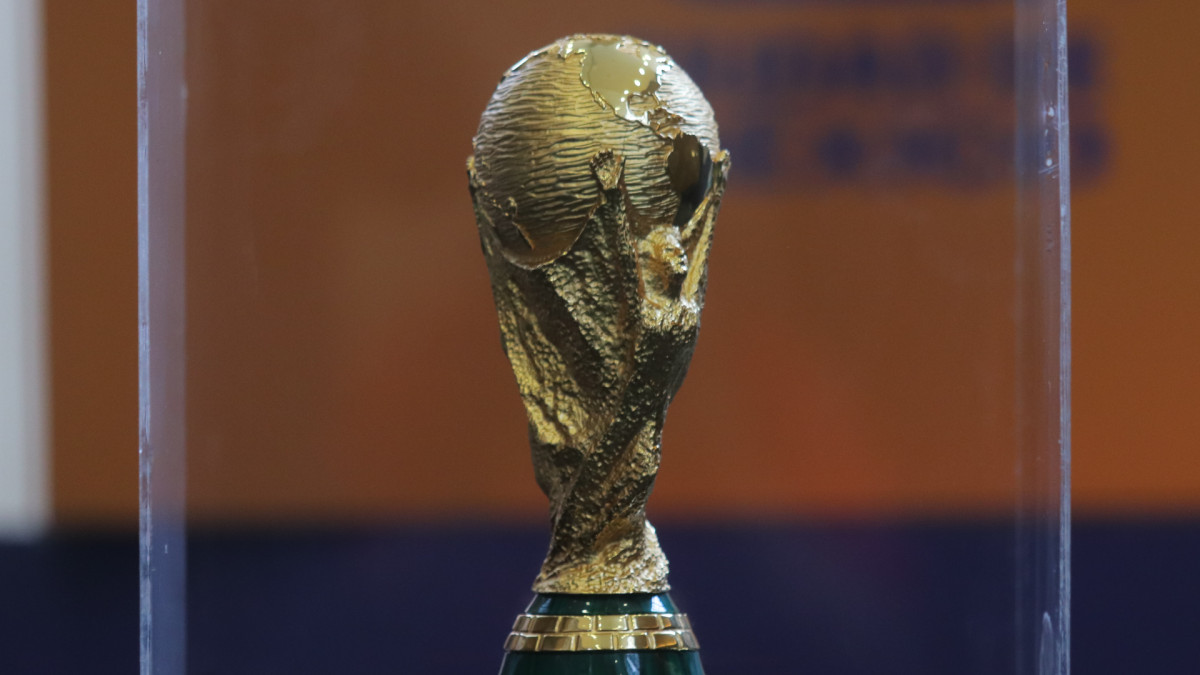
A few days before the start of the FIFA World Cup, which has already left high doses of politics in recent months, it is worth reviewing what impact it may have beyond the sporting arena.
The vote also has mood
For several years now, researchers have been studying the relationship between non-political events —natural disasters, weather, UFO sightings…— and our political behavior. To understand this possible link, one must accept that we do not always behave rationally. Not even in politics. Things like being in a good or bad mood can be decisive when, for instance, expressing opinions about the government’s performance.
Before and after a college basketball game, American researchers conducted a survey among students at the two universities facing off. It was during the Obama era, and they found that after the game, the winning university valued the Government more positively, while the loser held a more negative view. Although there are many factors at play (magnitude of the impact, duration), it seems that in certain contexts sports events can carry weight in politics. That said, it does not appear to be straightforward. For example, in Finland positive effects on government evaluation from good Olympic results have not been found. It was also not the case in Ireland with Gaelic football.
“The authors of this curious study find an association between the position of Real Madrid in La Liga and the vote for this type of parties”
By contrast, in Spain there does seem to be a particular tendency involving the national football league, Real Madrid, and the “ethno-regionalist” parties (PNV, Bildu, ERC, Junts, BNG…). Although the label used is somewhat debatable, the authors of this curious study find an association between Real Madrid’s position in La Liga and votes for this type of parties. How does this happen? They start from the premise that the club led by Florentino Pérez symbolically represents a kind of national unity institution, also linked to the Crown. Following this thread, they detect that, between 1993 and 2019, and always in general and European elections, there are two trends:
First: if Real Madrid does well that year in the league, and there are nearby teams from these territories (such as Deportivo de La Coruña, Athletic Club, or, of course, FC Barcelona), the sports conflict transcends into politics and strengthens votes for these ethno-regionalist parties. In the authors’ view, this fits within the center-periphery dispute and, moreover, intensifies when the government is center-left (PSOE governments).
Second: if Real Madrid performs poorly, or if the local team is far from contending for the league title, that tension diminishes and votes for these parties decline.
In this sense, it isn’t that football generates an alternative political conflict. It also doesn’t transform dynamics. What it does is amplify or dampen preexisting political contests, and in Spain the most classic one is territorial.
What to expect from the World Cup?
However, from a World Cup it is hard to expect this kind of effects. In Spain, 90% of football fans support the national team in international competitions like the last European Championship, so effects attributable to disputes do not seem to be on the table. What we can do is pay renewed attention to how governments are evaluated.
“Approval of the national leader rises by about seven percentage points when there are «unexpected victories»”
In an analysis covering more than a hundred countries and international matches (not only those of the World Cup) between 2008 and 2023, it has been shown that approval of the national leader rises by around seven percentage points when unexpected victories occur. To assess whether a victory is expected or not, they use odds calculated by betting houses, which they complement with Gallup’s global poll series. And beware, because defeats do not have an equivalent punitive effect.
In this case, the Japanese researchers go a step further than other studies and suggest that, more than a mood shift, citizens identify victories as a demonstration of the country’s leadership. Through this mechanism, the evaluation of the president (or prime minister) would be reinforced, but the effect does not translate with the same clarity into votes.
Moreover, with regard to the World Cup, they find a very interesting factor: the more salient the match, the bigger the “reward” in case of victory. The World Cup, but also the Euro, Copa América, or the Africa Cup of Nations can produce larger effects. On the other hand, other elements such as the sociological composition should not be forgotten: men and younger people bear a large share of these effects.
A country especially football-mad
Spain is among the countries where football matters the most. Both socially and economically, it hosts Real Madrid, FC Barcelona, and Atlético de Madrid among the world’s most valued clubs. Added to this is a long run of successful Spanish national-team victories in various Euros (2008, 2012, 2024), the 2010 World Cup, and the 2023 UEFA Nations League. Moreover, the harsh period of the economic crisis coincided with the country’s greatest sporting successes. All of this creates a blend of cultural interest, economic weight, and emotional value that unites everything related to this sport.
“Driven also by polarization and politicization, football is another playing field where partisan loyalties and hatreds can be displayed”
Given the current unstable phase of the present legislature, an early election this year would not have been ruled out—some still do not rule it out. Had it coincided in time, the outcome of Spain’s national team in the tournament seems likely to have been on the minds of many voters, directly or indirectly. Yet, after reviewing the studies that attempt to examine this, thinking that it would change election results by itself would be too venturesome.
At the same time, these studies invite us to start viewing non-political events, especially when they are so massive and so closely linked to the sociology of a place, through the lens of politics. Driven also by polarization and politicization, football is yet another playing field on which to display partisan affinities and aversions. And although in politics winning a single game is rarely enough, in certain contexts, winning a game can help everything else look more favorable.
