
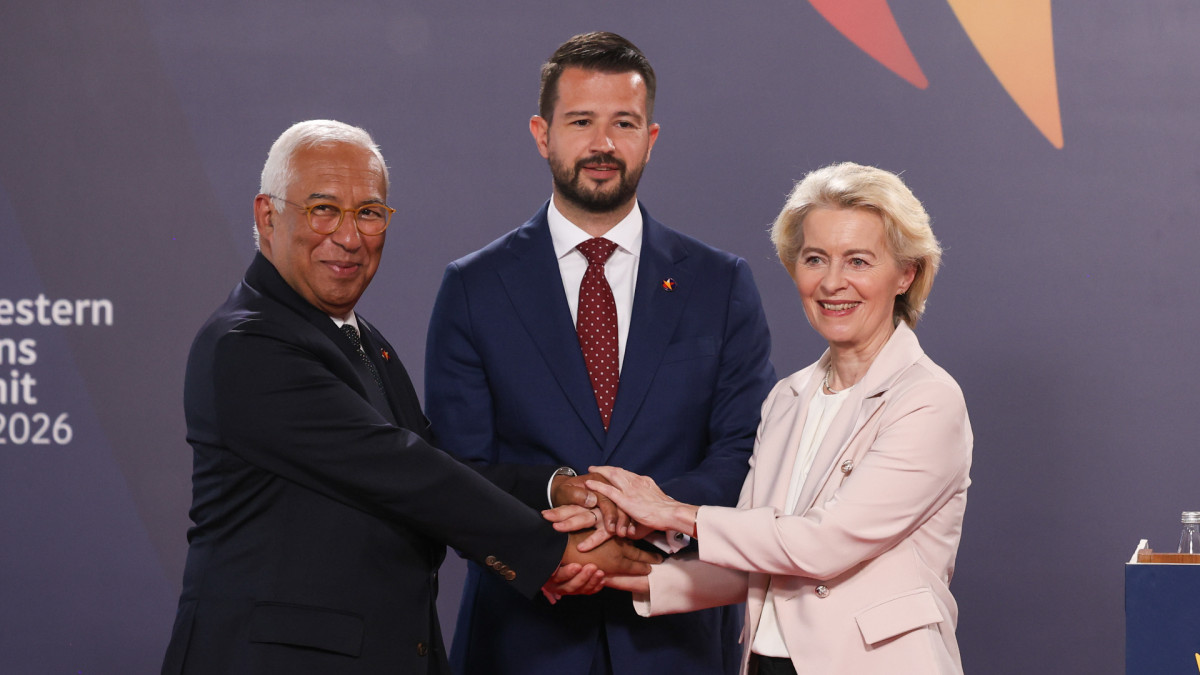
The VIII Summit between the European Union and the Western Balkans, held in Tivat (Montenegro), reaffirms Brussels’ willingness to push forward with a process that had been blocked for a long time; it is clear that enlargement is returning to the center of the European project. However, it is impossible to understand this shift in direction without the context: the Russian invasion of Ukraine, a scenario that has profoundly transformed Brussels’ strategic perception and that of the main European capitals. What for years was treated as a technical process, conditioned by reforms and lacking real political urgency, has now become a continental security issue.
“The acceleration of the Ukraine and Moldova process demonstrates that geopolitical considerations have acquired decisive weight in European decisions”
This summit, moreover, has highlighted a tension that is becoming increasingly explicit. On the one hand, European institutions insist that enlargement remains based on the individual merit of each candidate, on the implementation of reforms and on meeting the adhesion criteria. On the other hand, the acceleration of the Ukraine and Moldova process shows that geopolitical considerations have acquired decisive weight in European decisions.
La propia Comisión Europea y varios gobiernos nacionales reconocen abiertamente que la ampliación es hoy una necesidad estratégica. Aquí el problema radica en si ambas lógicas pueden convivir y si esto es compatible sin erosionar (aún más) la credibilidad de una política que lleva demasiado tiempo generando expectativas que rara vez se traducen en resultados concretos.
Desde luego, el mensaje oficial ha sido inequívoco. Los líderes europeos han reiterado que el futuro de los Balcanes Occidentales está en la Unión Europea y han definido la ampliación como una “inversión geoestratégica” en estabilidad, seguridad y prosperidad. Algo que, paradójicamente, llevan diciendo desde, al menos, la Cumbre de Salónica de 2003. La declaración final vuelve a hacer énfasis en que el proceso debe seguir guiándose por las reformas, la condicionalidad y el principio del mérito propio. Bruselas insiste en que no existe una competición entre candidatos y que cada país avanzará en función de sus resultados, pero precisamente ahí reside una de las principales dificultades.
Por qué la guerra de Ucrania ha cambiado la ampliación europea
The war in Ukraine has inevitably shifted priorities. Since 2022, Ukraine and Moldova have moved to the center of the enlargement agenda. The acceleration of their dossiers responds to understandable political reasons: the need to anchor both countries in the European space in the face of Russian aggression. However, in Tirana, Sarajevo, Skopje or Podgorica, that acceleration is observed with mixed feelings.
“A significant part of the current community strategy aims precisely to prevent the Balkans from feeling sidelined”
The perception in much of the region is that the Western Balkans have spent two decades meeting conditions, changing legislation and adapting institutions to now discover that geopolitics can alter the pace of the process. It is not solely a symbolic issue. Montenegro opened negotiations in 2012; Serbia in 2014; Albania and North Macedonia had to overcome successive political blockages before formally starting talks. Meanwhile, Ukraine has become the undisputed political priority of enlargement.
Brussels is aware of this discontent. In fact, a substantial part of the current community strategy aims precisely to prevent the Balkans from feeling sidelined. The constant references to “gradual integration” respond to that objective. The idea is to offer concrete benefits before full accession, which include gradual access to the single market, integration into certain European programs, incorporation into payment systems or the removal of barriers in strategic sectors.
The principal instrument of this new approach is the Growth Plan for the Western Balkans. Funded with €6.0 billion for the 2024-2027 period —€2.0 billion in grants and €4.0 billion in concessional loans—, it aims to accelerate the economic convergence of a region whose level of development barely reaches 35% of the EU average. The European Commission maintains that the program could even double the size of the Balkan economies within the next decade if reforms are implemented correctly.
The bet is not small. For years, enlargement relied almost exclusively on the future promise of accession. Today Brussels seeks to offer tangible incentives in the present. The progressive incorporation into the Single Euro Payments Area (SEPA), the reduction of roaming costs, the opening of trade corridors or energy integration are examples of a strategy aimed at proving that approaching the EU yields visible benefits for citizens.
“The success of the process also depends on the Union’s ability to adapt itself to a future enlargement”
But the fundamental issue remains political. In this sense, the main obstacles to enlargement are no longer only in the candidate countries. It is increasingly evident that the success of the process also depends on the EU’s ability to adapt to a future enlargement. The discussion about the Western Balkans is closely linked to the debate on the EU’s internal reform.
And it is here, in its internal dimension, where we find some of the keys to understanding why political consensus on enlargement remains more fragile than official statements suggest. Although there is broad agreement on the strategic importance of integrating the Western Balkans, significant differences persist regarding the pace, conditions and consequences of that process. Enlargement has become a matter that directly affects the political, economic and institutional balance of the EU itself.
Thus, tensions between Member States remain significant. Germany, the Baltic states, Poland or the Nordic countries consider enlargement a strategic necessity derived from the new European security context. France, though it has evolved considerably from its more reluctant positions a decade ago, continues to insist on the need to combine enlargement and institutional reform, while other member states maintain reservations related to budgetary capacity, internal governance or the democratic quality of some aspirants. It seems evident that a EU that could exceed thirty-five members would need to revise decision-making mechanisms, cohesion policies, voting systems and budgetary structures. Enlargement is no longer part of foreign policy; it now forms part of the very debate about the future model of European integration.
In this context, a middle-ground solution gaining ground suggests the possibility of a gradual or staged integration process. Germany and France have pushed formulas that would allow candidates to participate partially in certain Community policies before full accession. Advanced association arrangements for some candidate countries are even discussed while formal access processes are completed.
Thus, the Danish presidency of the Council of the EU is expected to reinforce this orientation. Denmark has moved from historically more cautious positions to become one of the advocates of an orderly but politically credible enlargement. The case of Montenegro, currently the most advanced candidate with hopes of accession by the end of the decade, is observed in Brussels as a possible success story capable of revitalizing the entire process.
“If the EU excessively relaxes the criteria to respond to strategic urgencies, it risks weakening its transformative capacity”
Nevertheless, the main risk remains the erosion of credibility. The merit principle is one of the normative pillars of the European enlargement policy. But geopolitical reality is pushing more and more toward exceptional political decisions. The paradox is evident: if the EU relaxes the criteria excessively to meet strategic urgencies, it risks weakening its transformative capacity. If, on the contrary, it maintains excessive rigidity, it may lose influence precisely in a region where Russia, China, Turkey or Gulf countries continue to expand their economic and political presence.
From certainly, the ball is at the EU’s court now. It is no longer enough to wield political commitment that does not translate into concrete actions, the only ones that would allow it to gain credibility in the region. Brussels is aware that it cannot keep generating expectations that are continually postponed, and that is essentially because the enlargement process at this moment has become a test of the EU’s ability to react, all while not renouncing the principles that have historically defined its integration project. Ultimately, the question is whether it will be able to, or will have to, give up any part of the equation.
