
The Faster Labor Contracts Act promises faster union deals, but it could permit federal arbitrators to impose contracts workers did not approve.
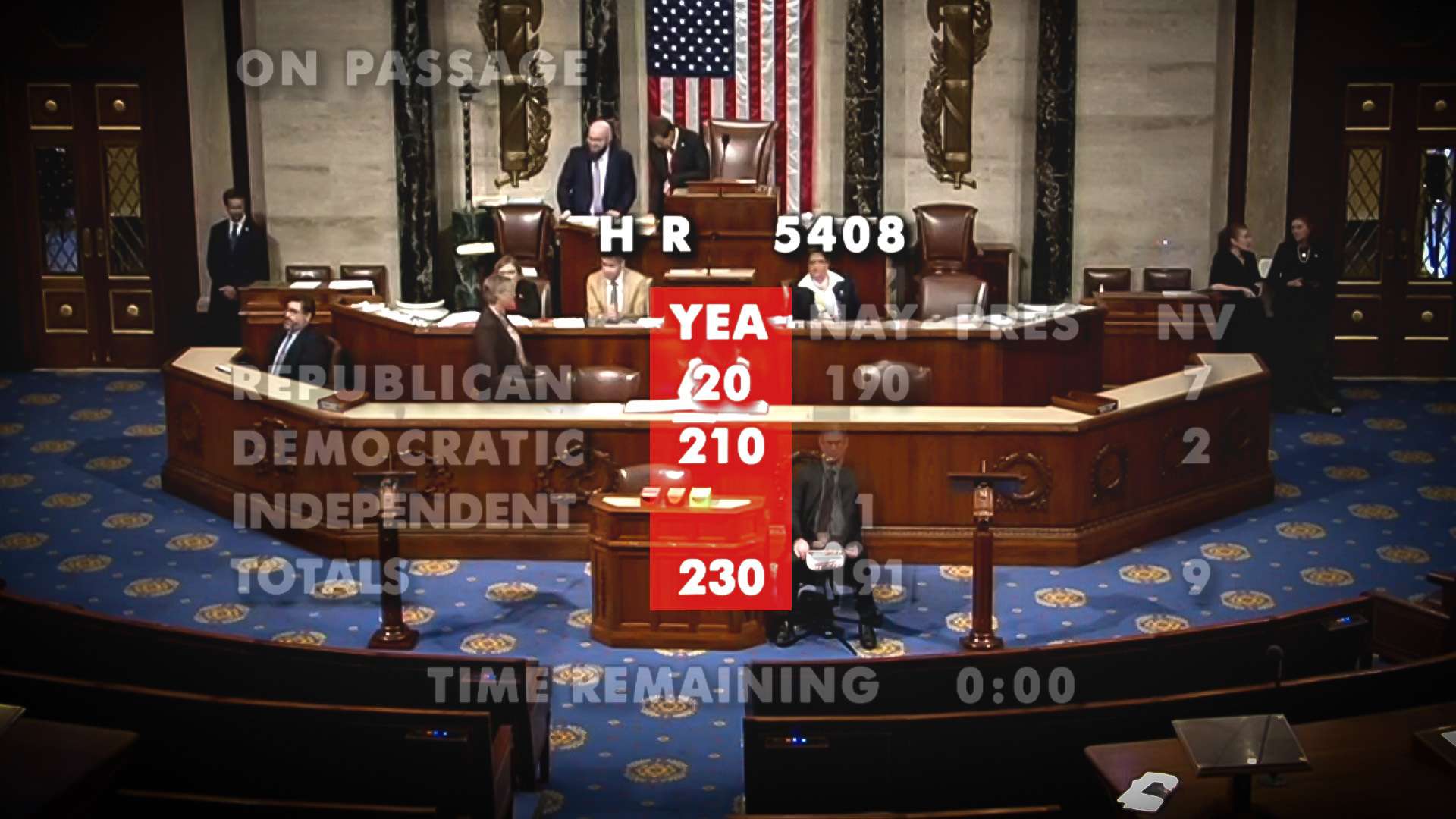
That evening, the House of Representatives gave final passage to the Faster Labor Contracts Act (FLCA) in a 230–193 vote, with twenty Republicans breaking ranks to back the Democratic-backed measure. The proposal, which seeks to accelerate initial bargaining talks after employees form a union, advances now to the Senate.
Support for the legislation has been celebrated by a growing faction of populists who have gained traction within the Republican Party.
Sen. Josh Hawley (R–Mo.), sponsor of the Senate version, stated he was “pleased to see the House has taken the right step for working-class Americans.” He added, “We need genuine labor reform that prioritizes workers.” Rep. Pete Stauber (R–Minn.), who co-sponsored the bill in the House, said he was “proud to collaborate” on the measure to “hold employers accountable and ensure workers have a real voice at the negotiating table,” adding that “when our workers succeed, our entire nation succeeds.” The legislation has also been praised by Oren Cass, founder of American Compass, who described it as the “best opportunity yet for conservatives to demonstrate support for strong labor laws and the rights of workers.”
The FLCA is designed to speed up negotiations after a new union is certified or recognized, in part by requiring the parties to begin contract talks within 10 days of a collective bargaining request. They would then have 90 days to negotiate, followed by 30 days of mediation, before the Federal Mediation and Conciliation Service must be notified. A three-person arbitration panel would be formed, and a majority of that panel could forcibly impose a first contract on both sides, binding the employer and worker for two years unless they later consent to changes.
Once this procedure concludes, the union would become the exclusive bargaining representative for every employee, including those who did not vote for it, did not join it, or may strongly disagree with its priorities. The FLCA would require a federally supervised arbitration panel to set terms for the entire workplace, meaning that many workers could lose the ability to negotiate on their own. Their wages, hours, benefits, and working conditions could be decided by union officials they did not support and by government bureaucrats they did not vote for.
Rep. Tim Walberg (R–Mich.) highlighted this point on the House floor. He argued the bill actually “erodes workers’ rights” and that a “government-appointed arbitration panel” would impose a contract if the parties do not reach an agreement within the bill’s timeline.
“Supporters of this bill assure businesses and workers that it is about worker empowerment and efficiency,” Walberg said. “I may be misremembering the definition of empowerment, but I can guarantee it does not mean taking away a worker’s right to vote on his or her own contract and giving that power to a Washington bureaucrat with no stake in the outcome.”
In practical terms, labor negotiations take time for legitimate reasons. The legislation cites a Bloomberg Law analysis showing that the average interval between union formation and the signing of a contract is roughly 465 days. “It’s a hard statistic to pin down,” Bloomberg Law notes, partly because private-sector collective bargaining agreements are not required to notify the government when a deal is reached.
Nevertheless, the FLCA treats potential delays as proof of a problem warranting federal intervention, even though the figure itself does not distinguish between bad-faith stall tactics and ordinary bargaining. By forcing first-contract negotiations into an arbitrary 120-day window, the measure risks reducing bargaining to a procedural hurdle before outside arbitrators impose the final terms.
The bill’s fate in the Republican-controlled Senate remains uncertain. Yet in 2025, Sen. Bill Cassidy (R–La.), chair of the Senate Health, Education, Labor, and Pensions Committee, criticized the proposal for removing “workers from the process by eliminating the need to ratify a contract.” He added that workers “cannot reject” the agreement, and argued that it would be “removing democracy from the workplace.” For the moment, it is unclear whether other senators will share Cassidy’s concerns.
Crucially, a faster contract does not automatically translate into a fairer one. While the FLCA may hasten negotiations, it does so by substituting negotiation with government compulsion. Conservatives who profess to champion workers should be wary of a bill that hands workers’ choices to union officials and federal arbitrators.
