
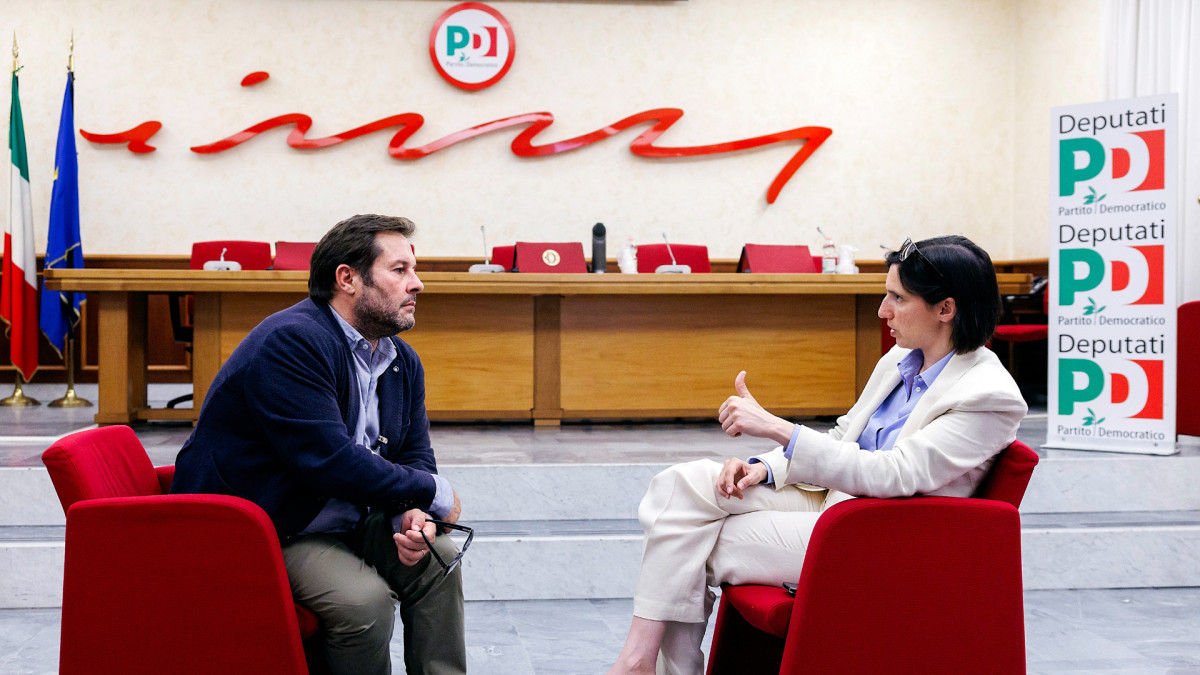
Elly Schlein stands today as the leading figure of the opposition to Giorgia Meloni in Italy. She welcomes me to Rome, to the Chamber of Deputies, specifically into the Enrico Berlinguer Room of the Democratic Party’s parliamentary group. Our conversation unfolds on a day charged with meaning: Schlein is slated to address Parliament in a debate that will help shape Italy’s stance ahead of the forthcoming European Council gathering. She even invites me to join the session from the visitors’ gallery. It is a healthy facet of Italian politics that deserves recognition: Parliament discusses the government’s priorities before European Council meetings, rather than afterward, as occurs in Spain when decisions have already been settled.
The leader of the Democratic Party approaches the interview with a direct, unvarnished demeanor, presenting lucid views on the challenges facing Italy, Europe, and the progressive movement. If there is one issue that especially weighs on her, it is wages. “Not only have wages failed to grow over the past thirty years, they have actually decreased by three percentage points,” she laments. In her view, this reality explains much of the social discontent coursing through the country.
Following three years of rebuilding and reuniting the progressive camp, Schlein is hopeful about the opposition’s prospects. “We are witnessing tangible progress across the progressive spectrum, and we will keep working to defeat this right-wing government,” she asserts. She believes the tensions within the governing coalition will eventually take their toll. “It is growing increasingly hard for Meloni to keep this majority intact, and the trouble is that ordinary Italians are paying the price,” she contends.
The dialogue also touches on the government’s stalled judicial reform, the debates around potential electoral reform, and the state of Italy’s institutions. But it is in conversations about international affairs that Schlein’s strategic vision becomes most evident. She argues that Italy is losing influence at a critical moment for Europe. “Today, France, Germany and the United Kingdom are engaging with Russian representatives. Italy is not,” she observes.
She is equally critical of the government’s response to Donald Trump’s attacks on Pope Leo XIV. According to Schlein, ministers opted for confrontation and “cloaked themselves in silence.” Regarding the future of the European Union, she leaves no room for ambiguity: “I believe in a federal Europe. And I think we must keep advancing in that direction. Meloni is not taking on those battles.”
Throughout the interview, Schlein emerges as a politician convinced that there exists a progressive alternative to the current government and that the debate over Europe’s future will be one of the defining political battlegrounds of the years to come.
Elly Schlein is a member of parliament and secretary-general of the Partito Democratico. Photo: Agenda Pública / Francesco Fotia
How can Meloni be defeated given the fragmentation that exists on the Italian left?
Unity is forged not solely against Meloni’s government, but around the collective aims we want to pursue for Italy. That remains the strategy I have pursued since taking over as secretary of the Democratic Party.
When I arrived, after the electoral setback, the party stood at historic lows in the polls—roughly 14%—and the center-left had nearly vanished. Through hard work and a substantial effort to forge coherence, we have gradually rebuilt solidarity around concrete, tangible issues.
The first battle in which we managed to unite the entire opposition was the push for a minimum wage in a country where four million workers are poor despite being employed. Spain already has a minimum wage, and Pedro Sánchez’s government has increased it by more than 50%. That uplift has helped sustain the purchasing power of workers and families, even amid the energy crisis and inflation.
Italy, by contrast, has not only stagnated on wage growth for thirty years, but wages have fallen by three percentage points.
Moreover, over the last four years ISTAT (the Italian National Institute of Statistics) has documented a nine-point drop in real wages, precisely when food prices were rising. This means that someone can go to the supermarket with the same salary as before and can no longer buy the same goods.
“Through a lot of work and a major effort to build unity, we have gradually rebuilt unity around concrete issues”
Then we achieved unity around public healthcare. We presented proposals to shrink waiting lists. Because if you aim to dismantle public healthcare, as the right is doing, you don’t need to change the law. You simply cut resources. Then you have too few doctors and nurses, emptied hospitals, and those with money turn to private care. Those without means nevertheless seek treatment.
Today, more than six million Italians—more than one in ten—forego healthcare because they cannot afford to wait or to pay for a private alternative. Between 2023 and 2024 alone, that figure rose by one and a half million under Meloni’s administration. This is why we proposed, together with the rest of the opposition, dedicating funds to immediately hire doctors and nurses and to reduce waiting lists.
What we are building is a broad progressive alliance grounded in shared principles: defending public healthcare, ensuring decent work, implementing industrial policies that accompany the green and digital transition, and strengthening education, universities, research, rights, and democracy.
Over these three years, we have promoted legislative initiatives, drafted proposals, and organized joint mobilizations. Today we can say there is a competitive progressive alliance capable of defeating Meloni in the next elections. We have already established it in many cities where we achieved victories together. We have expanded it regionally too: last year elections were held in seven regions and the progressive alliance ran united, something that had not occurred for twenty years.
Thus, within the progressive camp we are witnessing tangible progress, and we will continue striving to defeat the right.
What happened after the justice referendum? My reading is that fissures began to appear within the right itself. Turnout exceeded expectations. Do you think Meloni is now in a weaker position?
The situation is straightforward. Giorgia Meloni’s propaganda—and that of her government—clashed with the lived reality of millions of Italians.
We have endured nearly three consecutive years of falling industrial output, stagnant growth, stubbornly low wages, endless waiting lists, and a tax burden at its highest level in the last twelve years.
So people didn’t vote solely on the justice referendum?
Precisely. A turnout so high carried political significance as well.
People went to the polls to resist a justice reform that did not enhance citizens’ lives but aimed to place judges under government control, the same trend seen in other nationalist, right-wing movements across Europe and the world.
They also went to defend the Italian Constitution, an anti-fascist charter to which Italians feel deeply attached. And they voted against this government, against its subservient posture toward Trump and Netanyahu.
“People went to vote to stop a justice reform that did not improve citizens’ lives”
The fifteen million negative votes arose from a blend of reasons. Yet the government’s troubles did not begin with the referendum. They started months earlier, when we clearly won regional contests in Campania and Puglia.
They clung to Veneto, which was predictable, but with a twist: Matteo Salvini obtained a result in Veneto that doubled Meloni’s, thanks to the candidacy of the region’s former president. That immediately generated tensions inside the coalition.
We also saw those tensions when I had reached an agreement with Meloni on a basic law to protect women: the so-called “only yes means yes” rule. In other words, any sexual act without consent should be deemed sexual violence. Many European countries, including Spain, have already enacted laws of this kind.
We voted unanimously on the text in this Chamber on a Thursday. The sessions concluded on Monday, and on Tuesday the majority collapsed the agreement because Salvini no longer wanted it. That was the first clear sign of Meloni’s weakness: she was unable to enforce an agreement she herself had reached with me.
Then came disputes over the budget, to the point of endangering the approval of accounts before December 31. They have also clashed fiercely over foreign policy, because in reality they do not possess a coherent foreign policy: they operate with three instead.
“The ‘only yes means yes’ rule was the first real moment of weakness I saw in Meloni: she was unable to impose an agreement that she herself had reached with me”
In the resolution approved today by the majority, which criticized the opposition for its divisions, all the contentious issues disappeared. For instance, it references European Union enlargement to the Balkans, but it omits Ukraine. It is easy to conceal divisions by removing uncomfortable terms from documents. They even reached an absurd point: they debated military support for Ukraine and resolved the dispute simply by deleting the word “military” from a decree that continued to provide military aid.
That is the level of tension that exists within the majority.
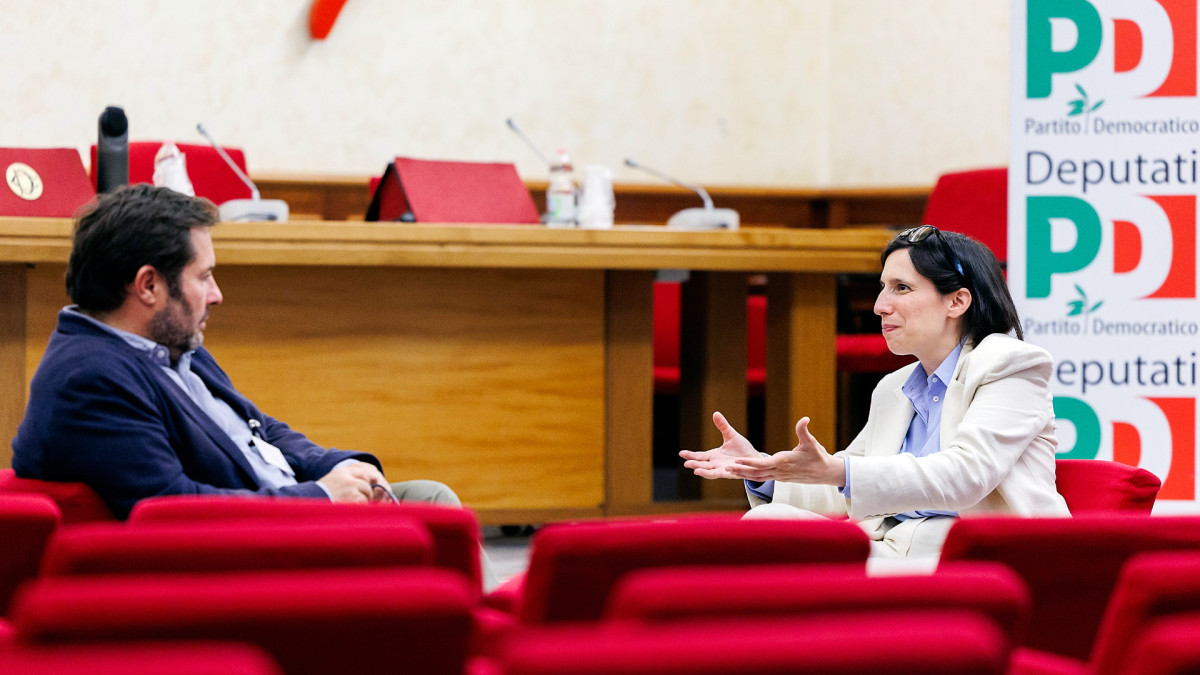
Schlein responds on the first signs of wear in Giorgia Meloni’s government. Photo: Agenda Pública / Francesco Fotia
The governing coalition wants to overhaul the electoral law. In what sense are they proposing this? And, in relation to what we have just discussed, do you think that after the referendum it will be harder for them to push through this new electoral law?
On the second point: yes, also because they are split on the issue. Not everyone supports the reform.
In fact, a week before the referendum, as Italians were paying double for petrol due to the war instigated by Trump and Netanyahu, the government convened an urgent summit. We anticipated a debate focused on wages or energy costs that would affect the competitiveness of our companies. Instead, the summit centered on the electoral law.
Meloni wished to seal a written agreement before the referendum since she recognized that it would become more complicated afterward. Why the rush? Because they fear losing. They aim to secure a victory through a law we deem unacceptable, as it would grant an overwhelming majority bonus that could nearly guarantee the majority’s unilateral reach of certain institutional safeguards.
In truth, this reform resembles a preview of the premierato project, Meloni’s ambitious institutional reform, which she has now paused because she likely does not want to face another constitutional referendum. What holds this majority together is not a shared national vision, but a power pact.
“This electoral reform is a kind of preview of the ‘premierato’ project, Meloni’s major institutional reform, which she has now stopped”
They are far more divided than we are, yet they stay united by interests of power and by a shared approach to reforms: the differentiated autonomy championed by the League, which risks fracturing Italy and widening regional inequalities; the longstanding justice reform pushed by Berlusconi and Forza Italia; and Fratelli d’Italia’s premierato project.
The first was partially struck down by the Constitutional Court for being unconstitutional. They are trying to circumvent that ruling, but we will oppose them. The second has been rejected by fifteen million Italians. And on the third, they have paused for now, though they are attempting to push it indirectly through electoral reform.
That explains why we have joined forces with the rest of the opposition to block it.
What role has Trump played in Meloni’s fragility? It was said that she was a key ally for Trump within Europe. Now it seems Meloni is changing course.
That appears to be the case. Yet even after the referendum defeat, and even after Trump’s unacceptable assaults, there has been no real shift. I myself denounced those attacks in Parliament.
By the way, this is something the Spanish opposition leader did not do.
It was a duty to respond when a foreign head of state attacks the Italian government. We may be political opponents in this Chamber, but we remain representatives of the Italian people. We cannot tolerate threats or attacks by another head of state, especially one from a long-standing ally.
In the same vein, it was necessary to defend Pope Leo against Trump’s unprecedented attacks.
All of this has created a significant political fracture. Yet, in practice, we have seen no shift in the government’s foreign policy. After Trump’s attacks, they retreated into silence. Partly because they lack a coherent foreign policy, and partly because they fear a renewed reaction from Trump.
That means betraying Italy’s diplomatic tradition, a country that has consistently stood at the forefront of peaceful efforts. Peace is in our Constitution. Today France, Germany and the United Kingdom are engaging with Russian representatives. Italy is not.
A few days ago there were discussions about European enlargement toward Montenegro, and Italy was not part of it either. It is increasingly difficult for Meloni to keep this majority together, and the price is borne by Italians.
“[Meloni] wanted to present herself as the bridge between Europe and Trump. However, that bridge collapsed under Trump’s bombs, including the commercial ones”
When Trump returned to power, Meloni was among the few European leaders present at his inauguration. She sought to cast herself as the bridge between Europe and Trump. But that bridge collapsed under Trump’s bombs, including the economic ones. Meloni then found herself trapped in a particularly delicate position. Hers has been the only European government to minimize the impact of tariffs in a country that relies heavily on exports.
Meanwhile, Pedro Sánchez acted swiftly, mobilizing 13 billion euros to shield workers and businesses. The Italian government announced a 24‑billion-euro plan, but in truth those were existing funds reallocated rather than new money, and it wasn’t even implemented as promised.
It is also the only European government to describe a unilateral military operation in Venezuela as “legitimate defence.” It is the only government that has agreed to participate as an observer on the Peace Board while Netanyahu consistently violates international law. They are not pursuing a just peace, which in Gaza could be achieved only if illegal settlements end and the Palestinian state is formally recognised.
It is also the only government incapable of uttering a simple sentence: “Hands off Greenland.” Meloni’s subordination has exacted a heavy price for Italy. I have seen no real shift, except perhaps in defending the Pope.
Honestly, I would have preferred the confrontation with Trump to occur over a war that is severely harming the global economy and the Italian one as well. What we are witnessing is the effort of a new global nationalist right to replace international law with the law of the strongest and the wealthiest.
That is precisely what we discussed in Barcelona at the global progressive mobilization summit with Pedro Sánchez, Lula, and more than a hundred progressive movements from around the world. We aim to rebuild an international order grounded in peace, dialogue, cooperation, and respect for international law. No double standards.
We rightly unite to defend Ukraine against Putin’s criminal aggression precisely because it breached international law. But we cannot stay silent when crimes are committed in Gaza or when a historic ally like the United States acts unilaterally. If we tolerate these exceptions, we give license to others to do the same.
I recently visited Canada and met Barack Obama and Mark Carney. Carney offered a striking observation: that the international order will be rebuilt because we will not accept a harsher world, and Europe must play a central role in that rebuilding.
To achieve this, Europe must change. It must overcome unanimity in decision-making, which Meloni opposes. It must move forward through enhanced cooperation when treaty reform is not feasible. It must foster joint European investment. Only in this way can we avoid being squeezed between military and commercial pressures from all sides.
We require a major European industrial plan, investment in innovation, social cohesion, the green transition, and a common defense. Meloni also opposes a shared European defense.
“If you accept Trump’s demand to raise military spending to 5% of GDP, but reject integrated European defence, all you are doing is buying more American weapons”
If you accept Trump’s demand to raise military expenditure to 5% of GDP, while opposing integrated European defense, unified command structures, and a stronger European defense industry, all you achieve is purchasing more American weaponry. That does not boost Europe’s strategic autonomy; it diminishes it.
Moreover, in the energy realm, whereas Spain has long boosted renewable investments and driven electricity costs down substantially, Italy continues to face much higher rates.
I recall that after the strikes on Iran, wholesale energy prices in Italy briefly spiked to around 180 euros per megawatt hour, while in Spain they hovered near 18 euros. A tenfold difference.
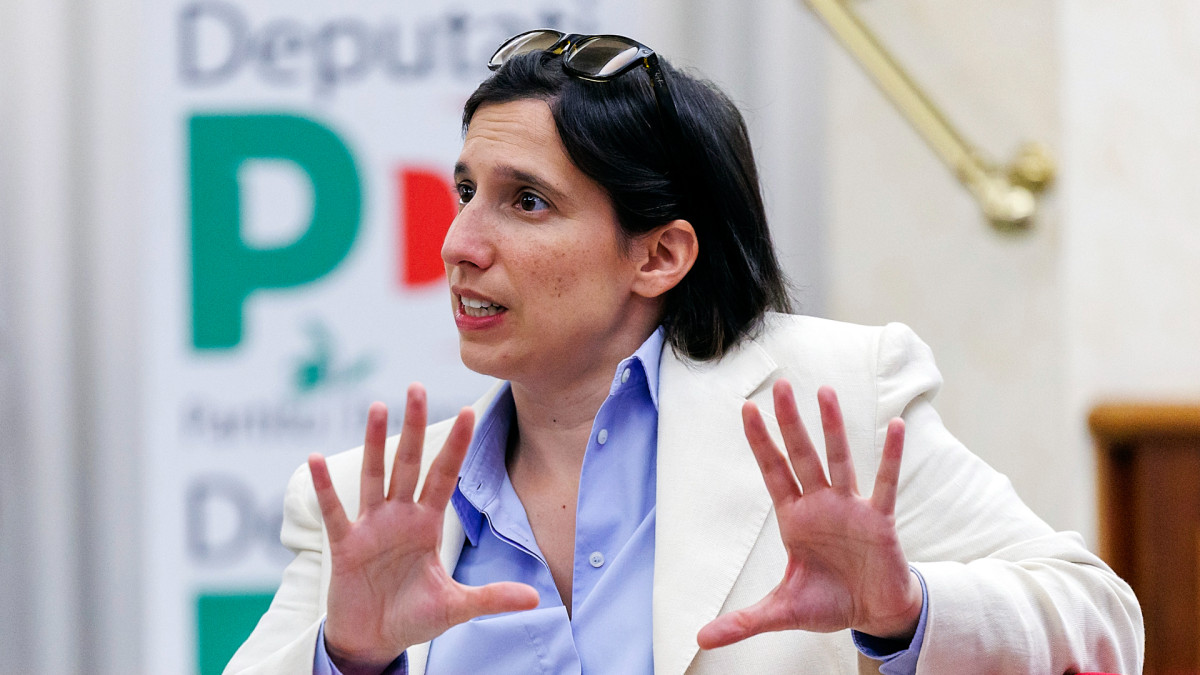
The Democratic leader defends a progressive response to Italy’s wage and social crisis. Photo: Agenda Pública / Francesco Fotia
You said today in the Chamber of Deputies that Italy is not growing. Yet Italy has received Next Generation funds. What has happened? Can it be said that unlike Spain, Italy has not managed to tackle some structural problems hindering productivity and growth?
That’s a crucial question, and one I keep posing to economists, business leaders, and experts. Indeed, the money did arrive.
And one thing is clear: without the PNRR (National Recovery and Resilience Plan), which Giorgia Meloni’s party did not even vote for in Brussels, Italy would already be in recession today. So yes, it has yielded effects. The question is why those effects have not translated into stronger growth.
In my view, this government has not carried out the necessary reforms, because it lacks a strategic vision and because it is internally divided when it comes to confronting corporate interests and deeply rooted structural problems. They also act in an intensely ideological manner. When they came to power, there was a mechanism that worked extraordinarily well: Industry 4.0. If you visit any Italian company, you will see advanced machinery purchased thanks to those incentives. It was a stable system, well known and valued by the business community.
But because it wasn’t their initiative, they chose to remove it and replace it with “Transition 5.0.” And what happened? They announced a reform and took nine months to implement it. The result? Investment paralysis. The same fate befell the PNRR.
“This government has not carried out the necessary reforms, because it lacks a strategic vision and because it is internally divided”
Because it wasn’t a plan designed by them, they insisted on modifying it. But they wasted a tremendous amount of time. The modifications were presented more than a year after they came to power and largely consisted of re-centralizing resources. They cut funds from municipalities and regions that were effectively carrying out projects and redirected them to ministries, which typically spend more slowly.
The move was motivated by the fact that many of those municipalities are governed by the Democratic Party. Meanwhile, they still do not understand that productivity grows through research and innovation. Italy remains a nation that invests a very small share of GDP in research. Today, research is precarious, and this government has made it even more precarious. We train excellent researchers who then leave for abroad.
I also find the Spanish approach to shortening working hours very compelling. You have enacted a law that promotes pilot projects and agreements between firms and unions. We have proposed similar measures, but the government won’t even discuss them. And yet, wherever it has been implemented, productivity has risen. That undermines many neoliberal arguments that remain stuck thirty years in the past.
With artificial intelligence and digital technologies, it is clear that we can work more efficiently and perhaps even shorter hours. But the social pact should distribute the added value produced by these technologies. If we fail to do so, inequalities will widen and wealth, power, and knowledge will become concentrated in an ever-smaller number of hands.
I always say this, even when Spanish media are not in sight. Spain has shown that there is a progressive path to grow while reducing inequality. I discussed this with Pedro Sánchez in Barcelona.
Spain has raised the minimum wage and strengthened workers’ purchasing power. It has also expertly deployed European funds, generating growth, employment, and productivity.
Conversely, Sánchez and Yolanda Díaz reached agreements with unions and companies to drastically reduce temporary work. In Italy, in contrast, more than half of under-24s know nothing but precarious employment.
With a contract that lasts only a month and with uncertainty about whether you’ll have work next month, you cannot become financially independent. You cannot rent a place in Rome, Milan, Florence, Bologna, Naples or Venice. You cannot start a family. And this has direct repercussions for birth rates. Precarity hits particularly hard on young people, women, and the southern regions.
Additionally, there is a lack of public care services for children and the elderly. In the end, women bear the brunt of that invisible labor.
“Sánchez and Yolanda Díaz reached agreements to reduce temporary employment. Meanwhile, in Italy more than half of under-24s know only labour precariousness”
In Spain, there is a serious debate about sharing caregiving responsibilities. We presented a unified opposition platform to extend parental leave. If Spain offers three months, we propose five months, fully funded by the state for both parents. We do not want to compel women to choose between work and family. Yet the government has blocked this proposal, just as it blocked the minimum wage.
It co-opted part of our initiative and labeled it a “fair wage,” but without establishing a mandatory minimum threshold. And so we still have workers earning five euros an hour, needing three jobs to survive.
Spain has also introduced intriguing policies to attract talent. We’ve recently presented a proposal partly inspired by those experiences. I also regard some recommendations in the report prepared by my predecessor, Enrico Letta, on the future of the European single market as highly valuable. In particular, I find the concept of a so-called “28th regime” appealing: a method to simplify and harmonize rules at the European level.
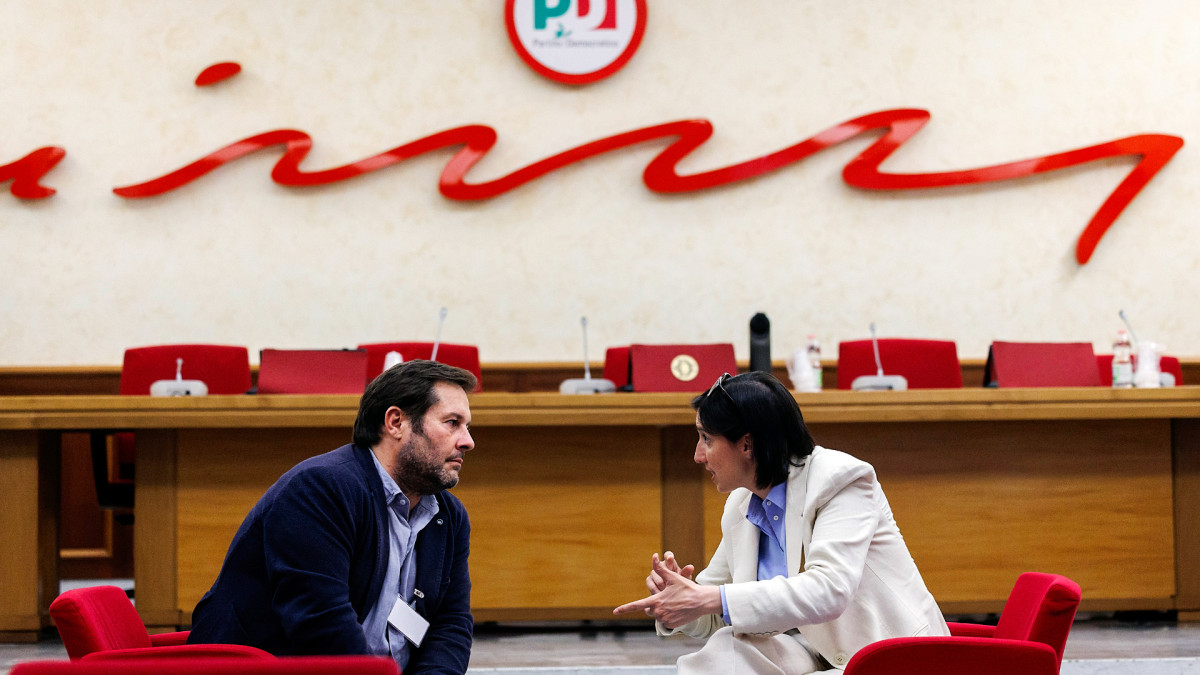
Schlein analyzes the relationship between Meloni, Brussels and the shift in European migration policy. Photo: Agenda Pública / Francesco Fotia
What is unfolding between Ursula von der Leyen and Meloni? There appears to be a distinctive political rapport. Last week Italy secured greater budgetary flexibility.
The first point I want to emphasize is that we have always endorsed more fiscal flexibility. What we criticized was the new Stability Pact, since it replicates old mistakes.
The pandemic experience demonstrated that expansionary policies pay off. And today the geopolitical context is even more intricate than it was then. If Europe does not maintain a path of common investments, it will be squeezed between the United States, Russia, and China.
Europe’s sole option is to leap forward. What I miss is the political bravery we did observe during the pandemic. Then the European Commission suspended the Stability Pact, activated common instruments, and launched the largest shared investment programme in European history.
I am a committed Europeanist. I believe in a federal Europe. And I think we must continue along that trajectory. Meloni is not waging those battles.
“If Europe does not continue with common investments, it will be trapped between the United States, Russia and China”
That said, it is natural for there to be an institutional relationship between the Commission and the Italian government. And it makes sense that a certain degree of flexibility was granted. Yet I also think the Commission responded intelligently to the attacks Meloni directed at Brussels.
Since MeloniCannot present solid economic results, she has returned to an old argument: blaming Europe.
The Commission answered by saying: “Here is fiscal space. Use it.” But not to merely patch energy bills temporarily; rather, to invest in renewables, power grids, and energy storage. It was a very astute political reply.
That said, we belong to the European social-democratic family, and we will not accept a policy of shifting alliances within the European Parliament. If a pro-European majority supports the Commission, that majority must be heard when debates on the green transition or immigration arise.
“Since Meloni cannot present good economic results, she has gone back to an old argument: blaming Europe”
Meloni has boasted about altering European migration policy. In reality, she has moved in the opposite direction. She has abandoned the battle that truly mattered for Italy: a fair distribution of reception responsibilities among all member states, a principle enshrined in the Treaties. Solidarity and equal sharing of responsibilities should be foundational.
Today, seven countries shoulder roughly 80% of all asylum applications in Europe. That was the struggle we consistently defended. I myself worked on reforming the Dublin system between 2014 and 2019 for the European socialist group. We argued that anyone arriving in Italy, Spain, Greece, or Germany is effectively arriving in Europe; therefore, all countries must assume their fair share. Meloni completely abandoned that stance, both for ideological reasons and because she lacked the courage to confront Viktor Orbán.
Nor can she keep using the notorious Albanian migrant reception center as an excuse. It has not become a model for Europe. European rules and the judgments of the Court of Justice made clear that it could not be used to deport asylum seekers as she first intended.
That is why they had to convert it into a detention center for irregular migrants. They move people from Italy to Albania, keep them there, and then have to bring them back to Italy to proceed with expulsion because they cannot be expelled from Albania. It is an absurd arrangement.
According to our calculations, nearly 800 million euros of public money have been spent that could have been used to strengthen security or hire more police officers. The officers end up guarding centers that are nearly empty.
In two years, only 536 individuals have passed through them. Meloni promised there would be 36,000 a year. Let’s do a simple fact-check: if about 200 million has been spent to manage 536 people, the cost exceeds 370,000 euros per person. With that amount, decades of reception in Italy could be funded.
Thank you very much.
