
On May 20, José Manuel Albares travelled to Berlin for a working session with Germany’s new Foreign Minister, Johann Wadephul. Officially, the aim was to reinforce bilateral ties and to tackle items on the European and global agenda, spanning the conflicts in Ukraine and the Middle East to multilateral cooperation. Yet the discussions also carried a much more concrete (and delicate) dimension.
Spain arrived in Berlin guided by two clearly defined diplomatic priorities. The first concerned granting official status within the European Union to Catalan, Basque, and Galician languages; the second focused on how Europe should calibrate its stance on Israel and the Gaza conflict.
According to people familiar with the talks, those two issues dominated much of the ministers’ discussions. On both topics, Madrid faced a negative reception from Berlin.
“The German stance on the co-official languages was of particular significance”
The stance of Germany on the co-official languages was of particular significance. For months, Germany has stood as the principal reference point among those states still voicing legal and financial concerns about the Spanish initiative. Albares himself publicly acknowledged in Berlin that he had discussed the matter “at length” with his German counterpart, though he declined to provide details. Sources from Germany’s Foreign Ministry were more explicit: Berlin “has not altered its position.”
The second disagreement revolved around Israel. The official agenda of the visit explicitly included the Middle East conflicts; on the same day, Albares announced from Berlin a summons of the Israeli chargé d’affaires in Madrid over the treatment of activists aboard the Gaza-bound flotilla, which he described as “monstrous, undignified, and inhumane.” Spain and Germany have been at considerable odds for months over Europe’s response to the war in Gaza and the advisability of increasing political pressure on the Israeli government.
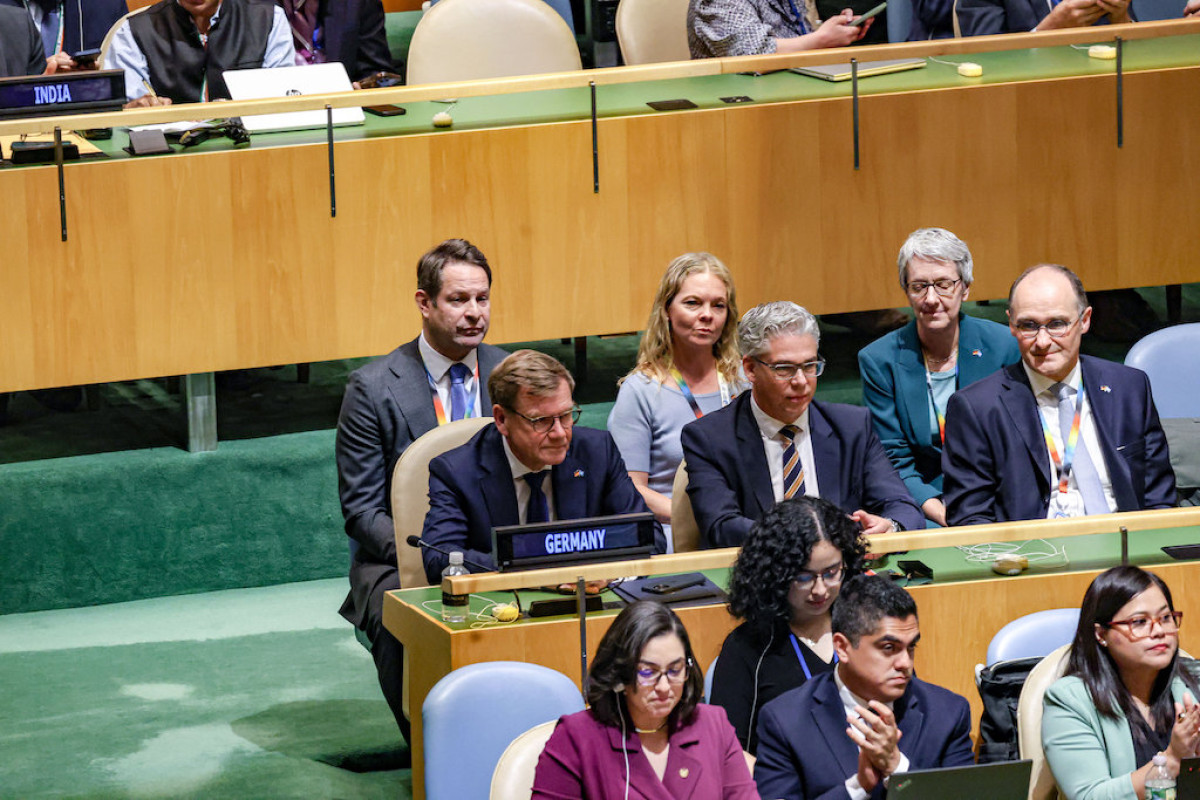
Fifteen days after that meeting, Germany endured a historic diplomatic setback. For the first time in its history, Berlin failed to secure a seat on the United Nations Security Council.
“In some European capitals, people are beginning to ask a different question. Had Germany adequately pursued the backing of its European partners? Or did they assume that support would be granted out of inertia?”
In Germany, the debate has focused on the broader reasons behind that defeat. Whispered discussions center on the worsening relations with the Global South, the level of German support for Ukraine, or the political costs of certain Middle East positions.
Nevertheless, in several European capitals, a different question is taking shape. Was Germany fully engaged in securing the backing of its European partners? Or did it presume that such support would come automatically?
Spain stands out as a telling example of a rising trend in European politics: the disappearance of automatic support. No one knows precisely how Spain voted at the United Nations, because ballots are secret. And frankly, there’s no clear evidence linking bilateral tensions to the outcome of the vote.
Yet diplomacy rarely operates in such isolated compartments. Governments accumulate political capital, or their capital erodes. They either build trust-based relationships or drift apart, often without public notice. By tracing the connections among the positions taken, one can see how seemingly unrelated concerns end up revealing a broader political climate.
Angela Merkel’s Germany could afford to say “no” repeatedly. After all, Germany was the anchor of the European Union. Its economic and political heft meant that, even when disagreements arose, few partners were willing to challenge its leadership.
The Europe of 2026 is a different place. The war in Ukraine has heightened sensitivities across nations. Industrial policies have reignited competition among member states. The Middle East has exposed deep-seated political divides within the Union. And the logic of partner relations has become far more transactional.
In this new setting, national priorities carry more weight than ever. For the government of Pedro Sánchez, the official status of the co-official languages has become a matter of political identity and European credibility. It’s not merely another issue, but a highly visible facet of Spanish foreign policy closely tied to the support of Junts.
The Israel question is equally central. Spain has made the defense of international law and its firmer stance toward the Netanyahu administration a defining feature of its foreign strategy.
It was precisely on these matters where the Berlin discussions showed that their outlooks still diverged.
For this reason, the lingering question after Germany’s UN setback goes beyond Spain. It is time to ask whether Germany has grasped the extent to which its partners’ priorities can no longer be treated as secondary issues.
“The Germans have an expression for this kind of situation: ‘Misere auf hohem Niveau’ — lamenting from a position of privilege — the paradox of someone who stays in a privileged stance yet discovers that some advantages are no longer automatic”
Germany’s setback at the Security Council doesn’t diminish its economic weight or its central role in Europe. Yet it suggests that even the continent’s leading power can no longer count on automatic political backing from others.
The Germans themselves use the phrase Misere auf hohem Niveau — lamenting from a position of privilege —. The paradox of someone who remains in a privileged position but discovers that some advantages are no longer automatic.
Perhaps that is precisely what happened at the United Nations. Germany remains a crucial European power, but Europe in 2026 no longer operates on the basis of implicit deference or automatic support. Even Berlin must persuade, negotiate, and listen.
Because European leadership has evolved, and because being indispensable is no longer sufficient. Today, it is also necessary to convince others that our priorities truly matter. When Berlin sought backing for one of its major diplomatic aims, did it take the time to genuinely hear the priorities of its closest partners?
