

China’s enigmas remain fairly inscrutable to the European observer, which is why I joined a visit by the European Parliament to Beijing and Wuhan during the last week of May. I sought a degree of certainty that would help me revise my initial impression of the country, formed when I attended a seminar in Shanghai in the spring of 2012 at the Europe-China Business School (CEIBS) while pursuing my Master’s degree in Business Administration and Management at IESE. I now feel it is essential to share with the people I represent some of the impressions gathered during this recent institutional visit.
My first observations, to be followed by a second update, are divided into two parts: a succinct reading of the drivers behind China’s strong economic growth from the 1980s to the present decade; and then an analysis of the challenges now facing the Chinese economy, which has seen its growth rate cut in half compared with earlier periods of expansion. In this section I address the issue of “involution” as identified by Chinese authorities themselves, along with the principal components of the 15th Five-Year Plan that aims to correct that problem.
In a subsequent installment, I’ll provide a brief political overview of China and propose a possible response by the European Union. But for now, we begin with the fundamentals.
Jonás Fernández, MEP and S&D coordinator in the European Parliament’s committee on economic affairs, during his visit to China. Photo: European Parliament
How did we get here?
In political, economic, and social terms, China in recent decades has built and consolidated a prominent role on the world stage, reclaiming a position it historically held prior to the Modern Age. At a time when Europe was voyaging across the seas to establish global dominions, China under the Ming dynasty chose isolation, banning shipbuilding, restricting foreign trade, and curtailing maritime ventures. Given the divergent trajectories of Europe—great discoveries, the Enlightenment, liberal revolutions on both sides of the Atlantic, and the industrial revolution—China’s isolation contributed to a century of humiliation at the hands of the emerging Western powers, including the so‑called ‘opium wars’, which left the once-mighty Qing dynasty weakened by external pressures as well as internal contradictions.
After the fall of that centuries‑old dynasty in 1912, China endured long stretches of civil wars and internal fragmentation. It also faced continental occupations, notably by Imperial Japan and Russia – a labyrinth from which it finally emerged through the victory of the Communist Party and the proclamation of the People’s Republic of China in 1949, thereafter entering another era of significant instability under Mao Zedong.
In political, economic, and social terms, China in recent decades has built and consolidated a prominent role in the international sphere
In his early years at the helm, and with Soviet support, Mao Zedong oversaw a vigorous period of industrialization; later, he again plunged the country into prolonged chaos. From the Hundred Flowers Campaign (1956-1957) to the Great Leap Forward (1958-1962) to the Cultural Revolution (1966-1976), he ended up wreaking havoc across the country. Another political leader so enduring and so completely deranged in the exercise of power would be hard to find.
Thus by the end of the 1970s, China stood essentially as a wasteland marked by famine and repression. Within that mire, only Zhou Enlai – who safeguarded his position during the Cultural Revolution – managed to sustain a minimal order and a vision of China’s role in the world. Even so, the country hit rock‑bottom after more than a century of decadence, domination, fragmentation, chaos, daydreams, and underdevelopment.
The ascent of Deng Xiaoping signified a drastic reorientation that was framed in economic terms through the euphemism “socialism with Chinese characteristics” – signaling an openness to markets and a tilt toward capitalism while keeping the Communist Party in control. The core problem to be addressed was not merely the shift from a planned economy to a market economy (as in the Soviet Union) but the ground‑up construction of an orderly economic model that Mao had left undeveloped for decades. Undoubtedly, that leader had fixated on grand schemes and perpetual revolutions rather than the country’s economic advancement, perhaps in pursuit of a Chinese “new man” under an Orientalist-Marxist teleology.
Deng Xiaoping steered China into capitalism almost from scratch. This was a clumsy process but arguably simpler than the dismantling of the Soviet economy in Russia, which required a bureaucratic-administrative framework that Mao Zedong’s China did not possess. On the other hand, while the Soviets sought modernization through perestroika and glasnost, Deng Xiaoping focused intensely on opening markets, not transforming the autocratic regime, but making its functioning more predictable. Those differences—the distinct initial conditions in the Soviet Union and China, plus varying degrees of reformist ambition—help illuminate the divergent trajectories of those two countries from the 1980s onward.
The coming to power of Deng Xiaoping meant a drastic reorientation that was framed in economic terms through the euphemism ‘socialism with Chinese characteristics’
The acceptance by China of capitalism, tempered by gradualism, from the early days under Deng until China’s entry into the World Trade Organization (2001) under Jiang Zemin, unleashed decades of rapid growth. This evolution—from self-sufficiency to market development and global integration—was also experienced by other nations on their path to prosperity. Japan, South Korea, and Spain likewise saw explosive growth during liberalization, as in Spain’s Stabilization Plan of 1959. That phase involved shifting workers from the primary sector and rural areas—where productivity was sometimes negative—toward new industries led and financed by the public sector. The abundant “idle” labor in rural areas migrated to cities and factories, driving growth.
Again, this pattern of growth is not unique to China, and its longevity depends on how far a country is from fully exploiting its “idle” resources when liberalization begins, as well as how many resources it can mobilize. At the same time, those processes are prone to emerging imbalances (political, economic, and social) that ultimately shape their success.
China began this journey with almost nothing. Its vast population—around a billion at the outset and growing steadily until recently—enabled a shift of rural workers into manufacturing, lifting productivity over several decades from the 1980s to the early 2020s. The so‑called Asian Tigers and Spain experienced shorter bursts of hyper‑growth, in part because their stock of idle resources was far smaller in nominal terms.
This reading of China’s economic ascent should not diminish the recognition of the skill with which Communist Party authorities have steered the country’s expansion for so long, given its enormous size. As noted, these stages of development also generate new strains. Internal tensions that have surfaced lately—political friction over rural‑to‑urban migration, the building of public services capable of preventing social fracture and instability, and the institutional involvement of diverse interest groups—reveal an extraordinary capacity to adapt. Nonetheless, China’s economic success appears to lack a revolutionary theory of economic policy capable of overturning established academic paradigms.
Under that reading of China’s development, we can ask: how long will this last? Will China be able to sustain the growth rates that have pulled hundreds of millions out of extreme poverty while maintaining autocratic legitimacy, or will it fall into a “middle‑income trap” that has ensnared other rising economies, turning broad consent into disaffection?
Given China’s global sway, the scenarios we must grapple with in the coming years hinge on answering that question—and on the policies and accommodations Europe fashions with the renewed Middle Kingdom.
That economic success seems to lack a revolutionary theory of economic policy capable of overturning prior academic paradigms
In my view, China has already entered a phase of economic slowdown, as current growth figures indicate. At the same time, sectoral and financial bubbles are emerging as a consequence of the country’s dirigiste approach. Consequently, growth will continue to moderate as we await evidence of whether the authorities will again reorient their economic policy—above all to offset the losses accrued by industrial priorities that have failed economically.
I do not foresee a recession or a systemic crisis. Given the opacity of information in China, future developments remain uncertain. But for the time being, the signs do not suggest that the obstacles to growth will be overcome quickly; nor are there motifs on the horizon of new programs as ambitious as those launched by Deng in the 1980s. We must await further developments.
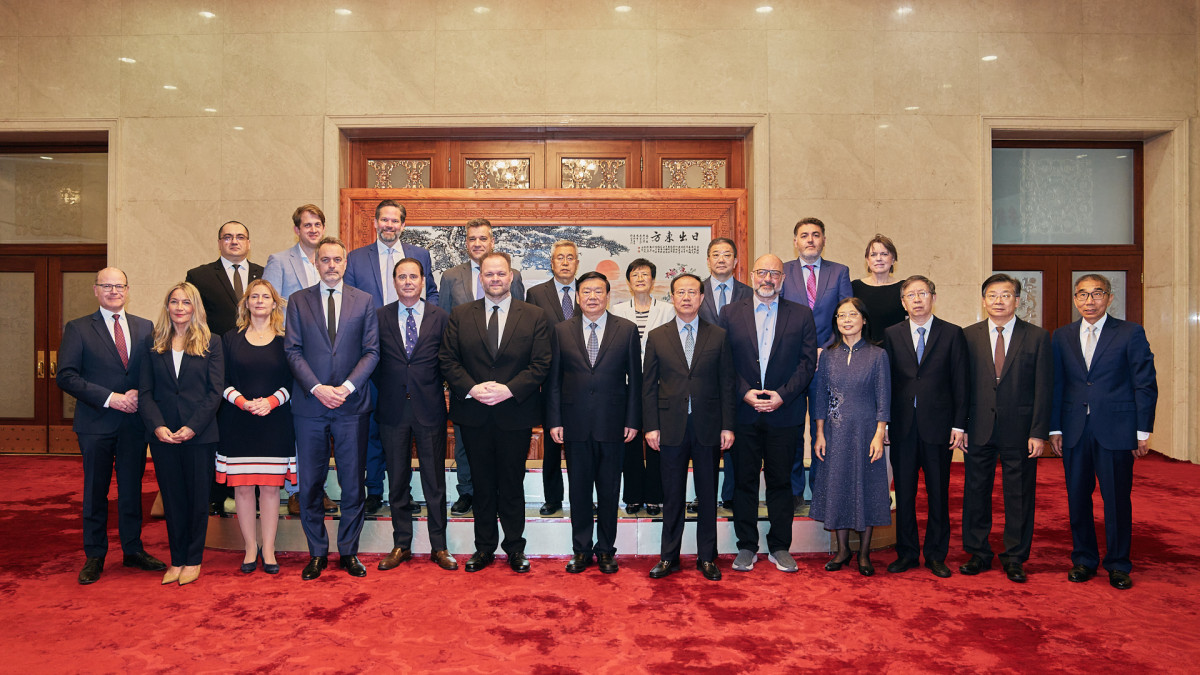
The Third EU-China Interparliamentary Meeting in Beijing, with interlocutors from the Chinese National People’s Congress. Photo: European Parliament
A preliminary analysis of the Government’s economic plans
Demographics always prevail. China reached its peak population in 2021-2022, at more than 1.4 billion, but the problems it is facing today feel all too familiar. The present fertility rate hovers around one child per woman of reproductive age, signaling a population decline toward perhaps 1.3 billion by 2050 and potentially shrinking to between 600 and 800 million by the end of the century. Revisions to the one‑child policy and current efforts to spur birth rates have collided with economic and cultural barriers that hinder reversing these trends. Also, youth unemployment runs around 16%, which forecasts delays in starting families and thus motherhood.
For the time being, signs are not indicating that the obstacles to economic growth present in China will be quickly overcome
First, China is beginning to confront scarcity in a key production factor—its population; and its mechanism for moving workers from rural to industrial life has reached its limit. The demographic dividend that sustained the economy for several decades is fading, and the opposite effect—a demographic winter—is already being anticipated.
Second, China’s top‑down economic policies—
Similarly, excessive investment in housing has left real estate debt on bank balance sheets, and this cleanup remains incomplete. The State has attempted to absorb some bank losses (notably through local credit institutions under public control) by transferring non‑performing loans to the central government to preserve credit flow. But official figures do not reflect a rise in mortgage defaults in step with the collapse in housing prices, which casts serious doubt on the success of balance‑sheet cleanups and has pushed up the public debt burden borne by the State.
That sharp collapse in real estate values has been depreciating the main savings asset of Chinese households
This environment of zero or negative inflation signals the fragility of domestic demand as a whole—another casualty of dirigiste industrial policies, where investments have not been matched by demand, and which may intensify in coming years, with spillovers to the rest of the world via the current account balances.
This reality is particularly evident in sectors such as renewable energy. China has an installed solar capacity that is double the present global demand, and demand remains too weak to absorb the level of investment the Government has encouraged in recent years. As a result, prices are falling, the sector posts multi‑billion‑dollar losses, and the workforce in some firms has contracted by more than a third. Behind these issues lie unpaid loans issued by state‑owned financial institutions, with defaults not yet reflected on bank balance sheets, thereby delaying the resolution of a significant problem for the nation’s financial stability.
Some may argue that such overcapacity will yield profits later, justified by infant‑industry protection theories. Yet when installed capacity is twice global demand, it is impossible to exploit falling average costs and recover current losses in the near term. Private analysts now contend that the sector must reduce its installed capacity to roughly 20–30% of its present level to restore profitability for firms.
In the near term, foreign exports are surging, seeking demand that is not available domestically, but at prices well below production costs, which only inflates losses. In this sense, China is dominating the global solar‑panel market, yet its leadership has come at the expense of value destruction. Meanwhile, consumers in other parts of the world benefit from subsidies via China’s industrial policy, but those same exports can act as destructive forces on the industrial fabric of the rest of the world, bringing about negative economic and political repercussions.
On one side, China’s industrial policy incorporates elements of competition between firms and regions in the micro‑allocation of public support (credit, taxes, regulation, etc.); on the other, macro‑level political decisions about how resources are allocated have begun to show inconsistencies.
When an economy is far from the frontier of its production possibilities, misallocations of resources produce a relatively small drag on growth. It is always preferable to do something rather than nothing, but when a country has already reached a middle‑income stage and is operating at full capacity, diverting resources from those more productive investments to less productive ones takes a heavy toll on growth and living standards.
Thus, all that glitters in the execution of China’s industrial policy is not gold, as European observers sometimes believe. Investments in batteries, electric vehicles, steel, cement, wind turbines, high‑speed rail infrastructure, and other sectors are showing similar problems: lower or negative profitability, with overcapacity that the market cannot absorb within a reasonable time frame, thereby fostering deflation, rising defaults, and banking instability while destabilizing patterns of international trade.
It should be noted that every economy carries excess capacity in the goods or services it exports, so Chinese authorities are right to resist discussing the overcapacity of their economy. Spain, for example, has excess capacity in tourism. This is not a problem if those exports underpin the profitability of investments already made. But if exports stem from investments that cannot be profitable at home, yet are made profitable abroad by pricing below actual costs, then the issue is not overcapacity but value destruction. That phenomenon—which arises frequently in discussions with Chinese authorities—has come to be called ‘involution’.
All that glitters in the implementation of China’s industrial policy is not gold, as the public debate in Europe sometimes perceives it
Despite a sound diagnosis of the disease, Chinese authorities have evidently misidentified its causes—at least during the meetings conducted on our official mission. According to our Chinese interlocutors, involution results from predatory competition among companies operating in those markets, a battle for market share that drives prices below costs. Under that argument, the causes lie in exceedingly intense levels of competition.
However, in sectors favored by the authorities through vertical and dirigiste industrial policies, excess supply is precisely the outcome of those policies. Suspecting that fierce competition is responsible for falling prices resembles campaigns against ‘speculators’ that can arise when a government imposes a maximum price on an imported good, inevitably producing shortages and black markets.
The Chinese authorities are right to stress the difference between ordinary overcapacity and involution, but they are mistaken about the root causes of the disease. Consequently, they have not adjusted their industrial policy roadmap in the current five‑year plan, choosing instead to redirect the sectors that will receive similar forms of support.
On the macroeconomic front, the Government aims to bolster domestic demand, chiefly through consumption, to counteract deflationary pressures and to render existing investments profitable. In this light, it seeks to reduce the current account surplus, while easing tensions in international trade that have been fed by protectionist moves elsewhere. To these ends, a broader social‑policy framework has been proposed, extending birth subsidies and strengthening public pension systems—an approach designed to dampen the propensity to save, a tendency accelerated by the ongoing real estate crisis.
The Chinese authorities are right to insist on differentiating between ordinary overcapacity and problems of ‘involution’
Nevertheless, reducing the current account surplus must be paired with addressing the deficit in the capital and financial account. In other words, facilitating capital flows between Chinese households and firms and the rest of the world via more open financial markets and foreign investment is essential.
In other words, the overall balance of the current account should be aligned with the balance of the capital and financial account—not merely through trade numbers but through a mirrored flow of capital. This accounting identity is not a theory or a valuation, but a practical truth: a decrease in the trade surplus must go hand in hand with a reduction in the deficit in financial relations with the rest of the world. Therefore, the authorities must foster net capital inflows to China. Attempting to adjust only one side of this accounting identity (the current account) without corresponding measures on the other (the capital and financial account) will influence only export and import volumes, not their net balance.
To achieve the objective of shrinking the current account surplus, the Chinese authorities must advance reforms that liberalize financial flows and attract foreign direct investment. So far, I have heard no concrete proposals in this direction. The relaxation of foreign investment controls under the CCP’s corporate‑control framework is likely at odds with such liberalization.
Without a policy to accompany capital flows, it will be impossible for China to reduce its current account surplus; any plan to stimulate consumption that raises imports will also raise exports, resulting in the same absolute net balance as the capital and financial account and preserving the same current imbalance.
Moreover, the aging population—coupled with current deflationary pressures, high youth unemployment, and weak social protections—will necessitate a public boost to domestic demand and broad institutional reforms that would be difficult to implement. In my meetings with Chinese officials, when I asked about the need to deploy social security worthy of the name to lower savings rates, my interlocutors stated that they did not intend to build a “society of irresponsible people.”
That response—which would delight some European neoliberals—reminded me of a European official who described the cultural influence of the Chinese approach to social policy as “Calvinist communism.” This is not, from a strictly intellectual standpoint, the best starting point for advancing active policies that would reinforce income distribution—measures that, in any case, do not appear on the Chinese Communist Party’s program.
Without a plan to liberalize capital flows and with only a modest policy to accelerate consumption, I would not bet on a correction in the country’s macro variables, nor on a fundamental shift in its growth model from export‑driven to domestic‑demand–driven growth—an adjustment China must pursue to reorient its economic model and international trade to limit the negative effects of its industrial decline.
To my question about the need to deploy social security worthy of the name, in order to reduce savings rates, my interlocutors stated that they did not seek to create a ‘society of irresponsible people’
Moreover, the boost in demand from the public sector should redirect a portion of its budget toward implementing new social policies rather than continuing to favor industrial investments. Yet, the current five‑year plan does not include a thorough revision of the budget; although it reaffirms sectoral commitments, it offers no substantial change in how these policies are implemented.
Undoubtedly, regional and corporate competition under a dirigiste industrial policy reduces inefficiencies when the supported territories and firms are chosen by the public sector; those inefficiencies cost less when an economy is distant from the frontier of its productive possibilities, but they can become fatal when resources are already fully employed.
Nevertheless, the existing costs within the Chinese economy—from a real estate gamble reliant on demand that never fully materialized to investments in renewable energy and other sectors where installed capacity far exceeds not only Chinese but global demand—point to growing concerns about the sustainability of current growth rates.
Some of these new bets may eventually succeed and could see China taking the lead in particular sectors on the world stage. However, the overinvestment this implies, the involution it entails (the destruction of value with sales below cost), and the absence of a sustainable learning trajectory—do not inspire an especially optimistic outlook for China’s near future.
In short, without institutional reforms that ensure public provision of essential services (education, health, pensions) and reduce the savings pull of households, a trend that aging will likely amplify, along with a shift in public demand from investment to spending (from industrial policy to social policy), the transition from an economy focused on investment and exports to one driven by domestic consumption will not be achievable. Nor will it be viable without policies that balance financial markets and accompany the adjustment of the current account with corresponding changes in the capital and financial account.
Therefore, the problems of involution, whose causes have not been well identified by Chinese authorities, and which are currently hindering increases in China’s growth and welfare rates, will not be solved quickly—and the destabilizing effects on global trade resulting from that same involution will not disappear soon either.
