
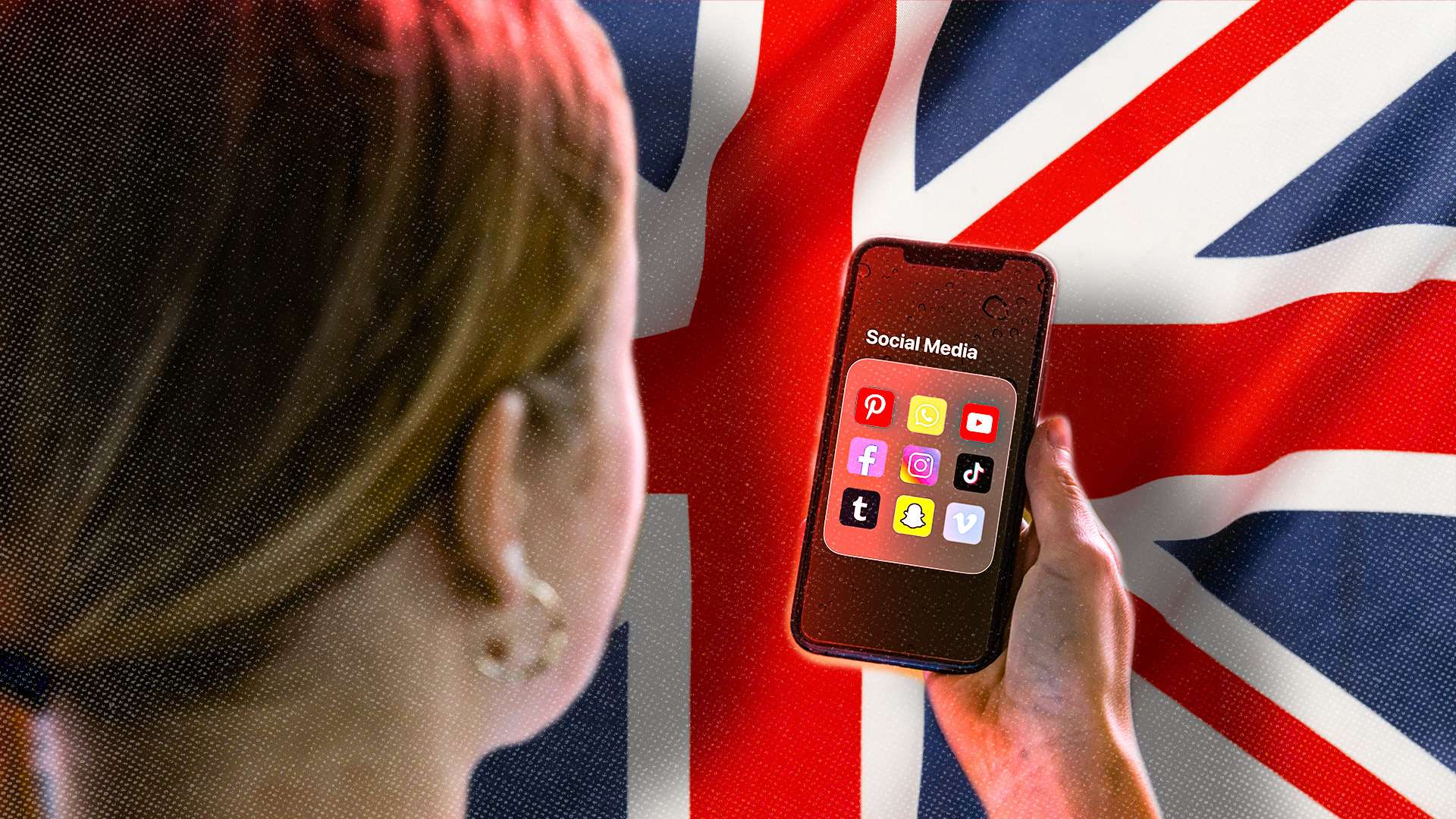
Britain is charting a course alongside Australia by embracing a policy that has already shown difficulties in keeping children off social media, while imposing intrusive age verifications on adults.
The United Kingdom announced on Monday that it would become the second nation to prohibit social media use by anyone aged 15 and under. Speaking at a press conference, Prime Minister Keir Starmer said that governments must make choices, and that in his view a comprehensive ban is the correct path.
“Every parent can see it with their own eyes. Social networks are making children unhappy. They make it easier for bullies to threaten and abuse them,” Starmer said. “And they could harm their mental health by exposing youngsters to content that grabs attention and keeps them scrolling. It’s designed to be addictive.”
The ban, slated to take effect next year, would apply to a selected set of “user-to-user” apps, including TikTok, X, YouTube, Instagram, Facebook, Reddit, and Snapchat. The government has not yet published the full list of platforms covered.
The government is also weighing overnight curfews and breaks in infinite scrolling for those under 19, with more details due in July, according to the BBC. This could mean that 16- and 17-year-olds—who can already legally engage in sexual activity, work, and pay taxes, and whom the government hopes to allow to vote—would not be allowed to access social media during late hours.
The method of enforcement remains uncertain. Australia, the only other country to have introduced a ban restricting under-16 access to social media, has struggled to implement it. A survey conducted by Australia’s eSafety Commissioner found that around 70 percent of children who already had accounts on Instagram, Snapchat, TikTok, or Facebook still retained them after the ban came into effect.
Regardless of how it is enforced, one certainty is that the policy would intrude on the privacy of all British internet users. The government cannot exclude children from social media without asking everyone else to prove they are not children. Ofcom, Britain’s communications regulator, notes in its guidance under the Online Safety Act that age checks can involve facial age estimation, open banking, digital identity services, credit card checks, email-based age estimation, mobile network verifications, and photo-ID matching.
Civil liberties groups have warned of privacy risks. Responding to the government’s announcement, Jack Coulson, head of advocacy at Big Brother Watch, argued that people will face a “papers, please” demand to go online, and that the proposals would compel the public to rely on sensitive identity documents with a history of leaks and hacks.
Nevertheless, critics say the plan seems to have been crafted by people with little understanding of how teenagers actually use the internet. A European survey of 13- to 18-year-olds found that, on average, 74 percent of teenagers reported watching YouTube videos to learn something for school, while 71 percent used YouTube for learning outside of school or for enjoyment.
“My son is passionate about classical music,” wrote author and journalist Stephen Pollard on X. “He is a gifted cellist who aspires to be a professional musician. He spends hours watching performances on YouTube—gaining insights into a career he hopes to pursue. If the ban goes ahead, he would have to break the law to keep accessing these performances and lectures that aren’t available elsewhere. It’s utterly mad.”
Social media also serves as a lifeline for maintaining connections with friends and family. An Ofcom report indicates that almost three-quarters of 13- to 17-year-olds who use social media say it helps them feel closer to their friends. A majority of both girls (71 percent) and boys (60 percent) see online activity as beneficial for building and sustaining friendships.
In the lead-up to the ban, the government conducted a three-month public consultation that it said was necessary to gather evidence. Now, critics see it as a retroactive justification. Among the parents who responded, about 90 percent supported a minimum age for children to access social media. Yet a consultation is not a poll, and respondents do not form a representative sample of British parents. Those motivated enough to respond to a government consultation on children’s social media use are likely to hold stronger views and be more supportive of restrictions than the average parent.
Parents, of course, are entitled to make different choices for their own children. If a parent wants to remove YouTube or other apps from their child, that remains their decision. However, those children who the ban is intended to shield do not seem particularly convinced. In a BBC interview with a room full of 11- to 14-year-olds, a presenter asked those who supported the ban to raise their hands, and none did. One student, Isabella, suggested she did not think the measure would actually happen, adding that she expected the prime minister to “give it more time or more consideration.” Her main concern was losing a way to contact friends, parents, and family. When asked how she would fill her newly found free time, Isabella replied succinctly: “stare at a wall.”
