
Who currently guarantees the liberal international order?
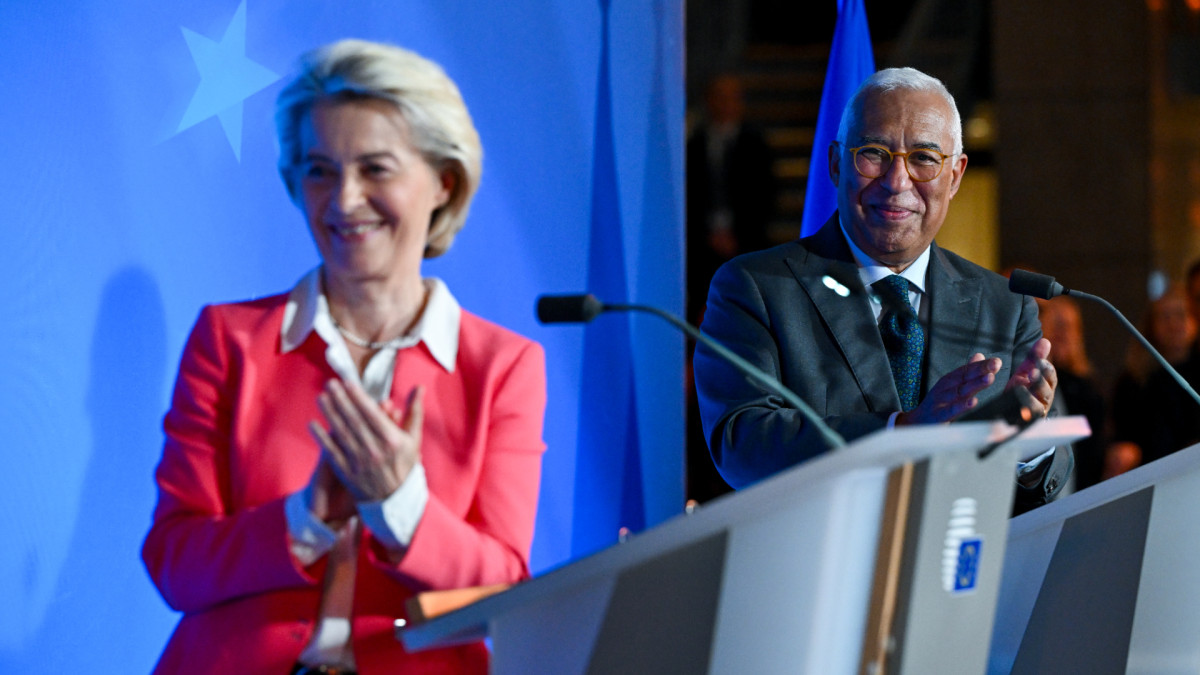
The problem is that both players capture only a part of the reality. Von der Leyen rightly senses that the strategic environment has changed. Costa is right in insisting that, without international law, the world increasingly resembles a jungle. The deeper question, however, is not semantic, moral, or legal. It is material. The key is not merely to determine whether the liberal international order is in crisis, but who guarantees it and who is willing to bear the costs of defending it when others challenge it by force.
“Rules matter. A lot. They work better, moreover, when there is enough power behind them to back them up and to make violators pay.”
It’s worth starting from a simple idea that Europe often forgets. International orders are far from being catalogs of principles or systems that endure merely through the force of legality. They are, above all, orders: relatively stable political arrangements backed by a particular distribution of power, by institutions that crystallize that balance of forces, and by actors capable of arbitrating disputes, imposing costs, and containing violent revisions of the status quo. Rules matter. A lot. They work better, moreover, when there is enough power behind them to back them up and to make violators pay. International law becomes more persuasive when it does not rely solely on words.
That was, in essence, the liberal international order. Not just a web of norms, alliances, institutions, and economic openness, but also a system backed by the primacy of the United States. The rules mattered, of course, because behind them stood a power with the capacity and will to uphold them. Europe could thus present itself as a normative power, focused on markets, integration, regulation, and the law, because its ultimate security rested on an external strategic umbrella. While that umbrella existed, the European exception was viable.
That reveals the major problem today. Europe speaks of the crisis of the liberal order as if it were only a normative erosion. In reality, it is witnessing a crisis of the guarantor. The problem isn’t just that Russia breaches borders, that China shifts balances, or that the Middle East rekindles fires. The problem is that the United States, the power that underpinned the Western architecture, no longer seems willing to perform that role with the same predictability or the same sense of systemic responsibility. Under Trump, it appears not only as a less reliable guarantor, but also as a power that questions substantial aspects of the very order it once supported. It may remain the decisive power, though it no longer acts as if guaranteeing that order were a permanent and unquestioned obligation. When the guarantor wavers or begins to reassess what it protected, the order frays even if the rules remain written in the treaties.
Can the EU defend that order without its own military power?
Seen this way, the European problem is not a lack of discourse about the liberal order, but a lack of power to preserve it. Europe seeks to defend an order for which it does not yet possess the necessary strength. For years it was said that the bloc was a economic behemoth and a military dwarf. The equation remains essentially true, with caveats: the EU is an economic power, though its relative weight has diminished, and it struggles to translate that weight into strategic capability. It can regulate, sanction, negotiate, finance, and set standards; when it comes to coercion, deterrence, or war, it is not a power.
“The EU can finance, coordinate and incentivize the consolidation of a common market. It cannot decide who fights, who commands, or who bears the political and strategic cost of employing force”
That is why it is wise not to be dazzled by Brussels rhetoric. ReArm Europe/Readiness 2030 does not turn the EU into a military power. They can mobilize resources, loosen investment rules, push joint purchases, strengthen mobility, or shore up the European defense technology-industrial base. All that matters, though it does not resolve the central question. Defense remains an intergovernmental domain and, therefore, remains in the hands of the States. The EU can finance, coordinate and incentivize the consolidation of a common market. It cannot decide who fights, who commands, or who bears the political and strategic cost of employing force.
This does not make the industrial agenda irrelevant; it simply requires not confusing an industrial base with military power. It is not the same to produce more, integrate markets, or enlarge arsenals as to command political authority, to lead, or to have the capacity to employ force. Power is not measured only by platforms or munitions, but by military capabilities. The first is necessary; the second remains absent. And in a power-politics world, military power remains decisive: to deter adversaries, to respond to coercion, and to translate economic influence into strategic capability. Europe can prepare more effectively, no doubt. Today, it remains a major economic and regulatory power that has not solved its military dependency.
The nuclear issue makes this problem even more evident. For decades, the debate stood in the shade under the American umbrella. Hence the French pivot is revealing. Emmanuel Macron has opened the door to closer cooperation with European partners and to a degree of Europeanization of its nuclear deterrent. The essential limit, however, remains: France will continue to reserve the final decision on whether to deploy its atomic arsenal. The political cover can be partly Europeanized; the ultimate control over the arsenal cannot.
Moreover, Mark Rutte himself stated it with unusual clarity: no matter how far the French initiative progresses, the ultimate guarantee of European security remains the U.S. nuclear umbrella. That line sums up the limit of the current debate. The French proposal may strengthen the European pillar of extended deterrence, but it cannot replace, at least for now, the United States. The problem of the guarantor is not only about capability; it is chiefly about credibility. Whether allies truly believe that someone will assume the ultimate risk on their behalf. And the EU still lacks that credibility. It does not depend solely on the nuclear instrument. It also hinges on the solidity of the conventional and sub-nuclear tier, on political coherence, and on the overall ability to endure a crisis. Extended deterrence, at heart, is not just about crossing the atomic threshold but about the confidence inspired by the entire posture.
“The real European problem is that it wants to keep speaking as a normative power in a world where norms survive better when backed by force. And that force is what the EU does not have”
Here the Costa–Von der Leyen exchange reappears from another angle. Costa is right to remind that without norms, without the United Nations Charter, and without international law, there is no order, only pure competition. Von der Leyen is also right to suggest that that language is no longer enough to protect Europe in a more hostile environment. The mistake is to present both intuitions as if they were incompatible. They do not have to be. The real European problem is that it wants to keep speaking as a normative power in a world where norms survive better when backed by force. And that force the EU does not yet have. Perhaps it has not even truly decided whether it wants to have it.
That is why the European dilemma is not about choosing between values and interests, or between law and realism. The real dilemma is whether Europe is willing to turn part of its wealth, its market, and its legitimacy into sources of power. Not to abandon its normative identity, but to prevent that identity from becoming a refined form of impotence. While the United States acted as guarantor, European shortcomings could be glossed over. When the guarantor wavers, reality returns unadorned: words matter; they weigh less when there is no force behind them to enforce them.
