
Our criminal justice system has lately been subjected to a stress test that undermines society’s confidence in its quality, impartiality, and even its probity. Undoubtedly, the unhealthy practice of politicizing justice and judicializing politics has a lot to do with this. But there are, and not insignificantly, many judicial decisions that are incomprehensible to the public—instructions given at different speeds, investigations conducted in a biased manner, or statements in very preliminary stages of the process that resemble early verdicts more than anything else.
The cocktail is undoubtedly explosive and feeds the headlines of the press, whether to damage a political rival or to criticize judicial decisions without even reading them. Both phenomena should worry us because they undermine the country’s democratic quality and the trust placed in one of its central institutions: the Administration of Justice.
Nevertheless, the quality of the Administration of Justice has never been a matter of interest for successive governments over these fifty years of democracy. It has certainly not been a priority when it comes to investing resources (it is enough to recall that the average number of judges per one hundred thousand inhabitants in OECD countries is seventeen, Germany has twenty-two, and Spain only eleven, to give a sense). Nor has it been a priority to undertake reforms essential to the system’s quality.
“They suffer the democratic quality of the country and the trust in one of its central institutions: the Administration of Justice”
In the face of inexplicable judicial decisions, including some that are more embarrassing than enlightening, we are now seeing how the political parties that support the Government tend to tear their garments, talk about lawfare, or even about prevarication. Obviously, all of this can happen, but beyond individual decisions, I am far more concerned by the systemic dysfunctions that hinder proper functioning, which affect the ordinary citizen as well.
These systemic dysfunctions demand reforms that have not been tackled, not even by this Government. They are as urgent as they are difficult, including some that would likely not have the support of the majority of the judiciary itself. But perhaps the price would have been low for a Government that has seen the judiciary—without addressing these pending reforms—organize strikes and even work stoppages with robes at the doors of the courthouses. Allow me to mention ten of them that, in my view, are pending, urgent, and necessary reforms for the improvement of our justice system in general, and criminal justice in particular. I will present them from the most general to the most specific:
1) Stop the proliferation of private universities lacking quality assurances and rethink and strengthen the training of law graduates at existing universities. A high-quality judicial process with all guarantees cannot be achieved without ensuring that all participants, including the bar, have proper training. Curriculum, teaching methods, and assessment tools are today outdated, and the quality of training for entrants and graduates is frankly improvable. This has long been the case, but it demands even more effort in the age of artificial intelligence. The concern should not be whether this tool is used, but whether future professionals have the proper training to work with it.
“Perhaps the price would have been low for a Government that has seen how the judiciary, without addressing those pending reforms, has organized strikes and even stoppages”
2) Undertake a deep reform of the system for accessing the judiciary (and the Public Prosecutor’s Office, the State Bar, and other high state bodies): the current system is essentially memoristic, belonging to a legal framework and a society that no longer exist. It requires years of study to memorize a syllabus that should be thoroughly reviewed as well. Beyond the difficulty of meeting this challenge for those lacking resources to sustain themselves during those years or to pay tutors (aspects now mitigated by a scholarship system and a public training academy), the system serves to select future judges based on memory rather than on useful competencies for their function. Proponents often argue that it is an objective, non-politicized selection system, but it would also be objective if we selected future judges on the basis of their height. We should be able to design a system that combines the maximum possible objectivity with an evaluation of the competencies a person in a judging role must have in today’s world.
3) Implement a new system for continuing education, with real incentives and requirements for judges to update their knowledge throughout their professional careers. That should include, of course, a genuine licensing system for studies, a modern training offering provided by the Judiciary itself, in collaboration with universities, and the consideration of that training in the promotion of judges. The current Spanish judiciary is extremely closed in its training: applicants pay (often covertly to the tax office) tutors who are judges, and most continuing education courses are taught by judges and magistrates. This guarantees the transmission of a certain corporate ideology, but it makes it very difficult for judges to draw on new non-legal knowledge, new legal theories, and to refresh what they memorized many years ago.
“A high-quality judicial process with all guarantees cannot be achieved without ensuring that all participants, including the bar, have the proper training”
4) Reform the Organic Law of the Judiciary, establishing genuine merit and capacity criteria for appointments to government posts or for access to the high courts of justice of the autonomous communities and to the Supreme Court. For years we have seen political parties fight for control of the General Council of the Judiciary, especially because that allows them to introduce covert political criteria for appointing magistrates to those courts. There is nothing to stop regulating by law a system of appointments that requires prior positive evaluation by a commissions of experts. Those experts could be chosen from among public university law professors, bar associations, the judiciary itself, and the public prosecutor’s office, etc. A diversified selection by groups would make political control of the council very difficult; and a system of appointments that did not depend on the mere majorities of the General Council of the Judiciary would greatly diminish political interest in controlling that body.
5) Abolish the adversarial popular accusation (acusación popular). This is one of the institutions that has introduced the most toxicity into our criminal system, often serving as the gateway for dubious actions by political parties or politically marked private associations to enter the justice system. It is an institution that does not exist in comparative law and has added far more noise than utility to judicial cases. Focusing the accusation on the Public Prosecutor and on the private accusation tied to the victim seems clearly the better model.
6) The criminal procedure, entrusted to the Public Prosecutor and under their direction, should also allow an in-depth review of the function of the investigative police and, in particular, of certain specialized units that should limit themselves to gathering evidence and not evaluating it. Far too often we have seen how the reports from those units are presented in a way that essentially substitutes for the judicial function, including rushed or biased inferences and taken inappropriately as expert “intelligence” reports. A greater training and better integration of those units are required, with more and better experts in diverse disciplines; the development of guidelines and investigation protocols that ensure the consideration and investigation of different hypotheses about the facts and that their activity is audited with proper internal guarantees.
7) Abolish popular prosecution, which has introduced the greatest toxicity into our criminal system, being far too often the entry point for spurious acts by political parties or politically biased private associations. It is an institution that does not exist in comparative law and has added far more noise than utility in judicial cases. Focusing the accusation on the Public Prosecutor and the private accusation linked to the victim seems clearly the better model.
8) The Spanish penal system is moving, under clear American influence, toward the disappearance of the oral trial. It promotes, in the name of efficiency, the acceptance of the defendant’s guilt through concessions in the form of a reduced sentence, which are applied by a conviction without a trial. This introduces grave distortions, ranging from requests for increasingly high initial penalties (which intimidate defendants and encourage admitting guilt to obtain a lighter penalty) to notably low convictions for serious crimes. If we pair a system that incentivizes confession with the improper practice of issuing judicial resolutions during the investigation with language closer to sentencing, and with an explicit attribution of the commission of crimes as soon as the investigation begins, it should not surprise us that many people feel it is advantageous to admit to crimes they did not commit. If the system ends up increasing the conviction rate of the innocent, one cannot claim it is pursuing efficiency. Therefore, it is urgent to reverse the trend toward more convictions without a trial, properly regulating sentence reductions, proving sufficient evidence beyond mere admission of guilt, and establishing when a plea agreement, which should be at least at the start of the oral trial, after the investigation is closed, can be made.
“If the system ends up increasing the conviction rate of the innocent, one cannot claim it is pursuing efficiency”
9) Carefully reconsider the judicial map, i.e., the structure of the judicial organs. Continuing to deepen meaningless specialization of certain courts and tribunals, whose specialized training is highly questionable, runs counter to the right to be judged by the natural judge, and in many cases implies that the same judge makes decisions on cases and people they have already decided upon before. Is it reasonable, for example, that a provincial appellate chamber that must decide the appeal of a conviction has previously ruled on the appeal of the same subject’s preventive detention? Psychology teaches us how much biases can influence such decisions, and only a design of preventive mechanisms to avoid duplications can be effective.
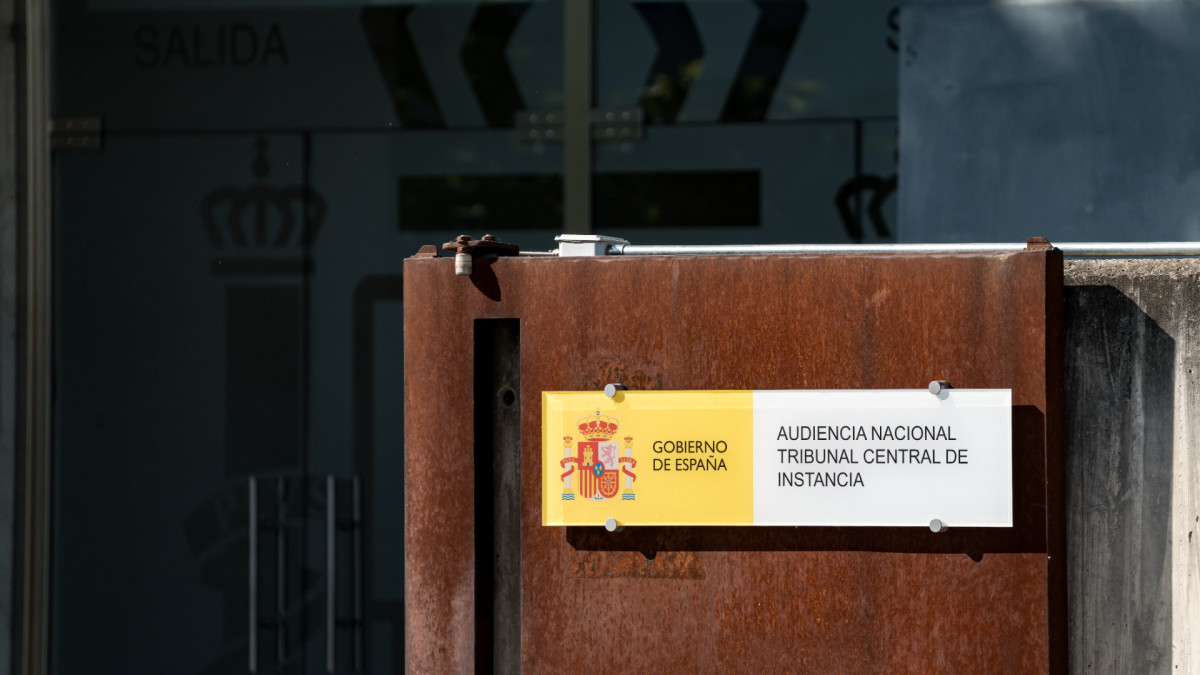
10) And to finish this hurried list, the National Court (Audiencia Nacional) should be abolished. The reason is not only or mainly its undemocratic origin as a Public Order Court, but that it is a national jurisdictional court without a clear purpose, concentrating investigations of complex cases, generating heavy backlogs, and, worse, a sustained relationship among its judges, specialized police units, and the Public Prosecutor’s Office that is difficult to reconcile with its independence and that produces very evident biases.
These reforms are certainly not the only ones needed, but they would contribute to improving the Administration of Justice in general, and criminal justice in particular.
Beyond the heated debate about the justification or lack thereof of specific judicial decisions, I think it is wise to raise our eyes to the systemic causes of a model that has too many misfitting pieces, focal points of inefficiency, and dark spots. If we are concerned as a society and as policy makers about the quality of justice (and democracy), it is not enough to criticize this or that decision; we must seriously tackle the root problems and offer solutions to them.
