
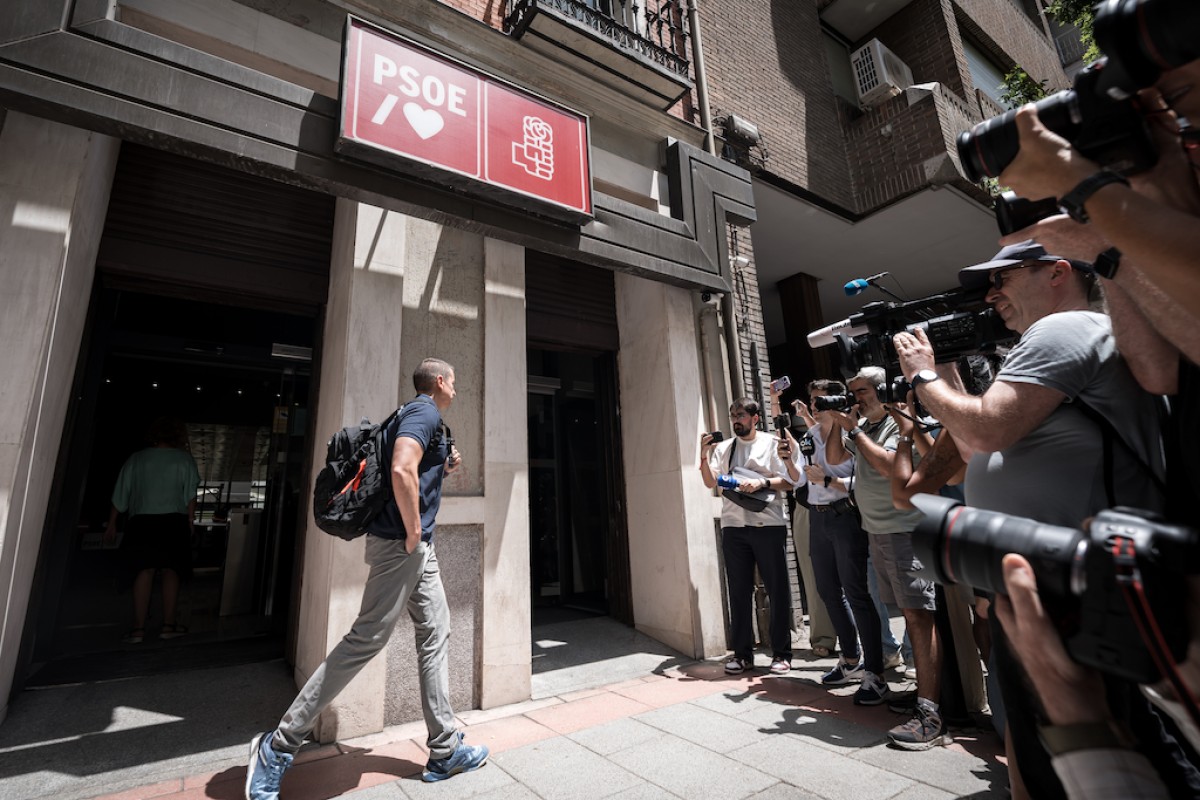
In recent weeks we have seen how Spanish political life has been completely altered by reports produced by police units within the framework of the investigation of criminal proceedings. It is entirely understandable, given the gravity of the criminal activities reported and the political relevance of the people allegedly involved.
“It is essential to carefully define the evidentiary value of that type of reports in the criminal process and the functions that correspond to the police investigation units and to the judges and/or prosecutors”
The media and political impact of these reports can be enormous and when translated into the judicial process they can give rise to not a few dangers. Therefore, it is essential to define with precision the evidentiary value of this type of reports in the criminal process and the roles that correspond to the investigative police units and to the judges and/or prosecutors. These reports have been referred to by jurisprudence and doctrine as “intelligence reports”, they are produced by the police within the framework of a criminal investigation and can constitute a mechanism of complaint before the judge or the prosecutor or as police judicial reports at the request of the investigating judge in a procedure.
These reports are typically produced in cases of high complexity, such as those involving organized crime, economic crime, corruption, etc. They usually incorporate a very diverse array of evidentiary elements, such as documents (seized by the police themselves or not), testimonial information, wiretaps, police surveillance, forensic analyses of many kinds: computer forensics, chemical analyses, genetic analyses, voice identification, accounting, etc. The amalgam of elements of evidence mentioned in these reports is normally tied to the complexity of the facts being investigated, and it is precisely here that their value and their problems arise.
Their value, because the investigative units of complex crimes bring their specialized knowledge about how such criminal schemes typically unfold (as highlighted, among others, by Supreme Court rulings 263/2012, of March 28, 2012, and 232/2024, of March 8, 2024). It can be said that, just as a tax inspector eventually learns the most common tricks of tax fraud, the police officers who work in these investigative units also acquire expertise regarding the ways in which certain crimes are committed or concealed in the processes they routinely handle. Therefore, their experience can be relevant for understanding the phenomenon, for pulling on a thread in an investigation, or for fitting the pieces of a puzzle together that to an inexperienced observer might seem unrelated.
“The task of crafting a coherent narrative of the facts of a case, integrating and detailing the participation of the investigated, is also the weakest link of this type of report”
But that task of crafting a coherent narrative of the facts of a case, integrating and detailing the participation of the investigated, is also the weakest link of this type of reports, because it often involves selecting the seized evidentiary material considered relevant, formulating hypotheses about what happened while discarding others, filling in gaps between evidence to give a factual account, and evaluating the entire body of evidence collected.
All of this may be indispensable but it carries many hazards that should not be ignored. To name just a few: there is a possibility that the evidentiary material (for example, fragments of recordings or phone taps) is selected to fit more neatly with a predetermined prosecutorial hypothesis, a clear example of confirmation bias, typical of the confusion between investigative and evaluative functions of the evidence; it may be that information that is not useful for the accusation is discarded, but it could be useful for the defense of the investigated; finally, it is possible that the police officers’ “experience” that lends sense to the narrative of the prosecutorial hypothesis is tinted by their biases, prejudices or simply by subjective aspects, filling evidentiary gaps with assumptions rather than with evidence.
All these reasons counsel extreme caution and not to attribute evidentiary value to the police report itself, but to the evidentiary elements on which it is based (testimonies, expert opinions, documents or physical materials), which should in any case be incorporated into the process as such. The extent to which those proofs reinforce or contradict one another and whether they corroborate or refute the factual hypotheses of the case should be, however, part of the analysis that falls within the judges’ remit (as reminded by the separate opinion of Perfecto Andrés Ibáñez to STS 710/2007). Permit me to complete the argument with two analogies: 1) just as those units are presumed to have some experience in investigating complex crimes, we can suppose, for instance, that a judge in a gender violence court will also have experience evaluating the evidence that is typically present in those cases; however, that does not mean that the evaluation made by the judge is itself evidence. It would be one thing to confuse the evidence with its evaluation. And 2) it is common in Spain that academic opinions on the law are not admitted into judicial proceedings because, it is said, it is the judges’ function to know the law; for the same reason, police reports evaluating the evidence should not be admitted, since that is also a judicial function.
“By admitting these reports and giving them evidentiary value, there is an undue assumption by the police of the function of interpretation and evaluation of the evidence, which corresponds to the judicial organ”
By admitting, on the other hand, these reports and giving them evidentiary value, there is an undue assumption by the police of the function of interpretation and evaluation of the evidence, which corresponds to the judicial organ. The interpretation of the police is, without a doubt, relevant for investigative purposes, but it should never be regarded as evidence in itself. As Sáez Varcárcel wrote a few years ago, now a magistrate of the Constitutional Court (“Intelligence Expertise: Penal Evidence and the State’s Scholarship,” in Jueces para la Democracia, no. 88, 2017, p. 86): “The intelligence incorporated into justice suggests an occupation of the procedural space by the police investigator under the cover of the expert and a displacement of the judge, or a colonization of the judge’s role, since that investigator assumes the role of constructing the fact. And it does so without respecting the rules of the process, because he is not bound by them, rules that require the judge to purge the evidence that can enter the trial framework, to analyze and determine its individual and comparative value, to expose the incriminating elements that follow from them and to motivate the confirmation or refutation of the hypotheses offered by the parties”. (In the same vein, other Supreme Court rulings have also expressed this view, such as 1029/2005, 556/2006, and 119/2007, today unfortunately in the minority).
All this is especially dangerous when, starting from those reports, media conclusions are drawn without the proper judicial controls, which in turn can have a strong influence on the course of the proceedings. And not to mention, if at any moment those police units, dependent on the Executive Branch, are appropriately directed by those who hold power for interests not necessarily legitimate. To say it again in the words of Sáez Varcárcel, “that intelligence has permeated the work of the courts and achieved a normal antecessor status, to the point of grounding condemnations, is also an indicator of the police-ization of the process and of the subordination of the jurisdictional function to police logic and methods” (p. 86).
That is no small matter for us to proceed without caution…
