
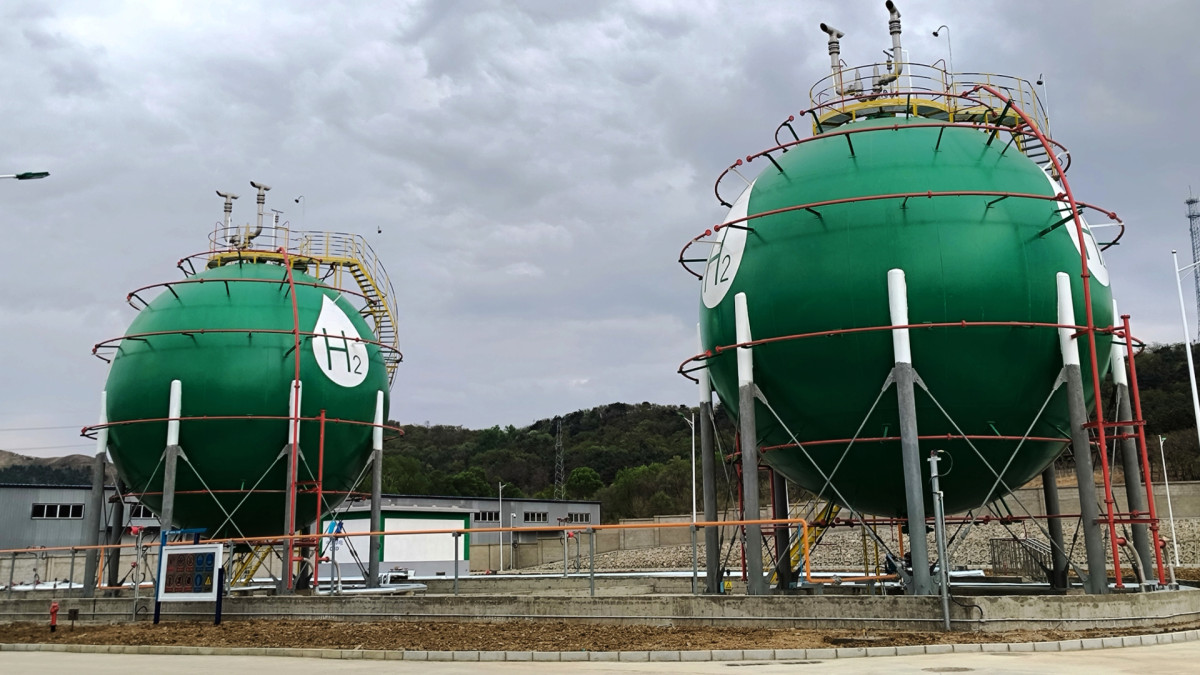
Spain has the opportunity to take a qualitative leap in its energy position: to consolidate itself as an electrostate (a country with a largely renewable electricity system) and to become a key geopolitical actor in the production of renewable fuels of non-biological origin (RFNBO, for its English acronym). The first part is already underway, driven by renewable expansion, wind repowering, and deployment of storage. The second, however, demands overcoming economic, regulatory, and market barriers that currently hold back the development of this new industry.
This opportunity rests on a structural advantage that is hard to replicate across Europe: Spain boasts some of the lowest costs of renewable generation (LCOE) and, by extension, of green hydrogen production (LCOH). On this foundation, the country can develop a complete value chain of synthetic renewable fuels (from hydrogen to methanol and eSAF) while rolling out advanced biofuels derived from its own organic resources (biomass, biogas and biomethane).
It has already been clearly stated in these pages: the price of electricity is redrawing the European industrial map and Spain currently occupies a privileged position in this new geography. That is true. But the Spanish advantage does not end with electricity: the strategic bet must go further and reach green molecules. This article is a case for that second step.
Why green molecules are not taking off in Spain
In the development of renewable fuels of non-biological origin (RFNBO), the main obstacle in Spain is the political economy: despite the large volume of public subsidies (both European and national) aimed at boosting hubs of hydrogen, a significant portion of projects has not reached the final investment decision (FID) or has even abandoned the subsidies.
“The country can develop a complete value chain of synthetic renewable fuels while deploying advanced biofuels”
The reasons are several. The development of a RFNBO plant requires coordinating environmental permits, grid access, water availability, and strict compliance with the grant conditions. The convergence of all these elements on time, without an ad hoc handling from the Administration, makes execution enormously difficult. On the other hand, the economic fundamentals of RFNBO projects remain fragile. Viability depends on simultaneously securing three elements: long-term offtake contracts, access to renewable energy that meets mandatory criteria (temporal correlation, geographic correlation and additionality), and a financing structure that combines public aid with bank debt.
However, beyond these operational and financial difficulties, the fundamental problem is another: there is not enough visible demand. Today, the development of the green hydrogen market in Spain rests on a very small number of projects (Muskiz, Cartagena, Huelva) and a constellation of smaller initiatives led by independent producers. The portfolio of mature initiatives remains far below the potential identified in the PNIEC and does not correspond to the ambition Spain could have as a country with the best conditions for green hydrogen production in Europe.
The Secretary of State for Energy himself acknowledged recently that not enough offtakers are being found and that the Administration is forced to “go out to seek demand.” The diagnosis is accurate and deserves recognition: indeed, today there is no demand. But I would argue that the conclusion should be different: the demand for renewable fuels is not found in the market; it is created by regulation.
“The demand for renewable fuels is not found in the market, but created by regulation”
Germany has just demonstrated this. Its transposition of the RED III directive, approved in May 2026, establishes a mandatory RFNBO quota in transport that starts at 0.1% in 2026 and climbs to 10% by 2040, well above European minimums. And it accompanies penalties for suppliers that fail to comply, equivalent to an effective price floor of about €14-15 per kg of hydrogen (versus the €5-8 per kg of produced green hydrogen). Germany did not go out to seek demand: it created it by law. In the sector, you can sense how this regulatory signal is already altering investment decisions across the value chain, from electrolyzer producers to project developers and future industrial consumers: they have redirected their attention from Spain (due to its low production costs) toward Germany (where demand has been created through regulation).
It is true that renewable fuels used to double the cost of fossil fuels until recently. But that objection, frequently raised in sector debates, deserves context. Cost differences of this magnitude (roughly double) are common in emerging technologies and tend to shrink rapidly with scale and learning, as already happened with solar photovoltaic energy or batteries, whose costs fell by more than 90% in a decade. Moreover, the comparison ignores the externalities associated with fossil fuels: climate impact and geopolitical vulnerability arising from dependence on external supplies. This is not merely a future promise: the Iran crisis, which will persist for many years, has already equaled in Asia the price of gray methanol with the green variant. I would argue that if such a cost differential exists, it is not an overcost but an investment in strategic autonomy.
“From electrolyzer producers to project developers and future industrial consumers: they have shifted their attention from Spain to Germany”
Spain holds the lever: we are capable not only of supplying our own market but also of becoming the natural provider for the demand that Germany and other Member States are creating and that they will need to cover with imports. But for that to happen, Spain must build its own internal market with the same resolve as Berlin. Raising the RFNBO consumption targets in the RED III transposition (with binding quotas, a long-term trajectory, and credible penalty mechanisms) may seem like a minor regulatory exercise. Yet it is the founding act of a new industry. And with it, true geopolitical power: Spain as the European hub of green molecules.
Bioenergies: the second pillar of green molecules
On the other hand, the development of synthetic renewable fuels cannot be viewed in isolation. There is a second vector, less visible but equally strategic, that can act as a catalyst for the first: bioenergies. Biomass, biogas, and biomethane are renewable resources that can be managed and moreover provide essential elements (such as biogenic CO₂) indispensable for RFNBO development. Integrating both vectors is a necessary condition to build a complete and competitive system for green fuels.
“We can become the natural provider of the demand that Germany and other Member States are creating and will need to cover with imports”
The potential of bioenergies in Spain is significant and, so far, underexploited. Harnessing biomass, agricultural, livestock, forestry, and industrial residues enables both renewable energy generation and progress in circular management of resources and an active forest policy. This vector combines three strategic dimensions: strengthening energy autonomy, improving industrial competitiveness, and contributing to territorial resilience, especially in rural areas.
The case of biomethane is a prime example of this opportunity. There is a substantial gap between current production and the country’s real potential, which opens clear space for investment and development. Spain could position itself as the third-largest biomethane producer in Europe by 2030, behind only France and Germany. However, current targets remain modest: the PNIEC expects around 20,000 GWh of biogas production in 2030, representing merely 6% of energy demand. This gap between potential and ambition indicates ample room to accelerate deployment.
Biomass should be understood as the natural evolution of industrial cogeneration: where gas today produces electricity and heat, biomass plants can take on the same role with a renewable basis. In fact, there are already projects in Spain replacing gas with heat for industry using biomass.
In short, bioenergies (biomass, biogas, and biomethane) are an indispensable complementary pillar to move beyond the electrostate through the development of renewable fuels: without sufficient deployment, the scale of RFNBO remains limited.
Both vectors, bioenergy and synthetic fuels, far from competing, reinforce each other and allow for a more diversified energy system that is, above all, geopolitically independent from third countries outside the EU, for which we are not a priority.
From opportunity to real geopolitical power: Spain’s energy future
Geopolitical capabilities in a country, just like “energy independence,” do not emerge by chance; they are built deliberately: interest groups with diverse opinions; an Administration balancing today’s general interests with potential future gains; intense sector debates; and, ultimately, bold decisions that require political leadership and whose benefits manifest over decades.
“Spain could position itself as the third biomethane producer in Europe in 2030, behind only France and Germany. However, current targets remain modest”
In a moment of redefinition of the European energy map, simply following Berlin’s example and raising RFNBO consumption objectives in the RED III transposition, Spain has before it the opportunity to consolidate itself as a strategic supplier of clean energy, whether as electrons or as green molecules. To achieve this, it is necessary to overcome inertia, cognitive patterns, and narrow self-interests.
Spain has already shown that it can lead the transition to a renewable electricity system. The next step is even more ambitious: to become a European power in green molecules.
