And a tour around town.
This evening, I am scheduled to speak to students affiliated with The Fund for American Studies. In keeping with my habit during June trips to DC, I stopped by the Court to witness the issuance of opinions. And, true to form, I made my way to First Street around 9:20 a.m. June usually leaves the bar section empty, but today proved to be an exception. The officer at the front gate indicated that more than 200 people were seeking bar admissions, and that securing a seat might be uncertain. That was a development I hadn’t encountered before.
I was asked to wait in the cafeteria while they assessed how many seats might be left in the bar area. Also in line was John Coghlan of Torridon Law, who had come to witness his sister’s swearing-in ceremony. (Fun fact: John was the first lawyer to argue in person at the Court after the COVID shutdown on October 4, 2021.) Fortunately, we were allowed upstairs just before 10:00. Only three bar members were to be admitted.
I took my seat just as Justice Gorsuch began delivering the majority opinion in Hemani. That meant there would be no opinions from Justices Jackson, Barrett, or Kavanaugh. As Gorsuch summarized the facts, it became clear he rejected the government’s “habitual” drunkard theory. He tossed in a few wry lines about how much John Adams and James Madison drank. The Fifth Circuit’s decision would be affirmed in this case. But not in the subsequent one.
Justice Kagan delivered the Court’s opinion in Hunter v. United States. The case centered on whether a defendant could be bound by an appeal waiver. Kagan noted that the government proposed an unforgiving standard, the Fifth Circuit adopted a middle one, and other circuits had adopted a more forgiving standard. It was obvious who would prevail here. The Fifth Circuit was reversed.
Next up was Justice Sotomayor with T.M. v. University of Maryland. I had written about this matter before. Elizabeth Prelogar appeared as a last-minute substitute for Kannon Shanmugam. The respondent was represented by Lisa Blatt. Justice Sotomayor made it clear that the Court would not overturn the Rooker-Feldman doctrine, despite Prelogar’s request. She also rejected Prelogar’s alternative argument. Surprisingly, the opinion split 5-4 in an unusual configuration. The majority consisted of Sotomayor, Thomas, Alito, Kavanaugh, and Jackson. Barrett dissented, joined by Roberts, Kagan, and Gorsuch. I should note that Justice Thomas cited the Heritage Guide to the Constitution (Third Edition).
In 1780, the Confederation Congress established a court under that authority whose jurisdiction allowed it to “hear new evidence without deference to state courts’” legal conclusions. W. Pryor, The Appellate Jurisdiction Clause, in The Heritage Guide to the Constitution 499 (3d ed. 2025) (Pryor)
I hope this marks the first of many Supreme Court citations in this significant volume. Whatever aura the Heritage brand may carry should not overshadow the outstanding scholarship presented in the book by Judge Pryor and others.
I could sense a palpable tension among the Justices. They did not converse with one another. Laughter or light banter did not seem to be on the agenda. Justice Alito appeared to be poring over a document intently. I initially thought he might be preparing to issue an opinion, but it appeared to be something else. Chief Justice Roberts kept glancing up at the ceiling for a prolonged stretch while Sotomayor read. Barrett gazed straight ahead with focused attention. The sole moment of levity arrived when Gorsuch quipped about our inebriated founders. These moods do not bode well for a tranquil close to the term.
After Sotomayor finished reading her opinion, the Chief Justice instructed the clerk to commence the admissions process. A majority of the reporters’ box departed at that moment, somewhat disappointed by the absence of blockbuster rulings. For a Thursday in June, the pace was slow. And with tomorrow’s federal holiday looming, there would be no more opinions issued this week.
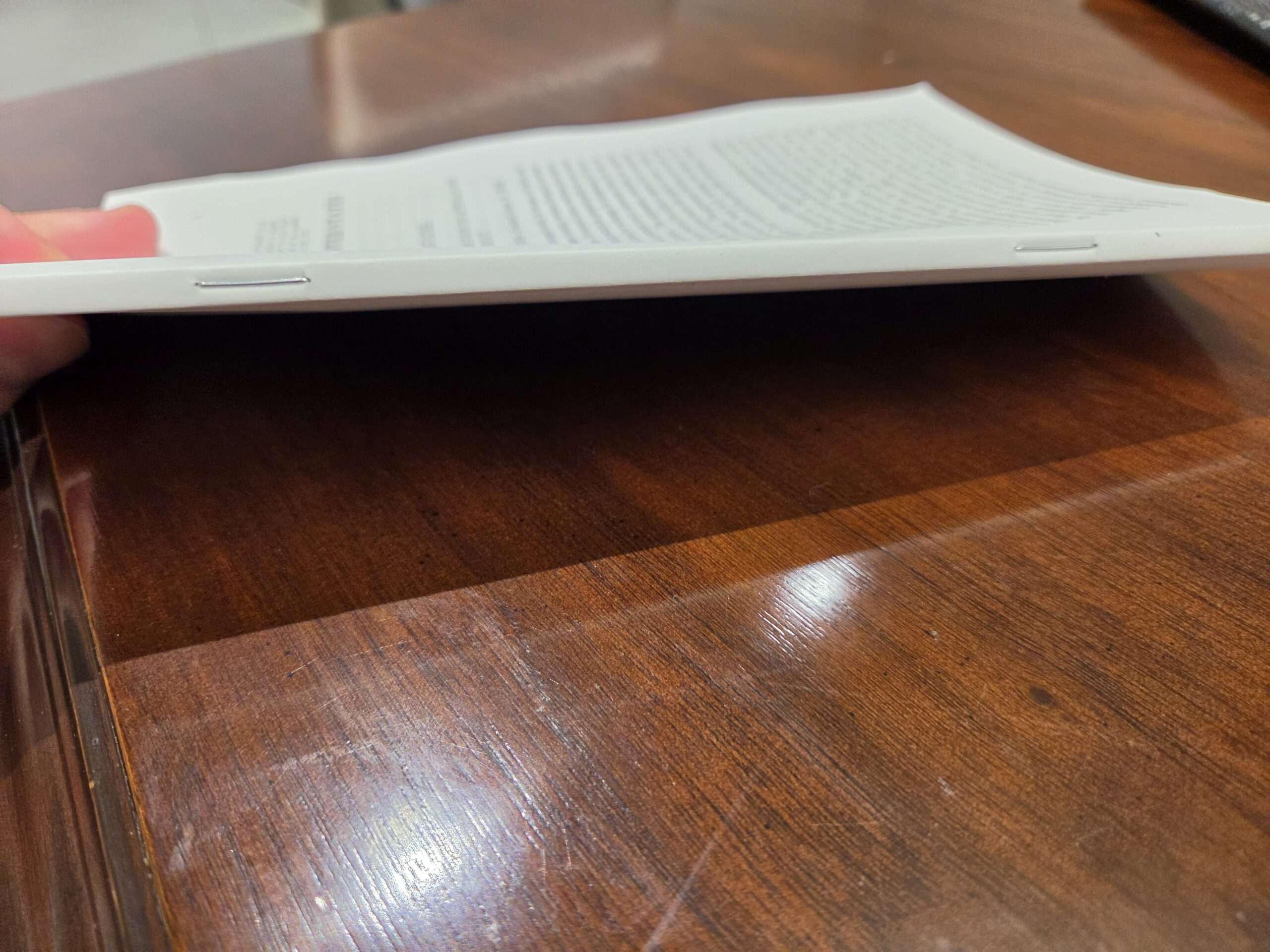
I stepped outside the Court to obtain a copy of the bench opinions. It had been a while since I waited for a paper edition, and I discovered the binding had changed. Two staples now appear on the spine. Mark Walsh, whose father ran a printing business, told me this is what they call a “Perfect Binding.”

Mark also mentioned that there would be no opinions issued on Monday, and the next batch is slated for Tuesday. There is a planned hand-down for Thursday as well. So the coming week will likely include a Wednesday or Friday session. The consensus from several reporters I spoke with is that the term will conclude on June 30 or July 1.
A few additional miscellaneous observations as I moved around the city.
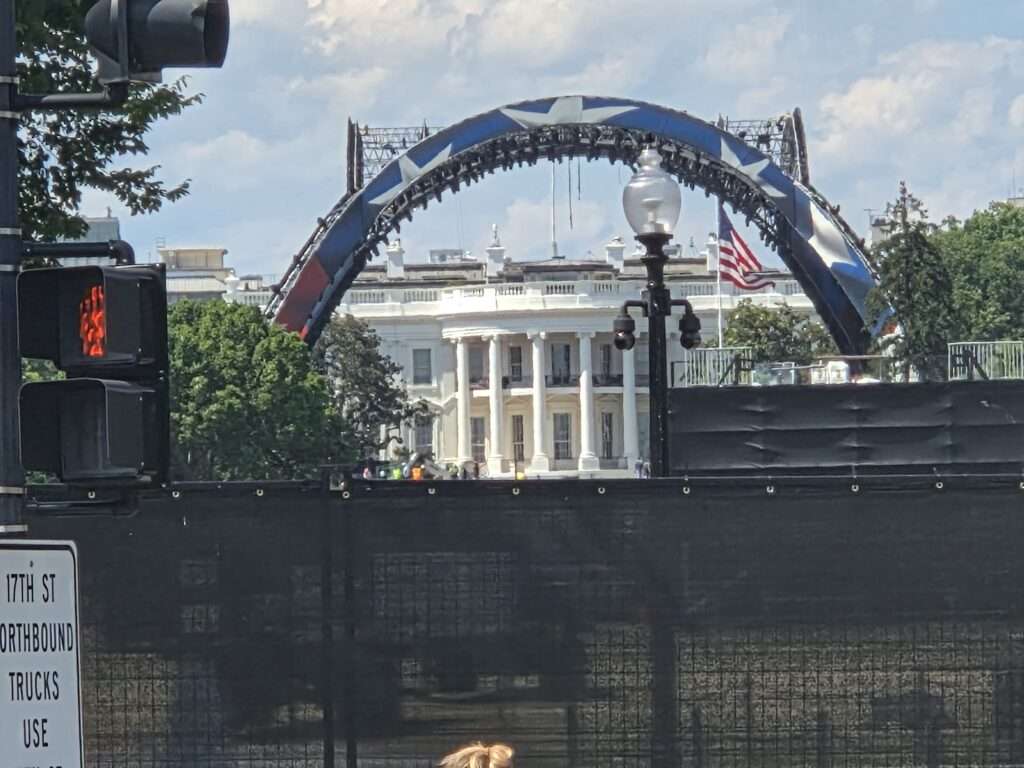
Yesterday, out of curiosity, I strolled past the White House to view the renovated reflecting pool. It is hard to explain the scale of the UFC Claw. It towers over the White House. It can be seen from both Pennsylvania Avenue and Constitution Avenue.
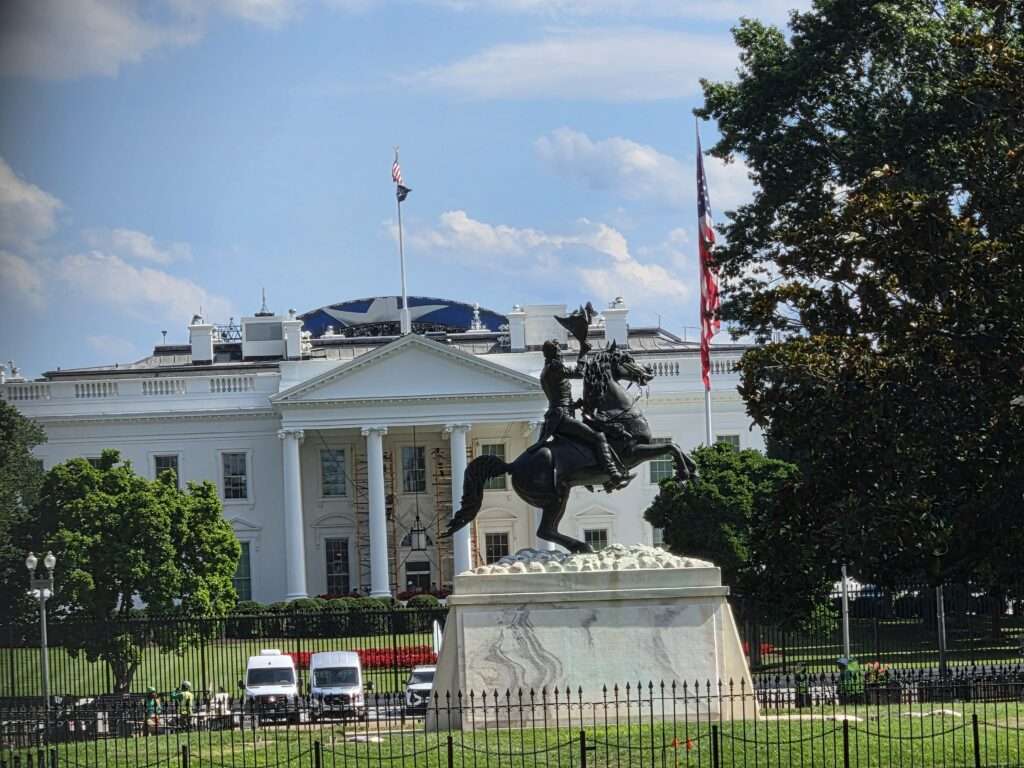
The reflecting pool appeared green. It harbored algae and other growth. I did not observe the American Flag Blue.



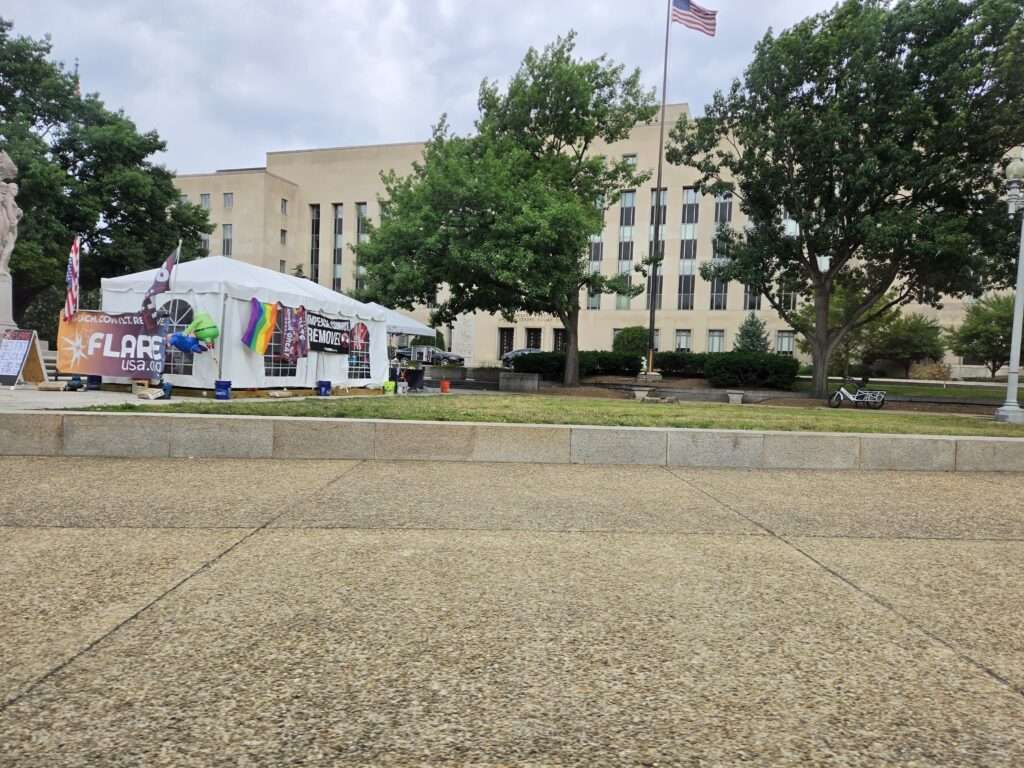
On the return journey from the Court, I passed the “86-47” tent in front of the DC Circuit Court House. It’s a scene in defense of Free Speech.
The reflecting pool appeared green, bearing algae and other growth. I did not notice the shade of American Flag Blue.
The restoration of the reflecting pool also reminded me how expansive the space is and how much there is to reflect upon in a city like this.
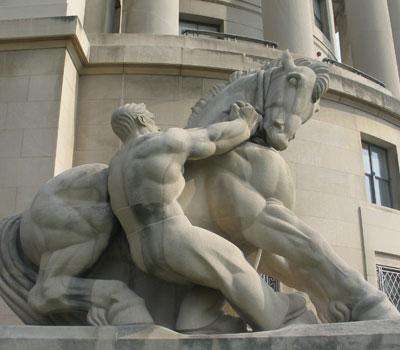
One more point stood out to me. I have always found the statue titled “Man Controlling Trade” outside the FTC building troubling. Created in 1942 to symbolize how the federal government governs the market’s unrestrained energy, it reflects a Roosevelt-era view of federal power. In today’s context, its symbolism seems misaligned. Perhaps this is another piece of D.C. architecture deserving reconsideration.