
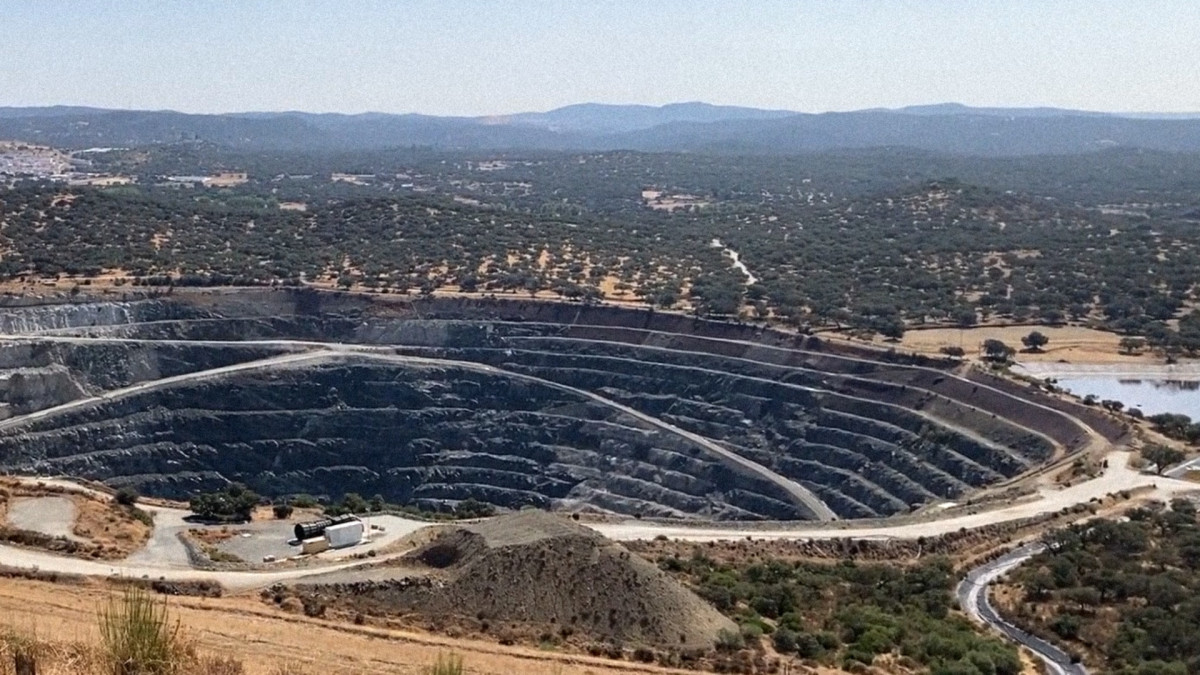
Although the green transition promises to free the modern economy from its dependence on raw materials such as oil and gas, technologies tied to the green economy (solar panels, batteries, electrolyzers, etc.) generate a new dependence on multiple minerals and metals, as consumption is expected to multiply in the coming years. Because of their economic importance for the ecological and digital transitions and their scarce supply, these “critical raw materials” (CRMs) are attracting intense attention from governments around the world, which seek to control the value chains of the main CRMs.
The economic need and wealth generated by mining and processing CRMs and the manufacturing of products containing them are joined by geopolitical motives: China controls the largest share of the market for nearly all CRMs, whether in mining or processing, and many are essentially under Chinese monopoly. In this context, the European Union approved in 2024 its Critical Raw Materials Act, which aims to secure domestic mining and recycling of a substantial portion of the CRMs consumed by European industry, and to diversify international sources of CRMs.
The Spanish institutions are not turning a deaf ear to these calls to “go back to the mine,” and are taking steps to back this European strategy, but at the same time social opposition to many mining projects is growing.
“Spain, as the largest country in the European Union by area, has substantial mineral wealth and therefore large reserves of most critical raw materials”
Spain, being the largest country in the European Union by area, in addition to being comparatively mountainous, also has substantial mineral wealth, which implies the presence of known reserves of a large majority of the CRMs listed by the European Union. This includes those needed for solar panels (primarily silicon) or electric batteries (lithium, cobalt, nickel, etc.), as well as significant copper deposits, essential for all electrical equipment.
As shown on the map, the vast majority of mining activity is located in the western half of the Peninsula and in Andalusia. The maps of known deposits replicate this trend. It is also worth noting the presence of a natural hydrogen deposit in Huesca. This “golden hydrogen” forms through natural processes in the Earth’s crust and could be extracted with the technologies available to the gas industry and thus used for zero-emission industrial processes while green hydrogen (produced with renewable energy) is not price-competitive yet.
An Abandoned Industry
However, the truth is that knowledge about Spain’s mineral resources is outdated. The last national survey of mineral resources dates from 1970, when technology that is now outdated was used and the focus was not on minerals of interest for the ecological and digital transition. For this reason, it is encouraging that the Government is preparing the first mining exploration campaign of the democratic era, in order to update the available information.
Public surveys will primarily focus on Andalusia and the western fringe of the country: Extremadura, Asturias, Galicia and the western part of Castilla y León. As discussed, these regions are the richest in CRMs, and where new mining operations and exploration by mining companies are concentrating.
At the same time, opposition to these new projects among residents in affected areas, from Galicia to Extremadura through Castilla y León, is rising. Beyond fears of environmental disasters like Aznalcóllar, there is opacity from companies and administrations, leading many to believe that promised jobs and wealth do not compensate for the risks. Given these legitimate concerns, it is urgent to develop a mining policy that guarantees 21st-century sustainability and transparency while also boosting economic development in the mining regions.
Toward Sustainable Mining
First of all, a thorough reform of the Mining Law, in force since 1973, is necessary. Although its alignment with the legal framework has gradually modernized with the advent of democracy, the autonomy statutes and the environmental requirements, the law remains outdated. A reform of the law, as was attempted unsuccessfully in the previous legislature, would simultaneously raise environmental standards and transparency, as well as streamline administrative procedures.
While modern mining in developed countries is much more sustainable than in the past, mining companies still frequently act out of touch with the public, and the most sustainable practices are not considered the default option, but rather an “extra” to be added after complaints to the administration or citizens.
A law reform should force mining companies to choose options with the lowest environmental impact (underground mining and transfer mining within open-pit operations) whenever technically feasible, as well as clearly delimiting the environmental impact assessment of mining on nearby protected spaces.
Ensuring that companies and administrations adequately inform the public and improving the quality and depth of environmental restorations when mining activities cease would also help to build public trust in mining projects. In return, the new Mining Law should facilitate — not weaken — administrative and environmental procedures.
“Huge administrative delays occur in the processing of a mine, but these are not the result of necessary environmental assessment; they stem from bureaucratic inefficiencies”
Currently, enormous administrative delays occur in processing a mine, but these delays are not the result of the required environmental assessment but of the relevant bureaucratic procedures’ inefficiencies. A rationalization of administrative processes could speed up the approval of mining projects without compromising environmental criteria.
Beyond reform of the legal framework, public administrations should promote the use of mining waste from past operations (overburden dumps and mine tailings) ahead of new deposits. Mining waste is simultaneously an environmental risk (heavy metal contamination, acid drainage, etc.) and a potential source of CRMs, present in the waste. Whether because those CRMs were not of interest in the past or because extracting them was not technically feasible.
For example, advances in technology allow extracting both tin and niobium and tantalum (the two components of coltan, largely mined in terrible conditions in the Democratic Republic of the Congo) from the tailings of the old tin mine at Penouta, in Ourense. In this way, economic activity can be revived in former mining districts, while at the same time improving Europe’s supply of CRMs and cleaning up old mining residues. Similarly, the acidic mine tailings ponds could also be mined and cleaned, sometimes with near-craft techniques that leave virtually no environmental impact.
Therefore, the news that the Government’s new mining exploration campaign will focus on assessing existing tailings dumps and ponds for CRMs that could be extracted as a mining modality is excellent, not only neutral but positive for the environment.
There is also a special mention of the natural hydrogen deposits in Huesca, as well as the possibility of discovering more during mineral exploration campaigns. These deposits are strategic, as they would enable the production of clean hydrogen (zero carbon emissions) at low cost (extracting resources with technology that already exists) with no environmental impact (extracting from underground reservoirs).
In this manner, the transition of heavy industry from fossil fuels to clean hydrogen could be facilitated by using competitively priced hydrogen, while hydrogen produced with renewable energy (“green hydrogen”) becomes price-competitive. Promoting the extraction of natural hydrogen as a strategic project should be pursued vigorously, because this low-cost decarbonization path runs in tandem with laying the foundations for future industrial competitiveness and creating sustainable jobs in Spain’s depopulated areas.
An Integrated Mining and Industrial Strategy
On the other hand, to maximize the mining sector’s economic impact in the regions that host it, it is essential to pursue a mining industry that is not merely extractive of resources, but leaves a tangible footprint (economic and social) in the territories where it operates, something that is often missing today.
For example, of the 47 CRMs projects declared “strategic” by the European Union, seven are in Spain, a high share. Yet, of the six Spanish mining projects, four are purely extractive and do not process the material, and among the higher value-added projects there is only one recycling project (none of CRM substitution).
The low average value added of the projects selected in Spain is not mirrored in neighboring countries, which hardly have any projects that are merely mining. Moreover, a mine stops providing jobs and prosperity when resources run out, while processing, recycling, and substitution projects have an a priori indefinite life.
“There is an urgent need to change course to promote the value-added sectors of CRMs value chains, using national mining resources as a lever to attract more industries”
Thus, there is an urgent need to pivot toward promoting the truly value-added sectors of CRMs value chains, using national mining resources not as a mere reserve to extract, but as a lever to attract other industries. To this end, the central government should promote a Strategic Project for the Recovery and Economic Transformation of Critical Raw Materials (PERTE MPC) that channels public policies.
The PERTE MPC should incentivize, support, and fund high-value mining projects (those that combine mining with extensive mineral processing or recycling), especially those that weave alliances across the rest of their supply chain. This would, for example, enable a lithium mine to attract battery manufacturing plants and their components, or to supply its production to existing Spanish factories. Support should also be given to high value-added and long-lived projects, such as recycling or substitution of CRMs with less critical ones.
Cases such as Atlantic Copper’s electronic products recycling plant, which will leverage the company’s copper and polymetallic mining know-how to recycle 60,000 tonnes of electronic waste annually, illustrate the important synergies that can be generated between mining and industry.
The best example to follow in this sense is in Extremadura, where investments across the entire battery value chain have been attracted: lithium and other metal mining, cathode manufacturing, and battery production. The addition of the Iberian Center for Energy Storage Research Foundation ensures the innovation of Extremaduran sector companies.
“Replicating Extremadura’s model in Spain’s main mining regions would be a key step toward reindustrializing rural areas”
Thus, there is a solid, vertically integrated ecosystem that captures the value added across its entire supply chain, with research support and talent development that will continue to attract companies and provide high-quality employment long after local mining resources are exhausted. Therefore, replicating Extremadura’s model in Spain’s main mining regions would be a key step toward reindustrializing rural areas.
But to ensure social backing for mining in the regions where it is located, it would be desirable not only for mining to be sustainable and to provide jobs for part of the local population, but also for the entire population to indirectly benefit from mining activity, so that the whole community shares in its success.
To achieve this, special taxes —low but meaningful— on mining firms’ profits should be established and these funds earmarked for local, regional, and national economic development. These levies should fund improvements in infrastructure and public services in mining areas, as well as foster business activity by investing in infrastructure for companies and financing for research and workforce training.
Since Spain’s natural resources are neither as significant nor as lucrative as those of other nations (Norway or Gulf monarchies), a sovereign wealth fund of that size is not feasible. However, prudent and strategic investment (funding investment rather than current spending and backing technology startups and innovation) has the potential to improve residents’ lives in mining areas while revitalizing the regional economy.
In summary, public authorities should view mining not merely as a generator of a few hundred jobs in rural areas, but as a catalyst activity to attract high value-added industries and to improve the lives of all citizens in mining regions directly, with minimal environmental impact. Although there is no need to choose between economic activity and mining and preserving our ecosystems, it is crucial that administrations take the necessary measures to balance the challenge of the transition toward green mining and industry with benefits that reach everyone.
